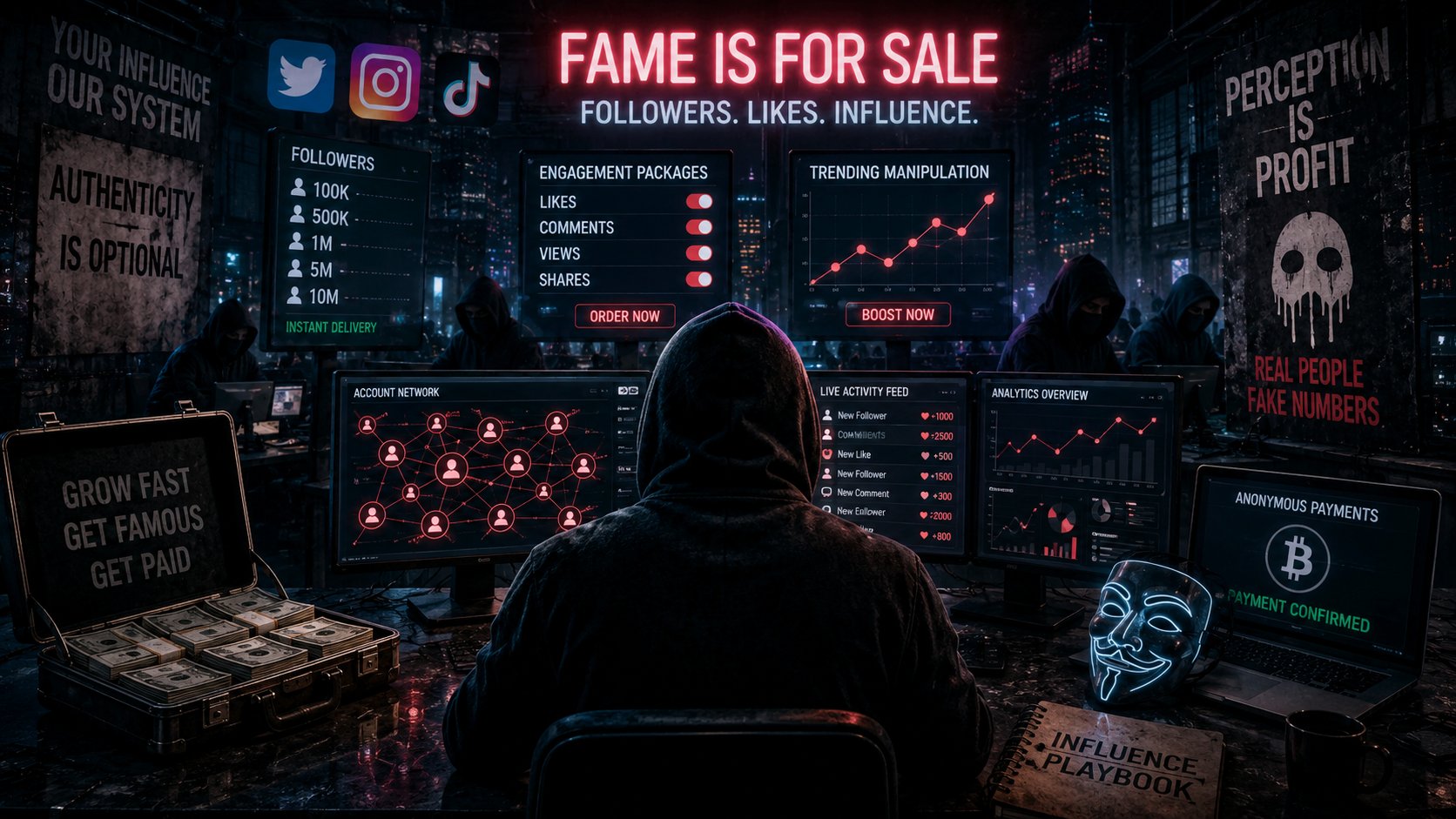
Inside the Social Media Underworld
"An influencer wakes up with a million new followers, all bought and paid for overnight. Who orchestrated this deception and why does it matter?"
What Happened?
In today's digital landscape, platforms initially designed for democratization of communication have been hijacked for deception. Behind the alluring façade of online fame and digital clout lies a murky reality. Individuals and entities manipulate these platforms not just to boost their popularity but to shape perceptions and decisions. These actions commoditize trust, turning it into something that can be bargained for at a price. While social media platforms enact measures to combat this deceit, the vulnerabilities exposed challenge each user to critically assess the authenticity of the content they consume, as the lines between reality and manufactured influence blur ever more indistinctly.
Takeaway
The lesson this story keeps teaching
“Digital facades demand scrutiny, as they mold reality and influence from behind the curtain.”
Why People Are Talking About This
Trust lies at the very heart of human interaction, and in our digital age, social media platforms have positioned themselves as the new arbiters of truth. The manipulation of these spaces for strategic gain not only undermines individual authenticity but threatens societal cohesion. Power now lies in the hands of those who can manufacture credibility, rendering personal identities vulnerable to manipulation and trust susceptible to erosion.
Much more than a technological quandary, the issues at play dig into the fabric of democratic institutions. The ethical ramifications of digital deception question the resilience of democracy itself—can the institutions stand firm in shifting winds of misinformation and insidious influence?
Addressing these challenges is not about enacting rigged initiatives; it is about actively fortifying our digital and moral landscapes against an evolving marketplace of deceit. Only by encouraging outcomes grounded in clarity and ethical responsibility can the digital realm be protected as a vibrant space that empowers connection and fosters transparency. As the digital age extends further into our lives, the stakes remain significant; our shared cultural candidness hangs in the balance, mirrored in the globally intertwining threads spun by technology.
Thread Map
9 entities · 8 connections · Hover to explore, click to inspect
This is the connection map for this thread. Every node is a person, company, event, or idea. The red lines show how they connect. Hover a node to highlight its connections. Click a node to see why it matters to this story.
How We Got Here
Operation Onymous Exposes the Digital Underworld
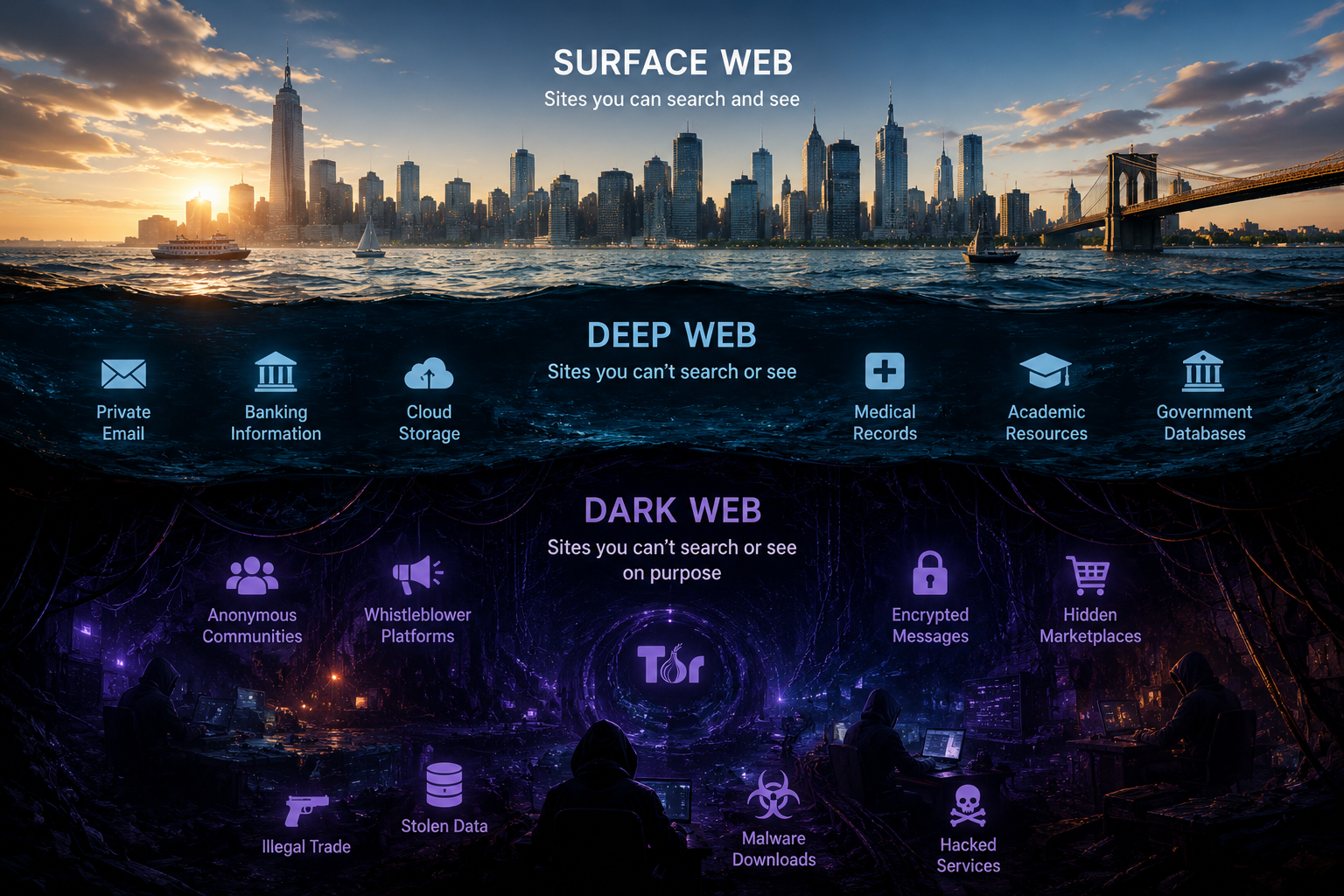
Operation Onymous, executed by the FBI and UK's National Crime Agency, led to the seizure of 27 hidden sites. This action uncovered the extent of illegal activities trading online, setting a precedence for digital regulation.
Devumi Faces Public Backlash and Legal Scrutiny
A scrutiny surfaced over Devumi, a company deeply involved in selling fake followers, leading to increased regulatory gaze and consumer awareness.
Twitter Battles Fake Accounts
In an effort to salvage its reputation and maintain user trust, Twitter initiated significant crackdowns on fake and spammy accounts, impacting its user engagement metrics.
Cambridge University Unveils the Online Trust Index
Cambridge University's Trust and Safety Index exposed the scope of fake account verifications, offering transparency to a digital world burgeoning under fabricated realities.
New Regulations Target Social Media Integrity
In response to the rampant misuse of social media platforms for manipulative tactics, new regulations were proposed aimed at safeguarding digital identities.
Social Media Giants Increase Transparency
Platforms implement policies to increase transparency and accountability amongst influencers and commercial entities leveraging social media.
Fake Follower Tactics Exploited
Investigations spotlighted how fake followers were used to manipulate public opinion during political campaigns, demanding higher accountability from platform owners.
Public Push for Authentic Engagement Grows
A movement advocating for authentic engagement blossomed, as stakeholders demanded ethical practices and genuine user connections over inflated numbers.
Wait... Who Is This?
In 1999, a quiet storm was brewing on the Internet’s horizon. The millennium was nearing its end, and digital technology was poised for an explosive evolution that few foresaw. The Internet, then still novel, was brimming with promise—a promise of boundless connectivity, unfiltered communication, and an equality-of-voice landscape. Entrepreneurs and visionaries pontificated over virtual round tables about seamless communication across hemispheres, unhindered by time zones or cost.
The dawn of the new millennium did more than deepen globalization; it transformed the status quo of interpersonal interactions. It was a time riddled with optimism as social networking sites like MySpace and Facebook offered intimate visceral connection in vast online universes. Anonymity engendered confidence, giving voice to those previously unheard. But, like Pandora's Box, this opening also released challenges previously unimagined—misuse of anonymity and monetization of personal profiles spurred ethical concern.
Fast-forward to the mid-2000s: social media had outpaced even the most starry-eyed projections of growth, becoming an archetypal aspect of societal engagement. Platforms matured from digital bulletin boards to significant arbiters of cultural currency— adhered onto political campaigns, social movements, and business agendas seeking influencer clout.
By then, an entirely different marketplace emerged from obscurity: one trafficked in fraudulent engagements—a paradoxical effect of a democratized virtual sphere. Disillusionment settled in as platforms, once championed as liberal bastions, battled issues threatening their core integrity. Anonymity, long heralded as freedom’s equalizer, devolved into a conduit for deceit—enabling exploitation under shrouds of secrecy, giving rise to disingenuous personas and misinformation.
Understanding the digital cultural revolution paints a picture of an evolving world grappling with newfound power, steered by unseen hands. The clash between empowerment and exploitation forms an intricate backdrop underpinning our study of trust in a digitally augmented age where perception and reality engage in a constant dance suspended by strings both visible and obscured.
Receipts
Cheap online fake accounts make misinformation a ‘thriving underground market’, study finds | Euronews
[PDF] The Role of the Underground Market in Twitter Spam and Abuse
[PDF] The Role of the Underground Market in Twitter Spam and Abuse - ICIR
[PDF] THE BLACK MARKET FOR SOCIAL MEDIA MANIPULATION
Inside social media’s black market
Paying to be popular: inside social media’s black market for fake followers | The Seattle Times
Continue the Rabbit Hole
Each story explores the same idea from a different angle. Follow the connections and discover where the thread leads.



Fictional placeholder content