A $150 Billion Laugh
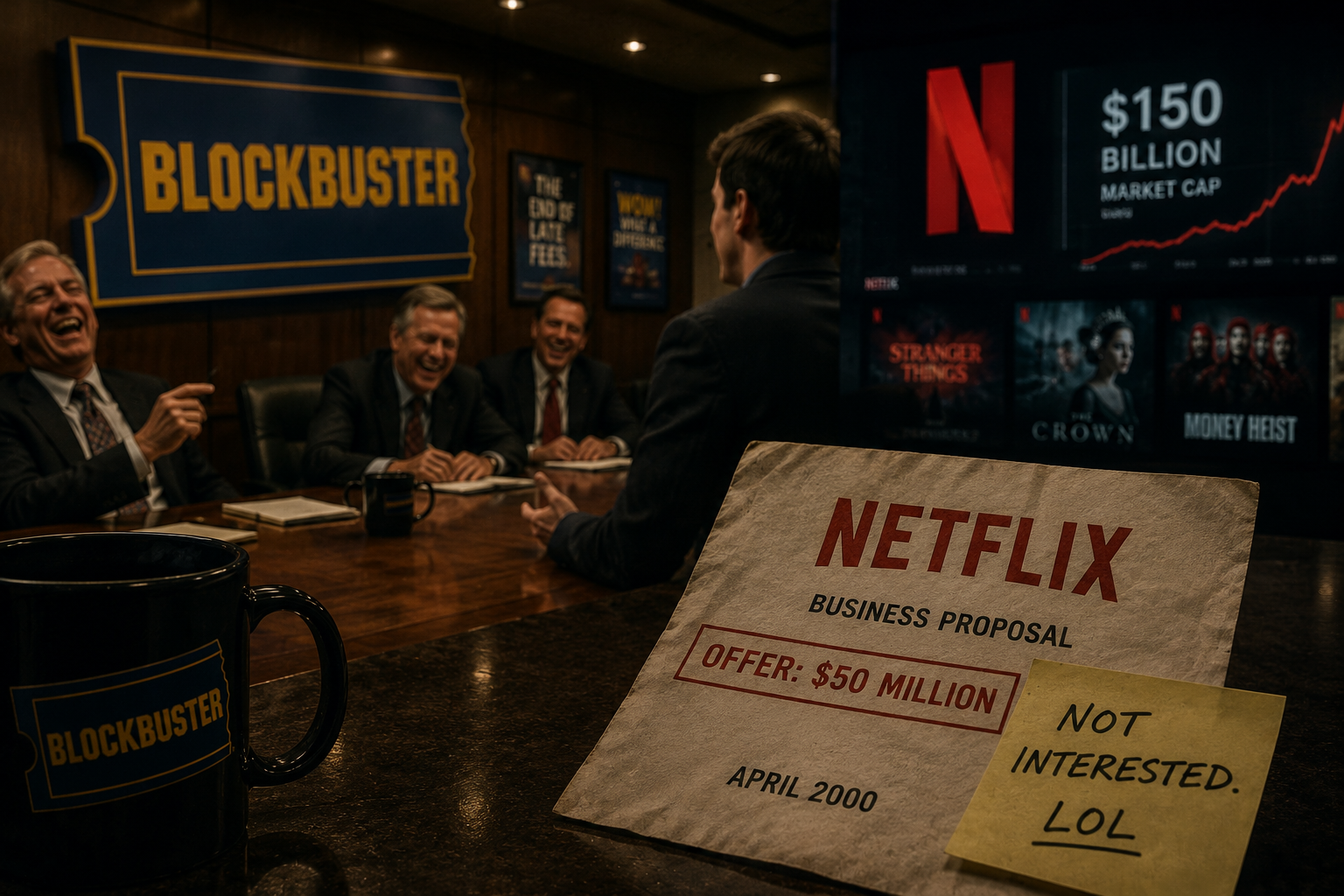
"In 2000, Netflix's founders walked into Blockbuster's office with a $50 million offer. Blockbuster’s executives laughed them out of the room."
What Happened?
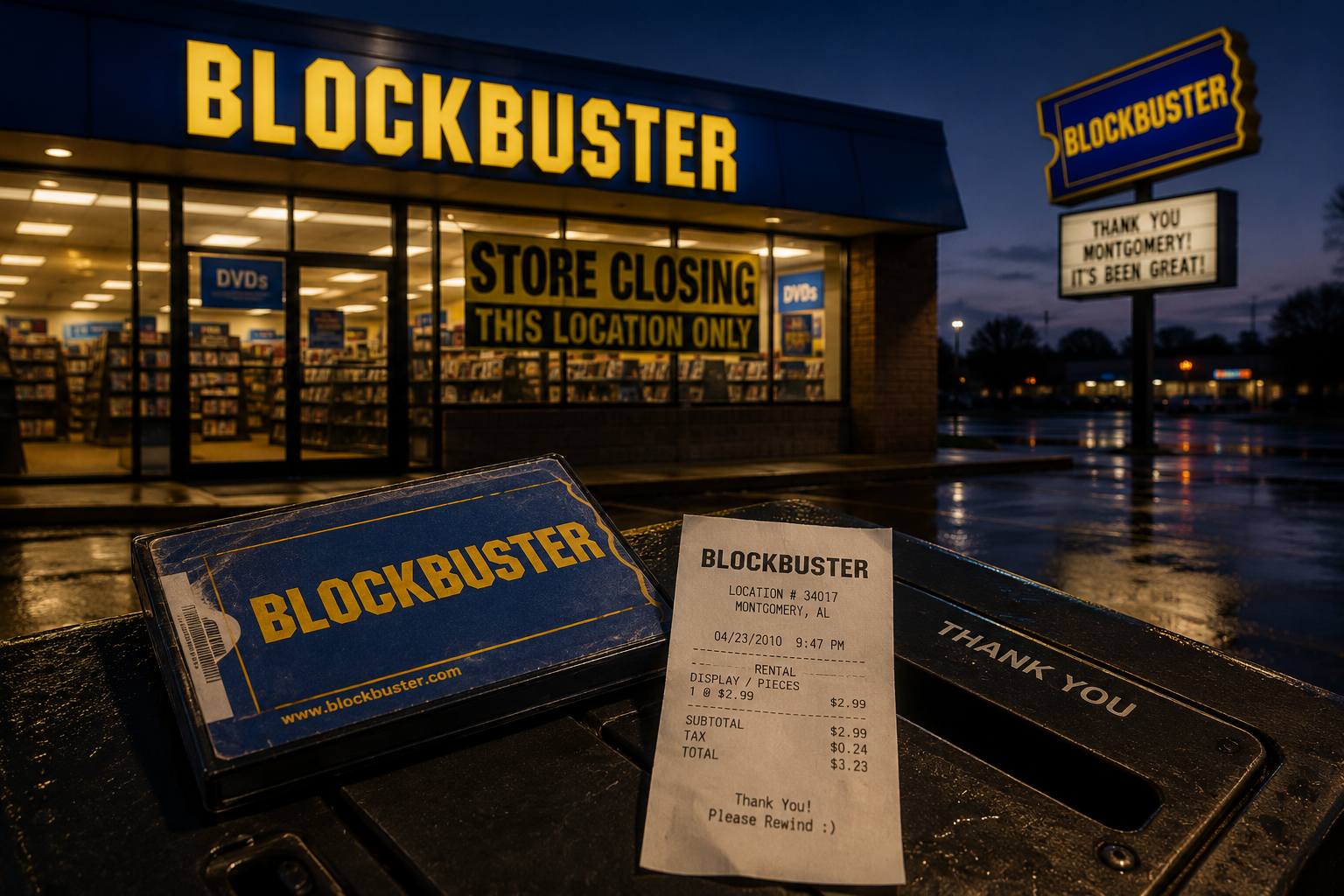
In a crucial meeting in 2000, Netflix's co-founders Reed Hastings and Marc Randolph pitched a $50 million acquisition offer to Blockbuster. John Antioco, then Blockbuster's CEO, dismissed the proposal, perceiving it as an overreach of the internet bubble's ambitions. At that moment, Blockbuster was earning robustly from rental late fees and held a domineering presence in home entertainment. Meanwhile, Netflix was struggling, yet its leaders held a visionary outlook on digital streaming’s potential. This decision, swaddled in skepticism, seemed justifiable then but proved pivotal as Netflix grew exponentially while Blockbuster succumbed to bankruptcy by 2010. This narrative underlines the imperatives of foresight and adaptability in business, showcasing how minor dismissals can lead to seismic shifts in industry landscapes.
Takeaway
The lesson this story keeps teaching
“Arrogance blinds even giants, risking their fall at the dawn of innovation.”
Why People Are Talking About This
The Blockbuster-Netflix dynamic is more than an isolated event; it is the quintessential narrative of progress and the risks of static comfort. In a world dominated by rapid technological advancements, enterprises face a perpetual ultimatum to innovate or risk irrelevance.
Blockbuster’s story is a cautionary emblem in industrial archives, a lesson in foresight's absence. It demonstrates how disruption respects no empires, nor nostalgias of past success.
For businesses today, heedfulness to consumer evolution is imperative. The nostalgia of physical presence once celebrated by Blockbuster is a relic. Netflix's ascension embodies agility, a testament urging industries to preempt change rather than react to it. A modern canto urging introspection, it heralds a future where adaptation breeds longevity.
Thread Map
7 entities · 6 connections · Hover to explore, click to inspect
This is the connection map for this thread. Every node is a person, company, event, or idea. The red lines show how they connect. Hover a node to highlight its connections. Click a node to see why it matters to this story.
How We Got Here
Blockbuster Launches as a Video Rental Titan
Blockbuster opens its first store in Dallas and rapidly expands to thousands of locations globally, becoming synonymous with Friday night entertainment.
Netflix Begins with a Radical Vision
Netflix is founded, launching a mail-order DVD rental service that aimed to harness the then-novel internet for convenience and accessibility.
Netflix Proposes $50 Million Deal to Blockbuster
Reed Hastings and Marc Randolph offer Blockbuster an opportunity to purchase Netflix for $50 million. The proposal is dismissed with laughter.
Dot-com Bubble Casts Doubt on Digital
The dot-com bubble creates wide skepticism around tech ventures, impacting perceptions of digital enterprises like Netflix.
Netflix Innovates by Embarking on Streaming
Netflix introduces its streaming service, allowing instant viewing of select titles, fundamentally transforming media consumption.
Blockbuster Declares Bankruptcy
Blockbuster files for bankruptcy, unable to sustain operations amidst technological and market shifts largely driven by Netflix's model.
Netflix Ventures into Original Content
Netflix expands its offerings by producing original content, including the hit series 'House of Cards,' further cementing its market dominance.
Netflix Valued at $150 Billion
Netflix's valuation surpasses $150 billion, marking its journey from a startup offered for $50 million to a global entertainment powerhouse.
Wait... Who Is This?
In the twilight of the 20th century, Blockbuster epitomized the American dream. With stores dotting cityscapes and suburbs alike, it monopolized the film rental market, amassing fortunes through a model deeply ingrained in social habit. It was a bastion of late fees, a formidable architecture of convenience.
While Blockbuster lived off revenues that exceeded $6 billion annually, a wave of change breezed through Silicon Valley. The dawn of the internet age drew entrepreneurs like Reed Hastings, whose grievances with late fees transformed into disruptive ambitions.
Netflix, conceived in a Los Gatos office, stemmed from Hastings' frustration. DVDs by mail, while ambitious, challenged the status quo. As the dot-com bubble formed, the sector oscillated between gilded promises and fear of collapse. Yet, Hastings, with technical acumen, pushed Netflix forward.
As Blockbuster fortified its towers, oblivious to the tide of digital innovation sweeping beneath, Netflix garnered traction—not through mass adoption, but by understanding potential shifts. Their 2000 meeting was not just a sale attempt but a pivot of paradigms.
The collision—tenacity over tradition, ambition over stagnation—would redefine media landscapes.
Receipts
Blockbuster Could Have Bought Netflix for $50 Million, but the CEO Thought It Was a Joke
Blockbuster Had The Opportunity To Buy Netflix For $50 Million But 'Laughed Them Out Of The Room' — A $150 Billion Mistake
Lessons from the Rise of Netflix and the Fall of Blockbuster | Cato Institute
Blockbuster’s Failure: A Lesson in Data Transformation
Netflix cofounder recalls Blockbuster rejecting chance to pay $50M for company now worth $150B
Continue the Rabbit Hole
Each story explores the same idea from a different angle. Follow the connections and discover where the thread leads.





Fictional placeholder content