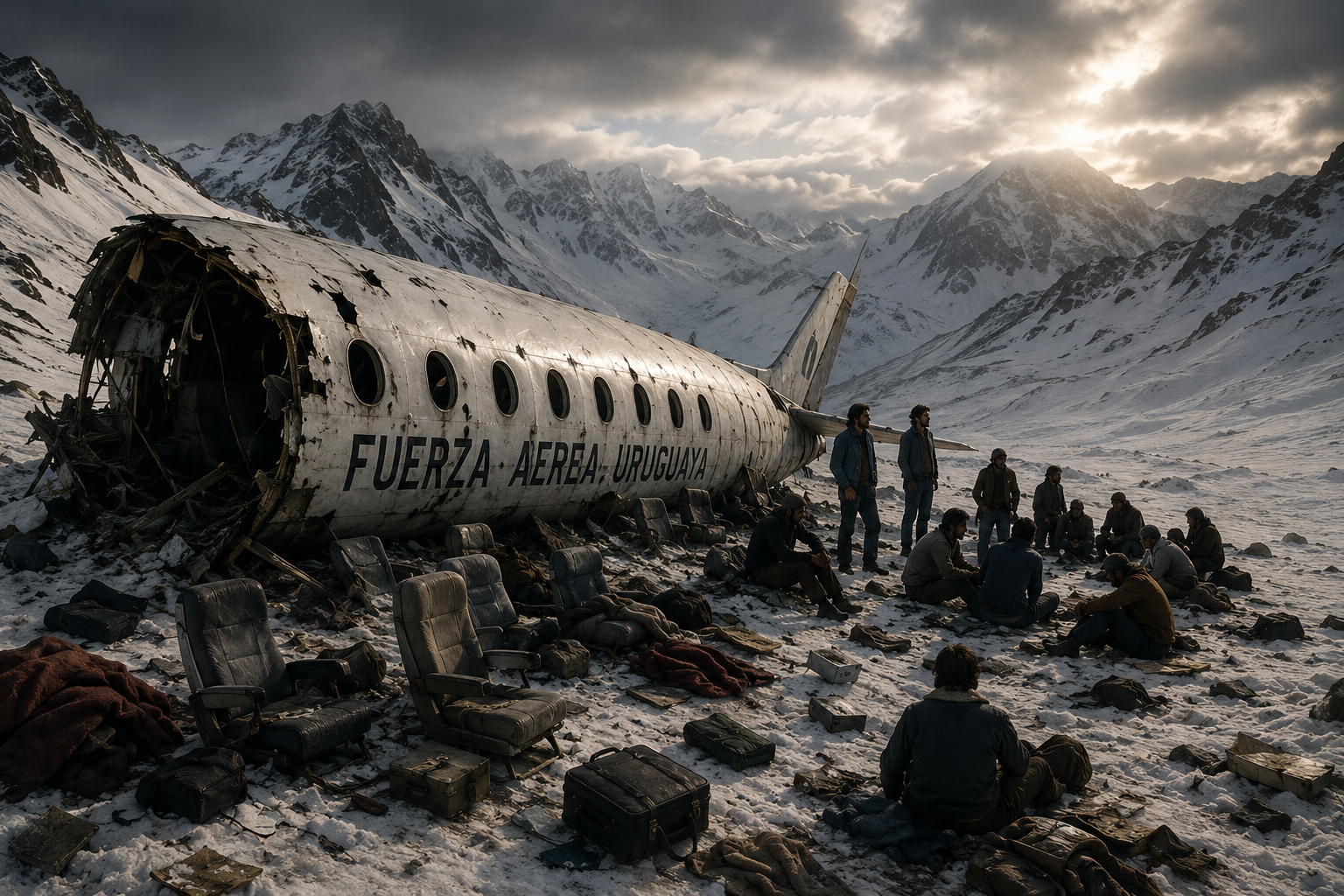
Miracle in the Andes: Survival at the Edge
"October 13, 1972: A plane carrying 45 passengers vanishes into the icy grasp of the Andes Mountains. Seventy-two days later, a tale of endurance emerges against impossible odds."
What Happened?
When a plane carrying a Uruguayan rugby team crashed high in the Andes, the survivors faced freezing temperatures, isolation, avalanches, and dwindling food. With rescue efforts abandoned, they made agonizing choices to stay alive. After more than two months, two survivors crossed the mountains on foot to find help, turning the tragedy into one of the most powerful stories of endurance and human will.
Takeaway
The lesson this story keeps teaching
“Survival often depends on cooperation, adaptation, and the willingness to face impossible realities.”
Why People Are Talking About This
Their story is not just a survival epic; it is a study of humanity under siege. By coming face-to-face with the unimaginable and yet emerging on the other side, they invite us into a dialogue about ethics, human will, and the potent force of collective survival when the stakes are life itself.
This narrative deeply examines what it means to be human at the extreme edge—physically and morally. It questions limits and posits that perhaps survival isn’t only about will; it’s also about redefining what possibilities mean against the odds.
Thread Map
9 entities · 8 connections · Hover to explore, click to inspect
This is the connection map for this thread. Every node is a person, company, event, or idea. The red lines show how they connect. Hover a node to highlight its connections. Click a node to see why it matters to this story.
How We Got Here
Plane Crashes into the Andes Mountains
Uruguayan Air Force Flight 571 crashed into the snowy Andes. From 45 initial passengers, only 29 survived the initial impact. Rescue seemed an impossible dream amidst the white peaks.
Avalanche Further Traps Survivors
An avalanche swept over the crash site, claiming more lives. The survivors' makeshift shelter was buried, tightening conditions and skyrocketing their fears.
Survival Bottleneck
November tested the survivors with dwindling supplies. Confronting starvation, they made the difficult decision to resort to ingestion of flesh from teammates who had perished.
Survivors Begin Trek for Rescue
Realizing that rescue wouldn't come, Nando Parrado, Roberto Canessa, and Antonio Vizintin ventured out for help. Their journey underscored the vital necessity of drastic action for survival.
Reaching Civilisation
Exhausted and malnourished, Parrado and Canessa encountered a Chilean herdsman. Salt of hope dissolved the desolation they endured as he alerted rescuers about the survivors.
Definitive Rescue of Survivors
Helicopters airlifted all remaining survivors from their icy prison. This miracle amidst relentless suffering reached families waiting with mingled anguishes and prayers.
Release of Film 'Alive'
Directed by Frank Marshall, 'Alive: The Miracle of the Andes' portrayed the survivors' harrowing ordeal to a worldwide audience, dramatizing their strife and endurance.
Publication of ‘Miracle in the Andes’
Nando Parrado and Vince Rause published 'Miracle in the Andes.' The memoir delivered intimate insights from Parrado's perspective, capturing grit from survivor narratives.
50th Anniversary Reflections
Survivors and their stories celebrated a milestone turning point. The world took a moment to ponder the narrative and its tenacity-laced lessons in the past half-century.
Wait... Who Is This?
In the 1970s, air travel was an emblem of modern connectivity, linking countries and continents with newfound speed. Uruguay’s rugby team embodied youth, humane bonds, and competitive spirit, as they prepared to travel to Chile for a match by airplane—a conveyance not yet tarnished by disaster in the public's mind. The Andes, described in lore as untamable and fierce, would become an improbable congregation of danger and isolation for the outgoing team.
As Uruguayan Air Force Flight 571 departed for Santiago on October 12, 1972, this team anticipated a game but arrived at a nightmare. However, they brought with them more than unwinnable optimism—they carried unshown grit that revealed itself as days turned into infinite stretches of time. The Andean peaks banqueted on darkness and perpetual snow, matters of insurmountable friction for survival. The crash set in motion a gradual erosion of these young men's former identities, eroded not by choice but by a realm learned only through the teachings of survival—the ultimate school of humanity’s resilient stories.
The context behind their crash encompasses not only a flight gone poorly awry but also the territorial scope that defined this horrific narrative: a bold journey thrust into an unforgiving altitude, commanding them to discover all it truly means to endure when alone with death on someone else’s mountain.
Receipts
Miracle in the Andes - Wikipedia
Miracle of the Andes: How Survivors of the Flight Disaster Struggled to Stay Alive | HISTORY
Society of the Snow: The horrifying story of the 1972 Andes plane crash is also one of survival and generosity
Uruguayan Air Force Flight 571 - Wikipedia
What the Andes Miracle Teaches about Adaptive Leadership - Knowledge at Wharton
My plane crashed in the Andes. Only the unthinkable kept me and the other starving survivors alive | Uruguay | The Guardian
Continue the Rabbit Hole
Each story explores the same idea from a different angle. Follow the connections and discover where the thread leads.







Fictional placeholder content