The Puzzle that Conquered the World
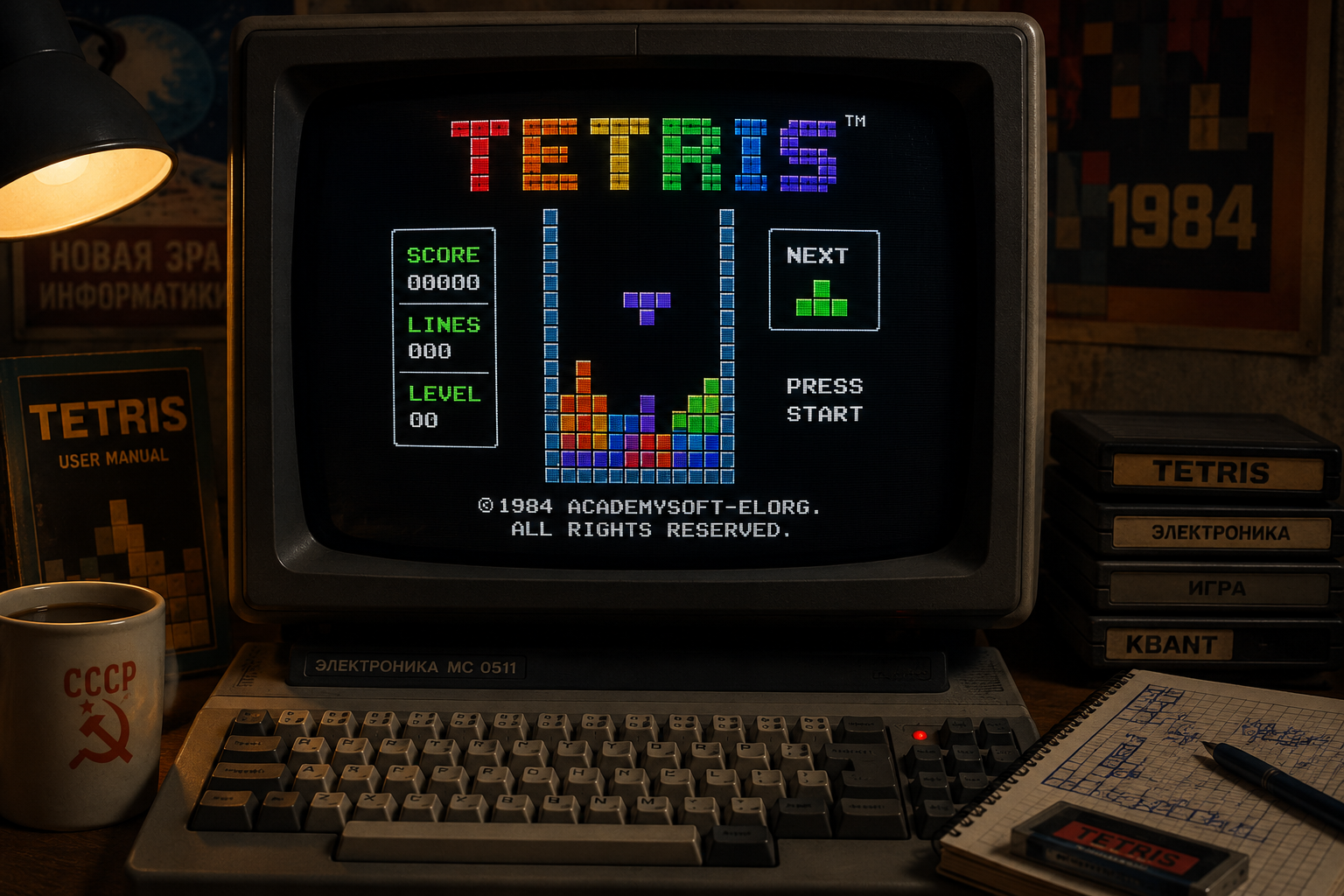
"A Soviet engineer at his desk, unknowingly poised to create a legend. His creation? Tetris — a game that would break barriers and forever alter the gaming landscape."
What Happened?
In a small office in Moscow in 1984, a Soviet engineer named Alexey Pajitnov was not devising war plans or scientific formulas, as one might expect during the throes of the Cold War. Instead, Pajitnov was creating a game he had no idea would one day hypnotize the world: Tetris. The game was simple, yet addictive, involving the alignment of falling geometric shapes into complete rows to clear them. But the simplicity masked a more profound impact—one that would make Tetris a worldwide phenomenon.
Initially, Tetris was confined to the corridors of the Soviet Academy of Sciences, a pastime among colleagues until it crossed geopolitical boundaries. The game's potential was first noticed by Henk Rogers, a Dutch game designer who stumbled upon Tetris at the Consumer Electronics Show in 1988. Instantly captivated, Rogers embarked on a mission to secure the global rights to Tetris, a task complicated by the fact that, in the Soviet Union, software was state property.
Rogers navigated the labyrinth of Soviet bureaucracy, dealing with ELORG, the state organization overseeing the game's distribution. By 1989, he had managed to clinch a deal that would tie Tetris firmly to Nintendo’s new Game Boy, launching it to unprecedented fame. With its success, Tetris reshaped the video game landscape, and by 1996, The Tetris Company was formed to manage its licensing rights, ensuring its legacy as more than just a game.
Tetris’s influence rippled across the globe, selling over 70 million physical copies and more than 425 million digital downloads. It appeared on every conceivable platform, making it the epitome of cross-generational appeal. Developers continue to mimic its elegant concept, yet none have replicated its lasting allure. Tetris didn’t just thrive in obscurity, it vaulted from Moscow’s desks to game consoles worldwide, forever changing how we perceive the simple act of playing.
Takeaway
The lesson this story keeps teaching
“When creativity meets opportunity, even the simplest ideas can transform into worldwide phenomena.”
Why People Are Talking About This
Tetris reshaped not just the gaming industry but expanded the horizon of global cultural exchange during a tense geopolitical era. Its journey from a Soviet lab to a global phenomenon illustrates how creative ideas can flourish across borders, defying political constraints. Its approach to design and addictive gameplay had a profound impact, influencing how games are conceptualized, marketed, and consumed today. For both players and developers, Tetris remains a seminal lesson in the universality of good ideas.
Thread Map
9 entities · 8 connections · Hover to explore, click to inspect
This is the connection map for this thread. Every node is a person, company, event, or idea. The red lines show how they connect. Hover a node to highlight its connections. Click a node to see why it matters to this story.
How We Got Here
The Creation of Tetris
In a dimly lit office in Moscow, Alexey Pajitnov created Tetris at the Soviet Academy of Sciences. This simple yet captivating puzzle game was the spark that would ignite a global phenomenon.
Tetris Goes West
Tetris first made its way out of the Soviet Union and into the hands of players in the West. Various unauthorized copies spread like wildfire, each adding to the game’s mysterious allure.
Licensing Battles Begin
The rights to Tetris became a fiercely contested prize as Western companies clamored to legally distribute the game. ELORG, the Soviet organization, grappled with international corporations over control.
The Nintendo Game Boy Coup
Henk Rogers secured the rights to bundle Tetris with Nintendo’s Game Boy, a move that proved pivotal in making the game a household name. Tetris’s portability took the world by storm.
The Tetris Company is Born
The formation of The Tetris Company consolidated the distribution and management of Tetris licensing rights, formalizing its status in the global market.
Tetris on Mobile
Henk Rogers expanded Tetris into the mobile gaming sphere through Blue Lava Wireless. This move tapped into the nascent mobile gaming market, ensuring Tetris’s relevance in a new era.
Tetris the Grandmaster Ace
The game launches on the Xbox 360 in Japan, showcasing its continued appeal and adaptability in the evolving gaming landscape.
Celebrating 40 Years of Tetris
Celebrations mark Tetris’s enduring legacy and cultural impact, reflecting on how a simple game transcended technological and cultural barriers to become a timeless classic.
Wait... Who Is This?
In the 1980s, the world was divided by the Iron Curtain, separating the Soviet Union from much of the Western world. Amid this geopolitical tension, the idea of video games as a form of entertainment was burgeoning in the West, with companies like Atari and Nintendo capturing imaginations. Behind this curtain, a young Soviet engineer dared to innovate in an environment that valued utilitarianism over creativity. Alexey Pajitnov, fascinated by puzzles since his youth, worked at the Soviet Academy of Sciences, and amidst the function-first culture, he found a way to merge fun with function. He crafted a puzzle game inspired by his love for pentominoes. This was no ordinary game; it eschewed storytelling for pure logic and subtle challenge, forming a digital design rooted in simplicity and skill. As East and West remained at odds, Pajitnov’s creation emerged as a symbol of unity — a puzzle that transcended barriers and politics.
Receipts
Tetris - Wikipedia
The History of Tetris | Tetris
Tetris movie: why the story of the game’s origins is legendary
Why Tetris is the 'perfect' video game
Deals, drama and danger: the incredible true story behind Tetris
Tetris (electronic game) | Sports and Leisure | Research Starters | EBSCO Research
Same Pattern
Different story. Same lesson.

The Chicken That Changed Retail
Costco's $4.99 rotisserie chicken isn't just a meal — it's a strategic masterpiece. The unexpected ripple effects changed retail forever.
The Lab That Invented Tomorrow
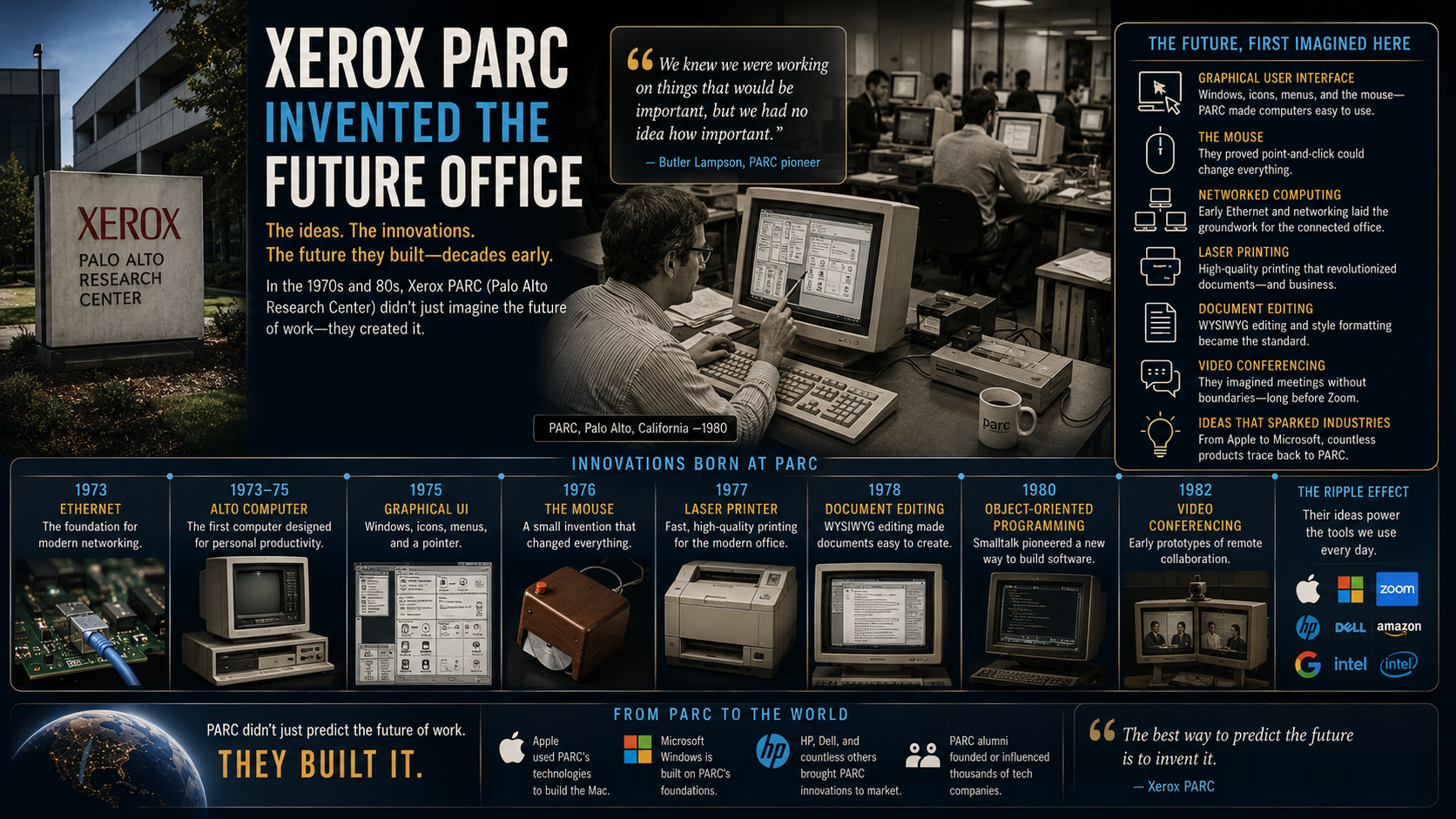
In December 1979, Steve Jobs saw echoes of the future inside Xerox PARC's halls. There, in a secluded lab, lay the blueprint for the modern tech landscape.
The Browser War That Built the Internet
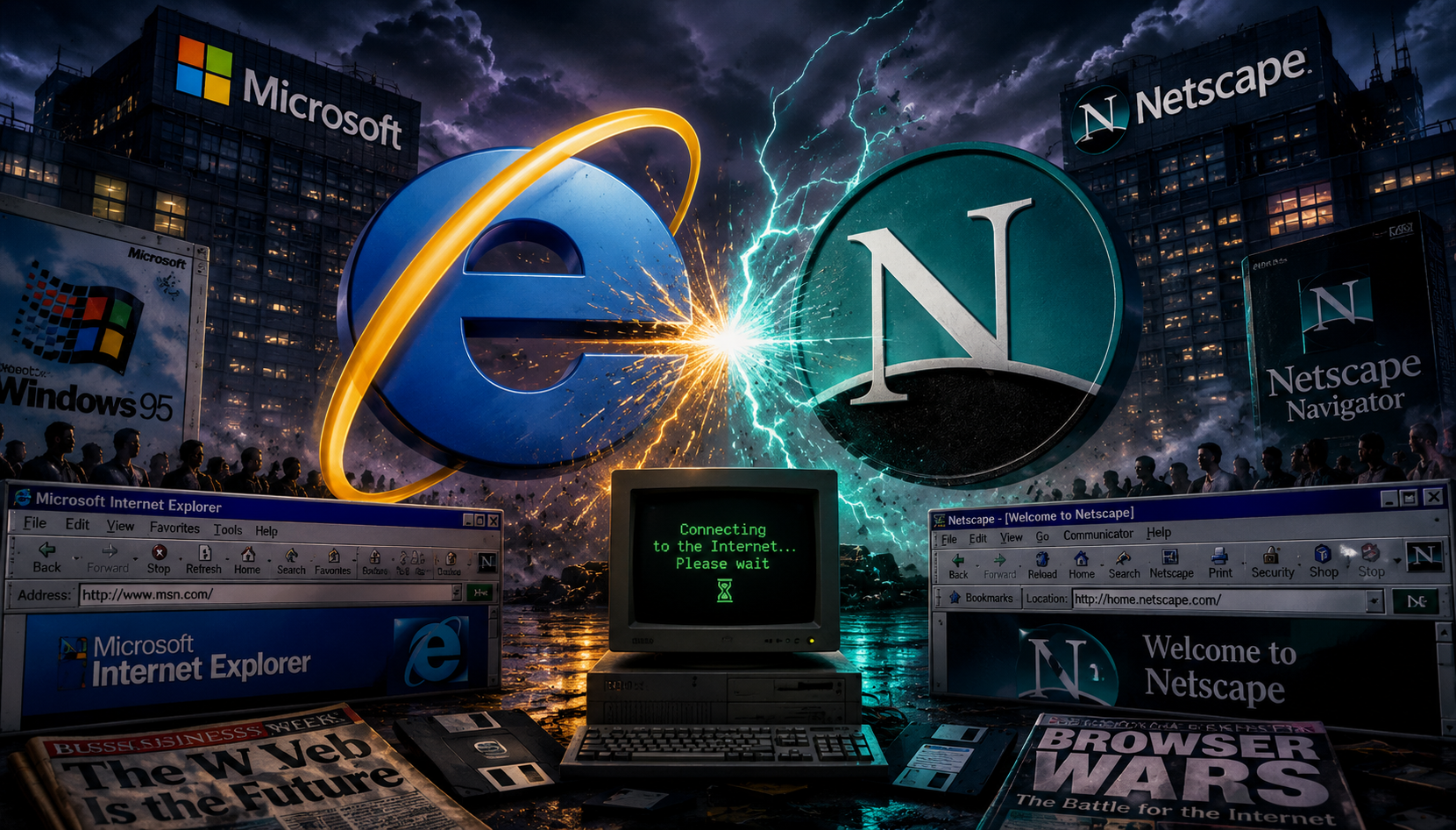
In the mid-1990s, a software battle erupted that would shape how billions accessed information. Few could predict that the victor would soon face its own downfall.

The Wii Gamble That Saved Nintendo
In a world obsessed with graphics and power, Nintendo bet on simplicity. The Wii was laughed at — until it wasn't.

Cracking the Cicada Code
In 2012, an enigmatic online puzzle appeared that promised enlightenment. But who was behind Cicada 3301?

How Google's 20% Time Shaped Innovation
Gmail, the widely-used email service, was born from Google's infamous 20% Time. What else did this unconventional policy unleash?
Continue the Rabbit Hole
Each story explores the same idea from a different angle. Follow the connections and discover where the thread leads.





Fictional placeholder content