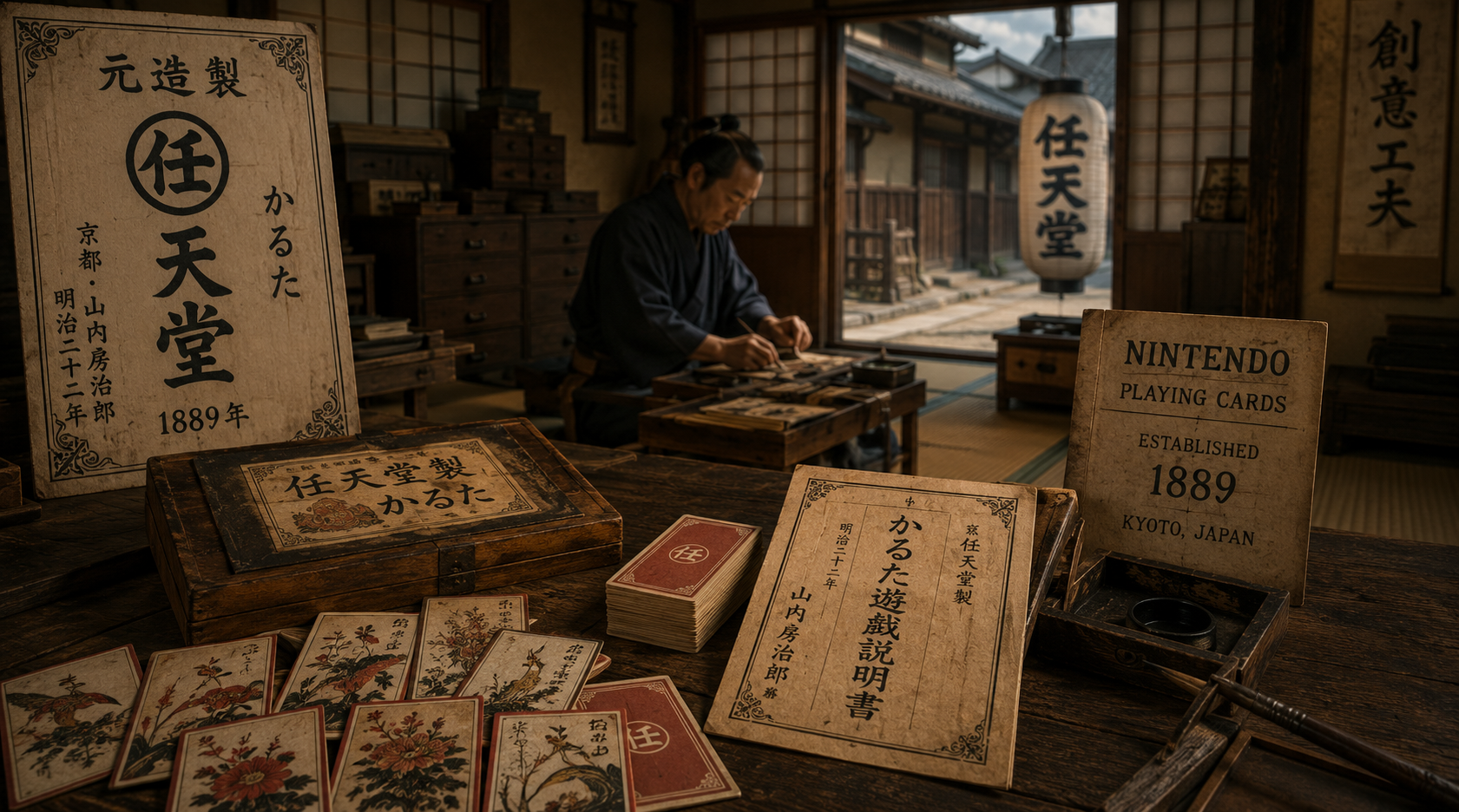
Nintendo's Hidden Century
"Nintendo began over 130 years ago, crafting playing cards, not video games. The company existed before Coca-Cola was even bottled."
What Happened?
In 1889, in the heart of Kyoto, Fusajiro Yamauchi founded Nintendo as a humble card company. This venture, while unassuming, would slowly evolve into a titan of the video gaming world, marking its remarkable journey through bold innovations and strategic foresight. Just three years later, across the ocean, another empire would begin as Coca-Cola emerged. These two behemoths, initially worlds apart in purpose, unknowingly set on a path that would revolutionize global entertainment and refreshments. The stories of these companies underscore a monumental legacy of adaptation and reinvention.
Takeaway
The lesson this story keeps teaching
“Enduring success demands not just innovation, but radical transformation when the world's pulse shifts.”
Why People Are Talking About This
Nintendo and Coca-Cola stand as titans of adaptability, their stories showcasing relentless reinvention. Nintendo's metamorphosis from crafting cards to dominating digital playgrounds mirrors broader cultural adaptability, hinting at a universal truth: survival hinges on transformation. For Coca-Cola, the reshaped beverage landscape often demanded unprecedented pivots — a testament to enduring relevance.
These narratives remind us that legacy brands are immortalized not through stagnation, but through evolving at each cultural juncture. Today, as technology propels industries forward, these stories underline an imperative for modern enterprises: transcend initial success and reimagine identity with the times.
Thread Map
9 entities · 8 connections · Hover to explore, click to inspect
This is the connection map for this thread. Every node is a person, company, event, or idea. The red lines show how they connect. Hover a node to highlight its connections. Click a node to see why it matters to this story.
How We Got Here
Fusajiro Yamauchi Founds Nintendo
Fusajiro Yamauchi launches Nintendo in Kyoto, Japan, creating handmade Hanafuda playing cards. This beginning quietly marks an era before Nintendo's console days.
Coca-Cola Takes Its First Steps
In Atlanta, Georgia, The Coca-Cola Company is founded by Asa Candler. The beverage, originally meant as a medicinal tonic, starts capturing the market deeply.
Nintendo Branches Out
Nintendo, under Hiroshi Yamauchi's leadership, diversifies into toys and eventually finds success with the Love Tester toy, laying groundwork for entry into electronics.
Nintendo Enters the Global Stage
Nintendo debuts the Game & Watch series, creating a new handheld gaming era. This success sets the stage for their future dominance in the video game industry.
Coca-Cola's New Coke Fiasco
Coca-Cola attempts a major recipe change, launching 'New Coke.' The change results in a public backlash and is quickly reversed, becoming a marketing cautionary tale.
Nintendo Releases The NES
Nintendo launches the Nintendo Entertainment System in America. This console redefines gaming, featuring iconic characters like Mario and Zelda and changes the retail landscape.
Coca-Cola Catalan Label Controversy
In Barcelona, the Platform for the Catalan Language protests Coca-Cola's exclusion of Catalan labels, sparking debate over corporate responsibility to local cultures.
Nintendo Launches the Nintendo 64
The Nintendo 64 introduces a leap in graphics and gaming experience, featuring hits like Super Mario 64, asserting Nintendo's renown in the gaming industry.
Coca-Cola Catalan Label Update
Coca-Cola still receives criticism for its labeling practices, failing to include Catalan text on its bottles, showing corporate struggles with cultural adaptation.
Wait... Who Is This?
Nestled in the streets of Kyoto, circa 1889, Fusajiro Yamauchi paints intricate lines onto what seem like ordinary cards. But these humble Hanafuda creations, born in a Japan at the cusp of modernity, would lay the groundwork for what some might erroneously dismiss as mere children's play. Yamauchi's keen embrace of this pastime, set against a backdrop of cultural transition, hinted at something more profound — the dawn of an entertainment revolution.
As Japanese society wrestled with Western influence, Yamauchi's venture carved out a unique space. Hanafuda, with its vibrant designs and social allure, wasn't just about gaming; it was about reshaping leisure, subtly redefining the mundane. It was a stroke of genius in its simplicity, ensuring the cards would resonate beyond the boundaries of Kyoto.
An ocean away, another revolution was bubbling in Atlanta, where Dr. John S. Pemberton concocted a tonic destined to quench global thirsts. While Nintendo played a long game of growth and adaptation, Coca-Cola effervesced with immediate allure — two divergent paths that ultimately navigated a similarly transformative quest: constant reinvention.
Each company, emergent from different traditions, found itself aligned over time in a dance with innovation — a dance history would not soon forget.
Receipts
Continue the Rabbit Hole
Each story explores the same idea from a different angle. Follow the connections and discover where the thread leads.



Fictional placeholder content