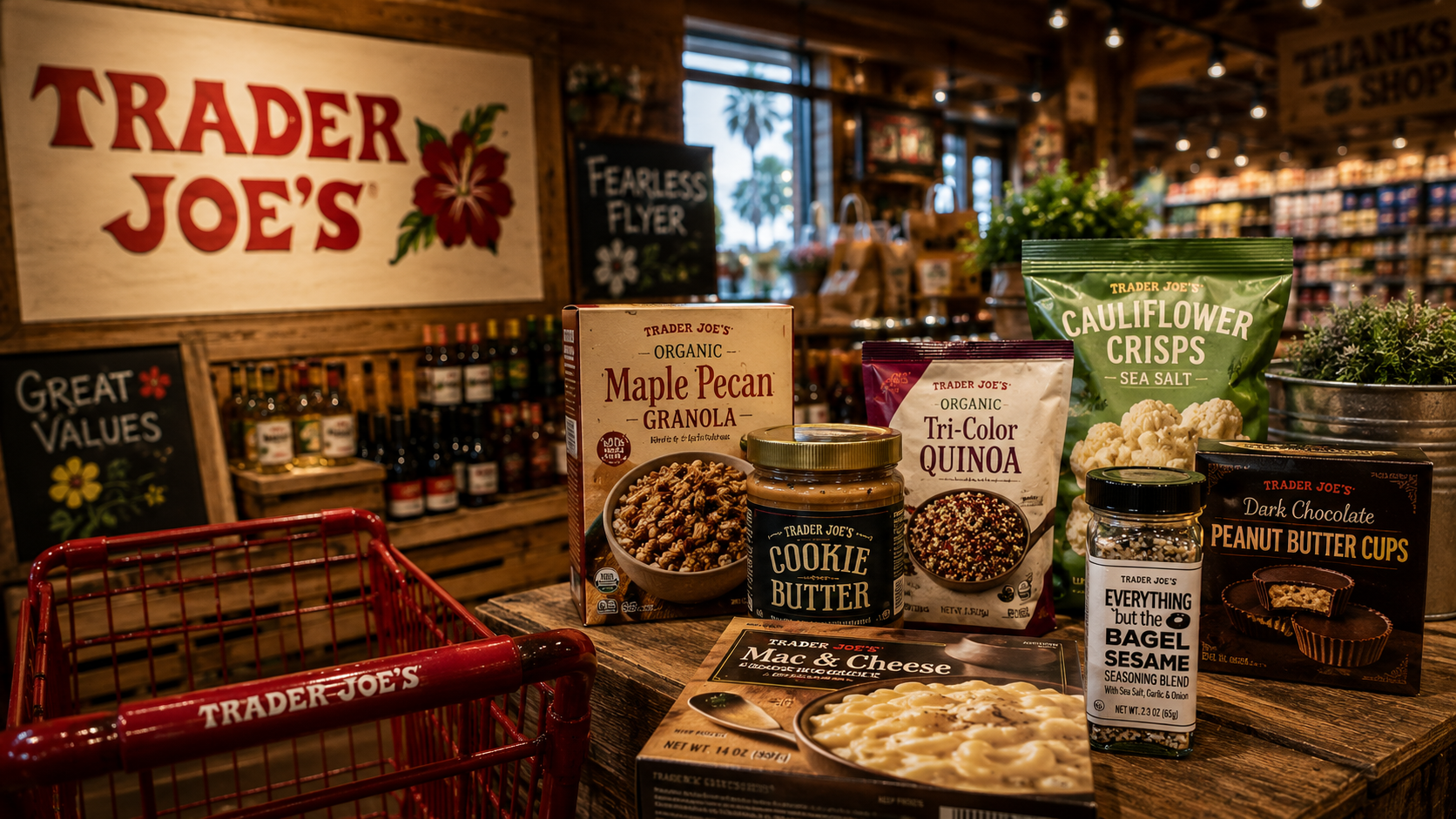
The Secret Behind Trader Joe's Private Labels
"Trader Joe's shelves are filled with unique products, yet the true origins are shrouded in secrecy. Why does this grocery store's strategy captivate so many?"
What Happened?
In the bustling world of grocery retail, Trader Joe's stands apart, not just as a quirky neighborhood store but as a master of its own narrative. Behind its shelves laden with vibrant, private-label offerings lies a strategy as cunning as it is concealed. The secret? Trader Joe’s artfully forges intimate supplier relationships, ensuring quality without the typical brand markups. By removing slotting fees and advertising costs, Trader Joe’s can challenge the conventions of retail pricing, achieving something extraordinary: gourmet at everyday prices.
But who truly supplies these cult-favorite products? That remains shrouded in mystery. While most retailers boast transparency, Trader Joe’s delights in discretion. Its private-label items comprise a whopping 80% of inventory, yet the identities of many of its producers are locked tightly away, revealed only through occasional FDA recalls. This intrigue breeds loyalty—and speculation.
The origin of this strategy is rooted in Joe Coulombe's visionary pivot during the 1970s. Recognizing the pitfalls of conventional brand dependence, Coulombe leaned into crafting a cohesive brand identity centered on private labels. Granola was merely the first step. By the late 1980s, Trader Joe's shelves were primarily stocked with its own inventive twists on international cuisines, transforming the store into a culinary destination.
Today, the chain’s approach resonates far beyond just getting groceries. It’s about discovery, surprise, and a touch of the exotic. When a new jar of Lime Leaf Sambal lands on the shelf, it’s not just a condiment; it’s the result of a meticulous dance of collaboration and secrecy. With each new product, Trader Joe's invites its customers to be a part of the mystery, one new flavor at a time. And that might be the most masterful branding of all.
Takeaway
The lesson this story keeps teaching
“Trader Joe's success lies in transforming hidden suppliers into a storytelling engine — giving narrative precedence over brand identity.”
Why People Are Talking About This
Trader Joe's unconventional strategy offers a stark contrast to traditional branding, demonstrating how cultivating narrative and mystery can outperform brand transparency. This shift is reshaping consumer markets, hinting that customers often prioritize intrigue over transparency.
Moreover, this approach reveals a significant shift in consumer behavior where stories, not just products, wield influence. In a realm where knowledge and discoveries take precedence, the Trader Joe's model continually challenges the framework of transparency in retail, essentially redefining what authenticity means in the consumer experience.
Thread Map
9 entities · 8 connections · Hover to explore, click to inspect
This is the connection map for this thread. Every node is a person, company, event, or idea. The red lines show how they connect. Hover a node to highlight its connections. Click a node to see why it matters to this story.
How We Got Here
A Reluctant Store Owner Disrupts Industry
Joe Coulombe opens the first Trader Joe's in Pasadena, California, planting the seeds for an innovative retail strategy centered around privately labeled products and exclusivity.
Private Labels Take Center Stage
Trader Joe’s introduces granola as its first private label product, setting the stage for a strategic pivot away from traditional branded goods.
A Taste for the Exotic
Trader Joe’s expands its private label strategy into international-sounding products, capturing consumer interest with its exotic appeal and further distancing itself from mainstream options.
Reaching the Peak of Private Labels
By this time, about 80% of products sold in Trader Joe’s are private label, marking a pivotal point in the store's branding and marketing journey.
The Eater Investigation
Eater's investigation reveals the connection between Trader Joe’s products and popular brands, piquing consumer curiosity rather than disillusionment.
Embarking on New Ventures
Trader Joe's partners with Auria's Malaysian Kitchen, highlighting its ongoing commitment to collaboration with distinctive small businesses.
Controversy Over Ethnic Branding
Amidst the George Floyd protests, Trader Joe's faces criticism concerning the ethnic branding of its products, pushing the company to reconsider some of its labeling.
Trader Joe’s Garners a Cult Following
Forbes highlights the fervent consumer loyalty at Trader Joe’s, cementing its status as not just a grocery chain, but a cultural phenomenon.
Wait... Who Is This?
Trader Joe's broke away from traditional supermarket chains in 1967, heralding an era where private label strategy didn't just survive but thrived. Joe Coulombe pioneered a distinct approach by prioritizing originality over mainstream appeal. This strategy quickly evolved, standing Trader Joe's apart.
In 1972, when Trader Joe’s launched its first proprietary granola, no one anticipated the repercussions that would follow. With larger retail conglomerates largely dominating the supermarket realm, Coulombe maneuvered deftly, ensuring Trader Joe's offerings spoke to curious and discerning consumers in a manner previously unseen.
The retailer’s penchant for exotic intrigue manifested from a need to stand out. As wine imported from around the world drew customer interest, Trader Joe’s further differentiated itself through increasingly eclectic product lines. Customers relished this element of mystery, fueling a devotion that saw venues across the nation flourish.
Underneath Trader Joe’s whimsical branding was a serious business plan — one that understood shoppers didn't want to just buy groceries, they wanted to experience discovery. These themes of unique charm and calculated secrecy became Trader Joe’s trump card in the intricate game of retail.
Receipts
Trader Joe’s: Building a Cult Brand Through Private Label Innovation | by Shah Mohammed | Medium
ICYMI: What is a Private Label, and Why Does ...
[PDF] Trader Joe's | Worldly Partners
Inside Trader Joe’s: The Genius Strategy Behind Its Cult Following (and Low Prices)
What Brands Are Actually Behind Trader Joe’s Snacks? | Eater
How Trader Joe’s Became A Grocery Cult
Continue the Rabbit Hole
Each story explores the same idea from a different angle. Follow the connections and discover where the thread leads.






Fictional placeholder content