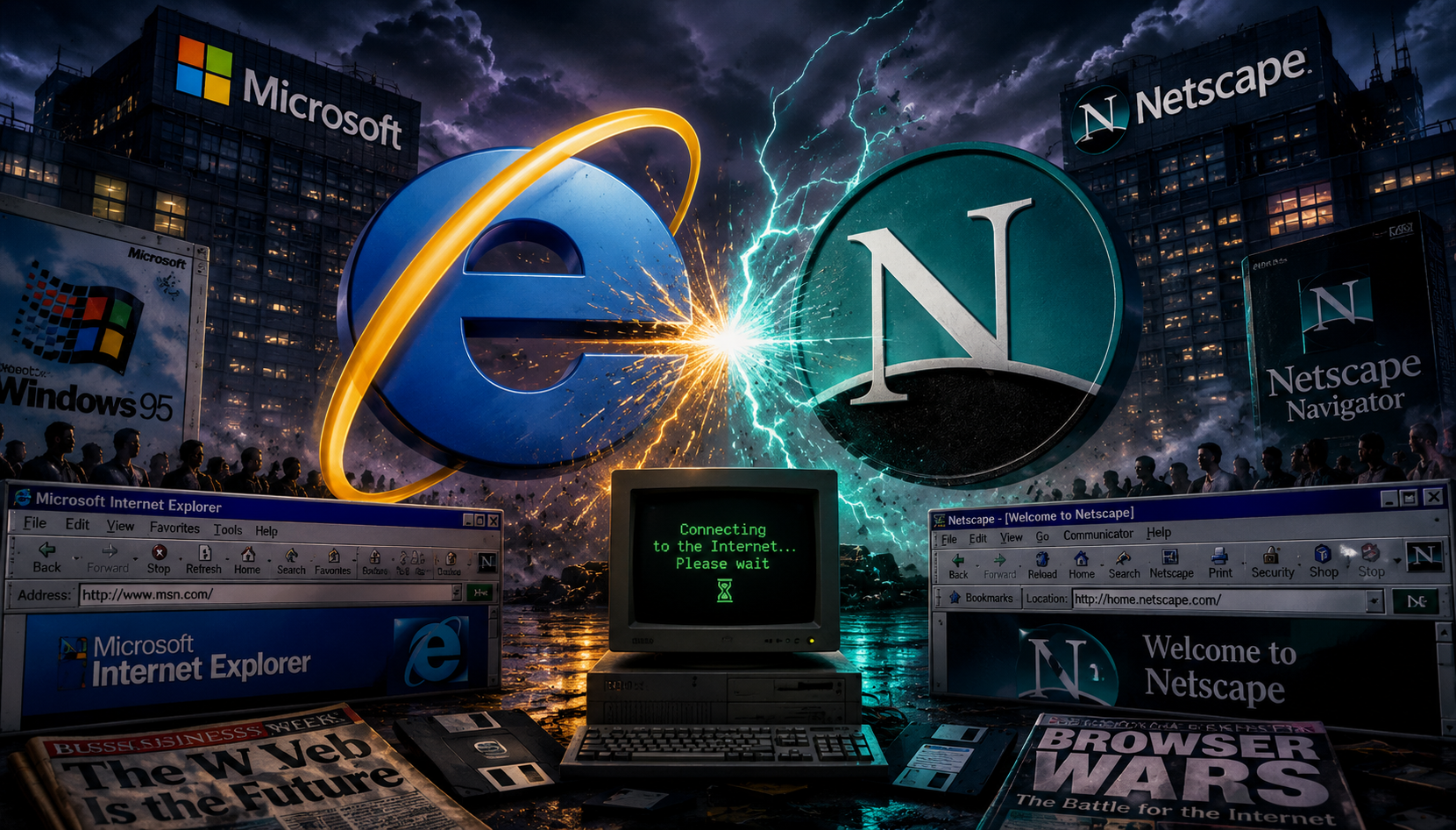
The Browser War That Built the Internet
"In the mid-1990s, a software battle erupted that would shape how billions accessed information. Few could predict that the victor would soon face its own downfall."
What Happened?
A high-stakes digital race was unfolding, invisible yet monumental. In 1995, Netscape Navigator sat triumphantly on the throne of web browsers, capturing the imagination of users eager to explore the digital frontier. But the celebration was short-lived. Behind closed doors in Redmond, Washington, a formidable challenge was taking shape. Microsoft, aiming to dominate the internet's gateway, was readying Internet Explorer. With Windows 95, they bundled their browser for free, a strategic gambit to seize control from Netscape.
In this battle for browser superiority, numbers weren't just figures; they were weapons. By the end of 1995, Microsoft had shipped over 40 million copies of Windows 95 with Internet Explorer, posing a severe threat to Netscape. Yet, the real clash wasn't just about technology. It was a confrontation of visions: open standards championed by Netscape versus Microsoft’s walled garden strategy, which risked reshaping the web into a proprietary landscape.
The tension boiled over into courtroom drama. In 2001, Microsoft's strategy backfired spectacularly in a landmark antitrust lawsuit. The decision to tie Internet Explorer to Windows led to accusations of monopolistic practices, changing the corporate battleground forever.
As the sun set on the first browser war, Netscape was but a shadow of its former self, acquired by AOL in 1999. Yet, out of its ashes rose Mozilla Firefox, keeping the spirit of open web alive. Today, the internet exists as a vast open space partly because of this pivotal struggle. The war for control of the browser was fierce, but the legacy it left behind is an ever-expanding digital universe where freedom and rivalry coalesce in every click.
Takeaway
The lesson this story keeps teaching
“Tech battles can trigger innovation but also bring unexpected vulnerabilities to once-indomitable giants.”
Why People Are Talking About This
The outcome of the browser wars dramatically altered how people access and interact with information online, showing the tech industry's penchant for rapid innovation and revealing the vulnerabilities in previously unassailable giants like Microsoft. This saga is a vital lesson in how fierce competition drives technology forward while reminding us that the landscape of power is ever-changing.
Thread Map
10 entities · 9 connections · Hover to explore, click to inspect
This is the connection map for this thread. Every node is a person, company, event, or idea. The red lines show how they connect. Hover a node to highlight its connections. Click a node to see why it matters to this story.
How We Got Here
Mosaic Connects Words and Pictures
Marc Andreessen and Eric Bina at the National Center for Supercomputing Applications released Mosaic, the first graphical web browser able to display text and images on the same page. This innovation transformed the internet from a text-based curiosity into an accessible visual environment.
Netscape Launches Navigator
Netscape Communications released Netscape Navigator, rapidly gaining popularity as the preferred browser due to its user-friendly interface and extended internet capabilities. It effectively opened the web to a general audience for the first time.
Microsoft Joins the Fray
Microsoft licensed Mosaic and launched Internet Explorer 1.0 as part of the Windows 95 Plus! Pack. Recognizing the growing importance of the web, Microsoft looked to carve out its space in the burgeoning digital ecosystem.
Internet Explorer Gains Ground
With an aggressive strategy of bundling Internet Explorer with Windows operating systems, Microsoft quickly eroded Netscape’s market lead, setting the stage for domination in the browser space.
Netscape Open-Source Strategy
In a bid to compete against Microsoft's dominance, Netscape announced that it would offer Navigator for free and made its source code available, betting on an open-source future to regain market position.
Microsoft Faces Antitrust Lawsuit
Microsoft was found guilty of monopolistic practices by the U.S. Department of Justice, a major legal battle stressing the integration of Internet Explorer with the Windows OS.
HTML5 Redefines Web Standards
HTML5 was introduced as a new web development standard, enabling browsers to deliver more dynamic and robust applications without relying on additional plug-ins.
Google Chrome Secures Dominance
After years of refinement and user-centered upgrades, Google's Chrome browser emerged victorious in the second browser war, highlighting the importance of speed and usability in capturing market share.
AI-Powered Browsers Announced
OpenAI and Perplexity introduced a new generation of browsers powered by AI, heralding a new era of intuitive, personalized web interactions, setting yet another phase in the browser evolution.
Wait... Who Is This?
To appreciate the tectonic nature of the original browser wars requires understanding the shifting sands of a digital-bound world in the 1990s. The wide-eyed optimism of the tech boom realized a future that once seemed fictional, crafting new paradigms at dawn. Mosaic led this revolution quietly in the halls of academia, setting down roots as the first web browser to feature images with text, paving the way for what came next.
Netscape's Navigator soon followed, ushering everyday users onto the web. But as it soared, industry titan Microsoft eyed the burgeoning platform. To let a browser dictate future computing standards was to cede control indefinitely. Microsoft's entry with Internet Explorer in the browser arena wasn't just business — it was viewed as existential for the tech giant. The battle that ensued dramatically shaped a previously unimaginable digital universe.
Receipts
Browser History: Epic power struggles that brought us ... - Firefox
Understanding the Browser Wars: Netscape vs. Internet Explorer
The History of the Browser Wars: When Netscape Met Microsoft - The History of the Web
The Browser Wars: How Microsoft Ruthlessly Crushed Netscape Then Got DESTROYED by Google
30 Years of Browser War: From Netscape to AI Browsers
Same Pattern
Different story. Same lesson.
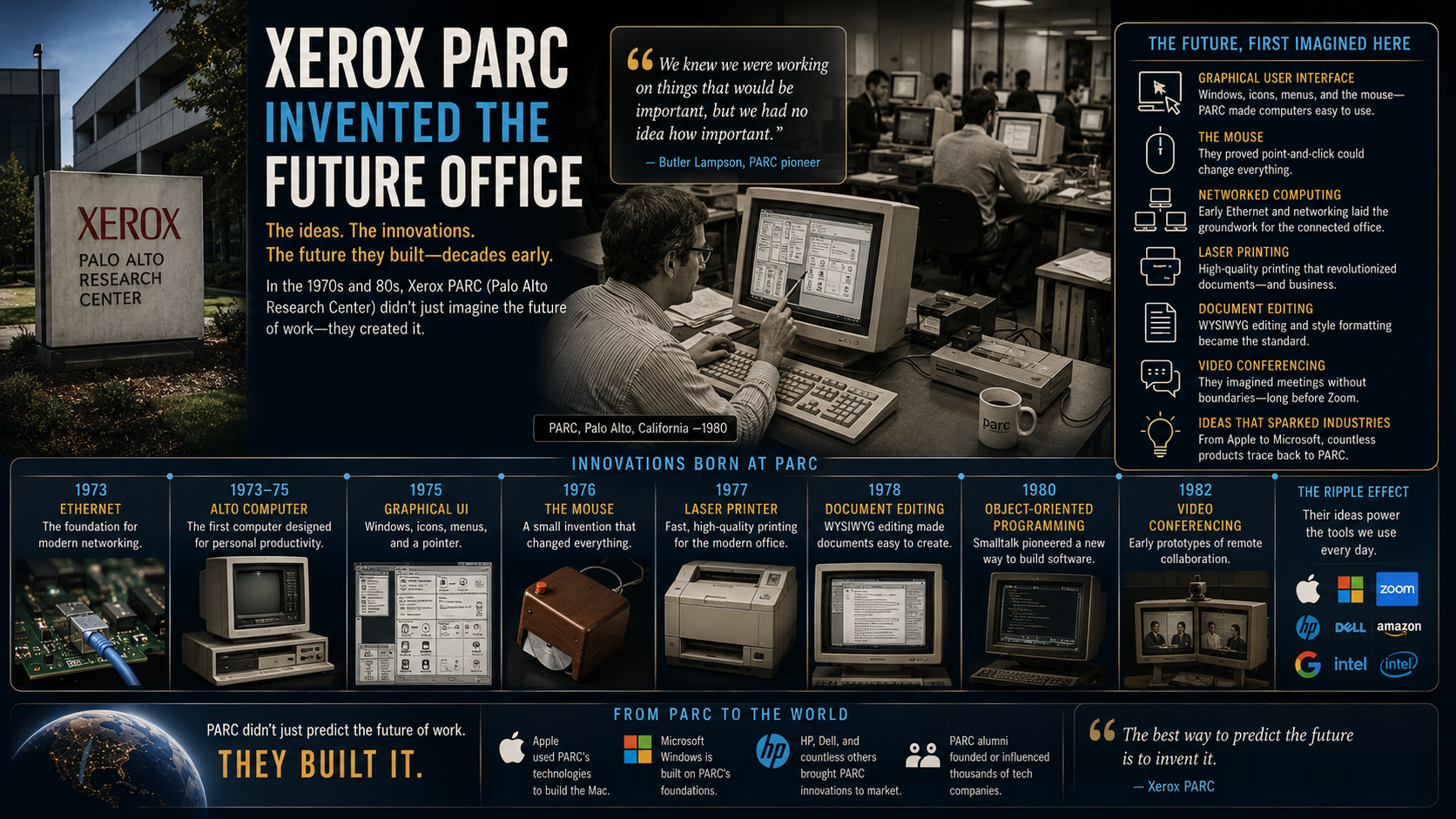
The Lab That Invented Tomorrow
In December 1979, Steve Jobs saw echoes of the future inside Xerox PARC's halls. There, in a secluded lab, lay the blueprint for the modern tech landscape.

The Chicken That Changed Retail
Costco's $4.99 rotisserie chicken isn't just a meal — it's a strategic masterpiece. The unexpected ripple effects changed retail forever.
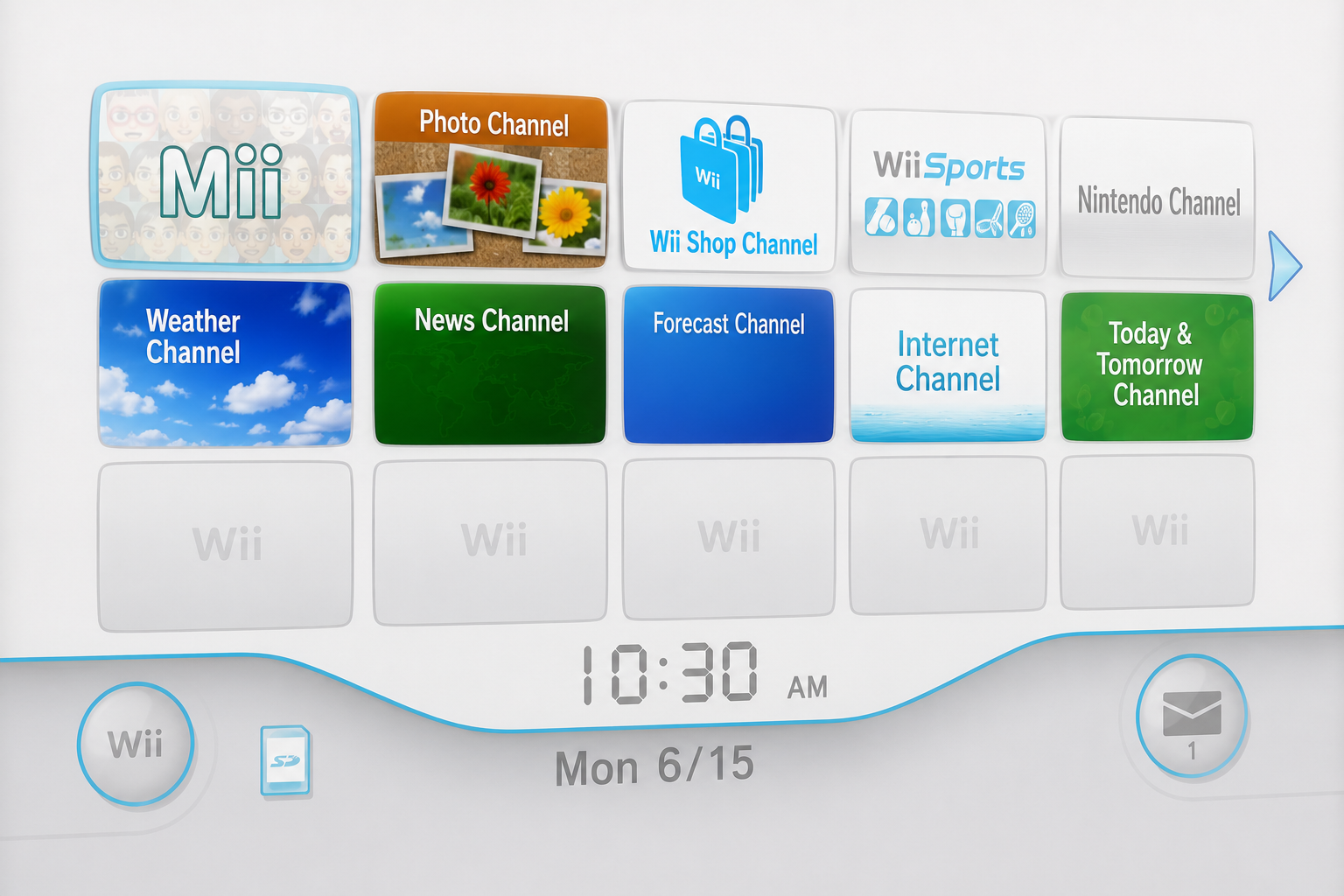
The Wii Gamble That Saved Nintendo
In a world obsessed with graphics and power, Nintendo bet on simplicity. The Wii was laughed at — until it wasn't.
Pixar's Radical Feedback Loop
In a stark, unadorned room, some of the most powerful voices in animation face off with ruthless honesty. Their weapons? Brutal feedback that molds raw ideas into cinematic gold.
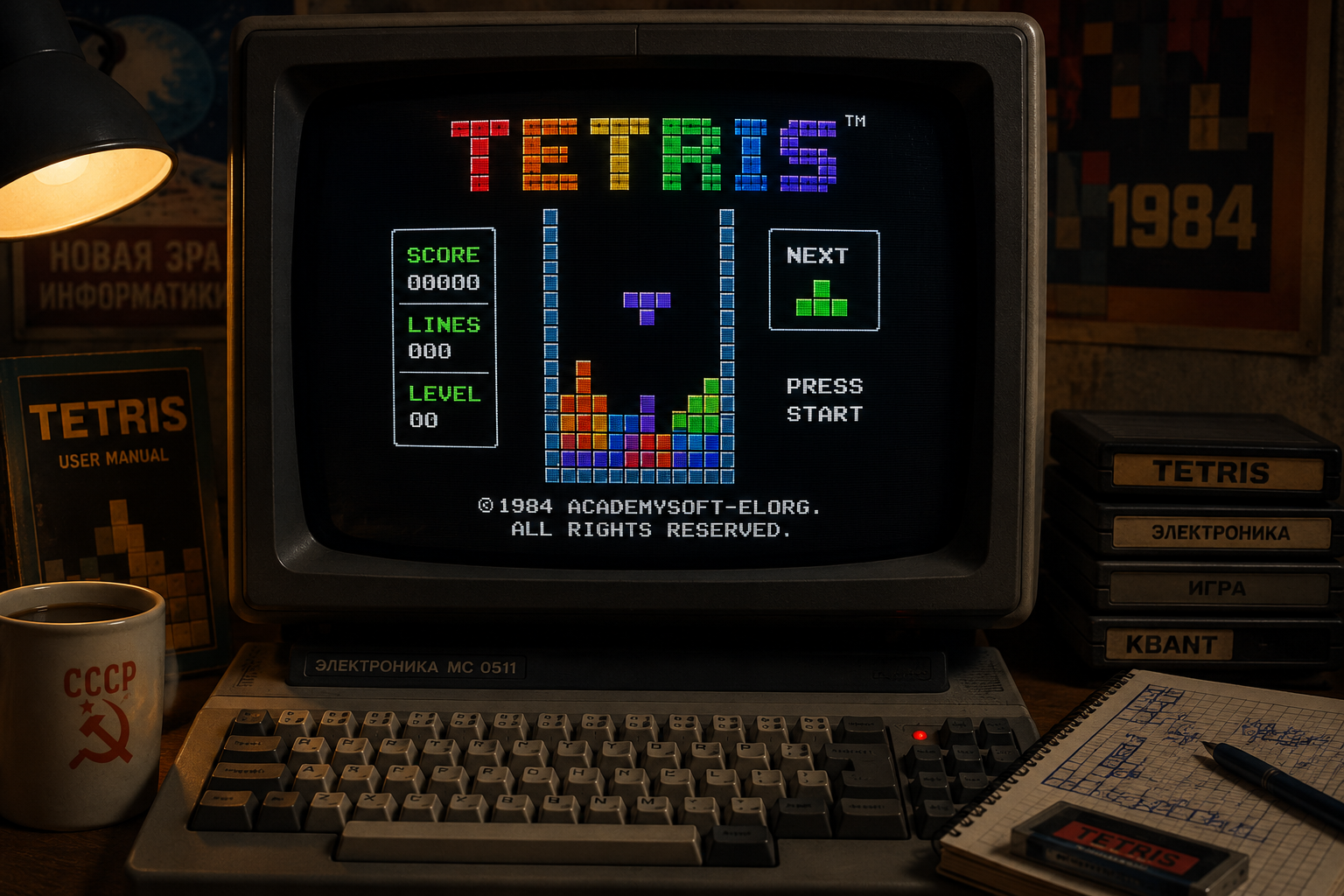
The Puzzle that Conquered the World
A Soviet engineer at his desk, unknowingly poised to create a legend. His creation? Tetris — a game that would break barriers and forever alter the gaming landscape.

Minority Report's Prescient Touchscreen Reality
In 2002, Hollywood imagined a future of seamless touchscreen interfaces. Today, Steven Spielberg's vision feels eerily prescient as technology catches up.
Continue the Rabbit Hole
Each story explores the same idea from a different angle. Follow the connections and discover where the thread leads.

Fictional placeholder content