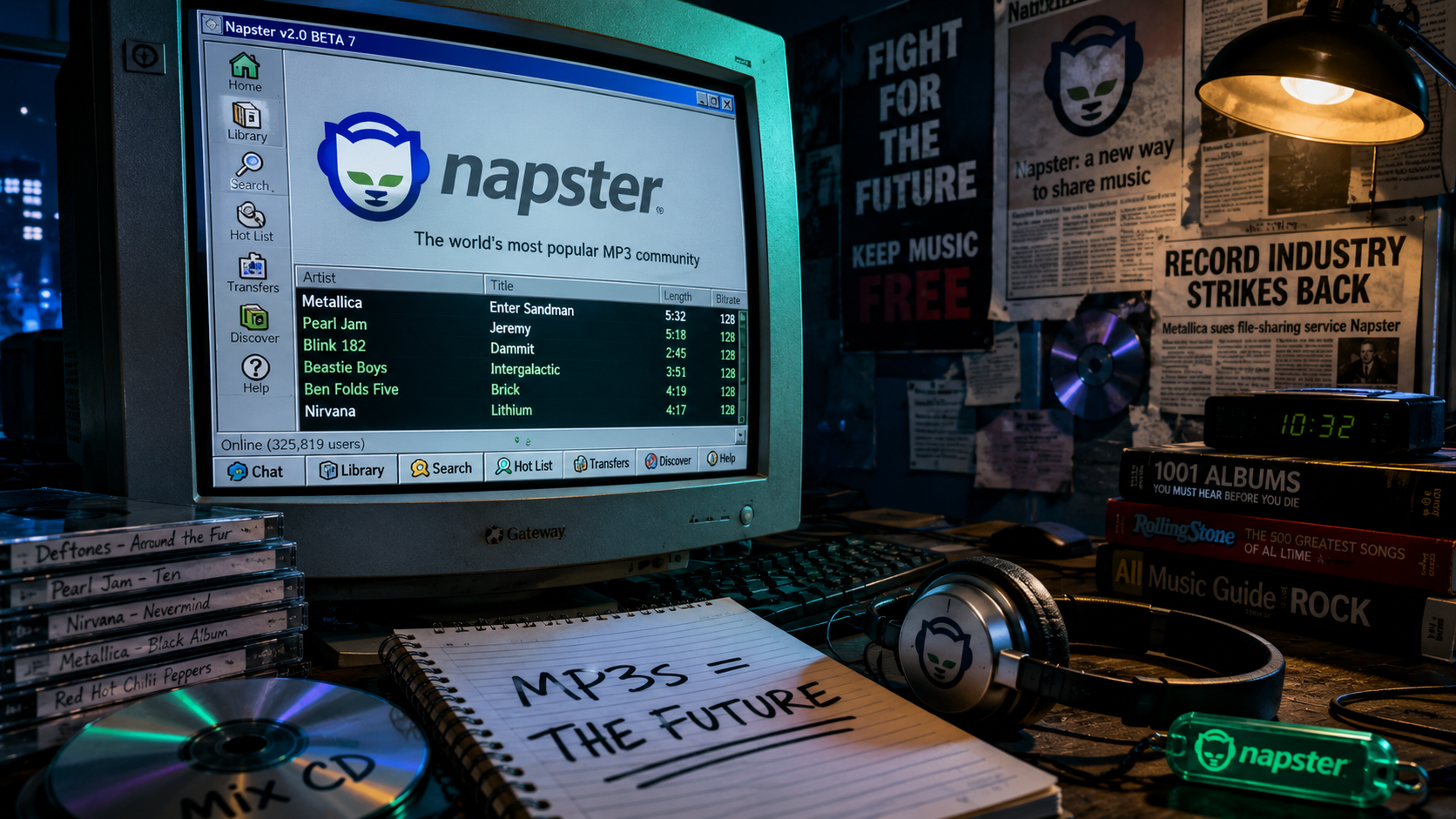
The Day Napster Changed Music Forever
"In a college dorm, a 19-year-old conceived a platform that would forever disrupt the multi-billion dollar music industry. And almost overnight, Napster became both a cultural phenomenon and a legal lightning rod."
What Happened?
On a balmy June day in 1999, the world turned a corner that no one saw coming. A 19-year-old college dropout named Shawn Fanning launched Napster from what seemed like nowhere, and suddenly a platform existed where music was liberated for the masses. Or, as record companies lamented, music was pilfered from their coffers. The concept was simple yet groundbreaking: connect millions of users directly in a peer-to-peer network and let them swap songs faster than they ever could by burning mix CDs. By the end of that year, Napster had three million songs being traded amongst its users.
But not everyone was thrilled. Within months, this seismic shift brought Metallica's Lars Ulrich pounding at the doors of justice, demanding reckoning for what was, in many artists' eyes, theft. On March 6, 2001, Judge Marilyn Patel's injunction against Napster was perhaps inevitable, standing as a barricade against what the industry called unbridled piracy. Napster flinched, but the ripple effect was unstoppable.
The curtain fell on Napster in July 2001 after legal battles bled the company dry. Yet, even as the plug was pulled, the legacy rippled outward. Napster set the stage for Apple’s iTunes and the rise of legitimate digital music distribution. With songs priced at $0.99 and a library larger than any store could stock, Steve Jobs entered a battleground with a solution the industry couldn't resist.
The chaos Napster unleashed paved the way for a world where music flows freely once more, leaving brick-and-mortar sales to gather dust and shaping digital freedom as the new revolution. The magic Fanning and Parker conjured in 1999 sparked a chain reaction that industries are still adapting to. Napster didn’t just change how we get music. It reshaped what getting music means.
Takeaway
The lesson this story keeps teaching
“Napster demonstrated how quickly technology can disrupt entrenched industries, revealing both the potential for innovation and the chaos it can unleash.”
Why People Are Talking About This
Napster didn't just change music — it reshaped the principles of digital ownership and consumption. The ripple effect transformed media industries, prompting legal reform and the birth of subscription models that dominate today. More than a tech service, Napster signaled a paradigm shift in how industries adapt — or fail to adapt — to technological advances and consumer demands.
Thread Map
9 entities · 8 connections · Hover to explore, click to inspect
This is the connection map for this thread. Every node is a person, company, event, or idea. The red lines show how they connect. Hover a node to highlight its connections. Click a node to see why it matters to this story.
How We Got Here
Napster Launches and Music is Never the Same
On June 1, 1999, 19-year-old Shawn Fanning launched Napster. It was the dawn of a new era for music accessibility as users could now share music files for free, transforming the digital space.
Metallica Sues Napster
April marked one of Napster's defining moments as Metallica, feeling the threat to their music rights, filed a lawsuit against them for unauthorized distribution. This lawsuit began Napster's continuous legal troubles.
Judge Patel's Ruling Against Napster
Judge Marilyn Patel demanded Napster remove copyrighted files within 72 hours. Her decision set the legal precedent for digital content, marking Napster's looming shutdown.
Napster Shuts Down
After failing to comply with legal stipulations, Napster shuttered its file-sharing network in July 2001. Its operations had been fatally undermined by legal battles and mounting copyright claims.
Napster Agrees to Settlement
Napster concluded its legal disputes with a $26 million settlement for past unauthorized uses of music. This resolution was combined with a $10 million future licensing advance, but it was already too late.
Roxio Acquires Napster's Remnants
The digital media company Roxio bought Napster's assets for $5.3 million, rebranding it into Napster 2.0, yet the essence of the original service was absent.
Rhapsody Revives Napster as Streaming Service
Rhapsody acquired Napster, transitioning it into a respected music streaming service. The brand continued in a new form, adapting to the digital music era.
Napster's New Chapter with Infinite Reality
Infinite Reality purchased Napster for $207 million, planning to transform it into a Music Social Networking Platform, demonstrating its enduring legacy in digital innovation.
Wait... Who Is This?
In the late 1990s, CDs were the all-powerful currency of the music world. Jewel cases lined the shelves of fans and collectors alike, each one an artifact of popular culture. Buying a CD meant owning a piece of the artist you adored, and this notion was cornerstone to the industry’s prosperity. At this time, the internet was burgeoning, but its full potential remained out of sight. In dorm rooms and libraries, the whisper of digital potential was becoming an organized chorus.
It was within this backdrop that Napster emerged, building on a quiet subculture of digital sharing that few understood. Young tech enthusiasts saw freedom in digits, unconstrained by the confines of physical media — a vision dismissed by the very industry Napster was about to unsettle. Little did anyone know, from these humble beginnings in college dorms and tech forums, would come an upheaval that would fundamentally alter how music is listened to, shared, and valued.
Receipts
Napster turns 20: How it changed the music industry
The Music Industry’s Fight Against Napster – Part 1: Napster’s Rise to Fame – Music Business Research
25 years ago, Napster changed how we listen to music forever : NPR
The death spiral of Napster begins | March 6, 2001 | HISTORY
The Music Industry’s Fight Against Napster – Part 2: Napster’s Demise – Music Business Research
Napster - Wikipedia
Napster: The Death, Rebirth, and Enduring Legacy - Los Angeles Times
Same Pattern
Different story. Same lesson.
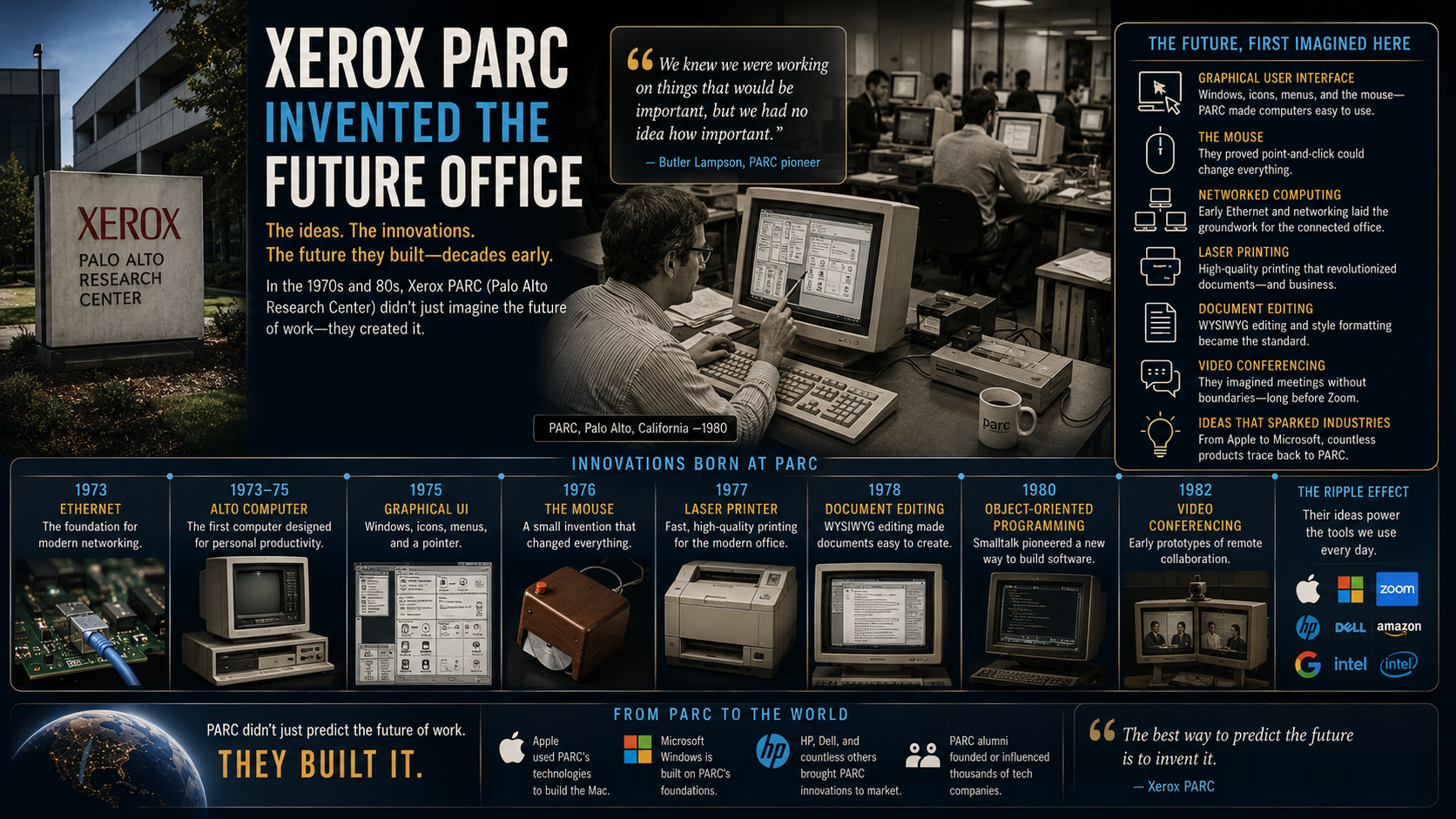
The Lab That Invented Tomorrow
In December 1979, Steve Jobs saw echoes of the future inside Xerox PARC's halls. There, in a secluded lab, lay the blueprint for the modern tech landscape.
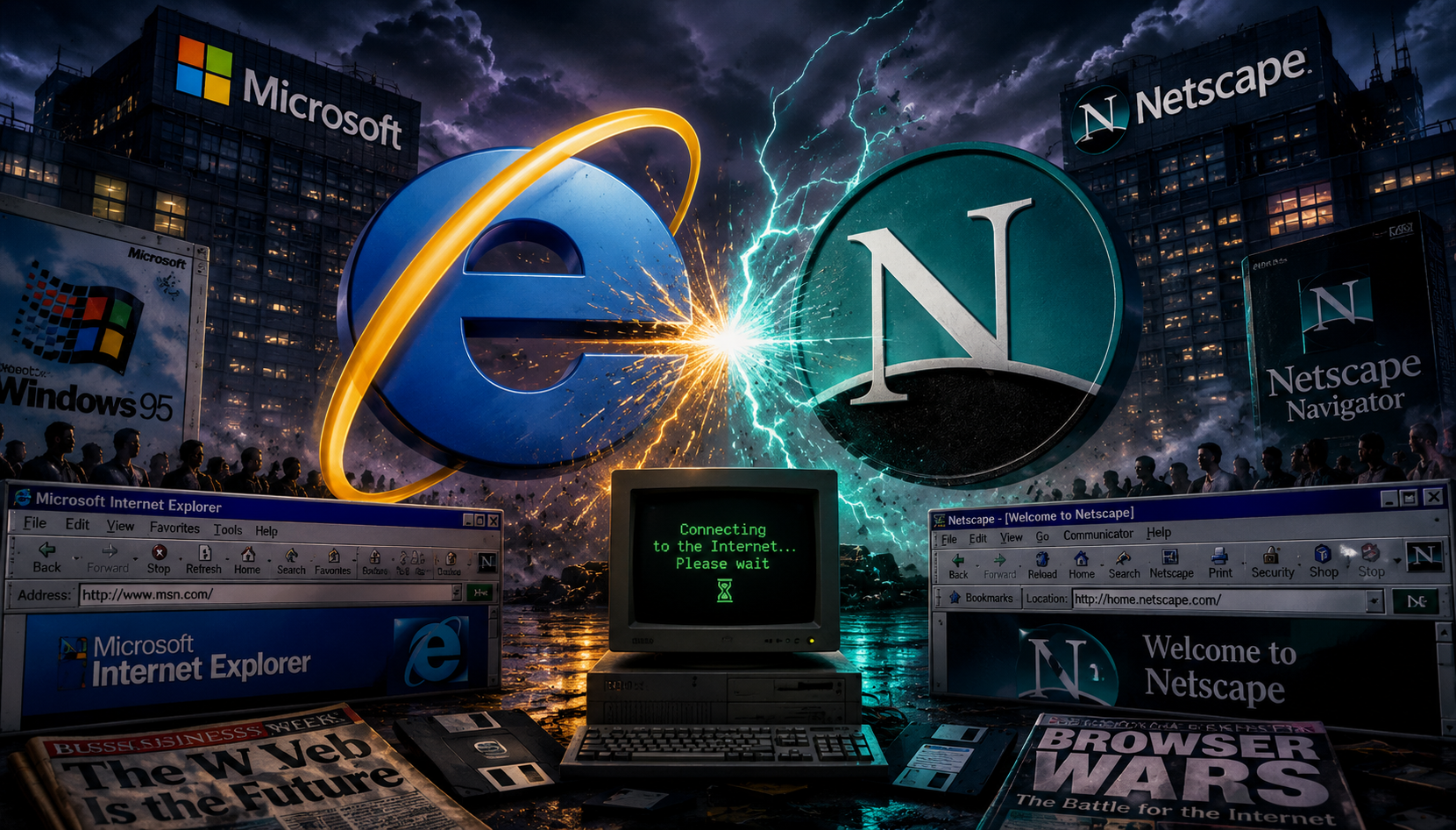
The Browser War That Built the Internet
In the mid-1990s, a software battle erupted that would shape how billions accessed information. Few could predict that the victor would soon face its own downfall.
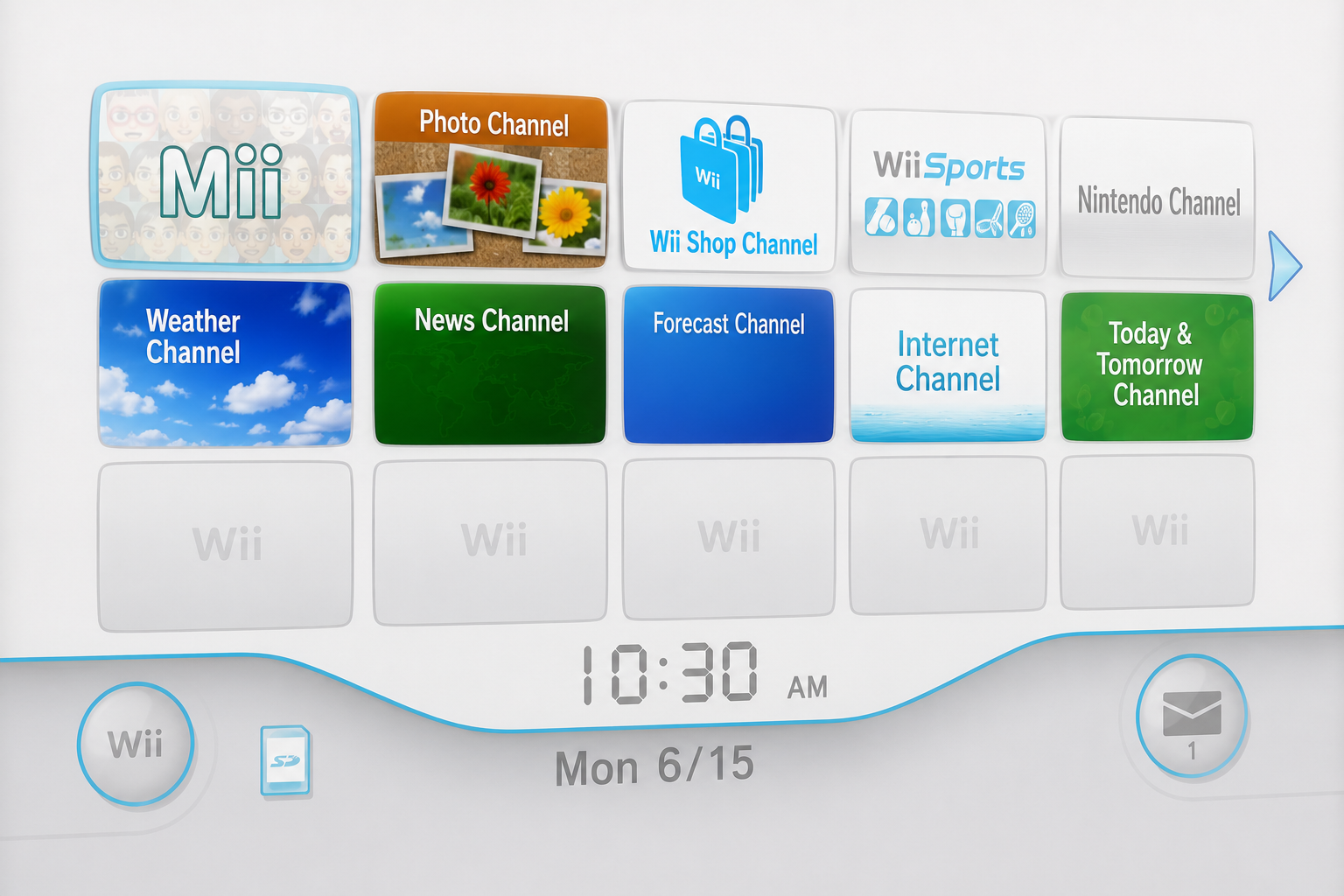
The Wii Gamble That Saved Nintendo
In a world obsessed with graphics and power, Nintendo bet on simplicity. The Wii was laughed at — until it wasn't.

Pixar's Radical Feedback Loop
In a stark, unadorned room, some of the most powerful voices in animation face off with ruthless honesty. Their weapons? Brutal feedback that molds raw ideas into cinematic gold.

The Chicken That Changed Retail
Costco's $4.99 rotisserie chicken isn't just a meal — it's a strategic masterpiece. The unexpected ripple effects changed retail forever.
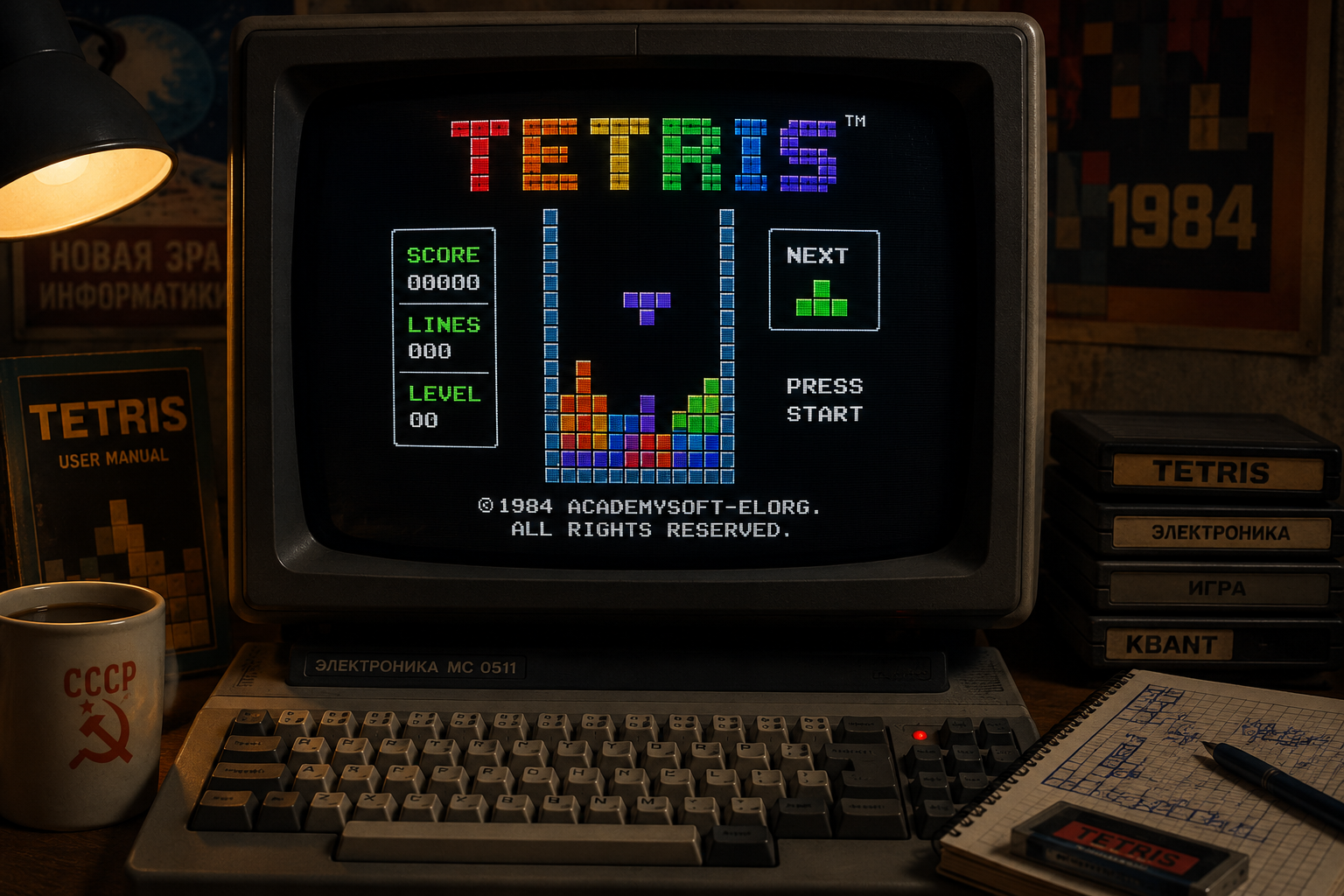
The Puzzle that Conquered the World
A Soviet engineer at his desk, unknowingly poised to create a legend. His creation? Tetris — a game that would break barriers and forever alter the gaming landscape.
Continue the Rabbit Hole
Each story explores the same idea from a different angle. Follow the connections and discover where the thread leads.


Fictional placeholder content