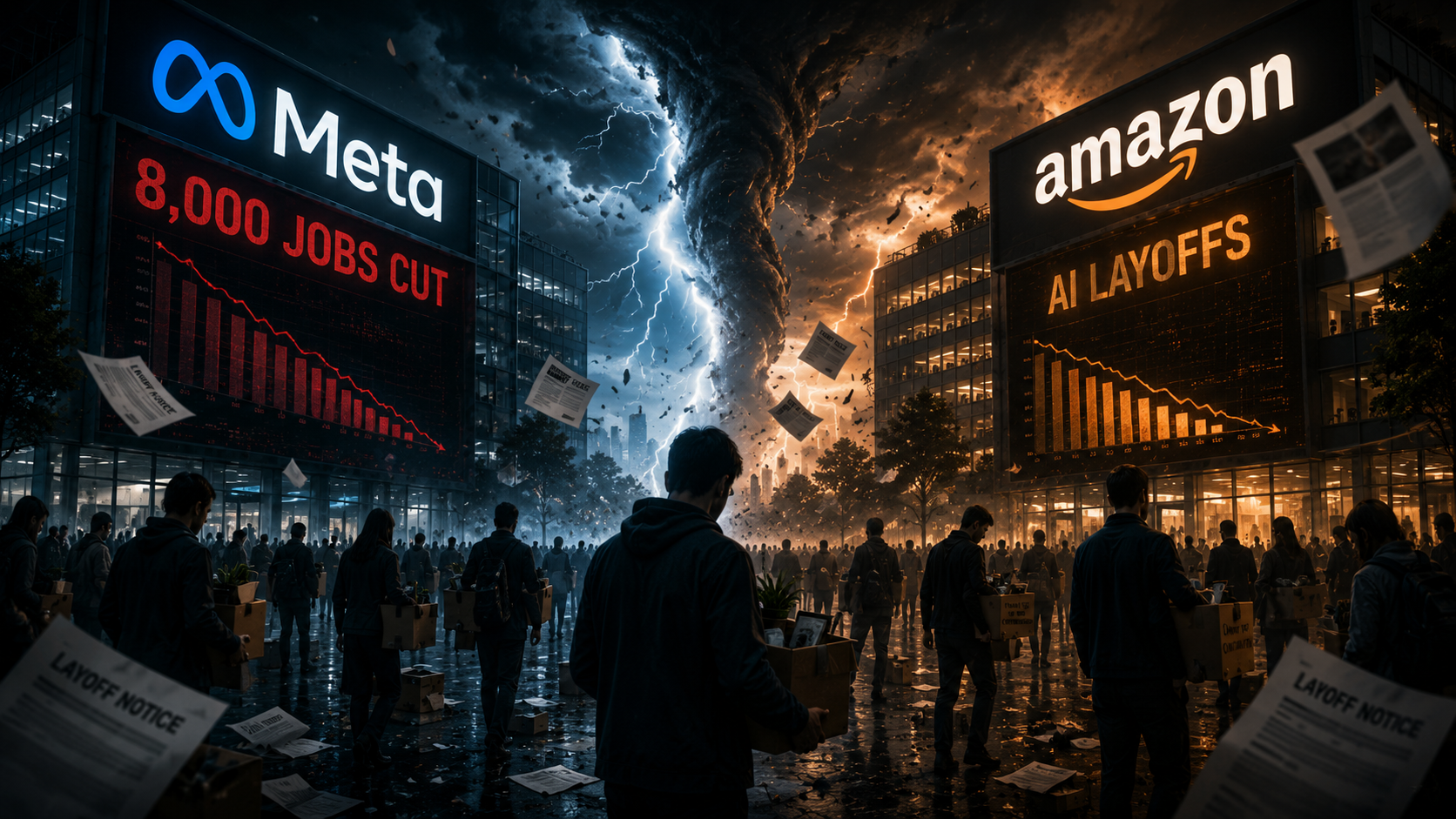
A.I. Carnage: Meta and Amazon's Layoff Cyclone
"In May 2026, Meta slashed 8,000 jobs as it fiercely pivoted towards AI dominance, igniting fears of an employment apocalypse. Meanwhile, Amazon, led by Andy Jassy, embarked on its own drastic AI-induced layoffs, sending shockwaves through the industry."
What Happened?
Meta and Amazon's major layoffs were not isolated corporate events. They reflected a larger industry transition as Big Tech redirected resources toward artificial intelligence, automation, and efficiency. The cuts became a visible sign of how technological revolutions can produce both enormous opportunity and immediate human disruption.
Takeaway
The lesson this story keeps teaching
“Innovation does not arrive evenly; the same shift that creates new opportunities can destabilize existing workers and business models.”
Why People Are Talking About This
This seismic shift in the tech industry has unveiled cracks in the armor of progress, exposing the unpredictable human cost of AI-powered ambition. Meta and Amazon's layoffs illuminate a stark reality: the pervasive reach of technology can come at the cost of real-world jobs and lives.
This development challenges not only economic norms but prompts a re-evaluation of the ethics governing corporate decisions. It reveals the precarious balance of power where innovation's imperatives collide with human capital, forcing a reckoning with technology's limits and potential in a world that cannot pause for reflection.
Thread Map
9 entities · 8 connections · Hover to explore, click to inspect
This is the connection map for this thread. Every node is a person, company, event, or idea. The red lines show how they connect. Hover a node to highlight its connections. Click a node to see why it matters to this story.
How We Got Here
Meta and Microsoft Reveal Sweeping Job Cuts
Meta and Microsoft, two of the tech industry's giants, announced plans to eliminate more than 20,000 jobs, signaling a seismic shift towards AI integration. This declaration sent ripples of uncertainty through the tech workforce during an already tumultuous period.
Meta Commences First Major Layoffs
Mark Zuckerberg's Meta initiates a significant reduction of 8,000 jobs worldwide as part of its fervent shift towards AI capabilities. This significant workforce reduction placed a harsh spotlight on the human cost of technological ambition.
Amazon Plans to Lay Off 16,000 Employees
In a bold move, Amazon announced plans to significantly reduce its workforce by 16,000, driven by CEO Andy Jassy’s strategy focusing on AI efficiency. This decision reflects a broader industry trend towards automation and cost reduction.
Yann LeCun Departs from Meta
Yann LeCun, once the chief driving force behind Meta’s AI strategies, leaves the company due to disagreements over its new AI trajectory. He later establishes AMI Labs, symbolizing unrest even within tech's upper echelons.
Meta Announces Further AI Investments
Despite layoffs, Meta commits to investing up to $145 billion into AI development projects. The financial commitment underscores the company's decisive pivot towards automation and its future visions.
AI Labor Crisis Publicly Addressed
Public debates around the ethical implications of AI-driven job cuts gather momentum, spurred by announcements from companies such as Meta, Microsoft, and Amazon. The discourse ignites renewed scrutiny on industry giants.
Public Backlash against Tech Giants Builds
Community outrage ensues as narratives of lost jobs due to tech’s relentless pursuit of AI intensify. Across various platforms, companies are critiqued for prioritizing technological advancement over employee welfare.
Amazon's Initial Layoff Announcement
Amazon publicly declares its intention to cut 14,000 corporate roles as part of a broader strategy to enhance operational efficiency through AI and automation. The initial news sets the stage for further reductions.
Wait... Who Is This?
Before the seismic shifts of 2026, Meta and Amazon were already at the forefront of technological evolution, spearheading projects that seemed to rewrite the rules of possibility. Metaphorically carved from the DNA of Silicon Valley itself, these companies crafted a narrative of connectivity, commerce, and corporate conquest.
Mark Zuckerberg, often criticized as much as he is celebrated, envisioned a connected universe—one facilitated not by physical touch, but by the reach of technology. Meta thrived amidst its cultural zeitgeist: a world that cherished innovation and allure of new tech. However, with the advent and acceleration of AI, a specter of transformation loomed.
Similarly, Amazon, under Andy Jassy's guidance, sought operational laser focus, emphasizing technological advancement and efficiency. It rode the wave of global e-commerce to unprecedented success, cultivating an empire built on consumer data and cloud superiority.
Yet, there were cracks. Tales of automation steadily encroaching on roles once held by humans flared up with each passing fiscal quarter. The hushed allure of AI stumbled into a corporate catch-22: where advancement required sacrifice, and technology’s bright future had shadowy costs. Caught between the momentum of transformation and the edge of ethical boundaries, Meta and Amazon braced for the tidal wave.
Receipts
Meta Plans 'Biggest Layoffs in History' | Amazon, Snap Lead AI Job Cuts | Vantage on Firstpost | 4K
20k job cuts at Meta, Microsoft raise concern of AI labor crisis
Meta cuts 8000 jobs in sweeping global layoffs
Amazon is laying off 16,000 employees as AI battle intensifies | CNN Business
Meta is slashing 8,000 jobs due to AI. Here are other tech giants who did the same.
Same Pattern
Different story. Same lesson.

Continue the Rabbit Hole
Each story explores the same idea from a different angle. Follow the connections and discover where the thread leads.






Fictional placeholder content