Dance Till You Drop
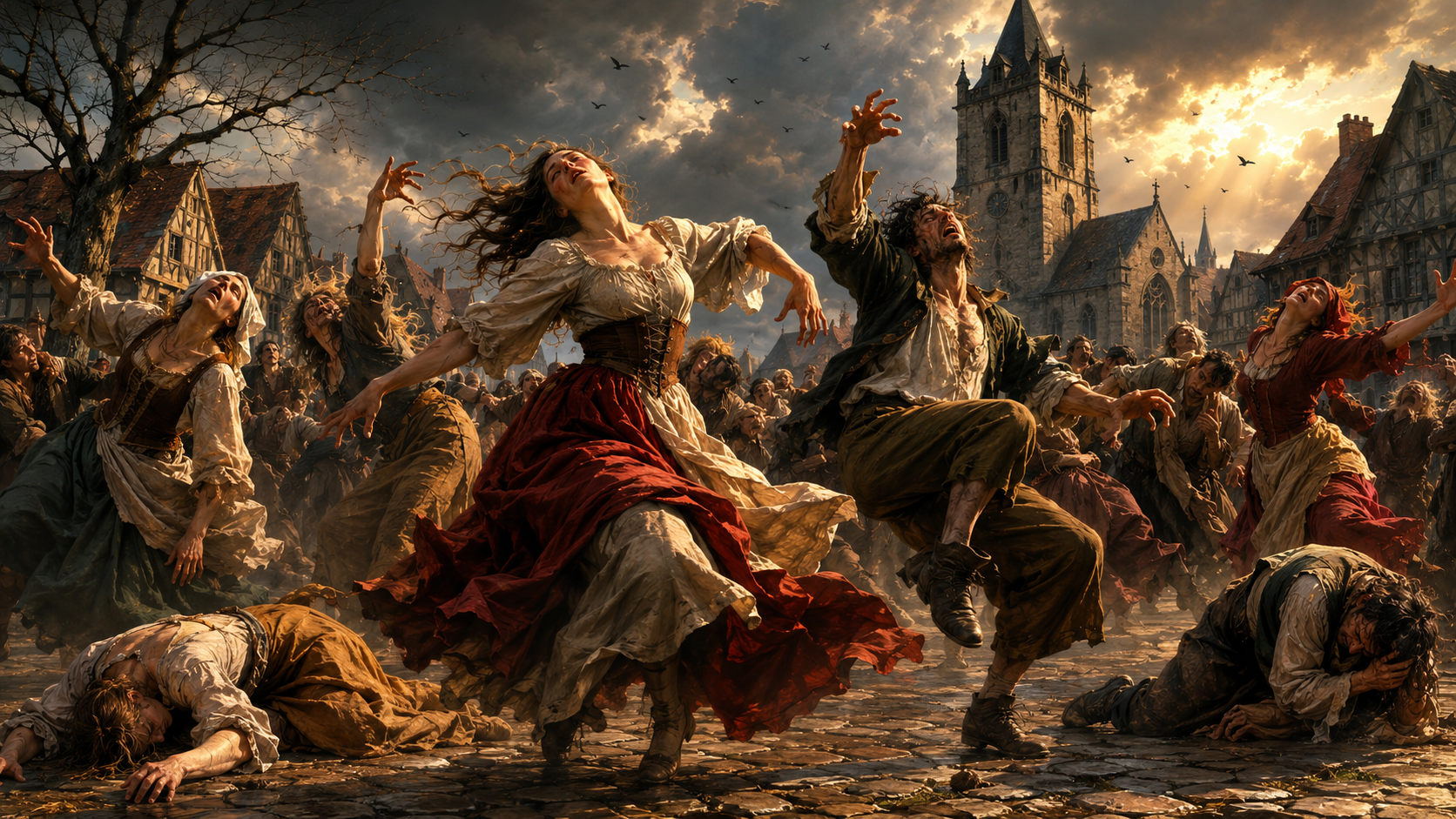
"In the summer of 1518, dozens of people convulsed through the streets of Strasbourg, unable to stop dancing. Within weeks, many were dead from exhaustion."
What Happened?
Under the relentless sun of Strasbourg in July 1518, Frau Troffea stepped into a street and began to dance—with no music, no celebration, just an unrelenting compulsion that defied explanation. Within days, this bizarre solo act metastasized into a community-wide epidemic as dozens, perhaps hundreds, were similarly overtaken by the frenetic urge to dance. The city watched in horror as people danced to exhaustion, some succumbing to strokes or heart attacks. Despite theories ranging from ergot poisoning to mass hysteria induced by stress, the true cause of this extraordinary event remains an unsolved mystery that continues to captivate historians and psychologists alike. Strasbourg's dancing plague is a sobering reminder of the power of collective belief and anxiety to shape reality in unsettling ways.
Takeaway
The lesson this story keeps teaching
“Collective stress and superstition can erupt into phenomena that defy logical explanation, challenging our understanding of human psychology.”
Why People Are Talking About This
The Dancing Plague of 1518 is a historical reminder that mass panic and psychogenic illnesses have roots deeper than mere physical symptoms. This bizarre event highlights how stress and shared beliefs can build to a fever pitch, reflecting on how society's reactions propel episodes of collective hysteria. In today's world, where misinformation travels at the speed of light and stressors are global rather than local, the need to understand and manage these impulses is more critical than ever. By revisiting past instances like Strasbourg, we gain valuable insights into the societal causes and prevention strategies that may keep our mental health in check during pressing times.
Thread Map
9 entities · 8 connections · Hover to explore, click to inspect
This is the connection map for this thread. Every node is a person, company, event, or idea. The red lines show how they connect. Hover a node to highlight its connections. Click a node to see why it matters to this story.
How We Got Here
Frau Troffea Begins Her Dance
Frau Troffea stepped onto the streets of Strasbourg and began to dance uncontrollably. Her dance continued for days, igniting the initial spark of the Dancing Plague.
Contagion of Involuntary Dance
Scores of citizens joined Troffea, dancing incessantly through the streets day and night. The number of dancers increased exponentially within a week.
Official Measures Fail
Authorities attempted to utilize music to soothe or control the dancers, hiring musicians in hopes that organized gatherings could dispel the frenzy. Their efforts proved fruitless.
Tragedy Strikes the Dance Floors
As the days turned into weeks, exhaustion from non-stop dancing led to fatalities. Heart attacks and strokes claimed lives, turning a communal plight into a deadly crisis.
The Dancing Ceases
The inexplicable plague gradually died down without clear explanation. Somehow, as spontaneously as it began, the involuntary dance movements ceased.
The Ill-fated Comet of 1492
A comet's appearance was interpreted as an ominous sign of misfortune, impacting the collective psyche and setting a superstitious tone that lingered for decades.
Societal Strain in Strasbourg
Frequent floods, devastating plagues, and harsh living conditions exacerbated stress among Strasbourg's population, creating an environment rife with anxiety and superstition.
Earlier Episode of Dancing Mania
An earlier outbreak of mass dancing occurred in 1374, with accounts suggesting beliefs in demonic influences were behind the uncontrollable urge to dance.
Tanganyika's Laughing Epidemic
A laughter epidemic in modern-day Tanzania paralleled the Dancing Plague, illustrating psychic contagion and the power of mass hysteria.
Wait... Who Is This?
Strasbourg in the early 16th century was a city caught in the crosswinds of political, religious, and social upheavals. Hugging the Rhine River and seated at a crossroads of trade, it was a microcosm of fermenting tensions characteristic of the larger Holy Roman Empire. The city, recovering from recent plagues and haunted by specters of poverty and famine, found solace and fear in equal measure through religion. The arrival of Protestant Reformation ideas at Strasbourg's doorstep further heightened a climate where dread and hope often intertwined. The people, accustomed to dealing with distress, occasionally attributed adversities to divine actions or omens. This historical context laid the groundwork for inexplicable episodes fueled by collective anxiety, with citizens threading every misfortune experienced into their spiritual fabric. As much as faith acted as a comfort, it also became a lens through which terror magnified, and tragedies materialized. By the time Frau Troffea began her harrowing dance, Strasbourg's air was already thick with anticipation—awaiting any spark to ignite unease.
Receipts
Continue the Rabbit Hole
Each story explores the same idea from a different angle. Follow the connections and discover where the thread leads.



Fictional placeholder content