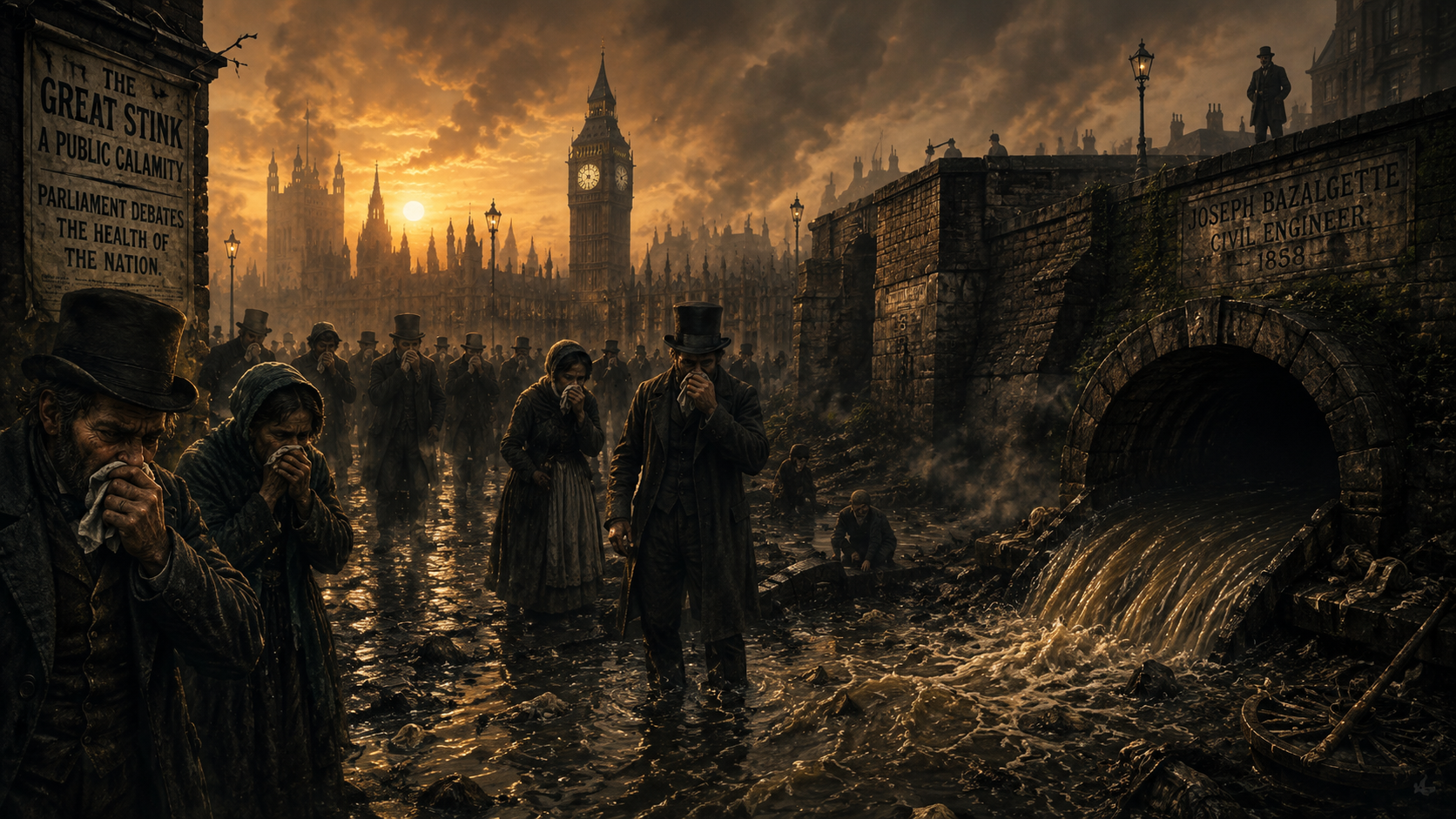
London’s Great Stink Crisis
"The summer of 1858, Londoners were trapped in their city by a miasma so vile it could induce vomiting. And then, a single engineer embarked on a plan that changed the course of urban living permanently."
What Happened?
By the summer of 1858, London's River Thames had become a foul, dangerous open sewer. The smell grew so intense that Parliament could no longer ignore the crisis. The Great Stink forced the city to invest in a modern sewer system, showing how public health progress often begins when hidden infrastructure failure becomes impossible to deny.
Takeaway
The lesson this story keeps teaching
“Public health breakthroughs often happen only after everyday conditions become impossible to ignore.”
Why People Are Talking About This
The Great Stink underscores that dire conditions can catalyze innovative breakthroughs. In the 19th century, it forced London to pioneer a sewage system that laid groundwork for urban sanitation globally.
Today, it serves as a cautionary tale for a world facing its environmental crises. The imperative: respond to ecological warnings before reaching a breaking point reveals how infrastructure needs and public health are inseparable.
Thread Map
5 entities · 4 connections · Hover to explore, click to inspect
This is the connection map for this thread. Every node is a person, company, event, or idea. The red lines show how they connect. Hover a node to highlight its connections. Click a node to see why it matters to this story.
How We Got Here
London Grows Beyond Its Means
As the population of London swelled from one to two and a half million within 50 years, the strain on public infrastructure became palpable. Underground sewage systems found themselves flooded with waste they couldn't hope to manage, hints of an impending disaster looming beneath.
Failed Reforms Pave a Path to Crisis
Efforts to address sewage disposal in the wake of municipal government reforms fell dramatically short. The river endured as a waste repository, with bad management dooming the Thames to greater exploits of inefficiency.
Cholera and the Call to Action
Cholera surged across London, bringing death in its wake. The connection between contaminated water and outbreaks came into sharper focus, highlighting the urgent need for improved sanitation.
Michael Faraday’s Conviction Echoes
Scientist Michael Faraday penned letters drawing chilling pictures of Thames’s pollution. Unlike many, he didn’t turn a blind eye, spurring public awareness as it hurtled toward the Great Stink.
The Great Stink Settles Over London
A scorching July sealed London's fate as the Great Stink unfurled over the city. Parliament succumbed to the oppressive stench, escalating the miasmic terror of disease.
Critical Legislative Action Taken
By August 2nd, Parliament was forced to establish a transformational sewage system—a legislative milestone to curb disaster and safeguard public health.
Bazalgette Commences Sewer Network Project
Joseph Bazalgette embraced the monumental task to redesign London's sanitation infrastructure, spearheading a sewer system that would alter the course of urban planning forever.
Completion Marks New Sanitary Era
After years of toil, Bazalgette's sewer network became operational in 1865, ushering in a legacy of urban sanitation hailed as an engineering marvel of its day.
Wait... Who Is This?
London had long ridden waves of prosperity through trade and industry, becoming a beacon of modernity by the early 19th century. By century's midpoint, it boasted a thriving population invigorated by growth but besieged by its own shadows: overcrowding and inadequate public services. The Thames, London's historic artery, was by then sullied by waste, serving as a physical metaphor for the city's rising underbelly.
From the glorious triumph of industrial power rose the stench of neglect — vast portions of untreated sewage flowed freely into the Thames, a calamity spawning generations prior through poorly managed urban landscapes. Earlier municipal health reforms from the 1830s failed to resolve sewage disposal conflicts, their deficits buried beneath bureaucratic inefficiency and economic short-sightedness.
With a changing world saw a population doubling. Cholera loomed ominously as waterborne diseases grasped at throats and health left unchecked sowed widespread public fear. Conversations among the elite often tiptoed around shouted demands for action. Londoners witnessed this era's defining change as city councils and state ministries squabbled over who should shoulder responsibility.
Thus, the scene for crisis was set: London was a city on the brink, its lifeblood reduced to a cesspool, and its leaderless masses stumbled ever closer to unwarranted demise.
Receipts
Great Stink - Wikipedia
The Great Stink of London – Death Scent
London's Great Stink heralds a wonder of the industrial world | Cities
The Great Stink of 1858 | London Museum
From the Great Stink to the modern sewage scandal: why 19th-century sewers are failing 21st-century England
The Story of London’s Sewer System – The Historic England Blog
London's 'Great Stink' of 1858: how a rapid policy response stopped ...
Continue the Rabbit Hole
Each story explores the same idea from a different angle. Follow the connections and discover where the thread leads.







Fictional placeholder content