The Tree That Nearly Sparked War
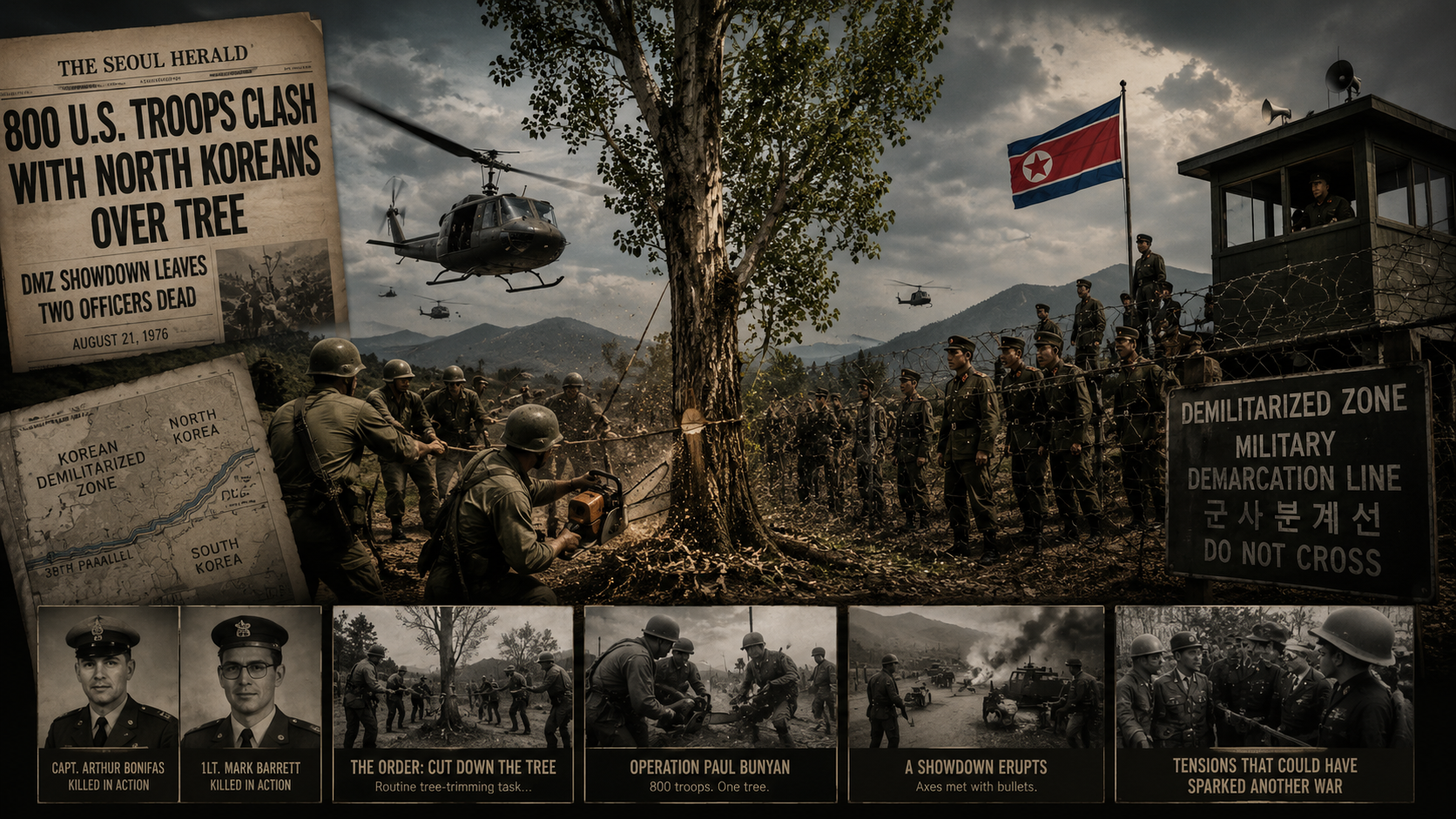
"On August 21, 1976, a showdown in the Korean DMZ included 800 soldiers, helicopters, and bombers over a single poplar tree. The stakes were terrifyingly high: a potential second Korean War."
What Happened?
On August 18, 1976, two U.S. officers were tasked with trimming a poplar tree in the Korean DMZ. Captain Arthur Bonifas and First Lieutenant Mark Barrett, armed only with axes, set out to clear the tree obstructing their line of sight. However, North Korean soldiers confronted them, demanding they stop. When the tension snapped, North Korean troops brutally attacked, leading to Bonifas and Barrett's deaths. The aftermath saw the U.S. launch Operation Paul Bunyan, a massive military display to assert dominance without combat. This operation underscored the precarious balance of power in the DMZ, where even a tree could become a catalyst for conflict.
Takeaway
The lesson this story keeps teaching
“Seemingly trivial actions can unleash geopolitical upheaval when steeped in symbolic intent and underlying tensions.”
Why People Are Talking About This
Operation Paul Bunyan underscores the high stakes of geopolitics entwined with symbolic actions. The event is an enduring reminder of how fragile peace is and how it can precariously teeter in regions brimming with historical and ideological tension. Understanding such dynamics is crucial to grasping today's diplomatic strategies where small actions potentially ignite broader conflicts.
Thread Map
9 entities · 8 connections · Hover to explore, click to inspect
This is the connection map for this thread. Every node is a person, company, event, or idea. The red lines show how they connect. Hover a node to highlight its connections. Click a node to see why it matters to this story.
How We Got Here
Panmunjom Axe Murder Incident Shocks the World
In an unprovoked attack, North Korean soldiers killed two U.S. Army officers, Captain Arthur Bonifas and First Lieutenant Mark Barrett, with axes as they trimmed a tree. This tragic incident heightened military tensions.
Operation Paul Bunyan Commences
In a formidable show of power, the U.S. launched Operation Paul Bunyan, sending 800 troops backed by nuclear-capable aircraft and naval forces to cut down the tree in question at the DMZ.
U.S. Forces Withdraw from DMZ
After the tree removal, U.S. and South Korean troops completed their mission successfully and withdrew without incident. Tensions remained high, but immediate conflict was averted.
Global Media Reacts to Operation Paul Bunyan
The unprecedented scale of the U.S.'s response caught international media attention, prompting analysis on the cost of military deterrence strategies during the Cold War.
North Korea Responds with Provocations
North Korean propaganda used the incident to rally its citizens, while its military posture remained aggressive, maintaining tensions in the DMZ area.
Diplomatic Channels Restore Fragile Peace
Diplomacy took center stage as both Koreas and their allies worked through official channels to re-establish communications and avert potential war.
Memorial Ceremonies for Bonifas and Barrett
Memorial services for the fallen officers were held, cementing their legacy and bringing closure to families affected by the incident.
Operation Paul Bunyan Studied in Military Strategy
The operation became a point of reference in military strategic analysis classes, illustrating the importance of military symbolism and deterrence.
Campaign for North-South Reunification
Both Koreas increased efforts towards a conciliatory approach amid global détente, aiming to replace military standoffs with dialogues for reunification.
Wait... Who Is This?
In the web of Cold War tensions, Korea stood volatile. The DMZ, created from a ceasefire in 1953, symbolized the conflict between two opposed ideologies frozen in time. Soldiers stood like pieces in a high-stakes chess match. The scene in 1976 was deceptively quiet, but the history wafted heavily in the air. Each soldier felt the weight of this historical charge, their roles dicey with the potential to pivot into political turmoil. The Panmunjom tree trimming, planned as an innocuous task, carried a latent potential risk within these charged borders. One misstep seemed enough to tilt the precarious balance into chaos.
Receipts
Panmunjom axe murder incident
#OTD- Aug. 21, Operation Paul Bunyan, a joint U.S.-Korean effort ...
DVIDS - News - Operation Paul Bunyan
[PDF] Korea - Operation Paul Bunyan - Gerald Ford Presidential Museum
The DMZ 'gardening job' that almost sparked a war - BBC
Korea Tree Incident: Operation Paul Bunyan | Clements National Security Papers Project
Continue the Rabbit Hole
Each story explores the same idea from a different angle. Follow the connections and discover where the thread leads.






Fictional placeholder content