The Wrong Turn that Started World War I
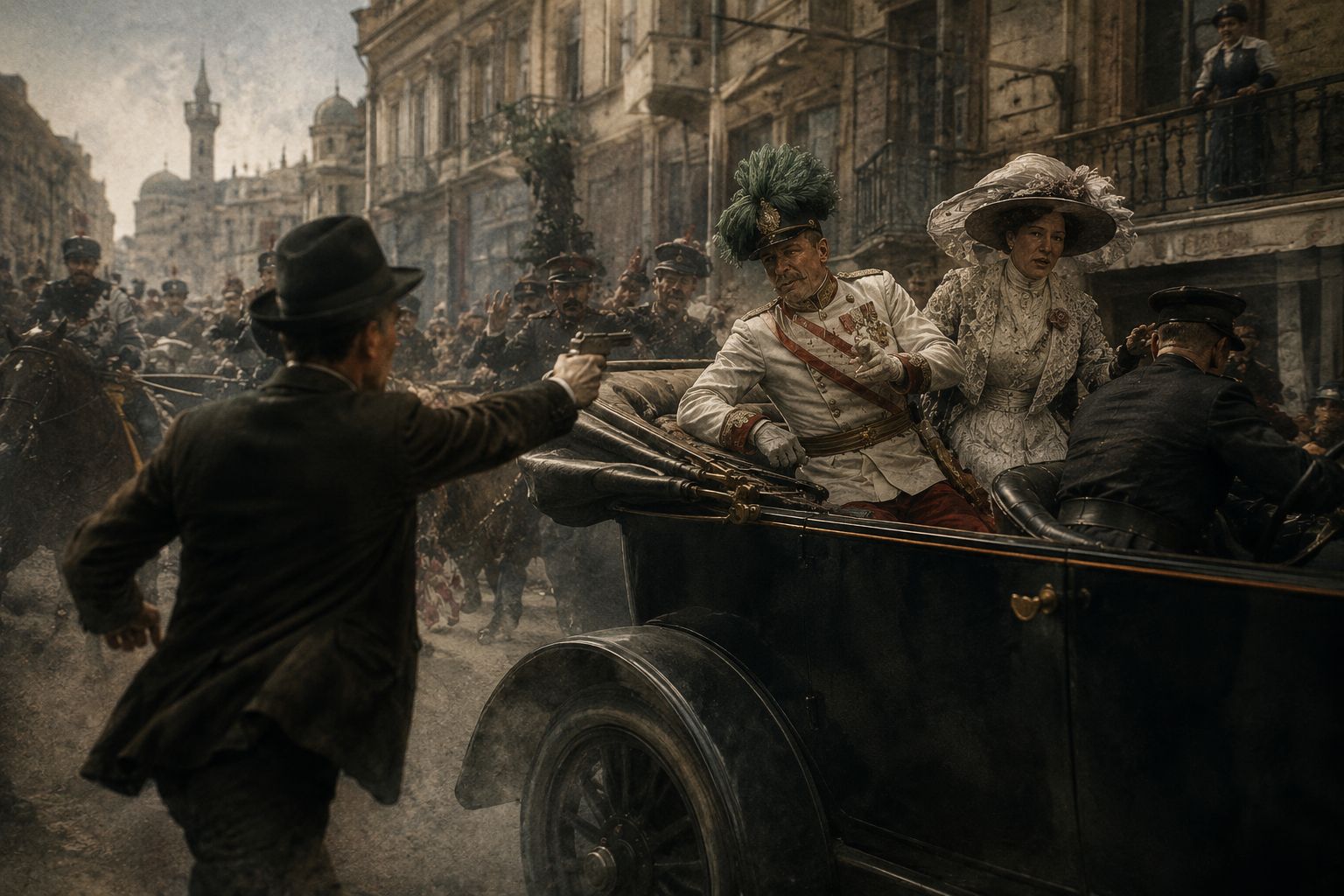
"The car carrying Archduke Franz Ferdinand in Sarajevo took a wrong turn. This detour landed him in front of Gavrilo Princip, igniting World War I."
What Happened?
June 28, 1914, began as just another day for Archduke Franz Ferdinand of Austria on his state visit to Sarajevo. Yet, amid escalating tensions, a wrong turn by his driver set the stage for what would become World War I. Earlier that day, a failed assassination attempt had already taken place. Fate intervened when a change in the itinerary brought the Archduke’s car directly into the line of sight of Gavrilo Princip, a young nationalist thirsty for revolution. Standing outside a delicatessen, Princip seized his moment, firing the fatal shots. This small oversight, an unexpected turn into Franz Josef Street, became a historical hinge — one that unlocked a chain of events leading Europe into the depths of battle and chaos.
Takeaway
The lesson this story keeps teaching
“Minor decisions can cascade into monumental consequences.”
Why People Are Talking About This
The assassination of Franz Ferdinand was more than a trigger—it was a lens into the volatility of geopolitical landscapes, a reality where alliances collapsed and built anew within the stir of a gunshot. This event forces introspection over modern geopolitics, where the house of cards teeters under tiny breezes. It remains a profound reminder: the threads of history are woven through small turns, a narrative acknowledging the precarious balance of choices.
Thread Map
6 entities · 5 connections · Hover to explore, click to inspect
This is the connection map for this thread. Every node is a person, company, event, or idea. The red lines show how they connect. Hover a node to highlight its connections. Click a node to see why it matters to this story.
How We Got Here
Franz Ferdinand is Assassinated
Archduke Franz Ferdinand and Sophie were killed by Gavrilo Princip after their car made a wrong turn in Sarajevo, sparking the beginning of World War I.
The July Crisis Begins
Diplomatic tensions escalated dramatically following the assassination, with Austria-Hungary issuing an ultimatum to Serbia, leading to declarations of war.
Austria-Hungary Declares War on Serbia
Austria-Hungary declared war on Serbia, marking the official beginning of military engagements and the escalation towards a world conflict.
World War I Officially Begins
A web of alliances led major European powers to declare war on each other, creating a global conflict unprecedented in scope and destruction.
End of World War I
An armistice was signed, ending hostilities at 11 AM and bringing a close to a war that reshaped nations and claimed millions of lives.
Treaty of Versailles Signed
The Treaty of Versailles was signed on this date, formally ending World War I and imposing significant reparations on Germany.
Bosnia and Herzegovina Annexed
Austria-Hungary formally annexed Bosnia and Herzegovina, heightening tensions with Serbia and setting the stage for future conflict.
Princip's Plot Takes Shape
Gavrilo Princip and his co-conspirators finalized their plans for the assassination as the Archduke's visit to Sarajevo approached.
Wait... Who Is This?
At the turn of the 20th century, Europe stood poised on the brink of transformation. Confronted by rising nationalist movements, leaders grappled with pressures that threatened to upend long-standing balances of power. The Austro-Hungarian Empire’s annexation of Bosnia and Herzegovina in 1908 further fueled nationalist sentiments throughout the Balkans, angering Serbia and compounding existing tensions. This geopolitical upheaval accelerated Europe's division into competing military alliances — a precursor to large-scale conflict. The Empire's hold on newly annexed territories was tenuous, mired in resentment from ethnic groups dreaming of union with their Slavic kin across the border. It was a kaleidoscope of intrigue, competing nationalisms, and a quest for identity that defined the era. As 1914 unfolded, the simmering tensions awaited only a spark to ignite a catastrophe that would scar the century.
Receipts
Austria's Archduke Ferdinand assassinated | June 28, 1914 | HISTORY
How a Wrong Turn Started World War I | HISTORY
Gavrilo Princip: How A Wrong Turn Sparked WWI | TheCollector
The Cause of World War I: The Assassination of Archduke Franz Ferdinand | UT Permian Basin Online
Gavrilo Princip and the Sarajevo Assassination That Triggered ...
Continue the Rabbit Hole
Each story explores the same idea from a different angle. Follow the connections and discover where the thread leads.


Fictional placeholder content