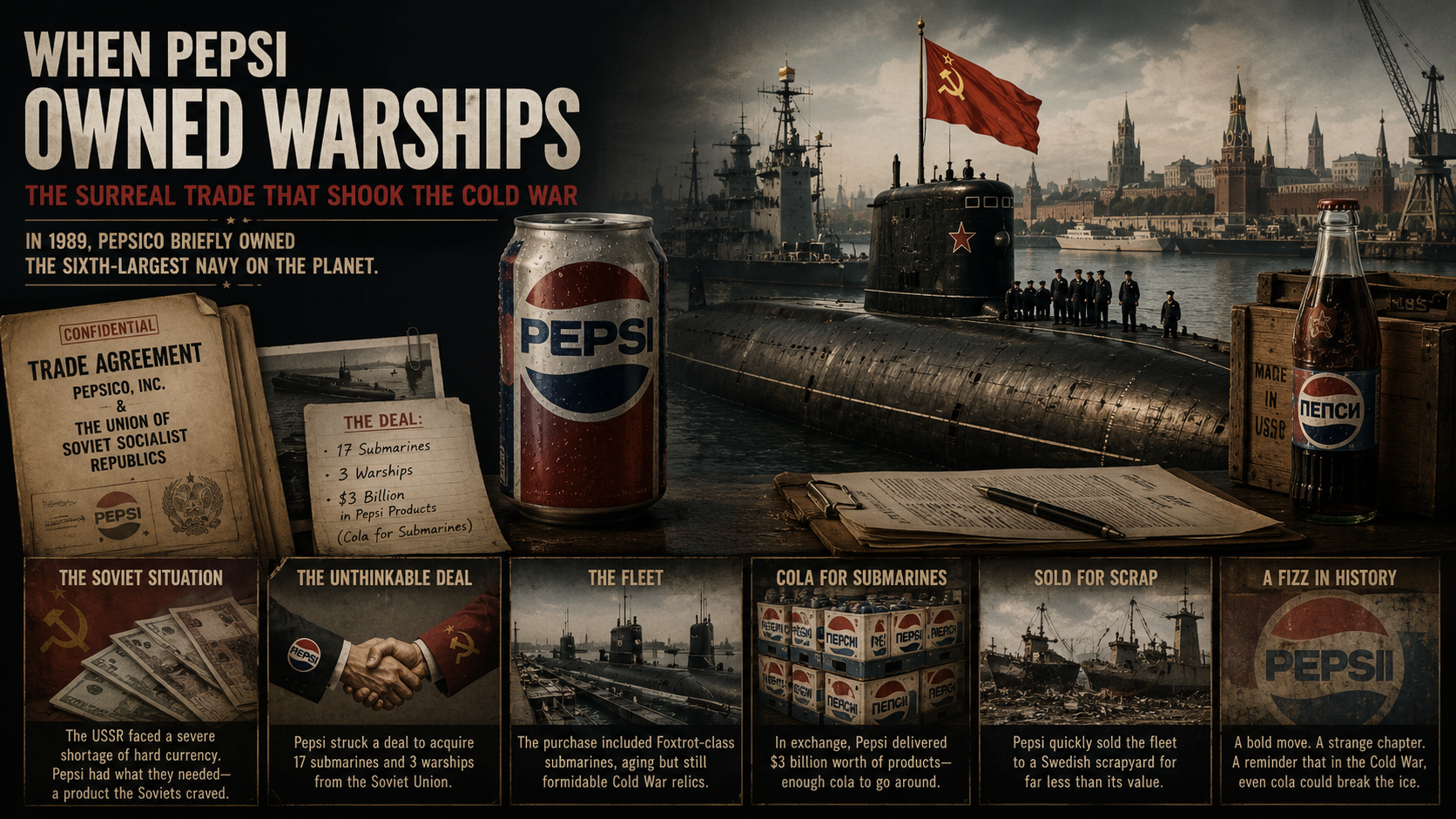
When Pepsi Owned Warships
"In 1989, PepsiCo briefly owned the sixth-largest navy on the planet. This surreal Cold War tale began with a literal trade: cola for submarines."
What Happened?
Amidst the Cold War's complex dynamics, PepsiCo made a baffling trade with the Soviet Union: soda syrup for a fleet of warships. This unconventional exchange was driven by the USSR's desperate economic situation and Pepsi's pursuit of global market expansion. With the ruble effectively useless for international trade, the Soviets offered military vessels to Pepsi in a barter deal. Although Pepsi never intended to utilize the ships, the agreement highlighted how corporate ambition can intersect with geopolitical desperation, creating surreal yet strategic alliances out of necessity. This moment in history is not just a peculiar trade anecdote but a testament to how companies can leverage unique opportunities when the global marketplace demands creativity over convention.
Takeaway
The lesson this story keeps teaching
“Desperation can turn conventional trade logic upside down, transforming corporations into formidable, unexpected power brokers.”
Why People Are Talking About This
Pepsi's unique trade deal with the Soviet Union signaled a shift in the traditional dynamics of international trade, where corporate strategy began intertwining with political exigencies. This unusual alignment challenges companies to rethink global engagement strategies, illustrating how innovation can redefine traditional commerce borders during crises. The deal foreshadows corporate players' rising influence, long presaged by Pepsi, in shaping modern geopolitical landscapes.
Thread Map
5 entities · 4 connections · Hover to explore, click to inspect
This is the connection map for this thread. Every node is a person, company, event, or idea. The red lines show how they connect. Hover a node to highlight its connections. Click a node to see why it matters to this story.
How We Got Here
Pepsi Enters the Soviet Scene
The American National Exhibition in Moscow introduced Pepsi to curious Soviet consumers with its fizzy allure. This initial foray planted seeds for future negotiations.
Economic Reforms Change Soviet Reality
Gorbachev's glasnost unveiled open-market reforms, encouraging foreign enterprises like Pepsi to explore Soviet soil for business relations amidst growing economic instability.
Pepsi Explores Soviet Expansion
Aiming to deepen its market footprint, Pepsi initiated talks with the cash-strapped USSR, examining barter opportunities given the nation's currency shortages.
The Pepsi Fleet Is Born
Executing an unprecedented trade, Pepsi acquired 17 submarines and naval vessels in exchange for its signature soda, momentarily transforming into a military proprietor.
Pepsi's Fleeting Naval Superpower
As news of Pepsi's naval capacity spread, speculation skyrocketed over corporate influence amidst Cold War uncertainties. The spectacle questioned global military norms.
Warships Sold for Scrap
Pepsi quickly sold the warships to a Scandinavian scrap firm, monetizing its fleet and emphasizing that it had no intentions of participating in warfare.
Soviet Union Dissolves
The dissolution of the Soviet Union marked the end of an era, symbolizing a turn in global relations that realigned economic, political, and cultural forces.
Pepsi Continues Global Expansion
With echoes of its naval heist lingering, Pepsi returned to investing in its brand's global reach, focusing on expanding markets beyond Cold War confines.
Wait... Who Is This?
In the twilight of the Cold War, the Soviet Union's economy was in tatters, driven to near collapse by years of mismanagement and unsustainable military expenditures. Mikhail Gorbachev's attempts to rejuvenate the stagnant economy with policies like glasnost and perestroika found limited success as they collided with deep-rooted systemic inefficiencies. The ruble had lost its viability in international markets, forcing the USSR to explore unconventional trade alternatives. Amidst this climate of economic instability, PepsiCo emerged as a surprising player, having already engineered a barter agreement with the Soviets that traded Pepsi syrup for Stolichnaya vodka.
Receipts
Naval Gazing Main/The Pepsi Fleet?
1989: The year soda company Pepsi briefly became a naval superpower - History Skills
Pepsi's Soviet Submarine Fleet Was the Endpoint of Business Dreams
Did Pepsi Really Own the Sixth Largest Navy in the World? (Short ...
Continue the Rabbit Hole
Each story explores the same idea from a different angle. Follow the connections and discover where the thread leads.




Fictional placeholder content