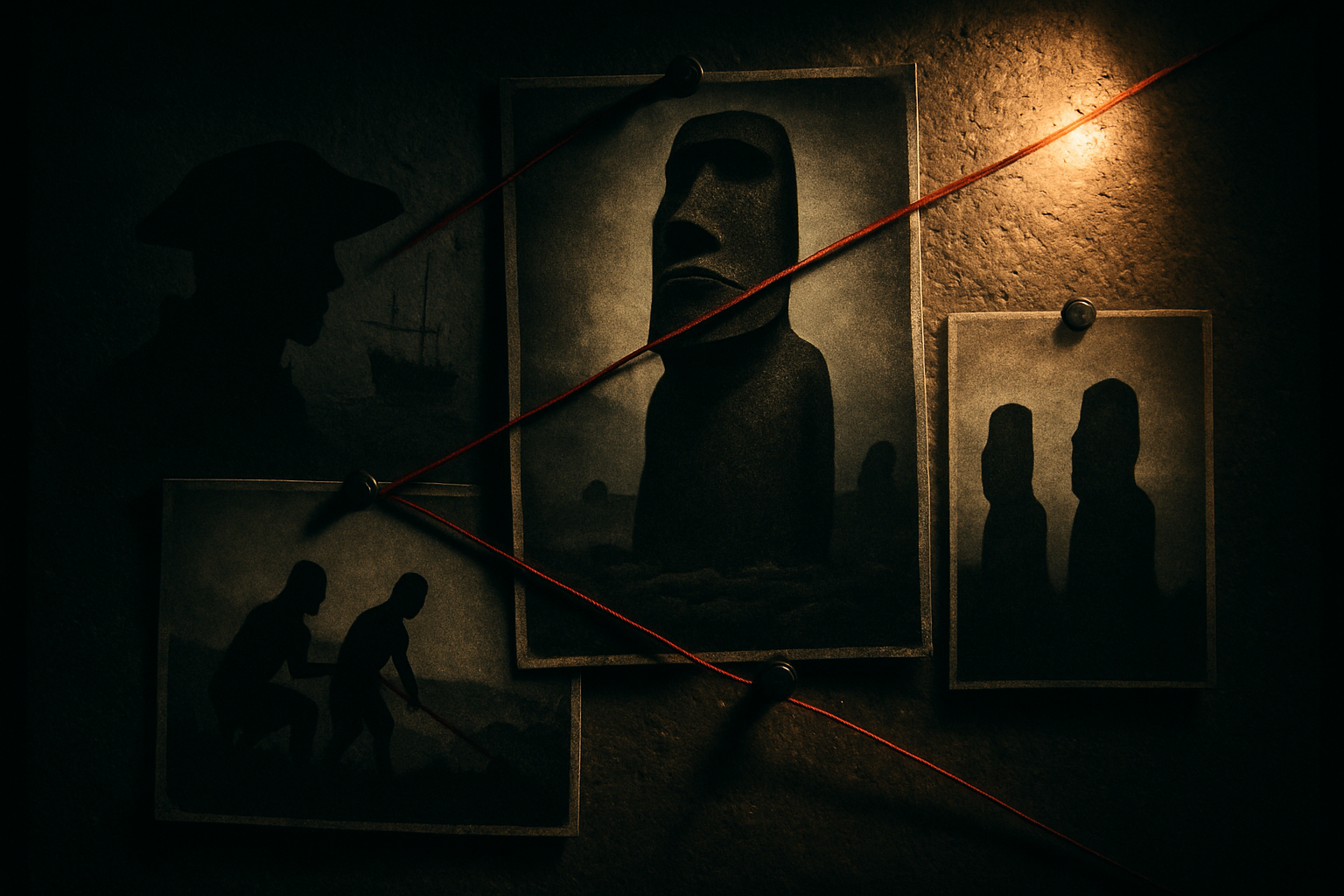
The Secrets of Easter Island
"When Dutch explorers stumbled upon Easter Island in 1722, they found a mystery still unsolved today: colossal stone heads dotting the landscape, guardians of a vanished society."
What Happened?
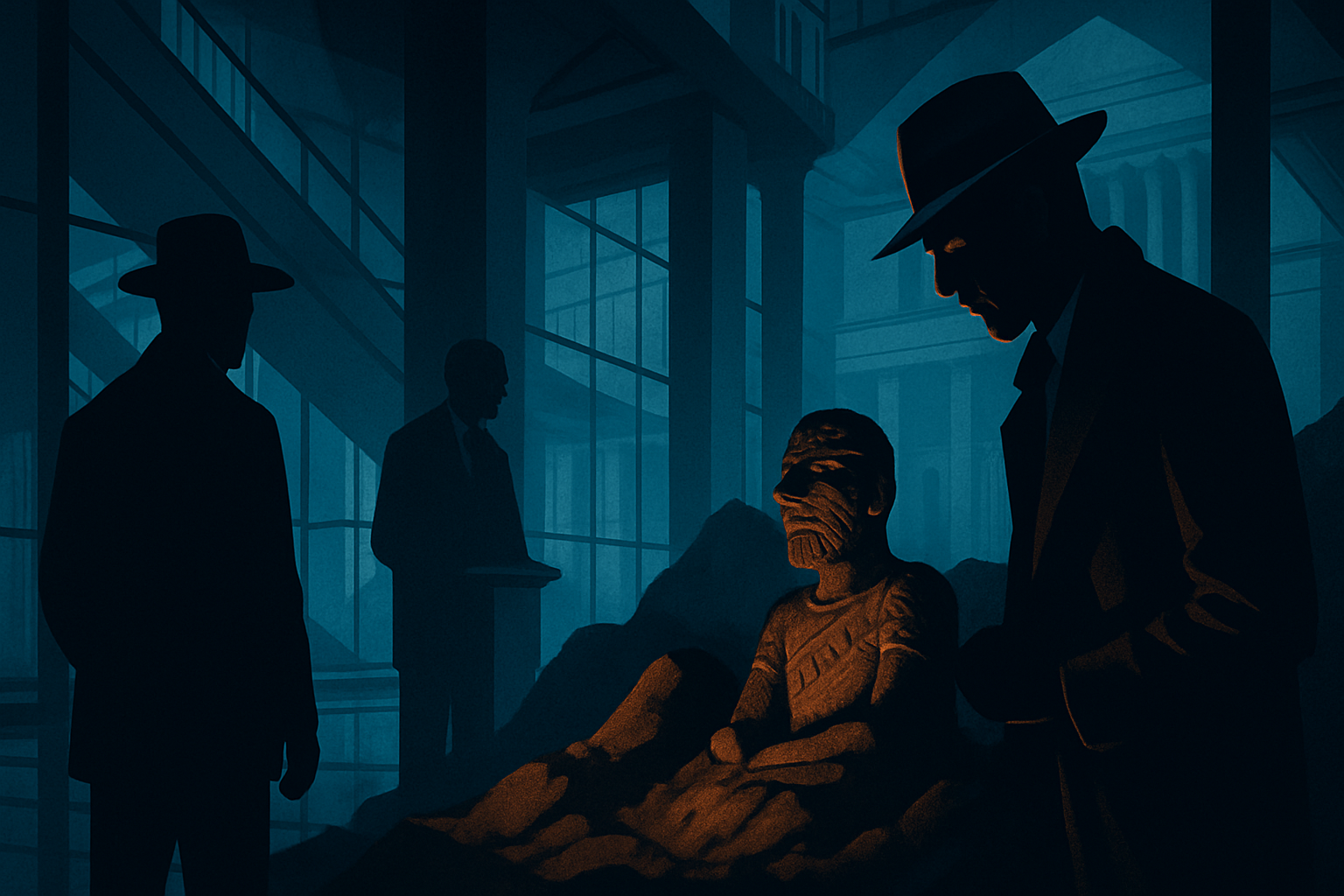
In the shadow of colossal stone eyes, the land seemed to echo tales of triumph and collapse. Easter Island, or Rapa Nui, was once a lush paradise, now haunted by its own enigmatic silence. The story of this isolated island is etched into nearly 1,000 moai statues—silent sentinels standing against time and memory. Around 800 AD, Polynesian voyagers touched this remote shore, a feat of navigation as remarkable as the legends they began to sculpt in stone. By the time Dutch explorer Jacob Roggeveen chanced upon it in 1722, the island bore scars of deforestation and ecological strain.
Deforestation reached a critical peak by 1700, reshaping the island’s fate. Without trees, the ecosystem faltered; wood for society's very infrastructure disappeared. Some 900 moai, intended to stand eternally, were left unfinished, monuments to the civilization’s halted expansion. Yet, the true force behind this transformation might not have been mere human folly. Recent studies challenge the classic narrative of self-destruction, citing limited soil fertility and a fragile ecosystem exacerbated by the elements and external pressures.
Colonized by Chile in the late 19th century and subjected to external exploitation by companies like Williamson Balfour & Co., Rapa Nui people often found themselves confined, their numbers dwindling to just 110 natives by 1877. But resilience is in their lineage. In 2015, a quiet revolution stewarded by the Rapa Nui Parliament reclaimed significant control as they sought autonomy from distant Chile—a modern echo of past struggles.
Easter Island's story warns of the perils inherent when ambition wars with habitat, when outsiders draw arbitrary lines. The moai watch, timeless and weathered, whispering a caution we may yet need to heed.
Takeaway
The lesson this story keeps teaching
“Understanding Easter Island's history requires peeling back layers of myths and cultural narratives to reveal deeper, complex truths.”
Why People Are Talking About This
Easter Island challenges one-dimensional views of historical collapse, forcing reconsideration of external versus internal factors in societal downfall. It illuminates how easily myths distort complex realities, urging deeper understanding of cultural resilience. This becomes more than an academic inquiry—it underscores current debates on sustainability and the impact of external forces on indigenous cultures, making it essential to modern discourse.
Thread Map
8 entities · 7 connections · Hover to explore, click to inspect
This is the connection map for this thread. Every node is a person, company, event, or idea. The red lines show how they connect. Hover a node to highlight its connections. Click a node to see why it matters to this story.
How We Got Here
Polynesians Set the Foundation
The first Polynesian settlers arrive, laying the groundwork for a unique culture marked by the future erection of the iconic Moai statues.
Moai Era Begins
Polynesians settle permanently on Easter Island, initiating the period of significant cultural and societal development known as the Moai era.
Creation of the Moai
The renowned Moai statues are erected, showcasing the Rapa Nui's engineering prowess and deep spiritual connection to their ancestors.
Deforestation and Decline
By this time, severe deforestation took place, indicating resource strains and social upheaval within the Rapa Nui community.
European Eyes Fall on Easter Island
Dutch explorer Jacob Roggeveen discovers Easter Island, initiating a new chapter of external contact that would eventually alter its trajectory significantly.
Population Plummets
Due to diseases brought by Europeans, the Rapa Nui population dwindled to a fragile 110, markedly impacting the continuity of their culture.
A New Exploitation Begins
Williamson Balfour & Co. leases the island for sheep farming, exacerbating land degradation and cultural distortion.
A UNESCO Treasure
Easter Island is designated a UNESCO World Heritage Site, marking an effort to protect its cultural artifacts and fragile environment.
Rapa Nui Takes Control
The Rapa Nui Parliament asserts authority over large parts of the island, seeking independence and self-management of their cultural heritage.
Wait... Who Is This?
Centuries before Europeans arrived, Easter Island, or Rapa Nui as its natives called it, sustained a Polynesian culture robust in spirit and art. Islanders were adept planners, erecting the now-iconic Moai between 1250 and 1500, which stood as silent sentinels. However, this tale was not just monumental success but also looming scarcity. The lush forests once covering the island dwindled, hinting at internal pressures exceeding sustainable limits.
Yet, the biggest twist came not from environmental strain but European arrival in 1722, altering the island's destiny. Disease and exploitation brought by outsiders intensified cultural disruption far more than any internal misstep. Misunderstood narratives cropped up, primarily blaming the islanders for self-induced collapse. This oversimplification overshadowed the more complex interplay of cultural resilience and adaptability amidst adversity. Today, Easter Island stands as a profound lesson in the cost of half-told histories, urging a closer look at the intertwined roles of environment and external influence in societal fate.
Receipts
Easter Island - Wikipedia
Chronology of Easter Island: Important Events on Rapa Nui
Easter Island | Map, Statues, Heads, History, Moai, & Facts | Britannica
Rapa Nui Polynesian Culture | Experience Rapa Nui at PCC
Easter Island | Social Sciences and Humanities | Research Starters | EBSCO Research
New study debunks myth of Easter Island's ecological collapse
Same Pattern
Different story. Same lesson.

The iPhone That Disrupted the World
In January 2007, Steve Jobs stepped onto the stage and introduced a device that would redefine the entire world: the iPhone. What seemed like just another gadget launch was, in fact, the dawn of a new era.
The Wii Gamble That Saved Nintendo
In a world obsessed with graphics and power, Nintendo bet on simplicity. The Wii was laughed at — until it wasn't.

The Chicken That Changed Retail
Costco's $4.99 rotisserie chicken isn't just a meal — it's a strategic masterpiece. The unexpected ripple effects changed retail forever.
The Puzzle that Conquered the World
A Soviet engineer at his desk, unknowingly poised to create a legend. His creation? Tetris — a game that would break barriers and forever alter the gaming landscape.

Predicting Streaming's Meteoric Rise
In a room filled with doubters, one voice declared that streaming was the future of entertainment. Years later, his vision disrupted entire industries.

The AOL Revolution
On January 10, 2000, the internet world shook as AOL announced its merger with Time Warner. It was hailed as a union that would change everything.
Continue the Rabbit Hole
Each story explores the same idea from a different angle. Follow the connections and discover where the thread leads.

Fictional placeholder content