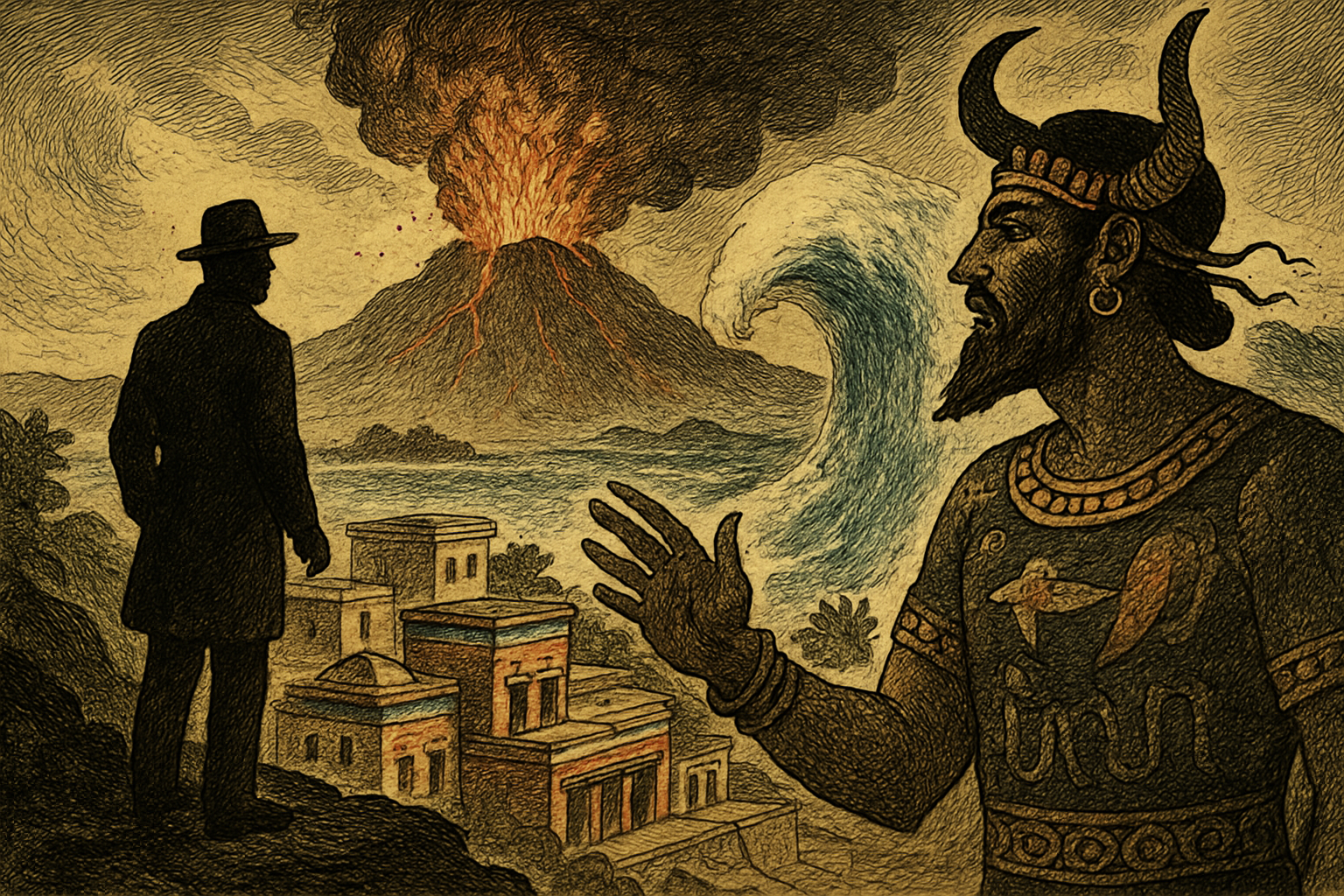
The Civilization Buried Under Ash
"What happens when the seas around your island home suddenly turn into walls of water? For the Minoans, this was no hypothetical — it was their downfall."
What Happened?
Dust from the Thera eruption settled over Crete, a haze that not only obscured the sun but foreshadowed the shadow cast on the Minoan civilization. This catastrophic event wasn't just an act of nature; it was the turning point in a story that had begun with one of Europe's earliest advanced civilizations. The Minoans, renowned for their impressive palaces and rich cultural imprint, suddenly found themselves in a struggle for survival as their trade lifelines began to fail.
The civilization that thrived under the legendary King Minos, with grand architectural feats and vibrant frescoes, was now teetering. There was once a time when their fleets navigated Mediterranean waters with ease, exchanging goods as far as Egypt and Anatolia. But the eruption in 1600 BCE was more than a natural disaster—it was a blow to the trading networks that had sustained them.
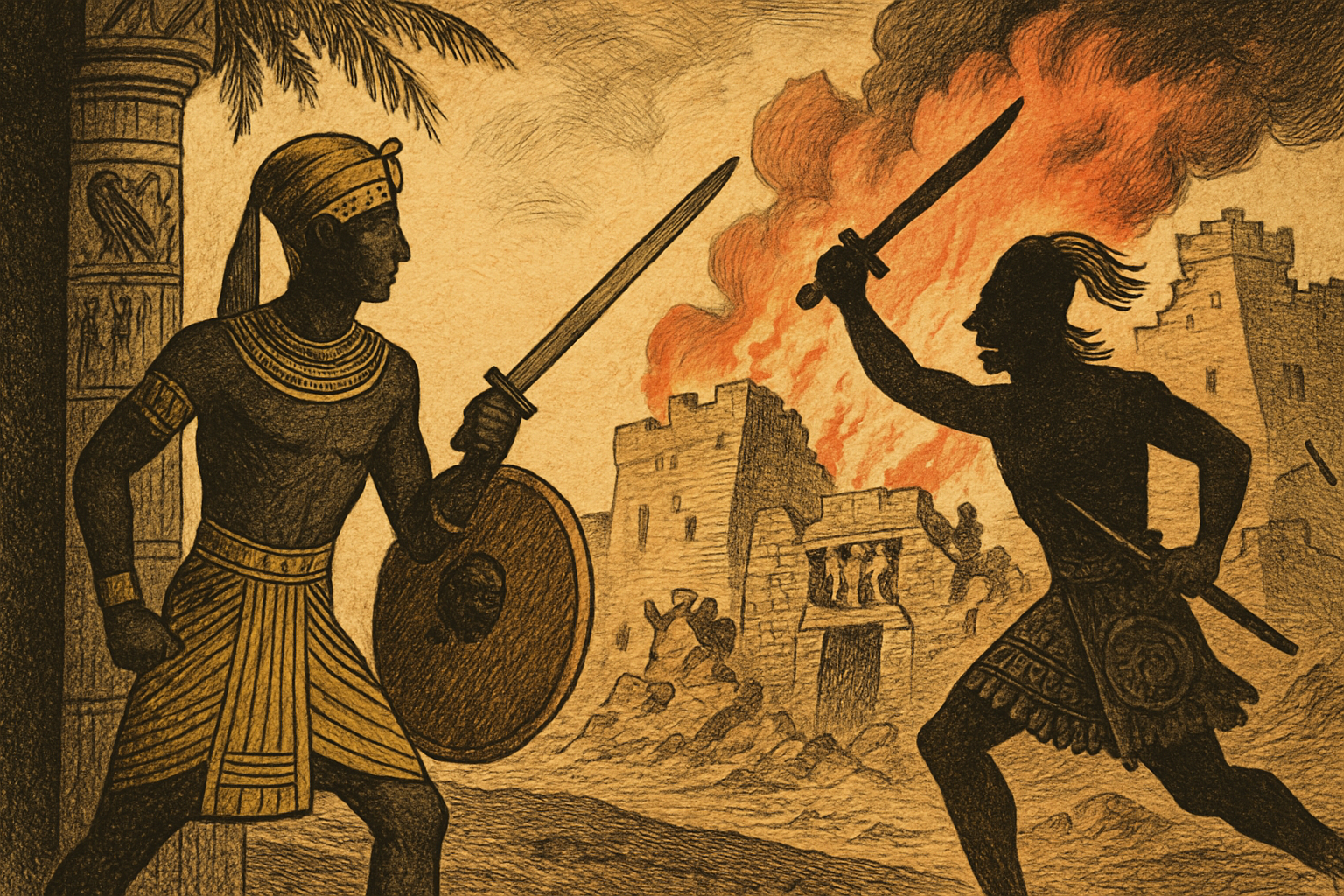
Complicating the Minoans' troubles, the Mycenaeans from mainland Greece were watching closely. With their power cemented in places like Knossos, the Minoans had been the envy of the Aegean. Yet, as chaos from the Thera eruption unfolded, the Mycenaeans saw an opportunity. By 1450 BCE, they invaded Crete, bringing with them the end of a civilization that had once stood unchallenged.
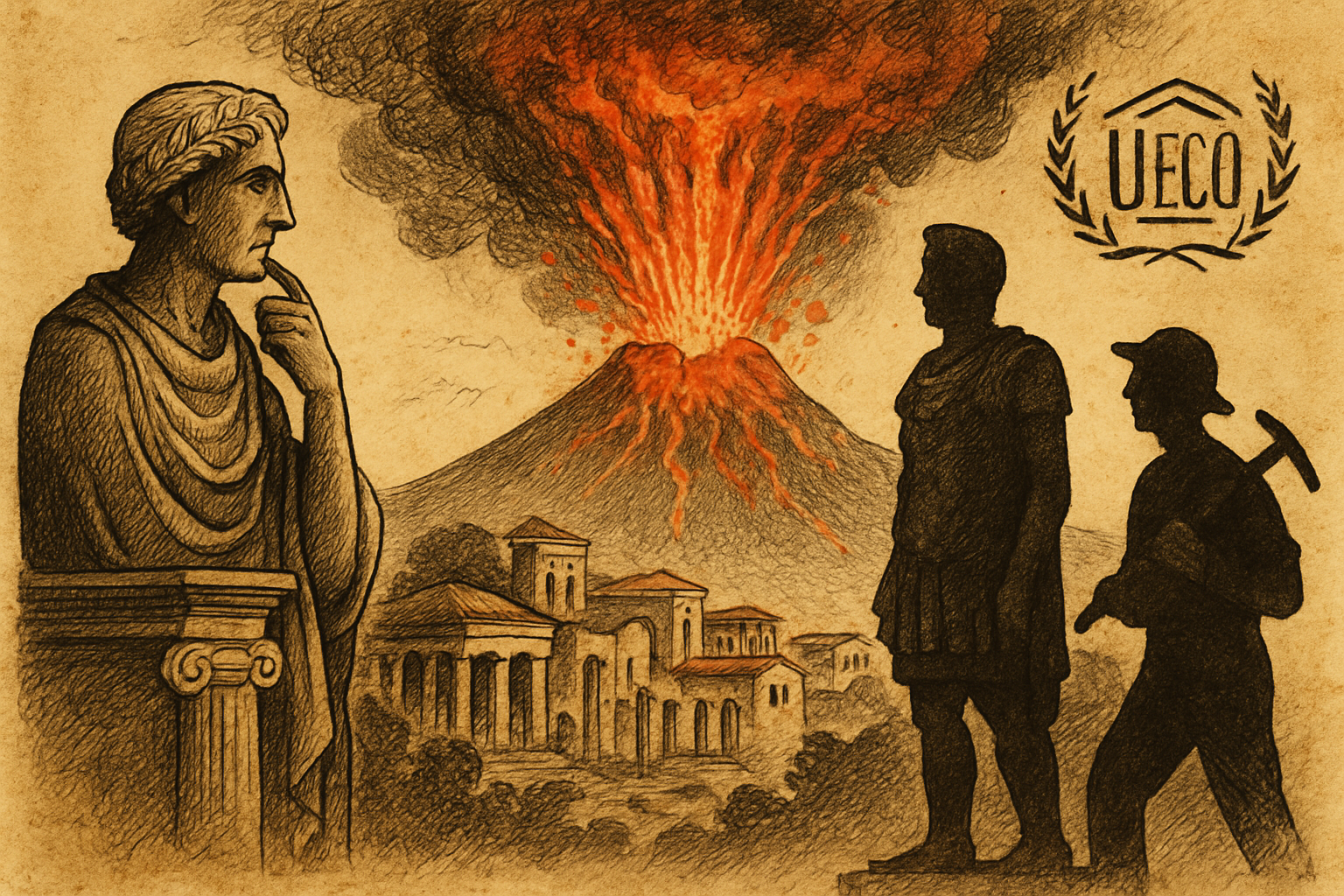
Archaeologist Sir Arthur Evans unearthed these buried histories in the early 1900s. His work at Knossos revealed layers of Minoan grandeur, speaking of a civilization lost but not forgotten. Today, the remnants of Minoan society reveal the fragility of even the most sophisticated cultures, how the force of nature coupled with human ambition can swiftly rewrite the fate of empires.
Takeaway
The lesson this story keeps teaching
“Prosperity hid the Minoans' vulnerabilities, and when nature struck, the edifice crumbled.”
Why People Are Talking About This
The Minoans' story matters because it serves as a stark reminder of nature's unpredictable dominion over human endeavors. Their downfall illustrates the fragility of even the most sophisticated societies, a poignant lesson that resonates today amidst discussions of climate change and disaster preparedness.
The resurgence of Minoan interest, propelled by archaeological findings, highlights how history can reemerge from obscurity, offering insights we may not appreciate until centuries later. As we navigate our modern challenges, the Minoan tale remains relevant, urging us to question our resilience against nature's whims.
Thread Map
4 entities · 3 connections · Hover to explore, click to inspect
This is the connection map for this thread. Every node is a person, company, event, or idea. The red lines show how they connect. Hover a node to highlight its connections. Click a node to see why it matters to this story.
How We Got Here
The Rise of the Minoan Civilization
On the island of Crete, a unique culture began to take shape, marking the start of the Minoan civilization. Spanning trade routes between three continents, this civilization would grow into one of Europe's earliest powerhouses.
Palace of Phaistos Constructed
The Minoans expanded their architectural achievements by constructing the Palace at Phaistos, showcasing their enhanced social and political structures.
Peak of Minoan Civilization
The Minoans experienced a golden age with artistic, political, and religious advancements that set the framework for their cultural legacy.
Thera Erupts with Catastrophic Force
The powerful eruption of Thera obliterated parts of the Minoan trading network, significantly impacting their civilization and marking the beginning of their decline.
Mycenaeans Invade Crete
Seizing the weakened state of the Minoans, the Mycenaeans from mainland Greece invaded and gradually assimilated their culture, contributing to the Minoans' downfall.
Destruction of Malia
An earthquake and subsequent fires brought an abrupt end to the Minoan settlement at Malia, reflecting the compounded disasters that plagued the civilization.
Arthur Evans Rediscovers Minoan Glory
The groundbreaking archaeological work of Sir Arthur Evans in Crete brought the grandeur and sophistication of the Minoans back to public consciousness.
DNA Analysis Reveals Minoan Origins
Advanced DNA analysis confirmed that the Minoans were a local European population, dispelling theories of their origins being from elsewhere.
Wait... Who Is This?
The Minoan civilization emerged around 3500 BCE on the island of Crete, flourishing due to its strategic location between Europe, Asia, and Africa. This vibrant culture, named after the mythical King Minos, was distinguished by architectural marvels like the palace at Knossos and artistic advancements. For centuries, they traded across the Mediterranean, becoming a beacon of wealth and cultural exchange. However, beneath the surface of prosperity, they faced risks inherent to island nations — natural disasters. The Minoans mastered the seas and cherished their isolation, unaware of the seismic instability that would one day threaten everything they had built.
The eruption of Thera caught them off guard, unleashing a tidal wave that reshaped geography and power dynamics alike. Yet, the full extent of their decline wasn't memorialized until discoveries centuries later, when artifacts revealed the sophistication of a lost society. As the dust settled, the world was left to ponder these enigmatic people whose story was both a testament to human ingenuity and a reminder of nature's relentless force.
Receipts
Minoan Civilization | Overview, Timeline & Location - Lesson | Study.com
Minoan civilization - Wikipedia
DNA analysis unearths origins of Minoans, the first major European civilization – UW News
Flowering of Minoan Civilization | History | Research Starters | EBSCO Research
The Eruption of Thera | Forbes and Fifth | University of Pittsburgh
Same Pattern
Different story. Same lesson.

The Fall of BlackBerry
In a boardroom once buzzing with innovation, silence filled the air as BlackBerry executives watched Apple's iPhone dismantle their empire one launch at a time.

The Lab That Invented Tomorrow
In December 1979, Steve Jobs saw echoes of the future inside Xerox PARC's halls. There, in a secluded lab, lay the blueprint for the modern tech landscape.

The Wii Gamble That Saved Nintendo
In a world obsessed with graphics and power, Nintendo bet on simplicity. The Wii was laughed at — until it wasn't.
Pixar's Radical Feedback Loop
In a stark, unadorned room, some of the most powerful voices in animation face off with ruthless honesty. Their weapons? Brutal feedback that molds raw ideas into cinematic gold.

Minority Report's Prescient Touchscreen Reality
In 2002, Hollywood imagined a future of seamless touchscreen interfaces. Today, Steven Spielberg's vision feels eerily prescient as technology catches up.

How Google's 20% Time Shaped Innovation
Gmail, the widely-used email service, was born from Google's infamous 20% Time. What else did this unconventional policy unleash?
Continue the Rabbit Hole
Each story explores the same idea from a different angle. Follow the connections and discover where the thread leads.



Fictional placeholder content