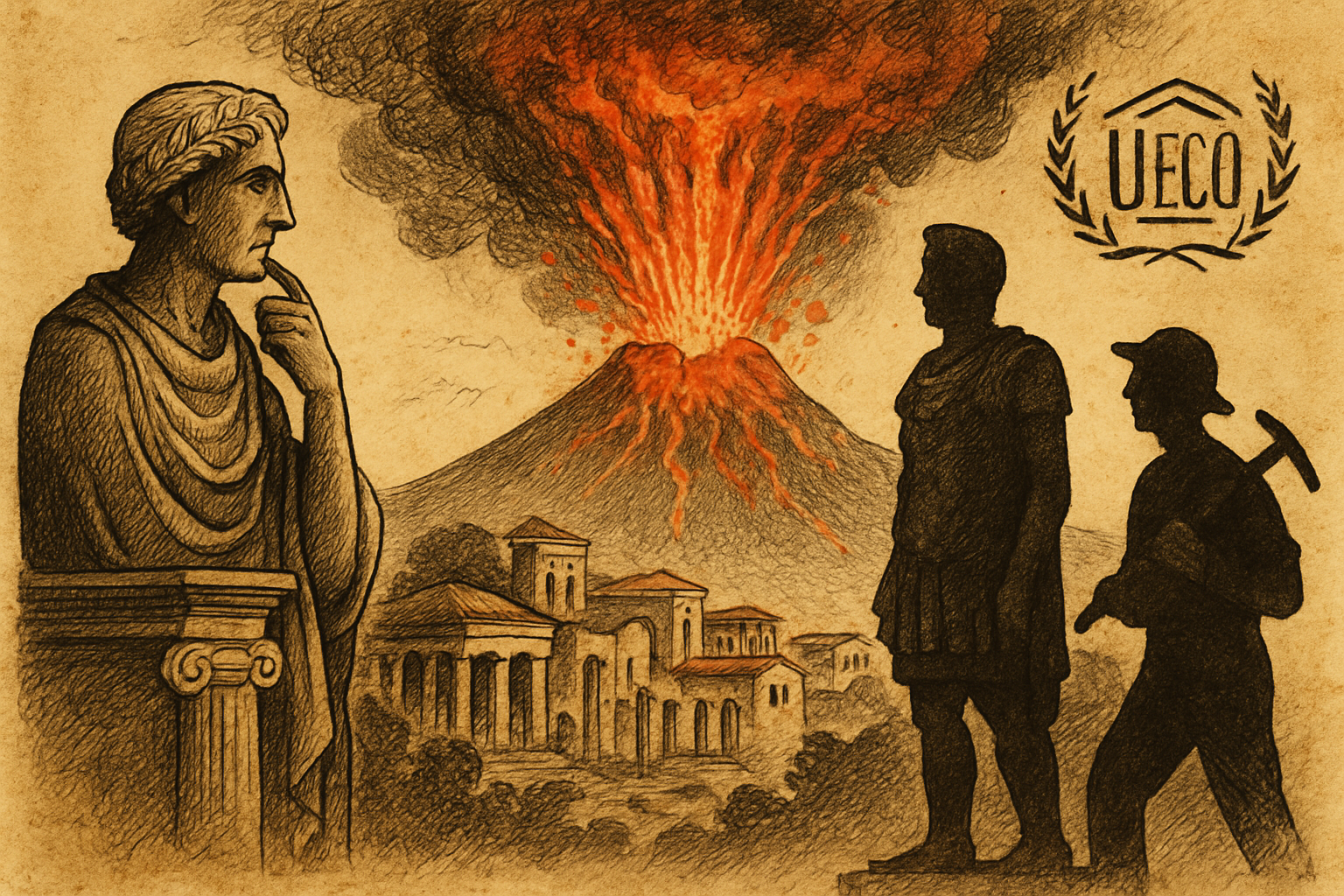
Pompeii: The Day Time Stopped
"In an instant, the bustling streets of Pompeii were silenced by a force they never anticipated. Thousands were left buried alive, their last moments preserved by volcanic ash."
What Happened?
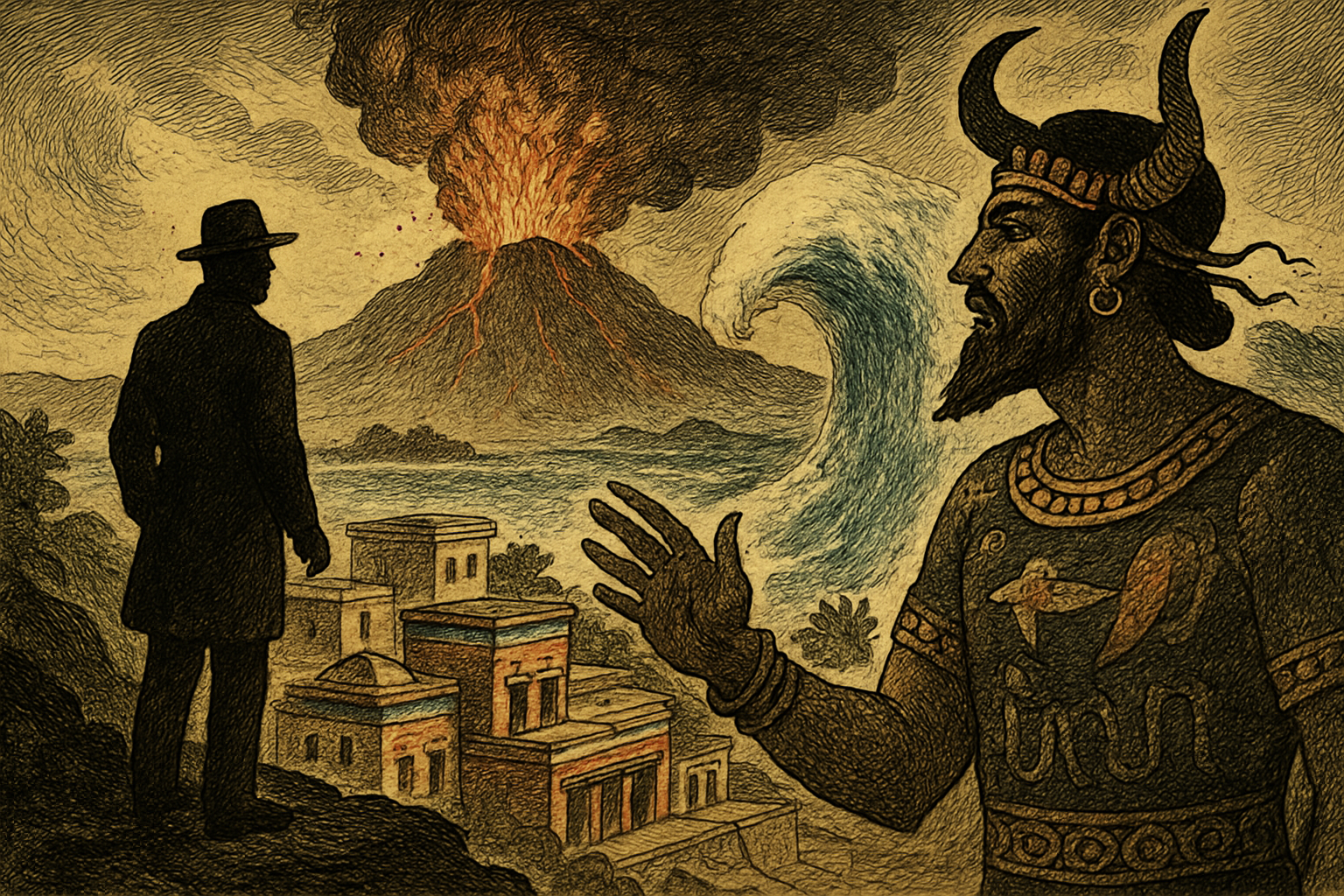
The sun had barely risen over Pompeii when the ground began to tremble, a prelude to the nightmare that would soon unfold. August 24, 79 AD — a date seared into the stone and ash that would blanket this bustling Roman city. Mount Vesuvius had awakened with a vengeance.
From its nearby summit, a deafening roar signaled the cataclysm. Ash spewed skyward, blotting out the day. Residents, barely comprehending their fate, looked skyward in disbelief. Within hours, Pompeii was reduced to chaos: rooftops buckling under the weight of pumice, breathing the air became a desperate struggle.
In all this upheaval, the human stories unfold vividly. Witnesses described the air growing hotter, filled with toxic gas—breath itself turning to fire. Some, like Pliny the Younger, would flee and document the horrors, his letters painting a graphic testament for ages. Others weren't as fortunate. Gaius Plinius caught the last gasp of life trying to save those trapped amid crumbling homes and cloistered villas.
The next day, pyroclastic surges rolled down, sealing Pompeii's fate beneath 14 to 17 feet of volcanic fury. The city—once alive with trade, culture, and people—was entombed, perfectly preserved in its moment of destruction. Its forums, temples, and vibrant murals became eternal specters of a civilization frozen in time.
Rediscovered in 1748, Pompeii offers a chilling window into the past, a testament to nature’s merciless power. The haunting figures of plaster casts—bodies captured mid-struggle, faces twisted in their final moments—are silent sentinels standing watch over what was lost, whispering the story of a world left in ash.
Takeaway
The lesson this story keeps teaching
“The enduring lesson of Pompeii is a stark reminder of the limitations of human foresight in the face of nature’s uncontrollable might.”
Why People Are Talking About This
The story of Pompeii serves as a warning that despite advances in technology and understanding, humanity remains vulnerable to nature's caprices. It calls into attention the anthropogenic impacts on climate change, underscoring the need for that vigilance.
In an era marked by environmental turmoil, Pompeii's fate reminds us that societal resilience and preparedness might be our best defenses against looming natural disasters that could strike when least expected.
Thread Map
9 entities · 8 connections · Hover to explore, click to inspect
This is the connection map for this thread. Every node is a person, company, event, or idea. The red lines show how they connect. Hover a node to highlight its connections. Click a node to see why it matters to this story.
How We Got Here
Pompeii Begins
The city of Pompeii, founded by the Oscans, starts its journey on the slopes of Mount Vesuvius, laying the foundations of a thriving Roman hub.
Pompeii Flourishes
As Pompeii becomes an independent Roman colony, the city flourishes into a prosperous center of commerce, noted for oil and wine production.
The Earth Warns
A powerful earthquake shakes Pompeii, causing significant damage but viewed by locals as a mere inconvenience rather than a warning.
Vesuvius Erupts
Mount Vesuvius erupts violently, releasing a cloud of ash and stones, covering Pompeii and Herculaneum, and sealing its fate under layers of volcanic debris.
Destruction Ensues
Pyroclastic surges decimate the surviving population of Pompeii. The intense heat instantly ends lives and preserves bodies under ash.
Rediscovery of Pompeii
The first official excavations begin, unearthing a time capsule of Roman history long forgotten.
Excavations Intensify
Archaeological efforts grow more sophisticated, revealing intricate details of both common and elite Roman lifestyles preserved in Pompeii.
Modern Conservation
Efforts to preserve Pompeii's ruins advance with new technologies, balancing tourism impact with the need to protect fragile remnants.
Wait... Who Is This?
Pompeii in the first century AD was more than a city; it was a symbol of Roman opulence and life. Located near the fertile plains of Vesuvius, it thrived due to its strategic position and agricultural bounty. Streets buzzed with merchants hawking their wares, artisans crafting their goods, and citizens indulging in grand feasts and public baths.
This bustling eruption of Roman life sat at the foot of Vesuvius, an unassuming giant that citizens believed offered life through its rich soils. Yet, beneath its serene slopes, the mountain harbored a formidable power laying dormant, unbeknownst to those who lived in its shadow.
The occasional tremors that shivered through Pompeii were easily dismissed. Romans, who lacked geological insights, took these as minor disturbances, unaware that they were living amidst a ticking time bomb. The city was on borrowed time, innocently and ignorantly marching towards its day of reckoning.
Receipts
Pompeii | History, Volcano, Map, Population, Ruins, & Facts | Britannica
What Happened To Pompeii? The ULTIMATE Eruption Timeline
Pompeii - Excavations, Ruins, Archaeology | Britannica
Pompeii – Ancient Engineering Technologies – UW–Madison
The Eruption of Vesuvius: A Timeline – History in the (Re)Making
Mount Vesuvius erupts | HISTORY
Same Pattern
Different story. Same lesson.

The Fall of BlackBerry
In a boardroom once buzzing with innovation, silence filled the air as BlackBerry executives watched Apple's iPhone dismantle their empire one launch at a time.

Predicting Streaming's Meteoric Rise
In a room filled with doubters, one voice declared that streaming was the future of entertainment. Years later, his vision disrupted entire industries.

MySpace: The Rise and Fall That Changed Social Media
In 2006, MySpace was the dominant social media platform, but a mere three years later, its reign ended abruptly. What happened in those pivotal years that turned MySpace from the king of social media to a cautionary tale?

The AOL Revolution
On January 10, 2000, the internet world shook as AOL announced its merger with Time Warner. It was hailed as a union that would change everything.
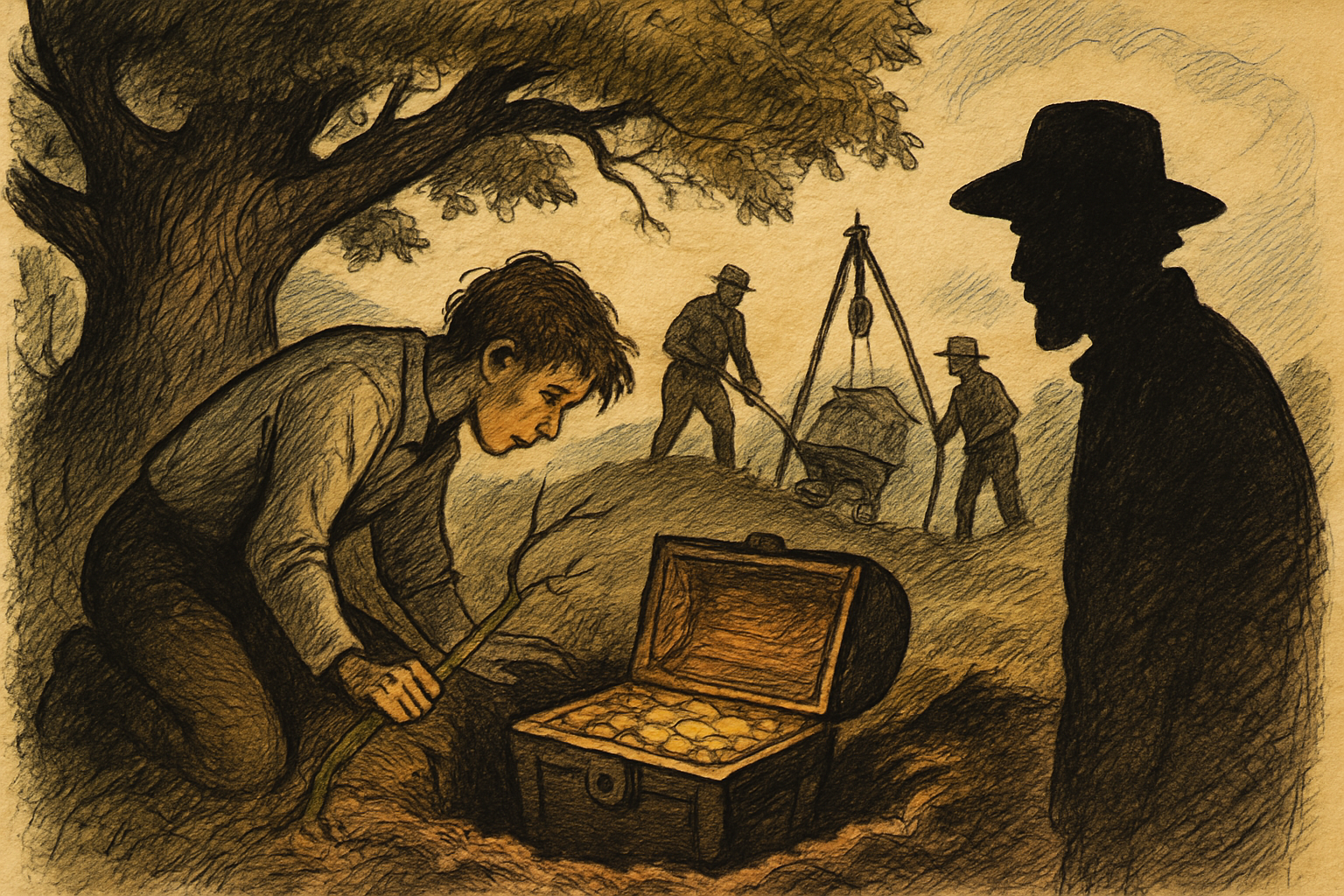
The Enigma of Oak Island
Beneath Oak Island lies a pit of promises, holding legends of buried treasure yet never yielding its secrets.
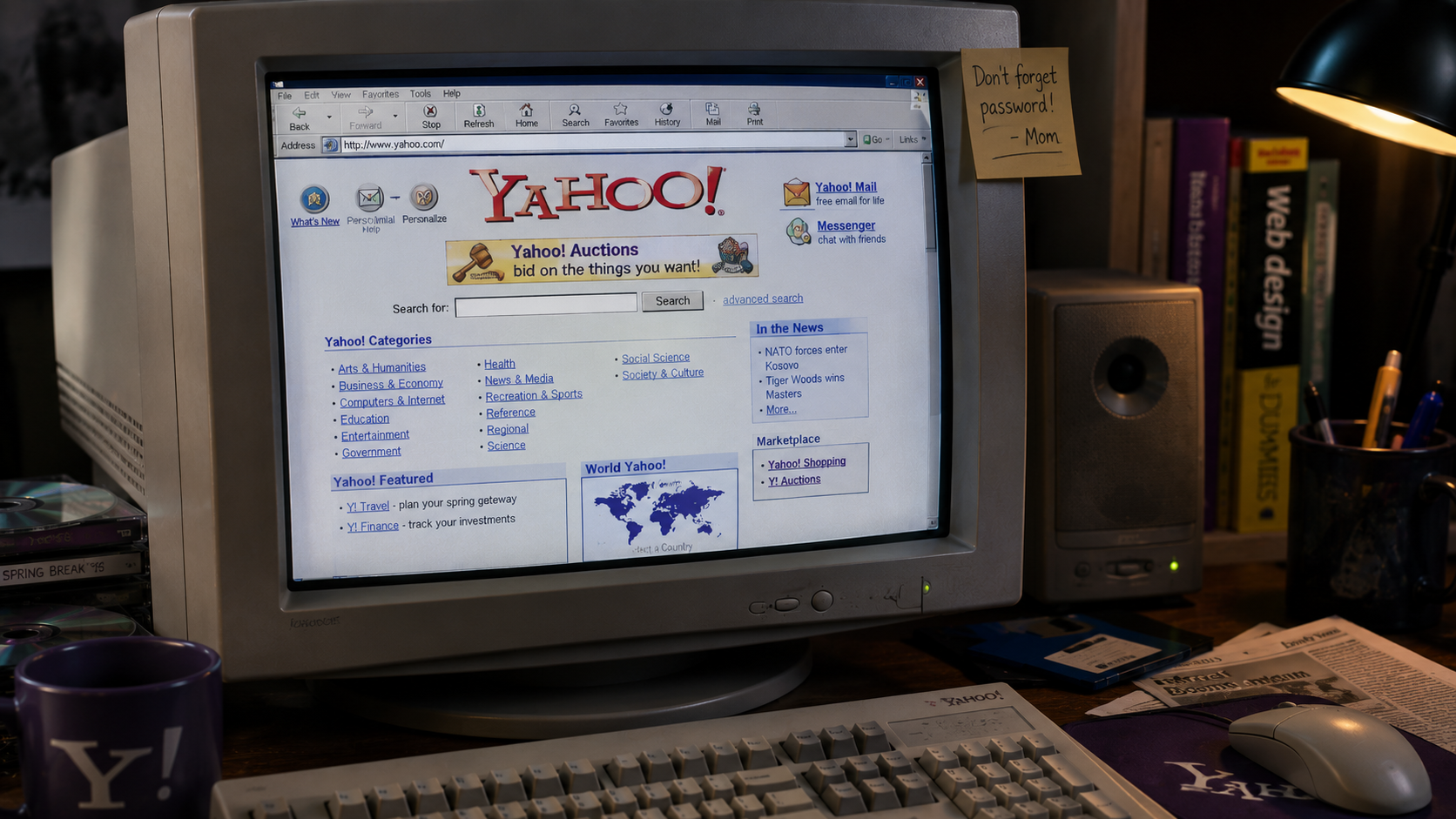
Yahoo's Rise and Fall
At its peak, Yahoo was the crowned jewel of the internet. Yet a series of missed opportunities and strategic blunders set it on a course to irrelevance.
Continue the Rabbit Hole
Each story explores the same idea from a different angle. Follow the connections and discover where the thread leads.

Fictional placeholder content