The Mystery Beneath the Waves
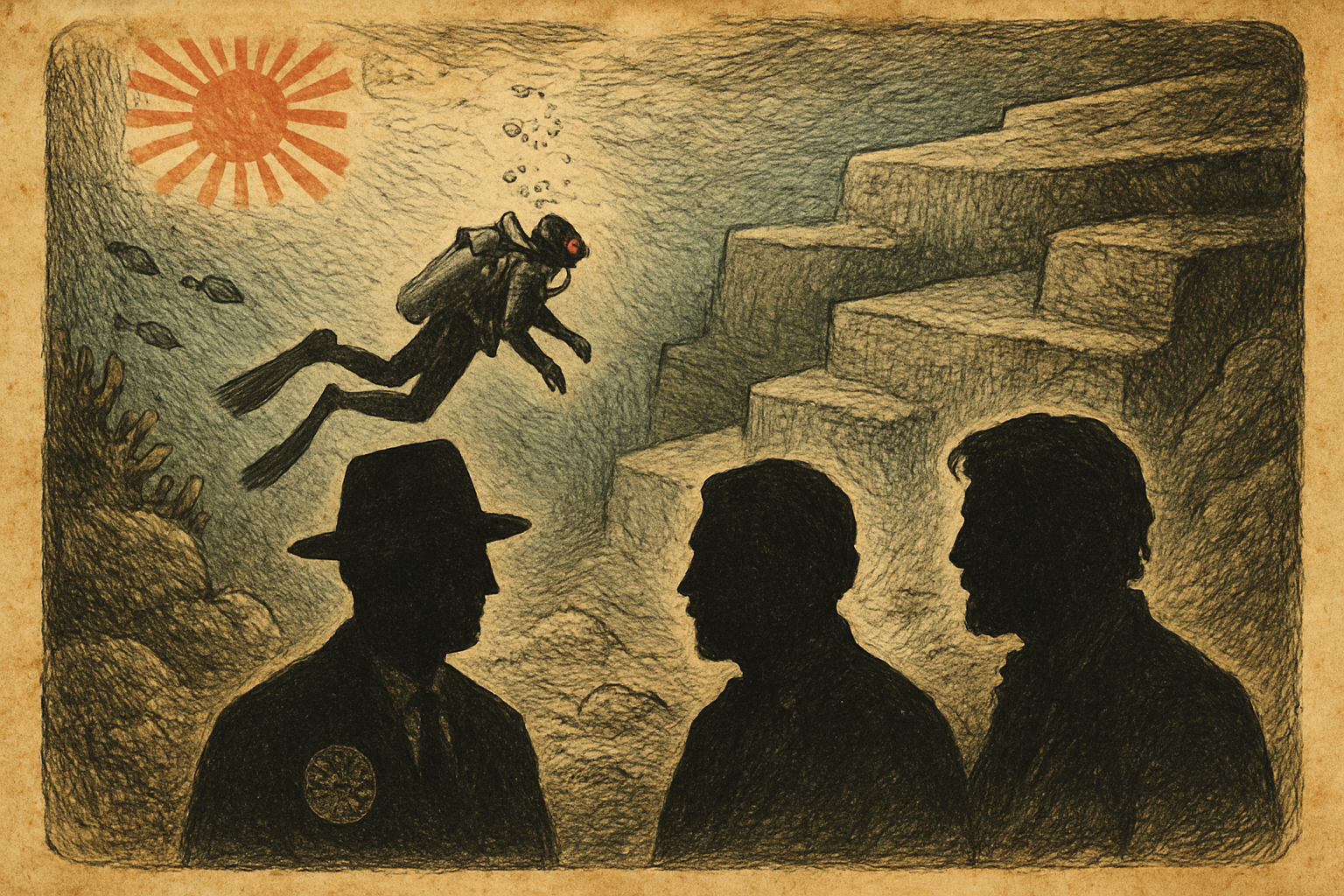
"In 1986, off the coast of Yonaguni Island, diver Kihachiro Aratake stumbled upon massive underwater structures that challenged our understanding of history. What lies beneath the surface are formations either carved by nature's hand or shaped by ancient humans."
What Happened?
The deep blues of the Pacific Ocean concealed a secret until one day in 1986, when diver Kihachiro Aratake stumbled upon what appeared to be ancient stone structures 25 meters beneath the waves off Yonaguni Island. Sharp angles and terraces cut into the rock echoed pyramidal forms, prompting immediate whispers of a lost civilization. Was this Japan's Atlantis lying silent underwater?
As locals marveled at the discovery, marine geologist Masaaki Kimura championed the idea of man-made origins, claiming the structures might have been crafted by humans more than 5,000 years ago. His hypothesis turned heads; the precision and scale rivaled renowned artificial constructions like Shuri Castle's original dimensions. This sparked worldwide intrigue but also ignited skepticism.
Enter Robert Schoch, a Boston University professor. After diving into the mystery himself, he concluded that natural processes sculpted the Yonaguni Monument, shaped by geology and time; nature's artistry mistaken for humanity's lost touch. His claims ignited debates that transcend simple questions of artifact or nature.
The controversy still simmers. The Japanese Agency for Cultural Affairs has yet to officially recognize the site, amplifying the questions: Can history be rewritten by a discovery under the sea? Or is this tale a testament to nature's uncanny ability to imitate human ambition? Kept shrouded in whispering waves and shadowed by doubt, the monument continues to compel divers and researchers to its enigmatic allure, where the harmony of past and present echoes with every ripple.
Takeaway
The lesson this story keeps teaching
“The debate over the Yonaguni Monument underscores how discoveries often reveal our biases and the narratives we want to believe.”
Why People Are Talking About This
The Yonaguni Monument challenges our understanding of human history and what we consider to be definitive proof of past civilizations. By blurring the lines between nature's wonders and possible human achievement, the monument forces us to question how we define and recognize ancient ingenuity.
The persistent debate over its origins highlights the human tendency to see what we want to see. As such, the Yonaguni Monument not only serves as an archaeological puzzle but also as a reflection of our biases and longing for connection with our distant past.
Thread Map
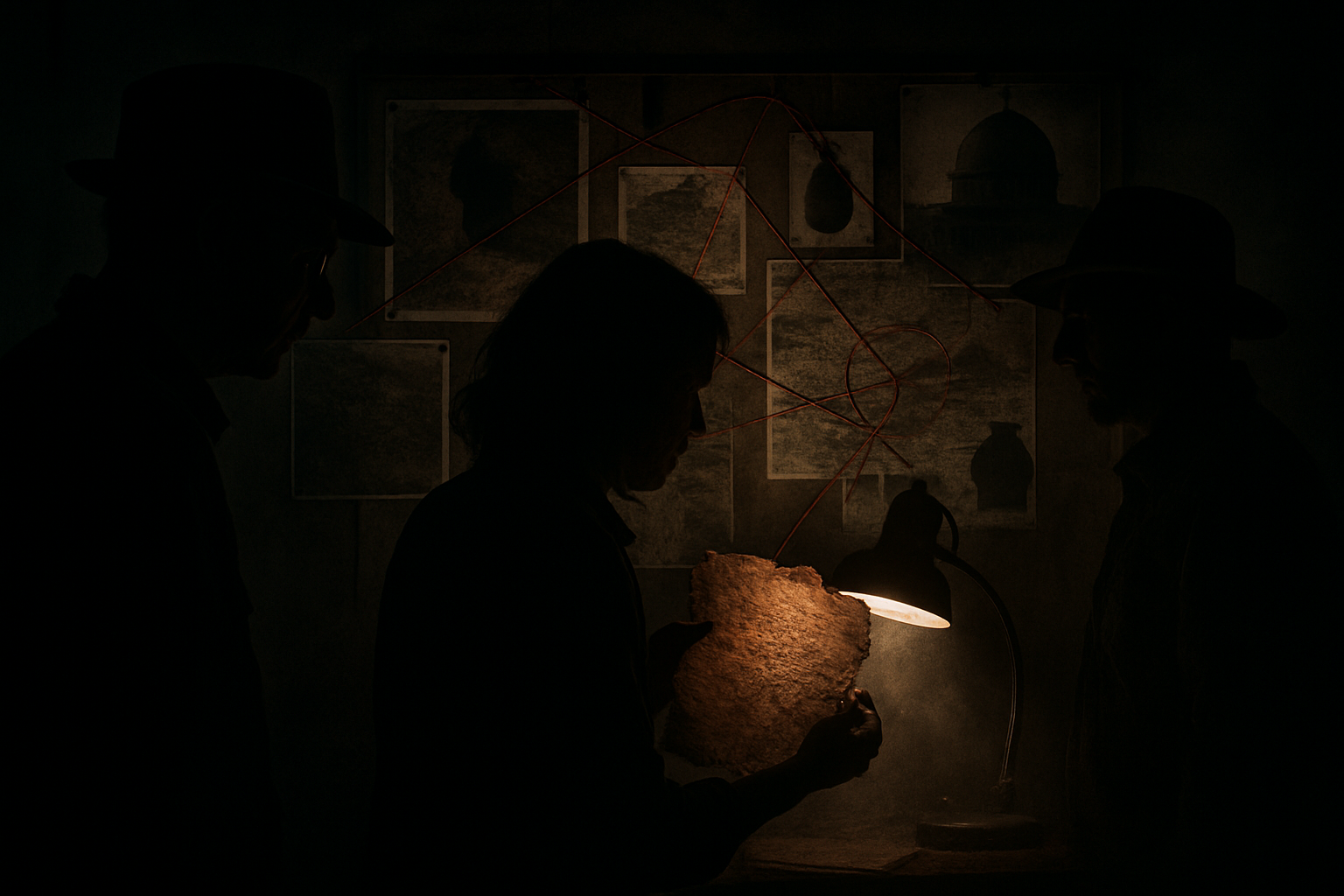
9 entities · 8 connections · Hover to explore, click to inspect
This is the connection map for this thread. Every node is a person, company, event, or idea. The red lines show how they connect. Hover a node to highlight its connections. Click a node to see why it matters to this story.
How We Got Here
A Diver's Encounter with the Unknown
While diving off the coast of Yonaguni Island, Kihachiro Aratake discovers massive stone formations resembling steps and terraces. His finding sparks a wave of curiosity and debate.
Explorers Dive into Controversy
A year after the discovery, the site gains attention from divers and researchers, with marine geologist Masaaki Kimura among the first to propose that the formations might be man-made.
Shuri Castle Rebuilt, Memories Stirred
While Shuri Castle in Okinawa is reconstructed, discussions about Yonaguni's origins gain new fervor, further drawing parallels between modern restorations and ancient mysteries.
Kimura's Theory Gains Traction
Masaaki Kimura publishes results suggesting that the Yonaguni Monument could be over 5,000 years old, sparking debates within the historical and archaeological communities.
Robert Schoch Counters Claims
Geologist Robert Schoch dives at Yonaguni and posits that the formations are natural, created by tectonic activity and erosion, challenging Kimura's assertions.
Media Spotlight Intensifies
The Yonaguni Monument becomes a focal point in television documentaries that explore whether the formations are nature's creations or remnants of ancient civilizations.
Academic Forums Spark Heated Debates
Various academic and archaeological forums discuss Yonaguni's possible origins, reflecting broader debates about historical narratives and human antiquity.
Technology Advances, Analysis Deepens
Technological advancements in underwater imaging provide clearer views of the monument, yet help little to resolve its origins as debates continue.
Cultural Recognition Remains Elusive
The Japanese Agency for Cultural Affairs maintains its stance, not recognizing Yonaguni as a cultural site due to insufficient evidence of its origins.
Wait... Who Is This?
The Yonaguni Monument lies off the southernmost tip of Japan, where the Pacific brushes against the island of Yonaguni. Before its discovery in 1986 by Kihachiro Aratake, the area was revered for its crystal-clear waters and diverse marine life, attracting divers from across the globe. However, the deep secrets the waters held turned the area into a hub of archaeological intrigue and debate overnight.
This part of the East China Sea, known for its tumultuous history of seismic activity and fluctuating tides, became a focus of international fascination for what hides beneath its surface. Local legends had long whispered of ancient cities and civilizations lost to waves, but few took these folklore tales seriously, assuming they were mere seafarers' myths. Aratake's finding challenged preconceived notions of history, suggesting that before the rise of documented civilizations, other sophisticated cultures might have existed, only to be swallowed by the ocean.
The discovery provoked scientists and archaeologists globally, pitting believers and skeptics against each other. It drew comparisons with ancient mysteries like Stonehenge, Petra, and of course, the fabled Atlantis. This debate on Yonaguni serves as a reminder of the ocean's enduring power to cradle secrets just out of human reach — and the human drive to unravel them.
Receipts
Yonaguni Monument | Definition, Theories, & Facts
Japan's Ancient Underwater "Pyramid" Mystifies Scholars | National Geographic
Yonaguni Monument: Lost Civilization or Nature's Trick? | WION Podcast
Exploration Mysteries: Yonaguni Monument » Explorersweb
Yonaguni Monument : diving a mysterious underwater city in Okinawa
The Deep End of History: What is the Yonaguni Monument?
Same Pattern
Different story. Same lesson.
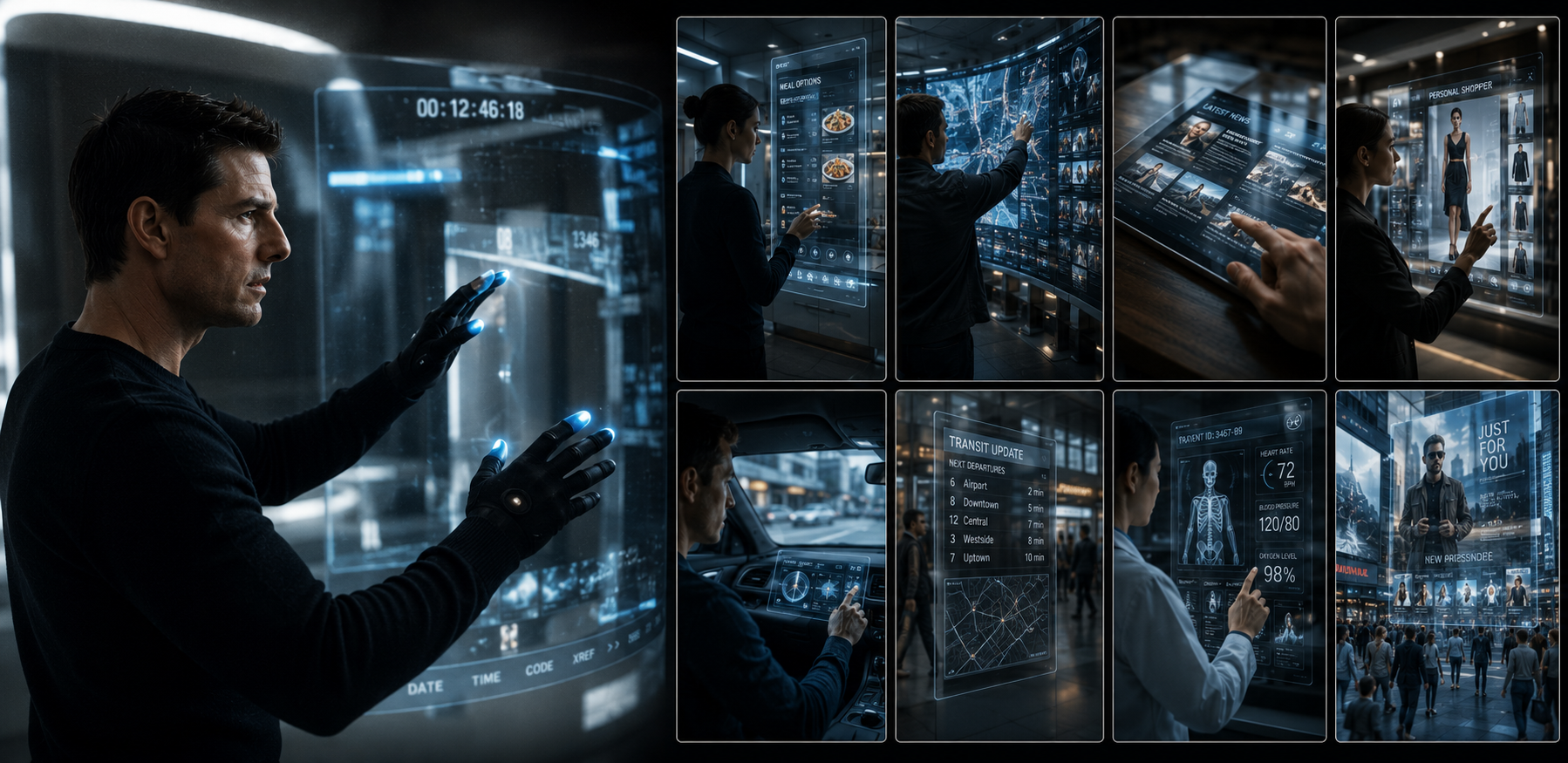
Minority Report's Prescient Touchscreen Reality
In 2002, Hollywood imagined a future of seamless touchscreen interfaces. Today, Steven Spielberg's vision feels eerily prescient as technology catches up.

The Lab That Invented Tomorrow
In December 1979, Steve Jobs saw echoes of the future inside Xerox PARC's halls. There, in a secluded lab, lay the blueprint for the modern tech landscape.

The Browser War That Built the Internet
In the mid-1990s, a software battle erupted that would shape how billions accessed information. Few could predict that the victor would soon face its own downfall.

The Wii Gamble That Saved Nintendo
In a world obsessed with graphics and power, Nintendo bet on simplicity. The Wii was laughed at — until it wasn't.

Pixar's Radical Feedback Loop
In a stark, unadorned room, some of the most powerful voices in animation face off with ruthless honesty. Their weapons? Brutal feedback that molds raw ideas into cinematic gold.

The Chicken That Changed Retail
Costco's $4.99 rotisserie chicken isn't just a meal — it's a strategic masterpiece. The unexpected ripple effects changed retail forever.
Continue the Rabbit Hole
Each story explores the same idea from a different angle. Follow the connections and discover where the thread leads.



Fictional placeholder content