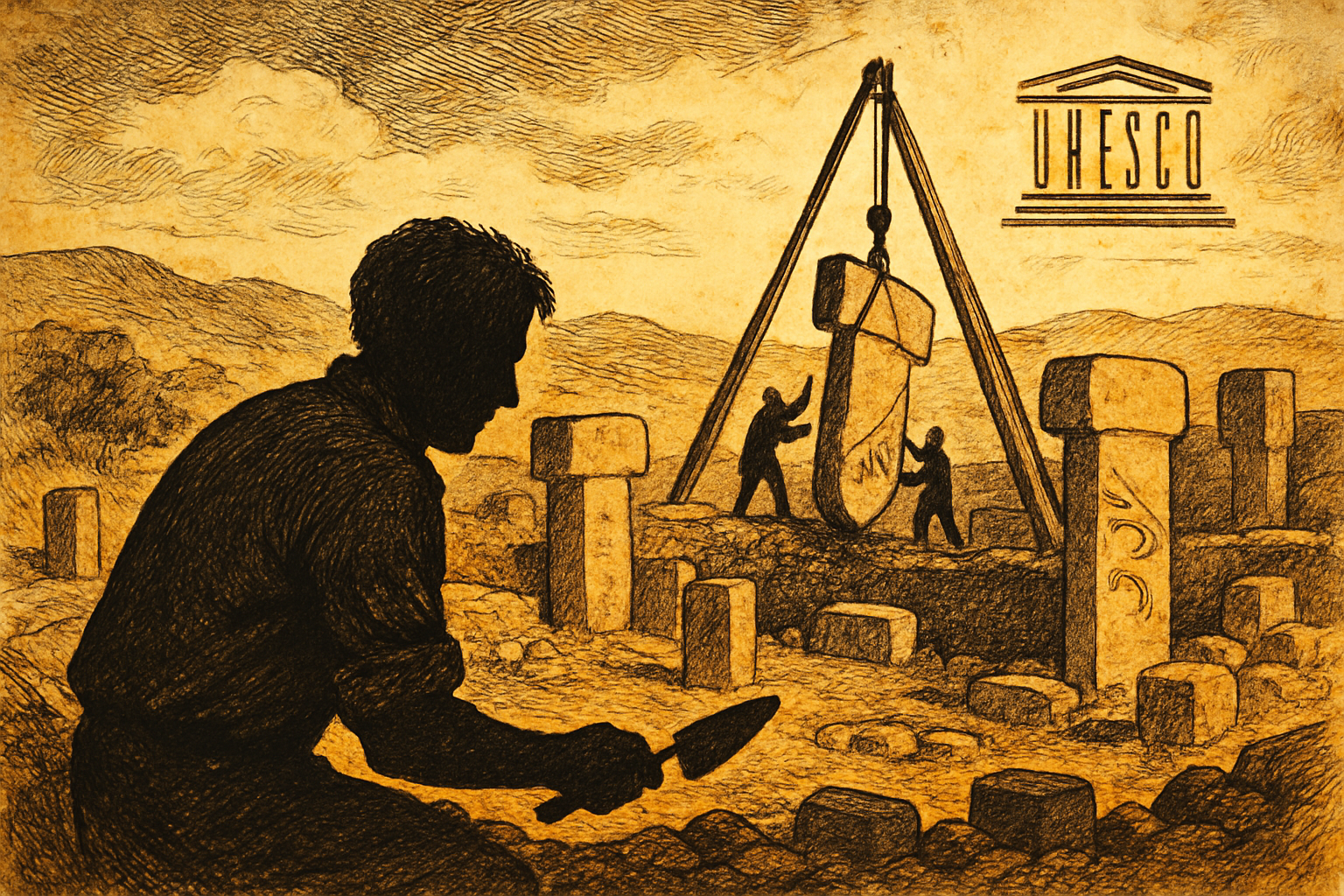
The Temple That Defied Time
"In a dusty Turkish landscape, an 11,000-year-old site silently dismantles our perceptions of early civilization. Göbekli Tepe wasn't supposed to exist—it demands we rethink history itself."
What Happened?
A twist of fate led Klaus Schmidt to a hill in southeastern Turkey where he stumbled upon something that would challenge the foundations of human history. The mound known as Göbekli Tepe didn't look like much at first glance, but a few scattered stones hinted at the secrets buried beneath. What began in the 1990s revealed a Neolithic marvel hidden for over 11,000 years—massive T-shaped limestone pillars carved with animal reliefs, arranged in circles, each one telling stories of a civilization that was not supposed to exist yet.
The discovery was astonishing. Archaeologists had always believed that civilization's roots lay with settled farmers, yet here was evidence of a complex society thriving long before agriculture took hold. Göbekli Tepe's intricacy and scale defied the understanding that hunter-gatherers were the key players of that era. Each pillar, taller than a man and weighing tons, suggested coordinated effort, perhaps even ritual gatherings that drew people from afar.
The process was methodical. Excavations peeled back layers of soil covering structures intentionally buried millennia ago. Each find raised more questions: Why would they hide their own achievements? What drove these ancient people to invest so much time and labor into such monumental constructions?
The site is still largely a mystery today, with only a small percentage excavated. But it has already rewritten the timelines of human development, sparking debates among historians and archaeologists. As we uncover more of these enigmatic circles, Göbekli Tepe keeps inviting us to rethink what we know about the dawn of organized human society. And somewhere beneath those layers of protection, more secrets await their moment in the sun.
Takeaway
The lesson this story keeps teaching
“Our understanding of human history is not as fixed as we once believed; hidden truths can shift paradigms.”
Why People Are Talking About This
Göbekli Tepe forces a profound reevaluation of human civilization's dawn. It reframes the sequence of development, placing religious activity before established agriculture. By opening up new pathways of inquiry, it underscores the significance of spiritual gatherings in shaping humanity’s fabric. Its impact stretches beyond archaeology—sparking conversations in history, anthropology, and even technology.
Thread Map
3 entities · 2 connections · Hover to explore, click to inspect
This is the connection map for this thread. Every node is a person, company, event, or idea. The red lines show how they connect. Hover a node to highlight its connections. Click a node to see why it matters to this story.
How We Got Here
The First Signs at Göbekli Tepe
Göbekli Tepe was initially discovered during survey work, although its potential was not yet realized. The site appeared innocuous but would later prove fundamental to challenging historical timelines.
Klaus Schmidt's Revolutionary Dig
After a fateful visit, Klaus Schmidt began intense excavations at Göbekli Tepe, revealing its massive megaliths and shifting paradigms about prehistoric societies. His findings suggested unprecedented social complexities for ancient hunter-gatherers.
Construction of the Enigmatic Structures
The site’s construction, employing enormous carved stones, is believed to have started around 11,000 BCE. It stands as a pivotal point in reimagining the timeline of human development.
Marked End of Use
Göbekli Tepe saw its final days of active human use during the Pre-Pottery Neolithic period. Enigmatically, its structures were methodically buried, concealing it for millennia.
UNESCO World Heritage Status
Göbekli Tepe was recognized by UNESCO as a World Heritage Site, highlighting its profound significance in understanding the depths of prehistoric human achievement and spirituality.
Global Academic Attention
During this decade, Göbekli Tepe attracted significant academic interest, driving research and prompting reevaluations of human history and prehistoric societal complexity.
Public Fascination and Conspiracies
Göbekli Tepe entered popular culture, associated with numerous conspiracy theories and debates about its purpose and origins, drawing intrigue beyond academic circles.
Establishment of Göbekli Tepe's Significance
By this time, archaeological work firmly established Göbekli Tepe as an extraordinary site, reshaping historical narratives and understanding of early civilization emerging before agrarian societies.
Wait... Who Is This?
Before the eyes of the world fixated on a seemingly innocuous hill in southeastern Turkey, Göbekli Tepe was a place veiled in secrecy. An ancient silhouette against Anatolia's skyline, the site lay dormant, dust-covered but majestic, waiting quietly for its story to be unearthed. It served as a testament to a time before records and histories, a period when hunter-gatherers meandered across an untamed land. The 1960s saw this site briefly appear on archaeological radar during survey work, hinted at but never imagined in its full potential until years later. While Stonehenge stood as a symbol of mysticism and ancient wonder, Göbekli Tepe's unearthing expanded those boundaries—challenging everything once taken for granted about early civilization. It was in these preliminary stages that whispers of something significant, something transformative began to circulate in niche circles. Little did anyone know that beneath the Turkish soil lay the seeds of a monumental revision of human history.
Receipts
Göbekli Tepe - Wikipedia
Gobekli Tepe | Location, History & Significance - Lesson | Study.com
Göbekli Tepe: The Mysterious Site Older Than Stonehenge | HISTORY
Echo from the Past: How Göbekli Tepe is Reshaping Our Understanding of the Neolithic – Popular Archeology
Göbekli Tepe (archaeological site) | Anthropology | Research Starters | EBSCO Research
Göbekli Tepe - UNESCO World Heritage Centre
Same Pattern
Different story. Same lesson.
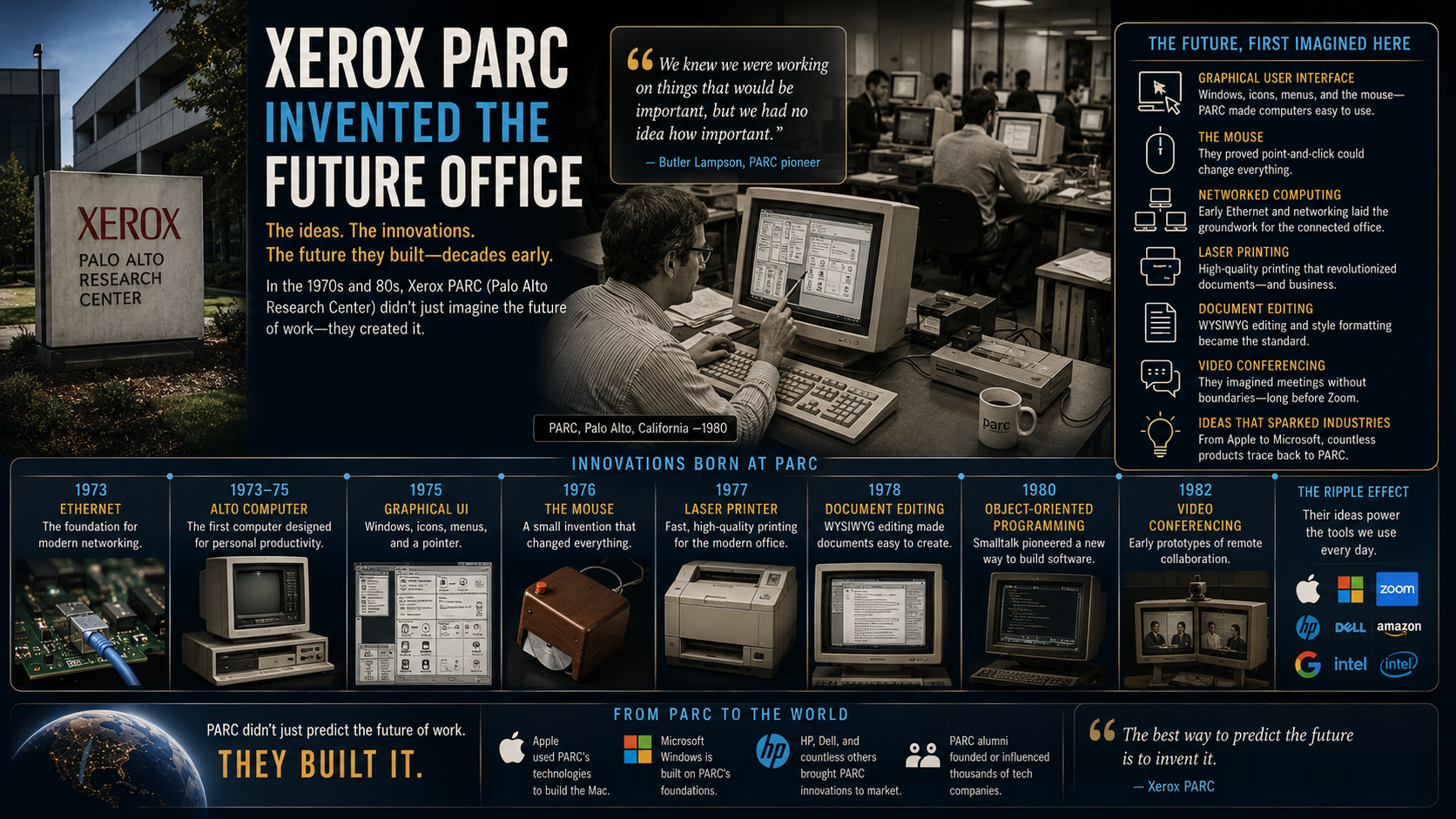
The Lab That Invented Tomorrow
In December 1979, Steve Jobs saw echoes of the future inside Xerox PARC's halls. There, in a secluded lab, lay the blueprint for the modern tech landscape.

The Wii Gamble That Saved Nintendo
In a world obsessed with graphics and power, Nintendo bet on simplicity. The Wii was laughed at — until it wasn't.

Pixar's Radical Feedback Loop
In a stark, unadorned room, some of the most powerful voices in animation face off with ruthless honesty. Their weapons? Brutal feedback that molds raw ideas into cinematic gold.

The Browser War That Built the Internet
In the mid-1990s, a software battle erupted that would shape how billions accessed information. Few could predict that the victor would soon face its own downfall.

The Chicken That Changed Retail
Costco's $4.99 rotisserie chicken isn't just a meal — it's a strategic masterpiece. The unexpected ripple effects changed retail forever.

Minority Report's Prescient Touchscreen Reality
In 2002, Hollywood imagined a future of seamless touchscreen interfaces. Today, Steven Spielberg's vision feels eerily prescient as technology catches up.
Continue the Rabbit Hole
Each story explores the same idea from a different angle. Follow the connections and discover where the thread leads.


Fictional placeholder content