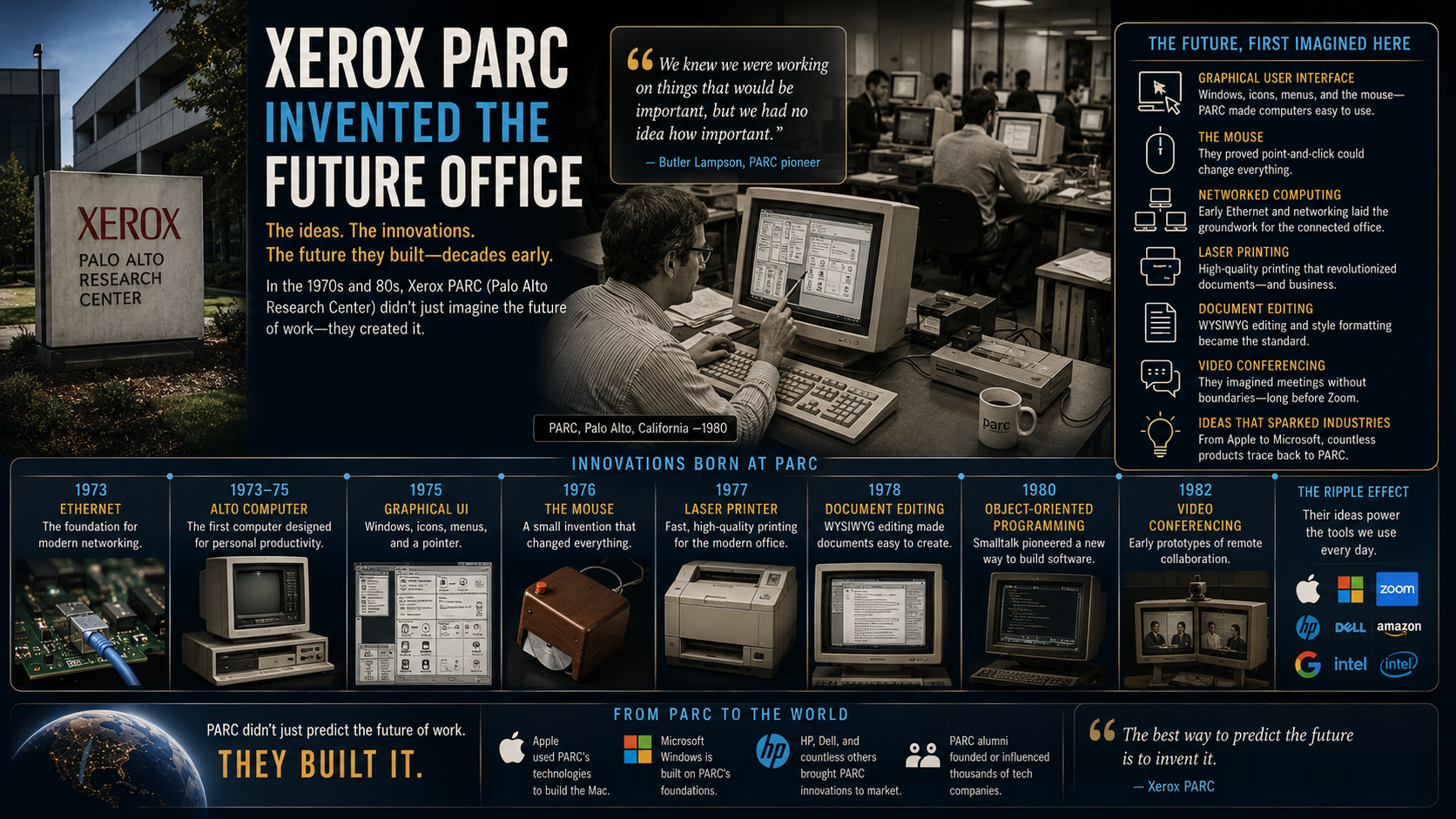
The Lab That Invented Tomorrow
"In December 1979, Steve Jobs saw echoes of the future inside Xerox PARC's halls. There, in a secluded lab, lay the blueprint for the modern tech landscape."
What Happened?
A small room in Palo Alto, California, softly lit by the glow of flickering screens, held the seeds of a revolution. Engineers from Xerox PARC had just finished linking a network of Alto computers, each equipped with a graphical user interface. It was 1973, and nothing like it existed—a networked setup that would shape the future office environment.
Inside this hub of innovation, the idea was simple but audacious: create 'the office of the future.' This mandate wasn't just a catchphrase. It was a call to action. Engineers transformed the concept into reality with groundbreaking creations like the Ethernet, a technology that would soon redefine connectivity, and the Alto, a precursor to the modern personal computer with its 'mouse' and icons.
The real twist came when ideas conceived within these walls left Palo Alto for the wider world, igniting sparks in unexpected places. By December 1979, word of these innovations reached Steve Jobs, who, struck by epiphany during a tour of PARC, saw the potential for Apple's Macintosh. The rest, as they say, is history—a tide sending ripples through tech giants for decades.
Ironically, PARC’s influence continues to echo, not necessarily through Xerox’s product lines, but in the DNA of computing giants like Apple and Microsoft. The innovations birthed here laid dormant within Xerox, their full commercial potential unrealized. Yet they were the kindling that sparked the creation of empire-defining products elsewhere.
Numerous visionaries like David Liddle and Charles Irby left to form Metaphor Computer Systems, taking fragments of PARC’s vision but leaving many undeveloped within Xerox itself. The effort to reclaim that innovative magic persists even today with new collaborations, a nod to the past striving for a future once imagined more than fifty years ago.
Takeaway
The lesson this story keeps teaching
“Disruptive inventions depend as much on visionaries to conceive them as they do on businesses to recognize and monetize them.”
Why People Are Talking About This
Xerox PARC's story is a sobering reminder of the potential pitfalls inherent in managing innovation. Despite crafting groundbreaking inventions that shaped modern computing, Xerox failed to capitalize on its immense lead. This tale highlights a critical insight into how business models need to accommodate — rather than stifle — technological advancements.
As tech giants today navigate their own cycles of innovation, PARC’s lessons resonate strongly: merely inventing isn’t enough; the pathway from laboratory to market is where true transformation happens. It's a narrative about potential stymied by complacency and oversight, a warning to all corporations nurturing nascent brilliance.
Thread Map
8 entities · 7 connections · Hover to explore, click to inspect
This is the connection map for this thread. Every node is a person, company, event, or idea. The red lines show how they connect. Hover a node to highlight its connections. Click a node to see why it matters to this story.
How We Got Here
Xerox Opens Radical New Lab
Xerox opened the Palo Alto Research Center in a bid to invent the 'office of the future', drawing in brilliant engineers and setting the stage for radical innovations.
The Birth of the Alto
Xerox PARC engineers introduced the Xerox Alto, a groundbreaking personal computer that featured a graphical user interface and Ethernet, far ahead of its time.
A Networked Future
Engineers at PARC began using networked Xerox Altos equipped with email and WYSIWYG editors, pioneering what would become staples of the modern office.
Steve Jobs' Paradigm-Shifting Visit
Steve Jobs toured Xerox PARC and discovered technologies that would later be incorporated into Apple's products, reshaping the future of personal computing.
Commercializing the GUI
PARC's graphical user interface technology was commercialized in the Xerox 8010 Information System, yet failed to reach the iconic status Apple would achieve.
Metaphor Extends the Vision
David Liddle and Charles Irby formed Metaphor Computer Systems to continue innovating on GUI technology, taking Xerox PARC's ideas into new territory.
The Lisa and Macintosh
Inspired by Xerox PARC, Apple introduced the Lisa and later the Macintosh, cementing the graphical user interface's place in personal computing history.
SRI International Revives PARC’s Spirit
SRI International announced plans to collaborate with Xerox PARC under its Future Concepts division, aiming to reignite the center's innovation legacy.
Wait... Who Is This?
In the late 1960s, Xerox was at the pinnacle of its industry, synonymous with copying. Yet, the winds of change demanded more than replication. The corporation's foray into the Palo Alto Research Center (PARC) in July 1970 was both a genius stroke and a curious gamble. Situated away from Xerox’s headquarters, PARC became a breeding ground for world-changing ideas far removed from the conventional office mindset.
Founded to explore the technological frontiers, PARC embraced a liberal and technologically adventurous approach to R&D. It managed to attract some of the brightest minds, including Bill Bowman and David Liddle, both set on the prospect of revolutionizing the workspace and computing. The center quickly filled with engineers passionate about redefining mundane office interaction into something futuristic.
These vibrant minds synthesized their expertise and futuristic dreams to create innovations such as Ethernet networking and the graphical user interface. Within its walls, the essence of modern computing was already taking shape, sometimes oblivious to those who wrote the check for it. But for all its ambition, PARC was ultimately viewed through the lens of its parent company, one focused on business machines and uninterested in exploring a future beyond its longstanding copier business.
Receipts
Xerox Parc’s Engineers on How They Invented the Future - IEEE Spectrum
Xerox PARC and yesterday's office of tomorrow
Fumbling the Future at Xerox PARC - by Max Olson
Can Xerox’s PARC, a Silicon Valley Icon, Find New Life with SRI? - The New York Times
PARC (company) - Wikipedia
How Xerox Inspired Apple and Microsoft | D&O Partners
Same Pattern
Different story. Same lesson.
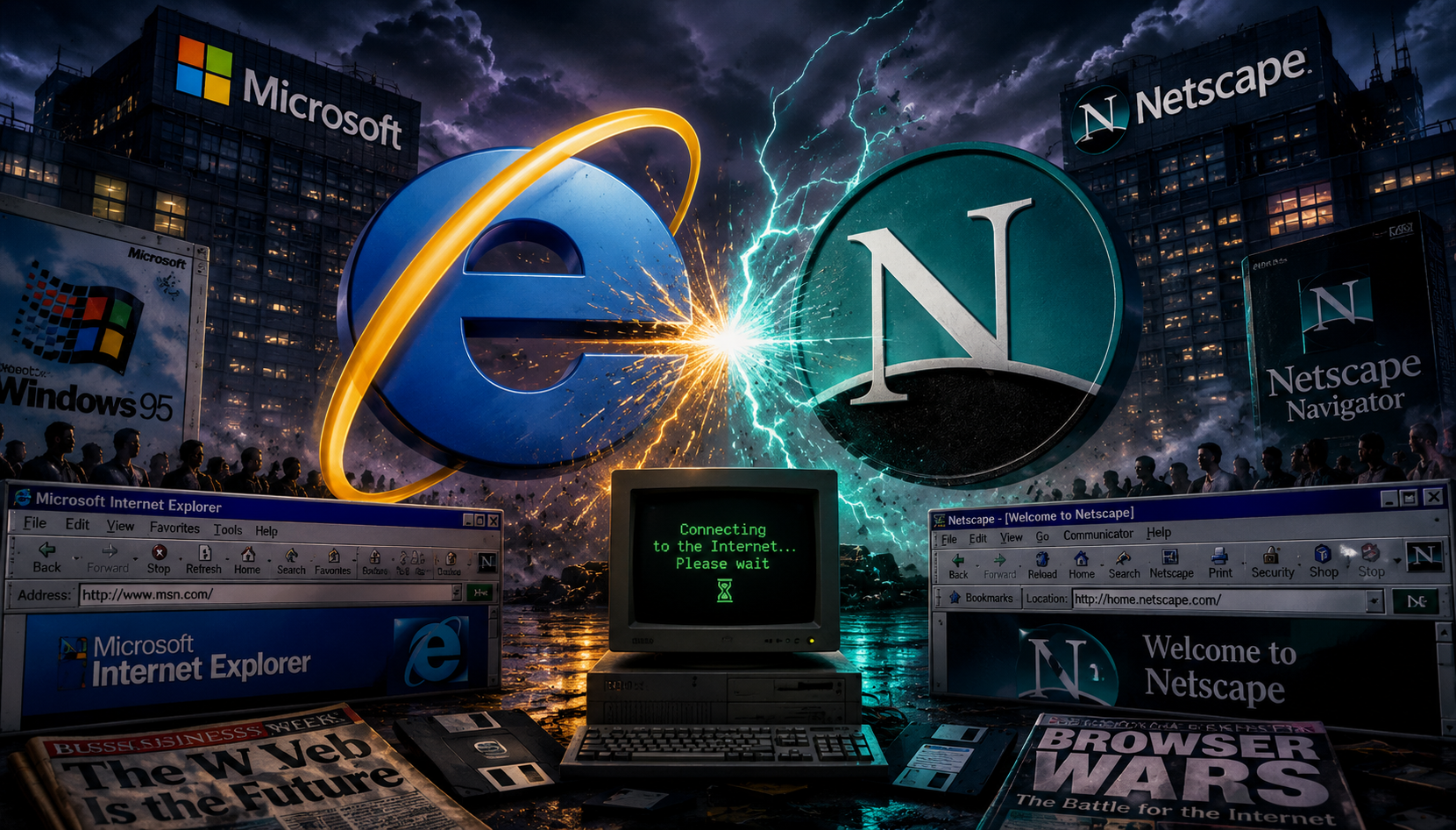
The Browser War That Built the Internet
In the mid-1990s, a software battle erupted that would shape how billions accessed information. Few could predict that the victor would soon face its own downfall.
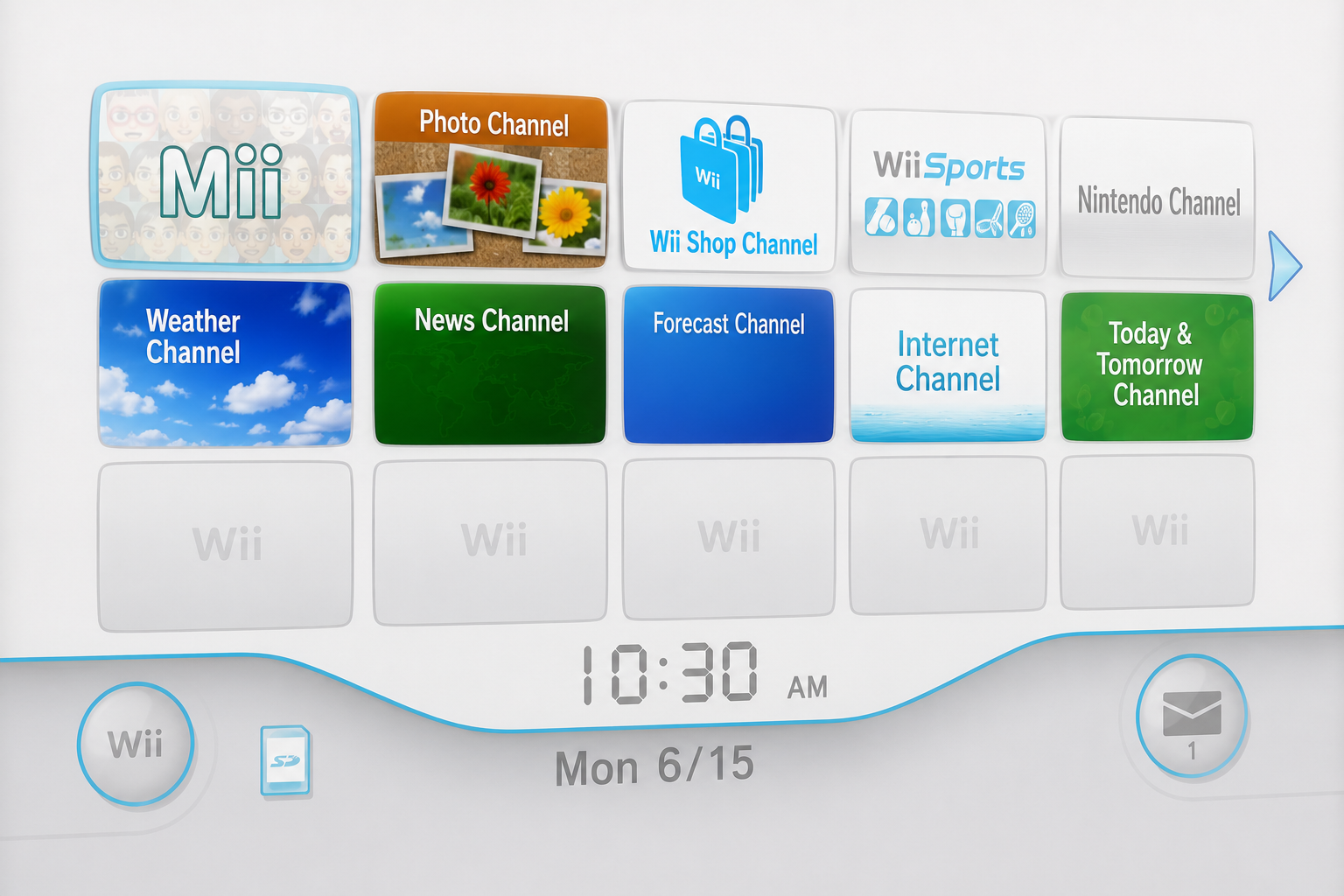
The Wii Gamble That Saved Nintendo
In a world obsessed with graphics and power, Nintendo bet on simplicity. The Wii was laughed at — until it wasn't.
Pixar's Radical Feedback Loop
In a stark, unadorned room, some of the most powerful voices in animation face off with ruthless honesty. Their weapons? Brutal feedback that molds raw ideas into cinematic gold.

The Chicken That Changed Retail
Costco's $4.99 rotisserie chicken isn't just a meal — it's a strategic masterpiece. The unexpected ripple effects changed retail forever.
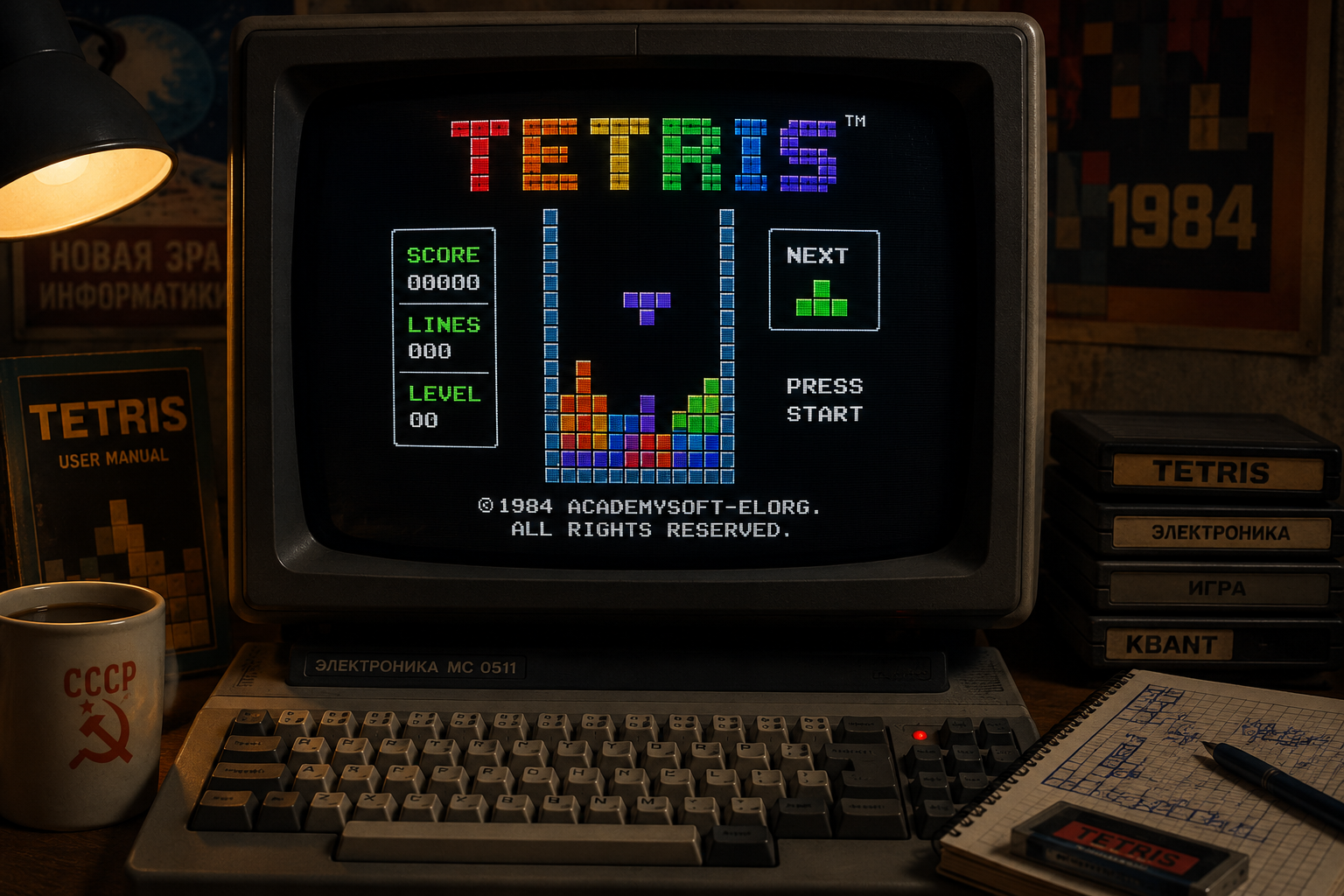
The Puzzle that Conquered the World
A Soviet engineer at his desk, unknowingly poised to create a legend. His creation? Tetris — a game that would break barriers and forever alter the gaming landscape.
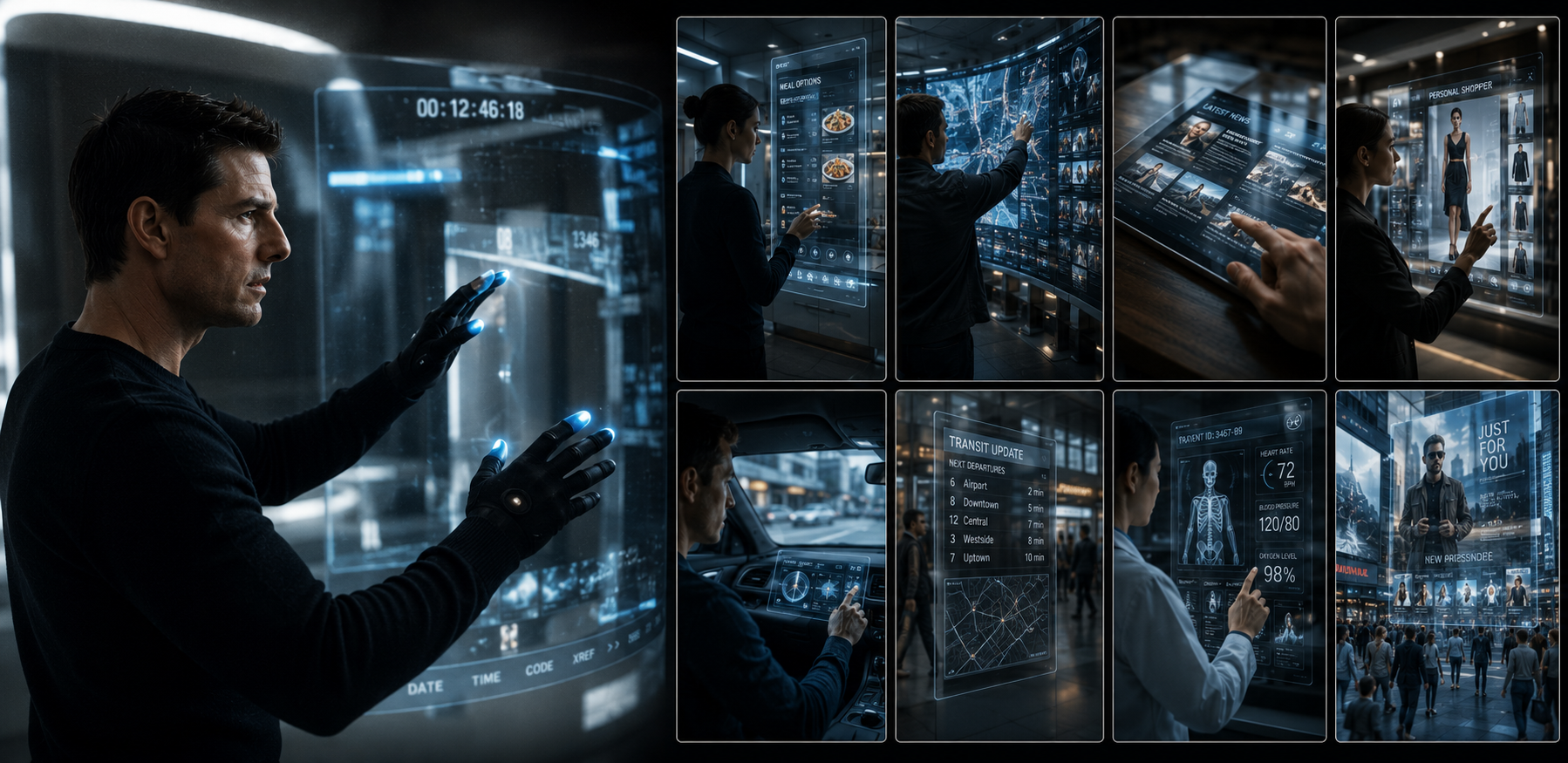
Minority Report's Prescient Touchscreen Reality
In 2002, Hollywood imagined a future of seamless touchscreen interfaces. Today, Steven Spielberg's vision feels eerily prescient as technology catches up.
Continue the Rabbit Hole
Each story explores the same idea from a different angle. Follow the connections and discover where the thread leads.


Fictional placeholder content