Automation's Unstoppable Ascent
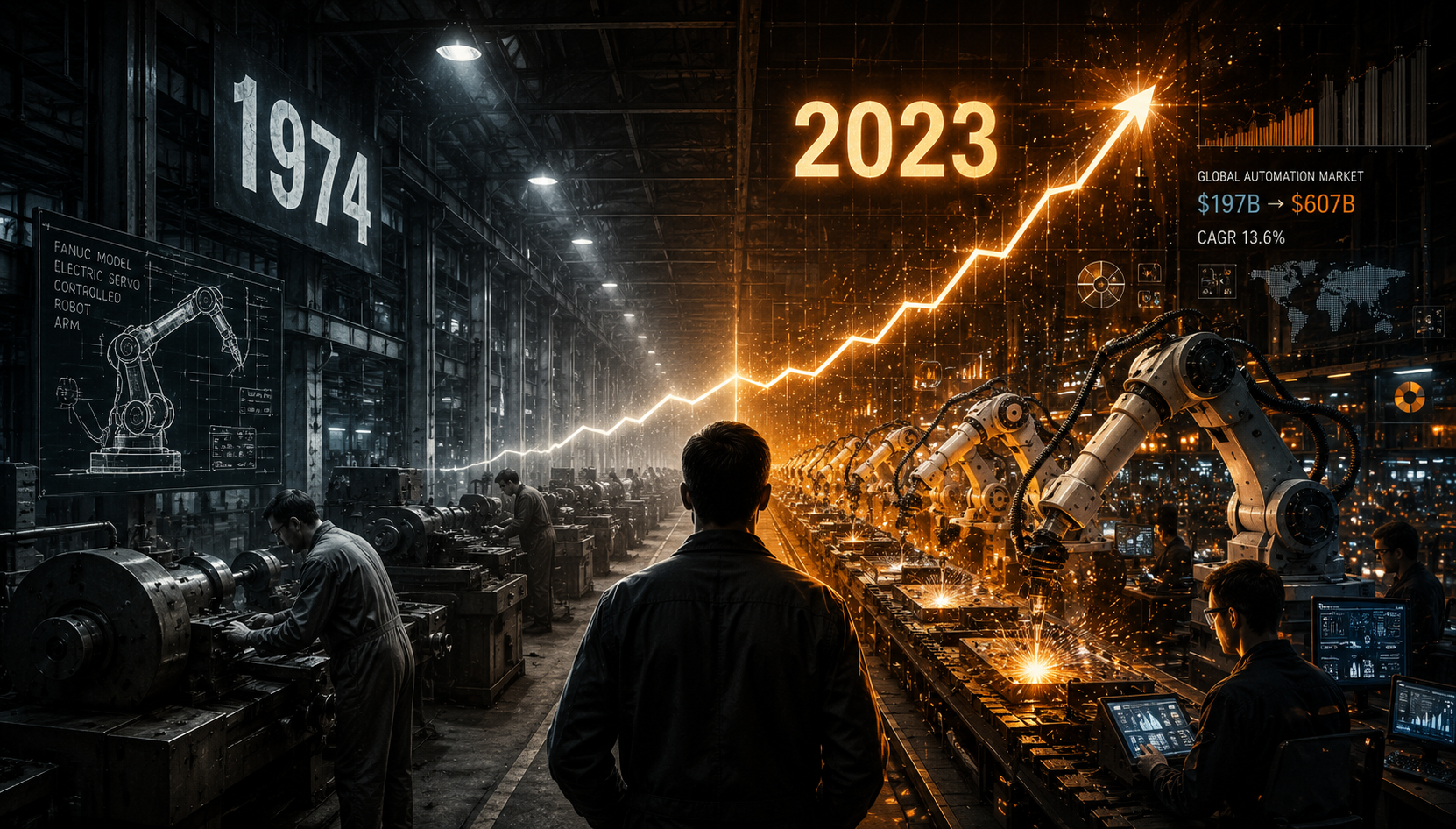
"In 1974, an electric servo-driven robot sparked a revolution. By 2023, debates over job loss threaten every industry."
What Happened?
In the midst of a quiet workshop in 1974, FANUC debuted its Model 1 electric servo-driven robot, an innovation that seemed minor but carried tectonic potential. This machine wasn't just a tool; it was a symbol of a profound shift. As its mechanical arms moved, they quietly overturned traditional ideas about labor, efficiency, and the economic order. By the 2000s, automation had woven itself into the fabric of industries worldwide, sparking both unprecedented productivity and deep-rooted anxiety over job displacement. The tension between technological progress and employment stability continues to deepen, challenging policymakers and society to rethink the value of human work in an automated age.
Takeaway
The lesson this story keeps teaching
“The relentless pursuit of efficiency can redefine societal structures and values, often at unforeseen costs.”
Why People Are Talking About This
Automation's rise pushes us to consider much deeper questions than just technology. It's ultimately about humanity's values and evolution. As machines take over tasks, societies must redefine labor, identity, and progress. The story isn't just about jobs—it's about the societal contract. As technology dictates more aspects of life, societies must balance efficiency with empathy, ensuring that progress doesn't erase human worth.
Thread Map
5 entities · 4 connections · Hover to explore, click to inspect
This is the connection map for this thread. Every node is a person, company, event, or idea. The red lines show how they connect. Hover a node to highlight its connections. Click a node to see why it matters to this story.
How We Got Here
FANUC Sizzles with Model 1 Debut
FANUC unveils the Model 1, the first electric servo-driven industrial robot, marking a pivotal launch in automation technology. This machine was a groundbreaking advancement and instantly became an emblem of future industrial transformations.
Electronics Price Plunge Drops Barriers
Throughout the 1970s, electronics prices plummet significantly, catalyzing the distribution and adoption of computers in homes and industries. This trend laid the infrastructure for automation to embed itself into everyday life.
Internet Sparks Automation Revolution
The early 2000s see a boom in internet technology which amplifies advancements in home and industrial automation. Connectivity and data begin to rewrite productivity scripts across industries.
Automation Anxiety Surfaces
A PwC survey reveals that 37% of the workforce fears job loss due to automation, highlighting a growing unease about the future of work. Discussions about labor market transformations gain critical momentum.
Debates Over Automation’s Future Rage On
Current conversations focus on whether the expansion of automation can coexist with a sustainable labor market. Innovations like AI drive discussions on ethical and socioeconomic dimensions.
AI Integration Escalates
Throughout the 2010s, AI becomes increasingly integrated into automation, compounding its effects on industries and bringing conversations about regulation and control to the forefront.
Pandemic Accelerates Automation Adoption
The COVID-19 pandemic forces industries to accelerate the adoption of automation to cope with labor shortages and new safety guidelines, reshaping consumer business models.
Intensified Scrutiny of AI & Privacy
Concerns over AI and privacy intensify, leading to discussions about data regulation and ethical deployment, with automation often at the heart of these dialogues.
Wait... Who Is This?
Before FANUC's pivotal move in 1974, the seeds of automation had already sprouted during the decades of post-war innovation. The Cold War spurred advancements in various fields, with global powers vying for technological supremacy. In the industrial realm, companies like FANUC and others dabbling in early robotics ventured against traditional norms. Amid an atmosphere infused with dreams of a computerized world, industries experimented with integrating electronics into production lines.
The decade was not merely about technics; it was about the people behind them. Engineers and inventors found themselves at the cusp of a new frontier. They bore witness and contributed to a tidal wave of change that promised more than just mechanical prowess. This era was a cauldron of optimism, tempered by the realization that every innovation cast shadows that had to be reckoned with.
The conversation around automation was more than mechanization; it was about redefining what it meant to engage with work and understand productivity. As of today, financial and cultural impacts of those early days persist, forming a complex mosaic into which today's technological adventures are woven.
Receipts
Timeline History of Automation - How Automation Was Evolving – Progressive Automations
Will the continued rise of automation cause widespread job losses? | World Finance
The Rise of Automation: How AI is Revolutionizing Process Automation
What is the Future of Automation? 2026 Trends & Predictions | SS&C Blue Prism
Artificial Intelligence and Privacy – Issues and Challenges
Continue the Rabbit Hole
Each story explores the same idea from a different angle. Follow the connections and discover where the thread leads.





Fictional placeholder content