The Curse of Thirteen
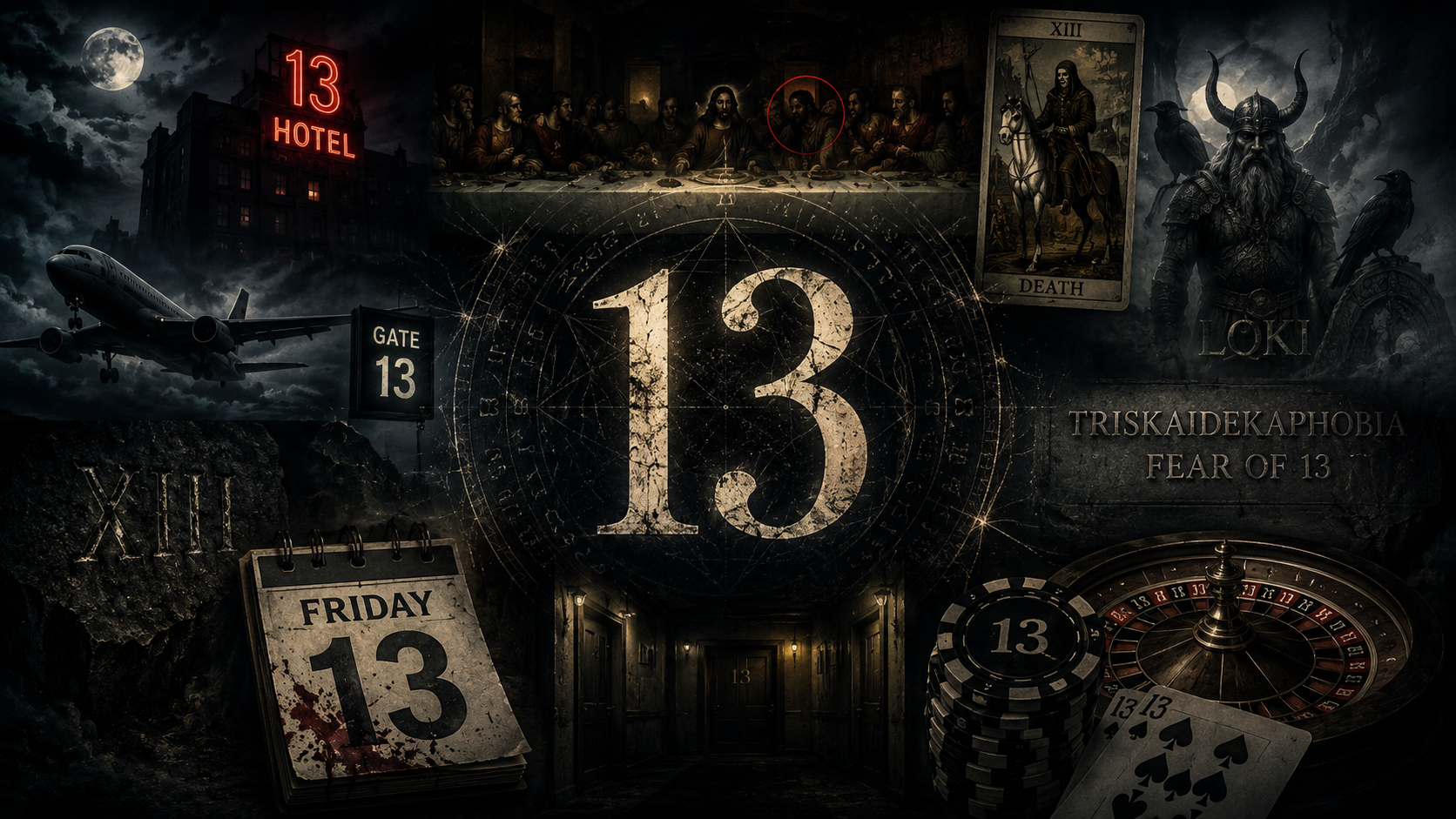
"It's the number that has haunted hotel floors, airplane rows, and gambling bets. The fear of 13 has roots that twist through time, inviting a brew of superstition and dread."
What Happened?
Long before skyscrapers omitted the 13th floor, an ancient fear of this number had already begun to embed itself in cultural narratives. The notorious reputation of the number 13 can be attributed to stories like Judas Iscariot's betrayal during the Last Supper and Loki's disastrous entry into a Norse feast. This fear, known as triskaidekaphobia, was reinforced further when societies avoided the number in architecture and superstitions like Friday the 13th. Even today, this superstition persists, demonstrating how deeply narratives of fear can entrench themselves within our collective psyche, influencing behaviors from urban planning to personal anxieties.
Takeaway
The lesson this story keeps teaching
“Superstition can transform whispers into widespread cultural norms, influencing decisions and behaviors for centuries.”
Why People Are Talking About This
The story of 13 is one of perception, a reminder of how easily fear can dictate cultural norms. Whether shaping the layout of cities or influencing the economics of the aviation industry, stories like that of 13 illustrate the power of narrative to shape the world. And in a society rapidly progressing towards scientific rationality, it underscores the lingering shadows of myth that still hold sway, nudging us to contemplate how stories from the past continue to challenge or shape our perceptions.
Thread Map
9 entities · 8 connections · Hover to explore, click to inspect
This is the connection map for this thread. Every node is a person, company, event, or idea. The red lines show how they connect. Hover a node to highlight its connections. Click a node to see why it matters to this story.
How We Got Here
The Last Supper Hosts a Traitor
At the Last Supper, Jesus Christ hosted twelve disciples, with Judas Iscariot betraying him as the 13th guest. This event became pivotal in embedding suspicions about the number 13 in Christian-influenced cultures.
Loki Arrives as the Uninvited Guest
In Norse mythology, troublemaker Loki attended a feast uninvited, becoming the 13th guest. His mischievous presence led to the tragic demise of Baldur, deepening the suspicion surrounding the number 13.
Rome Brands 13 as An Ill-Omen
Ancient Romans associated the number 13 with ill fortune and death, embedding these superstitions into Western culture layers, further entrenching fear of the number across generations.
Triskaidekaphobia Gets a Name
The term triskaidekaphobia was coined, designating the irrational fear of the number 13 in medical and psychological circles — acknowledging its longstanding cultural impact with a scientific name.
Rise of Friday the 13th Fears
Many cultural superstitions began to crystallize around Friday the 13th, fueled by echoes of historical narratives. Fear of this date became particularly potent among Western societies, perpetuating widespread anxiety.
Friday the 13th Movie Franchise Born
The horror film series Friday the 13th premiered, consolidating and commercializing existing fears, blending cold superstition with entertainment and embedding it deeper into pop culture.
Mayan Calendar Sparks End-of-World Fears
Approaching December 21, 2012, worldwide hysteria broke out at the end of the Mayan calendar's 13th Baktun, believed to herald an apocalypse. The date passed uneventfully, despite collective anxiety.
Survival of Superstations
Despite advancements in rational thinking and science, superstitions around 13 persist, with adaptations seen in modern architecture, travel, and popular culture still avoiding the dreaded number.
Wait... Who Is This?
Numbers have always danced between the tangible and the mystical, from their roots in trade and astronomy to the cryptic symbols of occult practices. The story of 13 stretches across millennia, intertwining cultures and mythologies in complex patterns. In Christian tradition, the Last Supper constructed an enduring association between 13 and betrayal, a symbolic chain reaction beginning with Judas Iscariot's kiss of death. This wasn’t a new fear, though; ancient Roman society’s disdain for ill omens, combined with Norse mythology, emphasizes how this simple numeric phenomenon magnifies into shared culture. The transformation of 13’s narrative into a widespread fear reveals our deep-seated need to rationalize the inexplicable with fable and superstition.
Receipts
Friday the 13th - Origins, History & Superstition
ELI5: Why is 13 an unlucky number in Western culture? - Reddit
Why Is 13 Unlucky? | Numerology, Christianity, History, & Culture
Why is 13 considered unlucky? Is it really? I see that number all the ...
Why is 13 considered unlucky? - USC News & Events | University of South Carolina
Superstition: Why do we still avoid the number 13?
Friday the 13th in Popular Culture
Continue the Rabbit Hole
Each story explores the same idea from a different angle. Follow the connections and discover where the thread leads.




Fictional placeholder content