Racing Shadows: A 2,600-Year Chase
"It seemed like an ordinary race — a hare and a tortoise with an imbalanced contest ahead. But the outcome defied expectations, rewriting the narrative of speed versus perseverance and echoing through millennia."
What Happened?
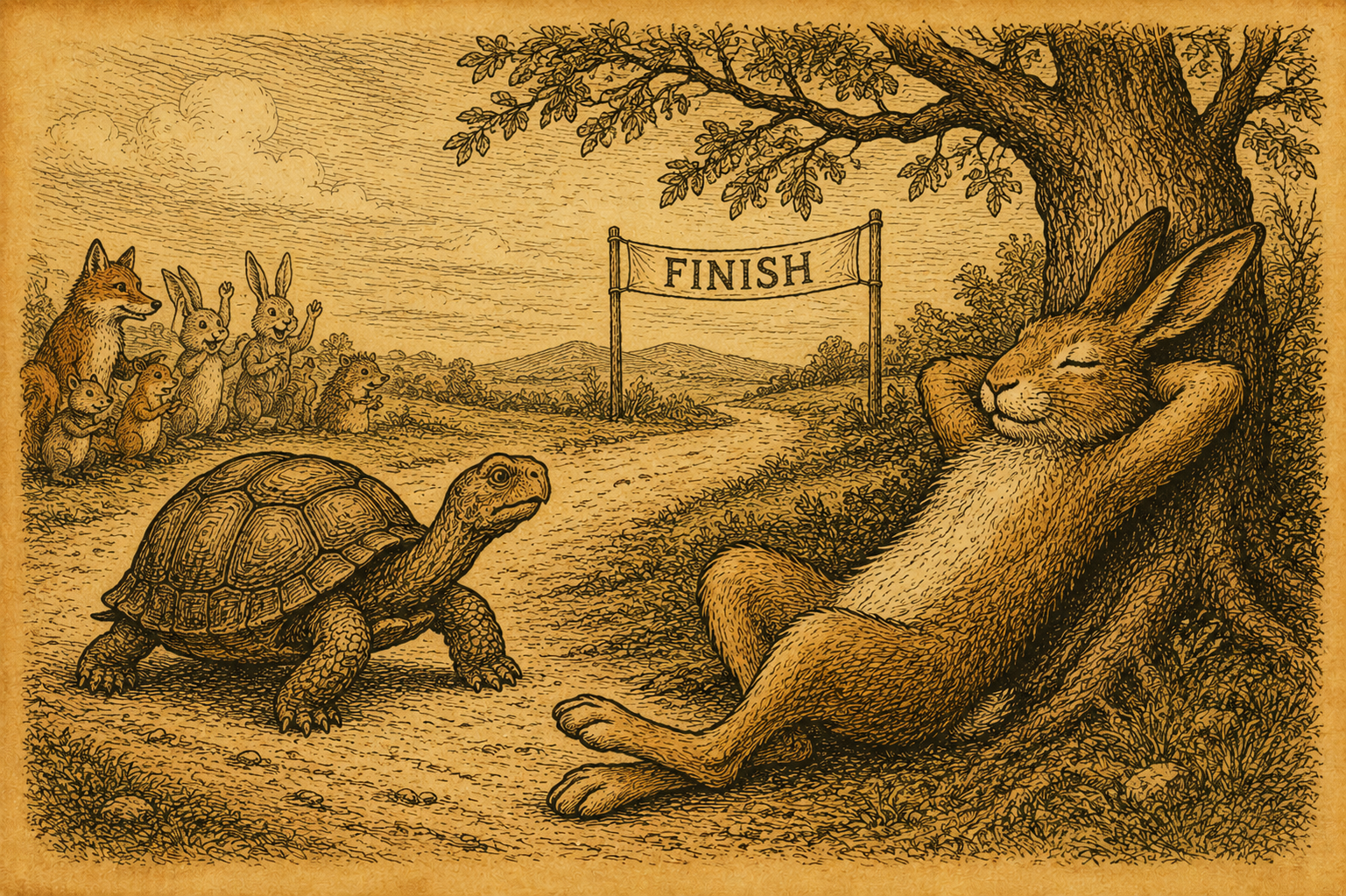
On a bright day in ancient Greece, an unexpected race unfolded between a swift hare and a steadfast tortoise. Everyone observing expected the hare, known for its unrivaled speed, to easily win. However, it was the tortoise's patient plodding that prevailed while the hare, confident beyond measure, chose to nap mid-race, leading to a surprising defeat. This simple tale, crafted by Aesop and retold across cultures and centuries, continues to encourage reflection on the balance of ambition and humility. In essence, the story layers a caution about overconfidence while extolling the virtues of perseverance and steady progress in overcoming challenges.
Takeaway
The lesson this story keeps teaching
“Arrogance may promise speed, but patience and persistence sustain the journey to true success.”
Why People Are Talking About This
In an era immersed in ceaseless ambition and often expediency-driven gratification, 'The Tortoise and the Hare' presses upon a truth: that steady and formative growth often surpasses fleeting strides in resilience, wisdom, and success. In domains of business, technology, or personal endeavors, this enduring fable illustrates that unflinching patience and discipline are the twinned counterparts to ambition's vibrancy. As we navigate realms that prefer speed, the story calls for remembering that sustainable growth relies on principles that balance innovation against the slow virtues of cautious strategy.
Thread Map
6 entities · 5 connections · Hover to explore, click to inspect
This is the connection map for this thread. Every node is a person, company, event, or idea. The red lines show how they connect. Hover a node to highlight its connections. Click a node to see why it matters to this story.
How We Got Here
Aesop Lays the Foundation
Aesop emerges as a master storyteller in ancient Greece, crafting fables like 'The Tortoise and the Hare' that capture human truths. His work will influence generations and underscore the fable's lessons across millennia.
The Fable is Recorded
'The Tortoise and the Hare' is transcribed into Greek, transitioning from oral tradition to written story. Its documentation solidifies its position in cultural narratives and immortality.
Van Veen Embraces the Fable
Otto van Veen integrates 'The Tortoise and the Hare' into European emblem traditions, promoting the theme 'hasten slowly.' This adaptation again renews the fable’s cultural relevance.
La Fontaine Revamps the Tale
Jean de La Fontaine publishes his influential rendition, 'Le Lièvre et la Tortue,' enriching the story with nuanced reflections of 17th-century France. This version propels the story’s significance across Europe.
Latin Version Enacts Moral Values
The Latin version 'De Lepore et Testudine' is released, highlighting themes of perseverance and industry. The fable's influence grows, with morals now firmly rooted in European literature.
Paradoxes and Fables Entwine
Zeno of Elea incorporates themes of the fable into his explorations of paradoxes concerning motion and progression. This diversification maintains the tale's intellectual allure.
Empowerment and Moral Revisions
Educational adaptations see the tale employed in widening circles, demonstrating empowerment of steady growth over hasty achievements. Variations in interpretation flourish within motivational literature.
Internet Reimagines the Race
The fable resurfaces through memes and online discourse, drawing upon its versatile applicability in modern culture. Its message of patience gains renewed weight.
Wait... Who Is This?
The crafting of cultural allegories in Greece began even before the rise of its renowned philosophers. Crafted around the 6th century BCE, Aesop's tales thrived in storytelling traditions where wit and wisdom were encapsulated through animals and fables.
A bridging figure melding oral traditions into preserved storytelling, Aesop's existence remains much debated, resting more in the realm of lore than validated history. The narratives attributed to him sought not simple entertainment; they channeled moral truths comparable to parables well-suited to transcending their time. These stories conveyed the folly of human vanity and the consequences of unchecked ambition, serving dual purposes of education and entertainment.
Over centuries, 'The Tortoise and the Hare' proliferated globally, from ancient Greek tongues to other European dialects, each nuanced retelling embedding further significance into its tale. The narrative's staying power lies in its ability to remain familiar whilst adapting to context: from La Fontaine's canon in 17th-century France to school lessons worldwide, each retelling imprints a different societal lens onto the fable.
Receipts
The Tortoise and the Hare by Aesop | Moral & Mottos - Lesson | Study.com
Life Lessons From Aesop's Fable 'The Tortoise and the Hare
A Little Happier: What's the Real Lesson from the Tortoise and the ...
Lessons from the Tortoise and the Hare - Onelife Leaders
Some Versions of 'The Tortoise and the Hare' Messed With the Moral
The Tortoise and the Hare Fable: Summary and Reflection Questions
Continue the Rabbit Hole
Each story explores the same idea from a different angle. Follow the connections and discover where the thread leads.








Fictional placeholder content