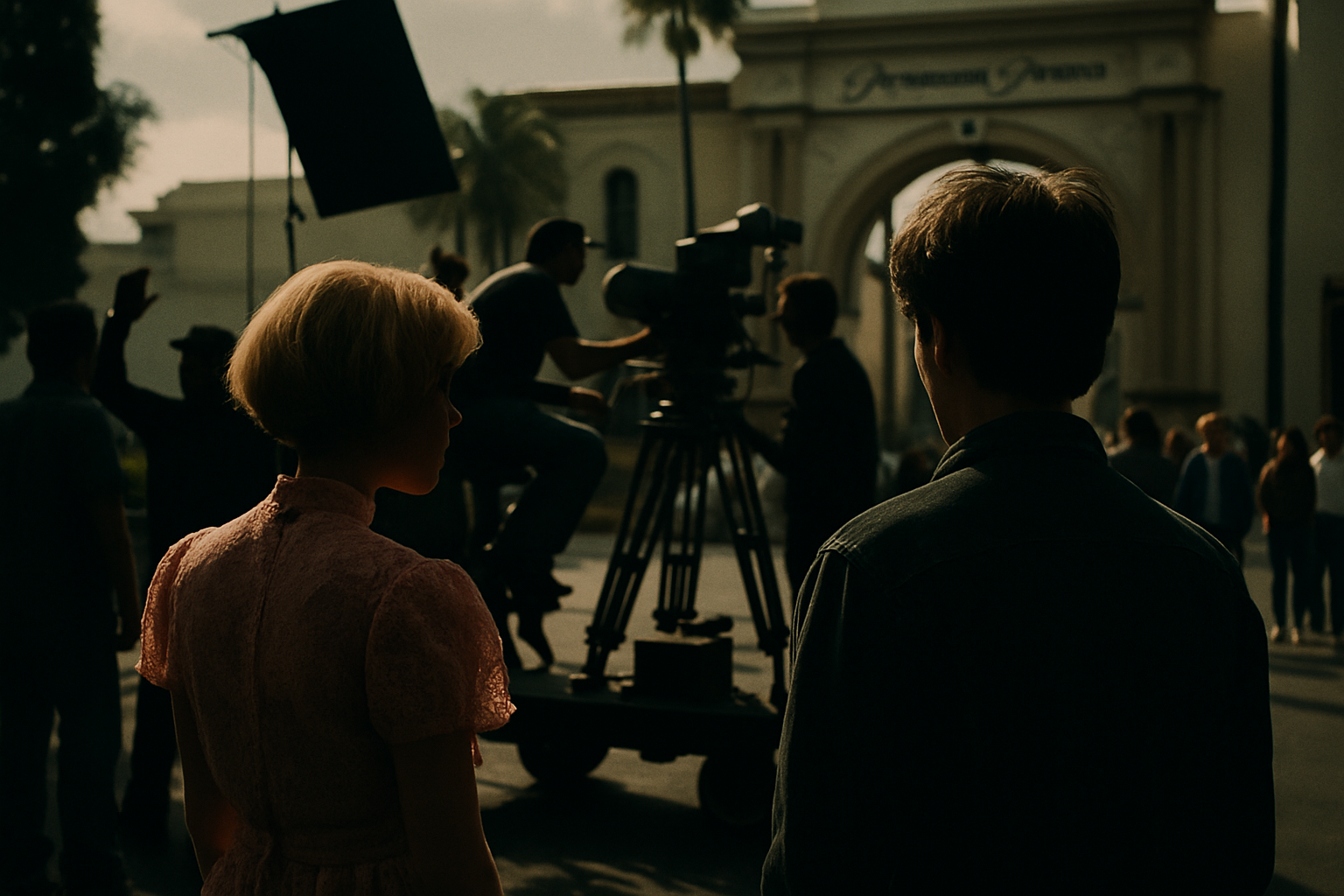
Teen Love Triangles: A Hughes Legacy
"In 1986, a discontented audience almost buried one of the most iconic teen romances when Pretty in Pink's test screenings demanded a dramatic change. John Hughes responded with a surprising twist—a redo in disguise."
What Happened?
In 1986, John Hughes faced a backlash from audiences due to the unexpected ending of Pretty in Pink, where Andie's choice of Blane over Duckie left viewers dissatisfied. They wanted a conclusion that echoed their own desires for justice and acceptance. The criticism led Hughes to create Some Kind of Wonderful in 1987, recalibrating his narrative to fit audience expectations better. By casting misfit Watts as a more complex love interest who stands her ground, Hughes addressed the need for authentic representation in teenage film narratives, setting a new standard in Hollywood.
Takeaway
The lesson this story keeps teaching
“A seemingly flawed ending can become a blueprint for understanding audience desires.”
Why People Are Talking About This
The controversy surrounding Pretty in Pink and the subsequent creation of Some Kind of Wonderful underscore a significant aspect of storytelling—how endings can resonate or disconnect with an audience's expectations. John Hughes' willingness to rewrite and refine his narratives reveals the delicate relationship between creator intention and audience reception.
In essence, this serves as a reminder that storytellers hold the power to reflect societal nuances while adapting their work in response to cultural shifts. Hughes' films are blueprints not just for cinematic ventures but for bridging narratives that speak to generations, advocating for authentic and evolutionary storytelling.
Thread Map
9 entities · 8 connections · Hover to explore, click to inspect
This is the connection map for this thread. Every node is a person, company, event, or idea. The red lines show how they connect. Hover a node to highlight its connections. Click a node to see why it matters to this story.
How We Got Here
Discontent with Pretty in Pink's Ending
Pretty in Pink premieres, but test audiences are unhappy with the original ending where Andie ends up with Duckie. John Hughes takes note of the backlash and begins considering alternatives. This discontent lays the groundwork for a potential reimagining.
John Hughes Begins Writing a New Script
Spurred by the mixed reception of Pretty in Pink, Hughes starts crafting Some Kind of Wonderful with the aim of exploring similar themes but providing a more acceptable resolution.
Release of Some Kind of Wonderful
Howard Deutch, collaborating with Hughes again, directs Some Kind of Wonderful, which debuts to audiences now familiar with its predecessor. The new film is well-received, resolving the dissatisfaction left by Pretty in Pink.
Critical Response to Some Kind of Wonderful
Critics note the parallels and see Some Kind of Wonderful as a response to Pretty in Pink's shortcomings. It garners praise for its approach to relationships and class without seeming derivative.
Cult Following Develops for Both Films
Both Pretty in Pink and Some Kind of Wonderful develop a cult following, appreciated for their timeless exploration of teenage life and romance, each offering its own unique charm.
Reassessment of John Hughes’ Influence
Film analysts and fans discuss Hughes' impact on teen cinema, often referencing the narrative choices and cultural significance of Pretty in Pink and Some Kind of Wonderful in exploring the themes of unrequited love.
Debate Over Reboots and Sequels
With the rise of reboots, discussions rise about the potential for a modern-day retelling of these classics. Molly Ringwald and others express keeping Hughes' works untouched as testament to his storytelling legacy.
Legacy of Teen Drama Films
Discussions about the influence of Hughes' films in shaping teen drama in modern cinema continue. The duality of Pretty in Pink and Some Kind of Wonderful remains a point of study in film courses.
Wait... Who Is This?
In the dynamic 1980s cinematic landscape, John Hughes emerged as a cultural phenomenon, crafting films that dissected the turbulence of adolescent life with wit and sensitivity. Focusing on the escapades and intricacies of teenage relationships, his work struck a chord with various demographics.
Hughes had been creating vibrant worlds centered around characters navigating identity and authenticity, effortlessly weaving sentiment with humor. Movies like Sixteen Candles and The Breakfast Club became cult classics, cementing Hughes as a chronicler of youthful rebellion and dreams.
Pretty in Pink aimed to build on that momentum, spotlighting Andie's journey through an emotional whirlwind defined by class boundaries. With Molly Ringwald in the lead, the film carried the weight of the audience's expectations. It was a risky narrative—balancing themes of individualism and fairness—that eventually clashed with its audience's dreams for poetic justice.
But as the curtain dropped on Pretty in Pink, leaving some viewers unsatisfied, Hughes considered what went wrong. His response was not retreat but advancement, strategizing to create a new film that would address critiques. The inspiration for Some Kind of Wonderful arose from this introspection, as Hughes sought to energetically confront unanswered emotional pleas from his audience and course-correct a path to cinematic redemption.
Receipts
A Love Letter To John Hughes’ Pretty In Pink (1986)
Ever Notice How Pretty In Pink And Some Kind Of Wonderful Are ...
Some Kind of Wonderful (film) - Wikipedia
Pretty in Pink vs. Some Kind of Wonderful Review - YouTube
How Some Kind Of Wonderful Fixed The Problems Of Pretty In Pink
The first people who saw PRETTY IN PINK hated it, which left John ...
Continue the Rabbit Hole
Each story explores the same idea from a different angle. Follow the connections and discover where the thread leads.





Fictional placeholder content