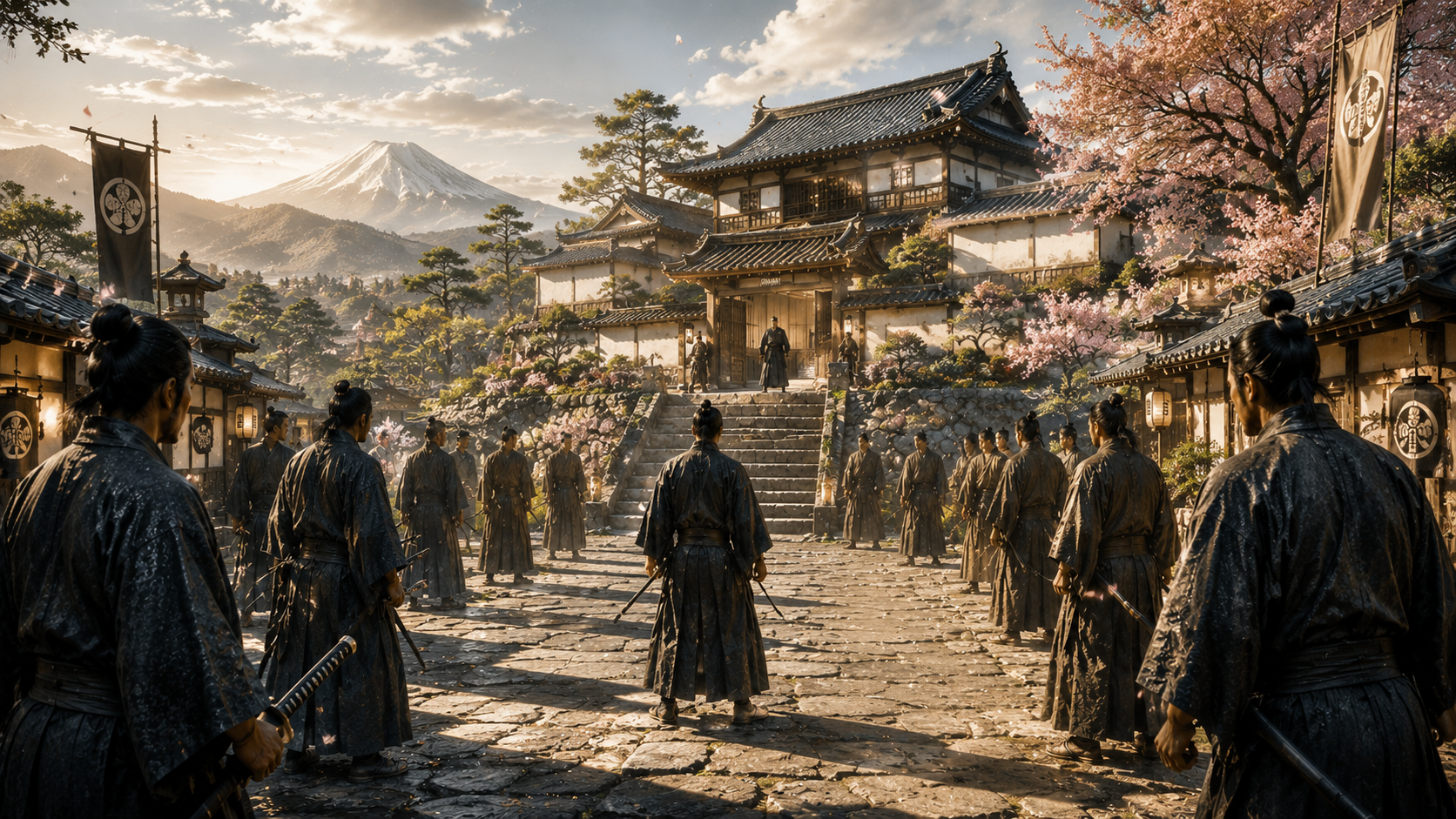
Revenge of the Forty-Seven Ronin
"In the quiet hours before dawn on December 14, 1702, forty-seven ronin stormed the residence of Kira Yoshinaka. Their meticulously planned act of vengeance would reverberate through the annals of history, embodying the ultimate tale of loyalty, honor, and sacrifice."
What Happened?
In the snowy darkness of January 1703, the last echoes of a clash cemented a legendary tale when forty-seven rōnin exacted vengeance on Kira Yoshinaka for the forced suicide of their master, Asano Naganori. By breaching Kira’s residence, the rōnin pursued justice through blood, rejecting imperial edicts for their own moral compass. Their meticulous, nearly two-year strategy of restraint and subterfuge culminated in a culturally seismic raid that questioned the balance between personal honor and societal law. The aftermath of their actions created ripples throughout Japan, forever embedding the narrative of honor-bound loyalty into the fabric of cultural folklore, urging reflection on the true essence of duty.
Takeaway
The lesson this story keeps teaching
“The story of the Forty-Seven Ronin illuminates how unwavering loyalty can drive actions that defy social norms and legal standards, challenging our understanding of honor and duty.”
Why People Are Talking About This
The story of the Forty-Seven Ronin carries forward a timeless discourse on the limits of legalism versus the fluidity of personal conviction. As societal norms dictate the skeleton of justice, it is within these tense frameworks that individual stories of gallantry surface, challenging the static definition of what is right. Deep in Japan’s cultural fabric lies a reverence for the samurai ethic—explorative of actions tethered to loyalty even when such allegiance tears at the seams of state decree. More than mere story, it is a meditation on the power of collective human integrity and the legacy of remembered honor.
Thread Map
9 entities · 8 connections · Hover to explore, click to inspect
This is the connection map for this thread. Every node is a person, company, event, or idea. The red lines show how they connect. Hover a node to highlight its connections. Click a node to see why it matters to this story.
How We Got Here
The Insult that Shattered Serenity in Edo
An insult from Kira Yoshinaka in Edo enraged Lord Asano Naganori during official duties, breaching protocol when Asano struck Kira with his sword, setting off a chain of irreversible events.
Lord Asano's Forced Seppuku
Asano Naganori faced the immediate consequences of his act. Ordered to commit seppuku, Asano's death orphaned his samurai, setting the stage for their eventual act of vengeance.
Ronin Execute Plot for Vengeance
The ronin's patience culminated in a well-orchestrated siege of Kira's residence. Under the cover of night, they exacted their revenge swiftly and precisely, slaying Kira.
The Ronin's Final Act of Honor
In confession, the ronin accepted their fate. Each committed seppuku, adhering to their samurai duties and concluding their tumultuous journey with honor.
Graves Established at Sengaku Temple
The graves of the forty-seven ronin were established at Sengaku Temple, becoming a pilgrimage site and lasting symbol of their fateful endeavor.
Legend Takes Root in Japanese Culture
The story of the forty-seven ronin became entrenched in Japanese folklore, retold through performances and writings, sealing its place in cultural consciousness.
International Recognition Grows
With Japan's opening to the West, the story of the ronin spread beyond its shores, influencing perceptions of Japanese cultural identity on a global scale.
Film Brings Modern Interpretation
The release of the 2013 film '47 Ronin,' a fictionalized retelling, brought renewed interest and discourse to this historical narrative, blending fantasy with history.
Wait... Who Is This?
The peace and order that characterized the Edo period in Japan offered an illusion of permanence—it was, on closer inspection, a society simmering under rigid codes and stratified ranks. This was the world the samurai class inhabited, their lives inextricably tied to the five articles of bushido: justice, courage, mercy, politeness, and honesty. Inside the Ako domain, Lord Asano Naganori adhered strictly to these virtues. It was in serving his emperor within these moral confines that he suffered insult, as Kira, whose strategic arrangements centered on truculent exactness, barbed their encounters.
Kira’s provocation was unexpected, its rebuke severe; Asano's unsanctioned strike awakened the ire of an unrelenting court system demanding retribution. An order for ritual suicide was the ultimate disgrace, an dishonor that diminished Asano's samurais’ standing, casting them into the shadows of static opportunism. Yet they thrived in adversity, transforming their inevitable outcast state into a crucible of rebirth where revenge entwined with reason, their destiny now tangled with defying social decency.
As the months passed and plans solidified, the ronin embraced ostracization with the gravity of soldiers lining their positions before the breach of dawn. In this silence, they were fortified by their relentless oath, the tension knotting each calculated moment that brought them closer to the execution of their indomitable raid.
Receipts
Forty-seven rōnin - Wikipedia
The REAL story of the 47 rōnin – Japanagram
47 ronin | Facts, History, Plays, & Films | Britannica
The Forty-Seven Ronin Story: Allyn, John - Amazon.com
Asia for Educators | Columbia University
The Forty-Seven Ronin Incident - History Today
Continue the Rabbit Hole
Each story explores the same idea from a different angle. Follow the connections and discover where the thread leads.






Fictional placeholder content