Echoes Before the Internet
"In 1835, the New York Sun convinced thousands of the lunar city's existence. Before fact-checking, imagination ruled."
What Happened?
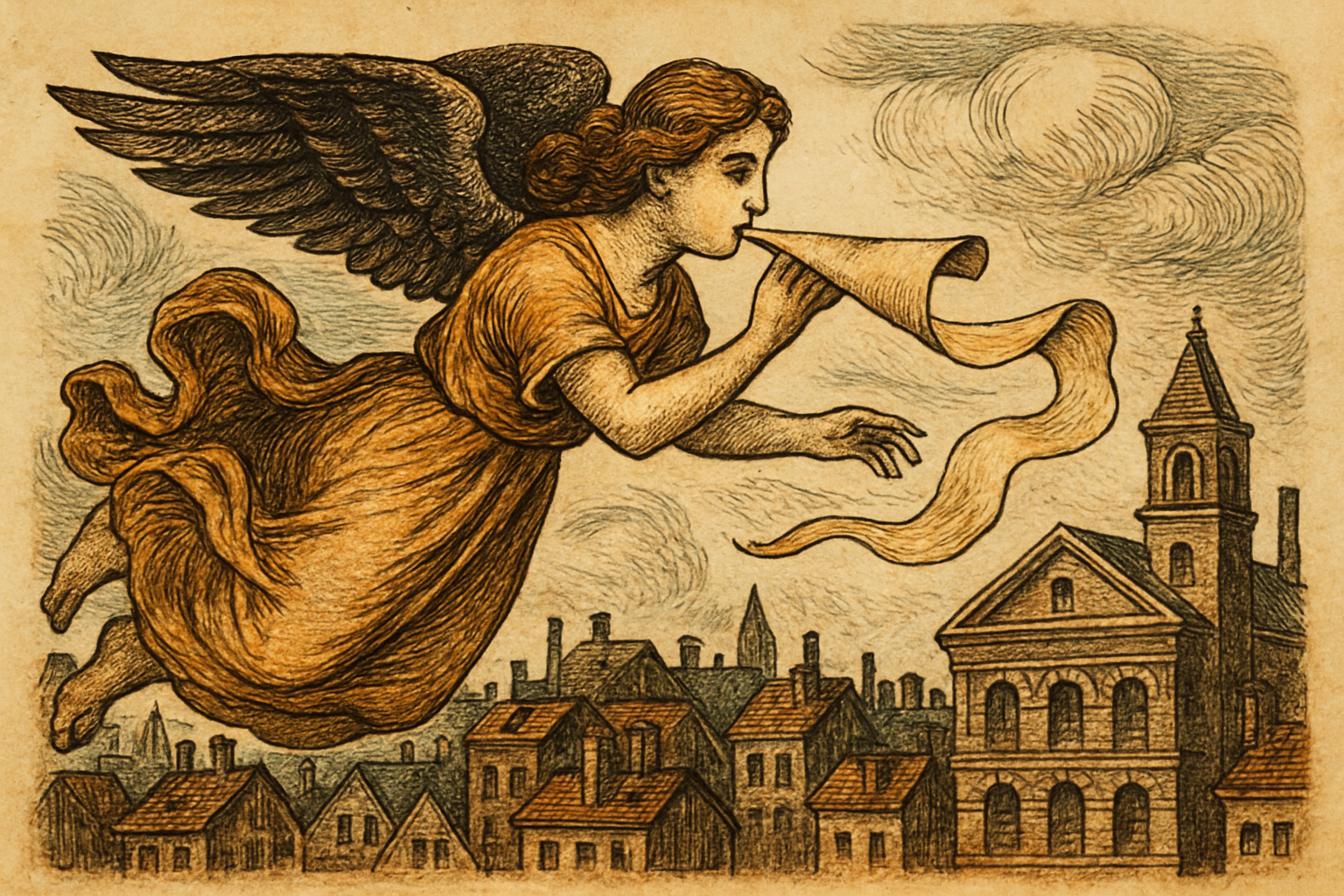
In 1835, New Yorkers were captivated by sensational stories from the New York Sun claiming to describe life on the moon, bizarrely believable in an age eager for any hint of discovery. Richard Adams Locke crafted these stories, attributing them to astronomer Sir John Herschel to lend them an air of credibility. The articles, dense with imaginative detail but lacking in scientific reality, were irresistible to readers longing for new realms to explore. As circulation soared, the eventual admission of its fictional nature hardly slowed the paper's momentum, cementing the enduring power of grand narratives to both enchant and mislead.
Takeaway
The lesson this story keeps teaching
“The compulsion to share remarkable tales survives every technological change.”
Why People Are Talking About This
The Great Moon Hoax of 1835 highlights the delicate balance between creativity and accountability in storytelling. As literacy rates rose and mass media began to shape public perceptions, the responsibility accompanying such power became increasingly scrutinized. This episode forecasted challenges now multiplying in our digital age, where misinformation travels rapidly, influencing credulous audiences as readily as any factual report. Recalling this foundational chapter encourages us to critically assess the sources of information vying for our trust.
Thread Map
8 entities · 7 connections · Hover to explore, click to inspect
This is the connection map for this thread. Every node is a person, company, event, or idea. The red lines show how they connect. Hover a node to highlight its connections. Click a node to see why it matters to this story.
How We Got Here
The New York Sun's 'Great Moon Hoax' Hits the Stands
The New York Sun publishes an extravagant claim of life on the moon, igniting massive intrigue. This hoax uses Sir John Herschel's name to lend credibility.
Outcry and Denial: The Rapid Spread of Lunar Lore
Citizens and scientists alike engross themselves in debates over the lunar tales. Herschel’s disavowal fails initially to sway public enthusiasm.
An Astrologer's Legacy Ignites a Media Frenzy
The astronomer Sir John Herschel's genuine works are overshadowed by fanciful claims of his discoveries, impacting his legacy.
The Hoax Unveiled: Media Revelations
Faced with mounting speculation, the New York Sun confesses its fabrications. Public reaction is surprisingly forgiving, seeing it as entertainment.
Newsroom Innovations: The Aftermath Sees Print Evolution
Newspaper credibility becomes crucial, spurring editorial reforms. The hoax's legacy persists, shaping journalistic reputations for decades.
Birth of ARPANET: The Digital Age Dawns
The establishment of ARPANET sets a precursor for the internet, foreshadowing new methods of rumor and information spread.
Partygate Unfolds in a Digitally Equipped World
Amidst an entirely different media landscape, rumors about political scandals go viral, demonstrating persistent challenges.
The Rise and Spread of Pastygate
Pastygate illustrates how modern controversies resonate, echoing the Moon Hoax’s effect on society's inclination to believe the absurd.
Wait... Who Is This?
In the 1830s, the gradual expansion of mass-produced newspapers transformed information flow. Media such as the New York Sun began shaping headlines, confronting both audience appetites and journalistic integrity. This phenomenon thrived upon the newfound accessibility of newsprint, straining under the tension of reliance on sensationalism to maintain relevance. With widespread enthusiasm surrounding innovation suspended in that liminal space between truth and fiction, New York in 1835 became acquainted with a narrative that captured attention on a grand scale: an elaborate fiction of life discovered on the moon.
Receipts
Continue the Rabbit Hole
Each story explores the same idea from a different angle. Follow the connections and discover where the thread leads.




Fictional placeholder content