Polynesian Navigators' Epic Mystery
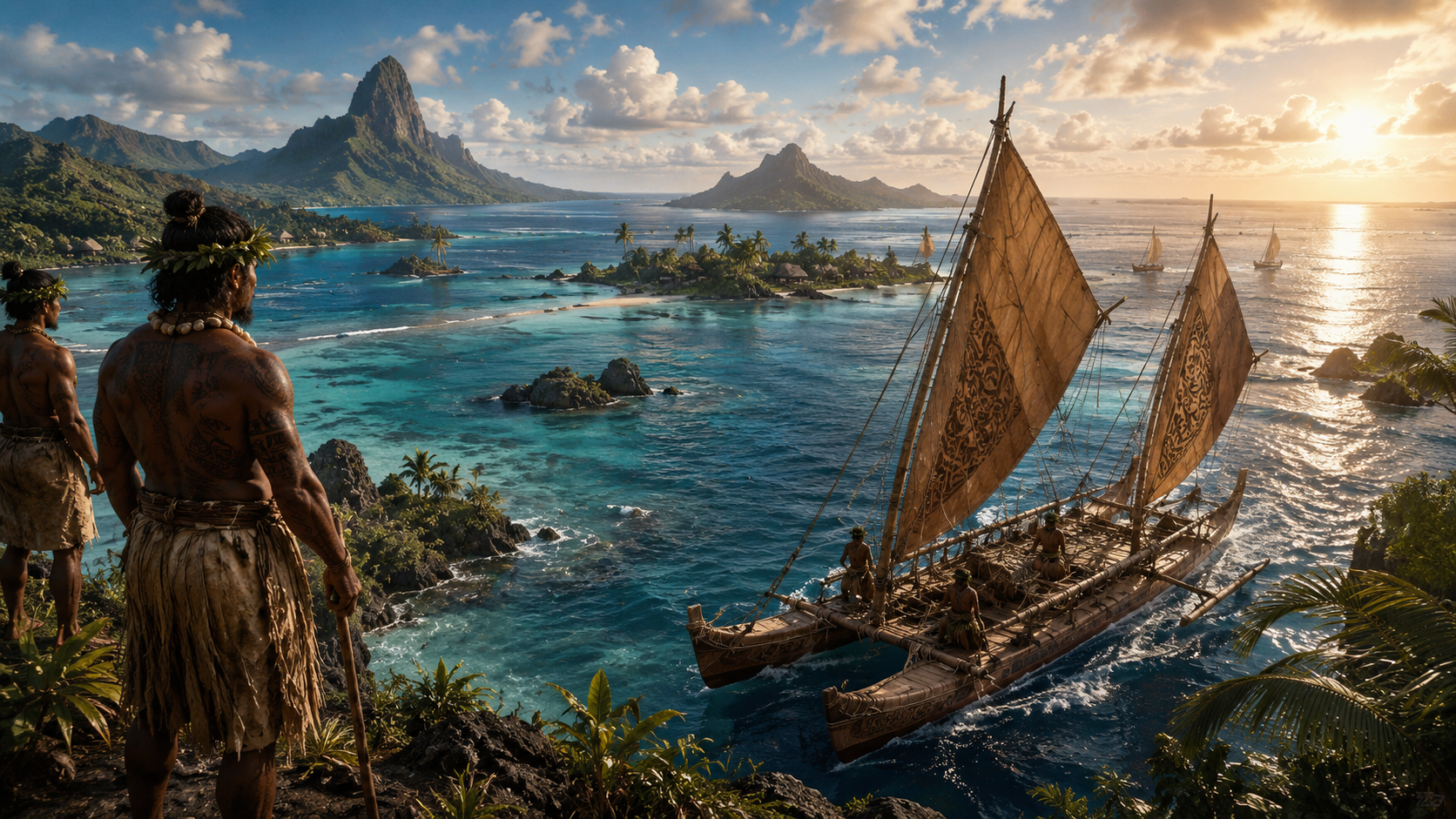
"Imagine charting the vast Pacific without maps or compasses. Polynesian navigators conquered thousands of miles of ocean using only the stars, winds, and waves."
What Happened?
Long before GPS or modern charts, Polynesian navigators traveled across the Pacific using close observation of stars, currents, swells, birds, and clouds. Their voyages connected distant islands and demonstrated an extraordinary body of practical knowledge passed through generations. The story challenges modern assumptions about technology, intelligence, and exploration.
Takeaway
The lesson this story keeps teaching
“Sophisticated knowledge does not always look like modern technology, but it can be just as powerful.”
Why People Are Talking About This
The mystery of Polynesian navigation challenges our fundamental understanding of exploration and reveals the potential depths of human innovation. This story isn't just a historical curiosity—it highlights the often-overlooked sophisticated systems indigenous cultures developed to thrive where modern science struggles to comprehend.
In a world racing to address contemporary issues with innovation, looking back at these remarkable feats of navigation reminds us of humanity's intrinsic ability to adapt, learn, and integrate sustainable living practices with the natural world around us. It's a revelation of how traditional knowledge can enrich and guide our present and future.
Thread Map
4 entities · 3 connections · Hover to explore, click to inspect
This is the connection map for this thread. Every node is a person, company, event, or idea. The red lines show how they connect. Hover a node to highlight its connections. Click a node to see why it matters to this story.
How We Got Here
Lapita Culture Paves the Way
The Lapita culture spreads across thousands of miles, laying the groundwork for what will become Polynesian culture and navigation. This period plants the seeds for one of humanity's greatest exploration tales.
Roggeveen Reaches Rapa Nui
Dutch explorer Jacob Roggeveen arrives at Rapa Nui, entirely unaware of the sophisticated navigational feats that enabled Polynesian settlers to arrive here long before him. His landing marks another point of contact between European explorers and these isolated cultures.
Roggeveen Visits Tuamotu
Continuing his voyage, Roggeveen explores the Tuamotu islands, further extending European knowledge of the Pacific though neglecting the extent of Polynesian settlement across this vast ocean.
Roggeveen Nears Sāmoa Islands
As his exploration progresses, Roggeveen approaches the Sāmoan islands, again unknowingly traversing paths long established by Polynesian navigators.
Commodore Byron Sights Atafu Atoll
Commodore John Byron charts the Atafu atoll in the Tokelau, realizing the complexities of the territory interconnected by Polynesian paths.
James Cook's Landmark Arrival
Lieutenant James Cook arrives in Matavai Bay, Tahiti. Accompanied by Tupaia, a knowledgeable navigator, he witnesses firsthand the sophistication of Polynesian wayfinding.
Revival of Wayfinding
Traditional Polynesian navigation techniques see a resurgence as cultural leaders seek to preserve and celebrate their ancient heritage, introducing new generations to these age-old practices.
Wait... Who Is This?
Centuries before the first Europeans crossed the Atlantic Ocean to explore unknown worlds, a different group of navigators had already mastered the greatest oceans on Earth. Emerging from the Lapita culture—spanning from 1300 to 900 BCE—the Polynesians spread across the Pacific, settling an array of islands scattered over thousands of miles. Their navigational prowess wasn't rooted in the technology of maps or compasses but in an intricate understanding of the environment.
By observing the stars, ocean currents, wind directions, and even the flight patterns of birds, these seafaring people developed a navigation system rivaling any modern technique. They journeyed across vast distances, forging an interconnected archipelago culture. Yet, the West remained unaware of these achievements until centuries later.
With the onset of European exploration in the 1600s and 1700s, the Western world struggled to comprehend the extent of Polynesian navigational skill. Explorers like Jacob Roggeveen and James Cook would only begin scratching the surface of what these societies knew. With the eclipse of these oral traditions by European colonization, much of this knowledge teetered on the brink of oblivion. But it never vanished entirely—a testament to the tenacity and enduring spirit of the Polynesian people, who are now reclaiming their lost arts in modern times.
Receipts
Harvard Review’s Thompson explores the history and mystery of Polynesian navigation — Harvard Gazette
Polynesian navigation - Wikipedia
Navigating Polynesia: Ancient Seafaring Traditions | Paul Gauguin Cruises
History of Polynesian Navigation - Living Oceans Foundation
Polynesian Settlement of the Pacific: Migration in Oceania - World History Encyclopedia
Continue the Rabbit Hole
Each story explores the same idea from a different angle. Follow the connections and discover where the thread leads.




Fictional placeholder content