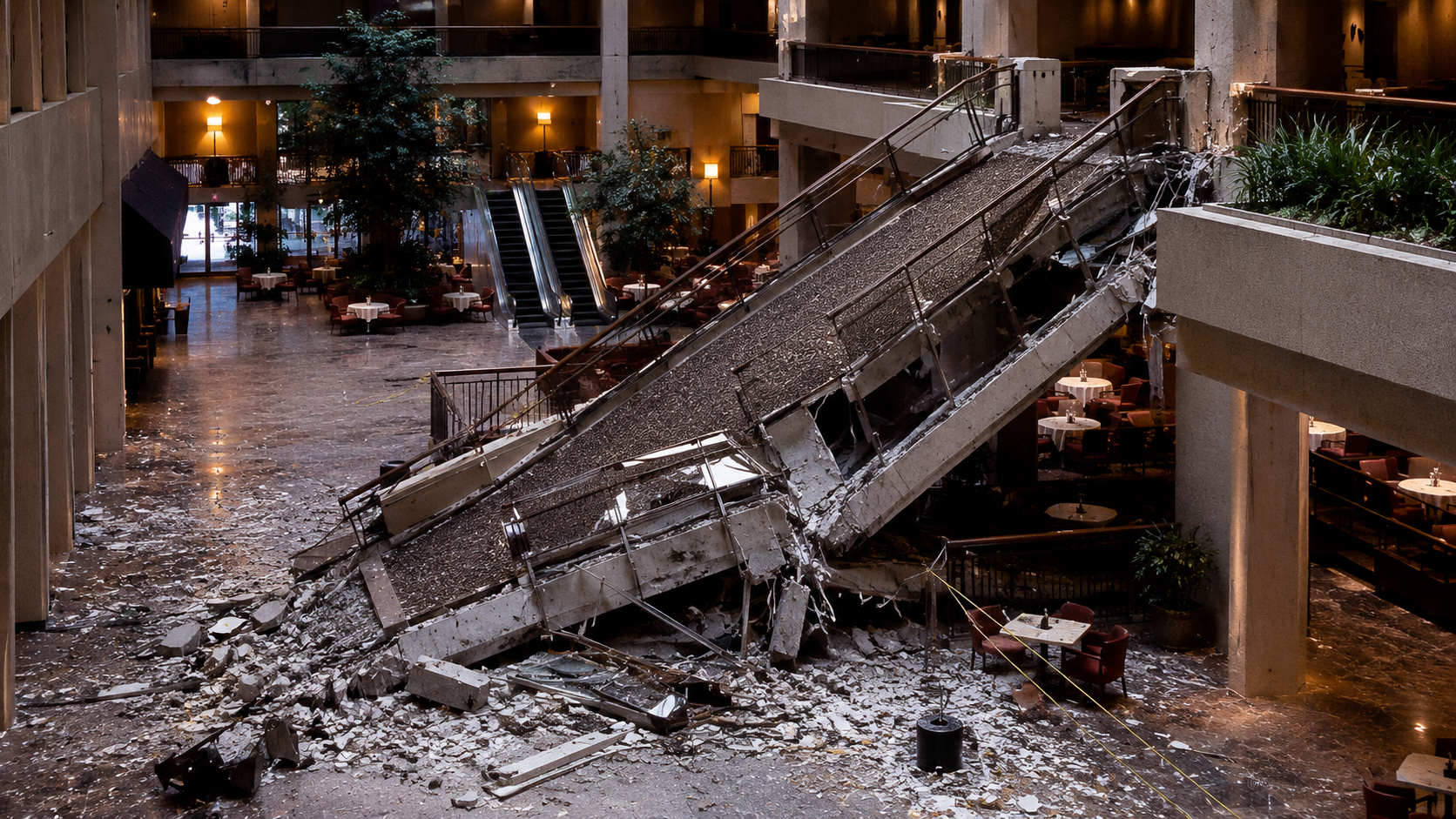
When the Skywalks Fell
"On July 17, 1981, two suspended walkways collapsed in the Hyatt Regency Kansas City, killing 114 people. What unseen detail could lead to such catastrophic failure?"
What Happened?
During a packed dance event at the Hyatt Regency Hotel, two suspended walkways suddenly collapsed onto the crowd below. Investigators later found that a design change had doubled the load on key support rods, leading to catastrophic failure. The tragedy transformed engineering ethics, building reviews, and professional accountability.
Takeaway
The lesson this story keeps teaching
“Even small design changes require absolute precision when lives depend on them.”
Why People Are Talking About This
The Hyatt Regency walkway collapse reframed how engineering practitioners perceive and handle design changes in large-scale projects.
The event highlighted the dire consequences of neglecting due diligence in design reviews, pushing for revised safety standards globally. It underscores the gravity of seemingly small decisions in complex systems, reminding the world that attention to detail must accompany architectural ambition.
Thread Map
9 entities · 8 connections · Hover to explore, click to inspect
This is the connection map for this thread. Every node is a person, company, event, or idea. The red lines show how they connect. Hover a node to highlight its connections. Click a node to see why it matters to this story.
How We Got Here
Hyatt Regency Kansas City Hotel Opens with Anticipation
The Hyatt Regency Kansas City hotel opens, featuring a grand atrium with three inviting suspended walkways. The architectural design is a testament to innovative engineering.
Fatal Collapse at the Height of Celebration
During a crowded Friday night tea dance, two walkways collapse in the atrium, killing 114 people and leaving 216 injured. The disaster becomes one of the deadliest in U.S. history.
Investigations Unfold Amid Devastation
In the immediate wake of the collapse, investigations begin. Engineers are left to determine the fault, focusing on design changes to hanger rods that doubled weight load.
Spotlight on Design Change
Reports reveal a fatal design change in the hanger rods, which doubled the weight load on the walkways, ultimately contributing to their collapse.
Negligence Trial Highlights Unseen Errors
Missouri's Board for Professional Engineers holds disciplinary proceedings against engineers Duncan, Gillum, and GCE, labeling them grossly negligent.
Culprits Named, Licenses Revoked
After a prolonged hearing, engineers involved in the Hyatt walkways are found negligent and lose their licenses. Professional reputations are irreparably damaged.
Settlement Reaches New Heights
Over $140 million is paid out in civil lawsuits, as families and survivors seek justice and compensation. The financial aftermath compounds the tragedy.
Engineering Ethics and Standards Revised
The aftermath of the Hyatt disaster leads to revised engineering standards and an emphasis on safety protocols. The legacy of tragedy inspires industry-wide changes.
Wait... Who Is This?
In the thriving 1980s, Kansas City wanted nothing more than to showcase its place in the modern architectural scene. The dynamics of innovation were at fever pitch, and the Hyatt Regency represented a grand achievement. The hotel's opulent design, with its suspended atrium walkways, was plastered across brochures as a symbol of cutting-edge engineering and design elegance. At its core, however, the atrium was a fragile marvel.
In this landscape of innovation, engineers Duncan and Gillum were tasked with creating the walkways suspended over the lobby. These young and ambitious engineers sought to manifest Kansas City's aspirations in concrete and steel. However, in the shadows of their visionary project, a pivotal design change was made that had unintended consequences. The move to modify the hanger rods was supposedly innocuous, meant to facilitate construction, yet it came without adequate review or reconsideration of the engineering fundamentals.
Despite the apparent peace of its opening, the Hyatt Regency was a house of cards prepped for collapse. The majestic walkways, instead of enhancing the space, hung as unseated verdicts to an oversight in engineering calculations. One year was all it took for the tenuous engineering choices to manifest catastrophically, leading to one of the most infamous structural failures in modern history.
Receipts
Hyatt Regency walkway collapse - Wikipedia
[PDF] The Kansas City Hyatt Regency Walkways Collapse
The Design Change That Took 114 Lives | Hyatt Walkway Collapse
The Hyatt Regency Walkway Collapse | ASCE
Hyatt Regency Walkway Collapse | Online Ethics
Inside the Hyatt Regency Skywalk Collapse
Same Pattern
Different story. Same lesson.
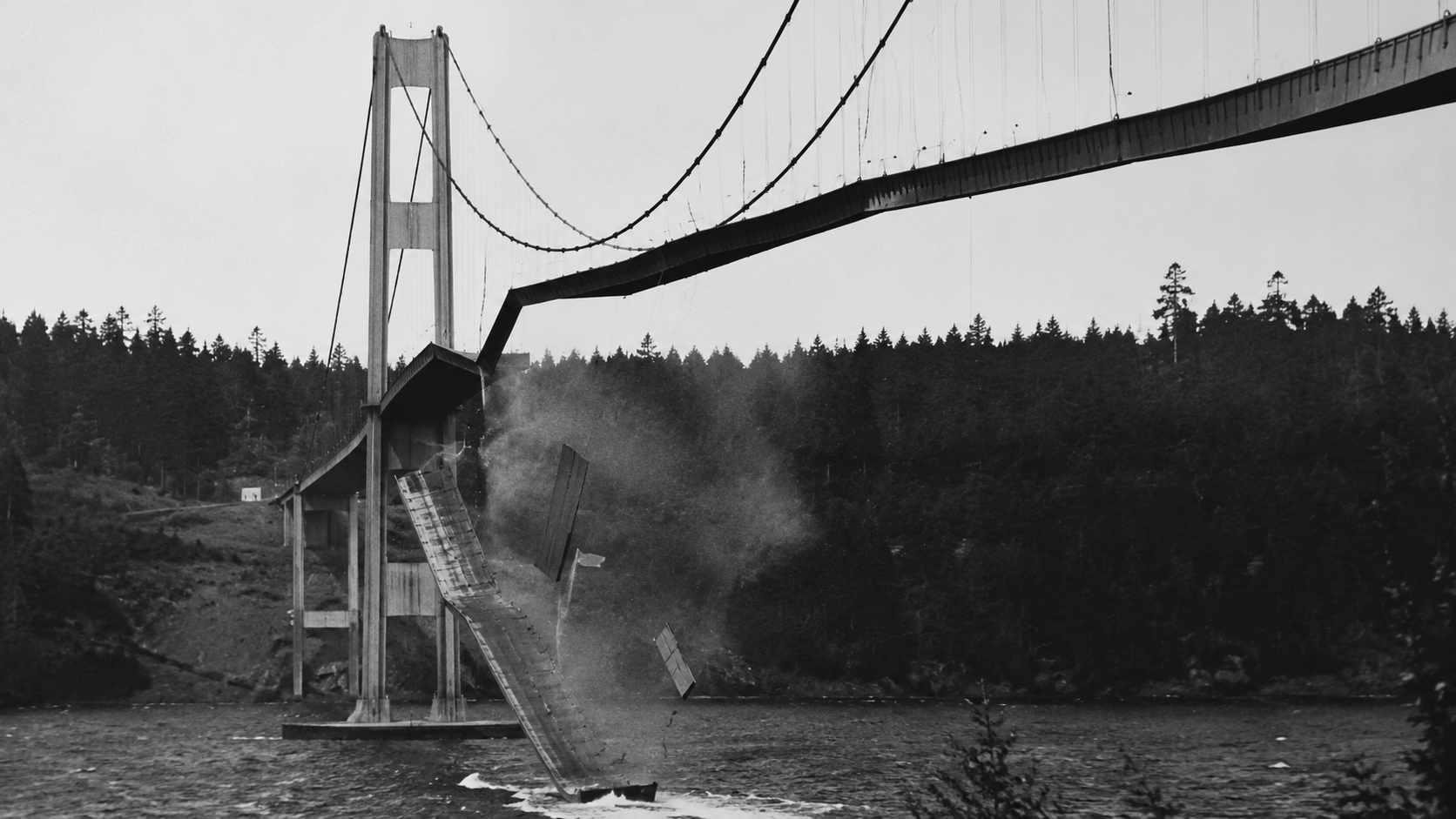
Galloping Gertie's Chaotic Dance
November 7, 1940: The sleek Tacoma Narrows Bridge twisted violently in the wind before collapsing into the Puget Sound. The engineering marvel turned disaster within seconds, leaving questions echoing through the air.

When Time Went Awry
On January 10, 1985, Eric Stoltz was fired after filming for six weeks. The frantic yet calculated recasting was as much about salvaging a movie as it was about altering cinematic history.

The $5.9 Billion Collapse
On a crisp October morning in 2023, the vibrant digital marketplace for Counter-Strike skins crumbled by $1.7 billion overnight due to an unexpected update. What set the stage for this colossal upheaval?

The Great Emu Debacle
In 1932, Australia's military declared war—on emus. With soldier precision and machine guns drawn, they faced a feathered foe that would not back down.
Continue the Rabbit Hole
Each story explores the same idea from a different angle. Follow the connections and discover where the thread leads.



Fictional placeholder content