The Warnings NASA Ignored
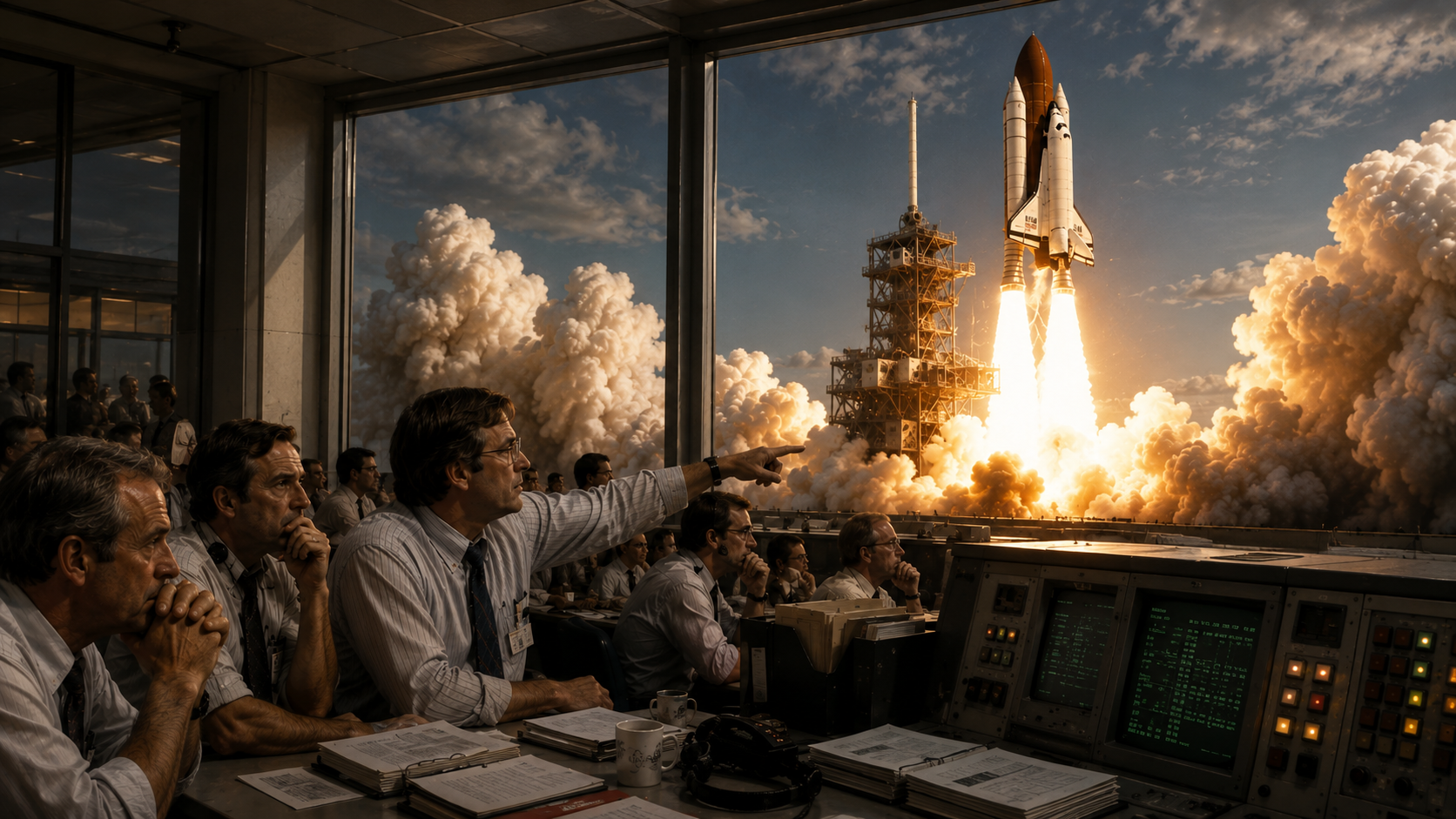
"Just hours before the Space Shuttle Challenger launch, engineers begged NASA to delay, warning of catastrophic failure. Yet on a cold January morning, disaster struck."
What Happened?
On January 28, 1986, the Space Shuttle Challenger disintegrated 73 seconds after its launch, a disaster witnessed by millions on live TV. The tragedy was preceded by a night of tension and desperation, where engineers at Morton Thiokol warned NASA that the cold temperatures could cause the shuttle's O-rings to fail. Despite their efforts, pressure to meet timelines led NASA to dismiss these concerns, marking one of the most tragic overlooks in space history. This tragedy highlighted a recurring human pattern: how ambition and bureaucratic pressure can blindside critical safety concerns, leading to catastrophic outcomes.
Takeaway
The lesson this story keeps teaching
“Rushing to meet expectations blinds even the most competent organizations to their fatal flaws.”
Why People Are Talking About This
The Challenger disaster reshaped NASA's culture, altering how safety is prioritized over ambition. It demonstrated the perils of disregarding caution in pursuit of achievements. This story continues to resonate, showing how systems can fail when they ignore the cautious whisper of data. Beyond space exploration, it serves as a universal reminder of the need to balance aspiration with the fundamental respect for reality.
Thread Map
9 entities · 8 connections · Hover to explore, click to inspect
This is the connection map for this thread. Every node is a person, company, event, or idea. The red lines show how they connect. Hover a node to highlight its connections. Click a node to see why it matters to this story.
How We Got Here
Morton-Thiokol Secures SRB Contract
Morton Thiokol was awarded the contract to build the Solid Rocket Boosters for NASA's space shuttle program, a critical component with rigorous safety requirements.
Engineers Voice Grave Concerns
In a tense teleconference with NASA, Morton Thiokol engineers, led by Roger Boisjoly and Bob Ebeling, raised concerns about the O-rings' performance in cold temperatures, urging a delay in the Challenger launch.
Challenger Launch Ends in Disaster
Despite engineers' warnings, Challenger launched into the frigid Florida skies. Seventy-three seconds later, it disintegrated, leaving the world in shock and seven astronauts dead.
Rogers Commission Unveils Initial Findings
The Rogers Commission held a closed meeting at Kennedy Space Center, confronting the disturbing realities of ignored engineering warnings and organizational missteps.
NASA's Redemption: Return to Flight
NASA announced that the shuttle would not fly again until 1988. This period was spent re-evaluating and rebuilding trust in the space program after the Challenger disaster.
Rogers Commission Conclusions
The Rogers Commission's findings pointed to NASA’s critical cultural and managerial failures, reshaping future approaches to safety and accountability.
Diane Vaughan Publishes Analysis
Vaughan’s book on the 'Normalization of Deviance' showcased the Challenger case as a sociological study of compromised safety standards and decision-making failure.
A Lasting Legacy in Aerospace
The Challenger disaster has remained pivotal in aerospace discussions, emphasizing that engineering prowess needs to be guided by careful attention to safety and human factors.
Wait... Who Is This?
In the mid-1980s, NASA was at the forefront of engineering dreams. Its audacious shuttle program, championed by the Reagan administration, stood as a testament to American progress and ingenuity. Yet beneath this veneer of success were cracks—growing like silent fractures in a seemingly unyielding facade. Engineers like Bob Ebeling and Roger Boisjoly were well aware that each component carried risks only gravity could underscore. As men of science, they knew that caution was part of their creed. However, their voices, once amid collective shouts of ambition, often dissolved in the echo of mission demands.
Receipts
40th anniversary lessons from the NASA Challenger disaster : NPR
40 years after Challenger: Lingering guilt and lessons learned – Houston Public Media
Roger Boisjoly and the Challenger Disaster – The Novum
The space shuttle Challenger explodes after liftoff | January 28, 1986 | HISTORY
How the Challenger Disaster Became a Case Study of the ‘Normalization of Deviance’ | Columbia Magazine
Return to Flight...Challenger Accident
Continue the Rabbit Hole
Each story explores the same idea from a different angle. Follow the connections and discover where the thread leads.


Fictional placeholder content