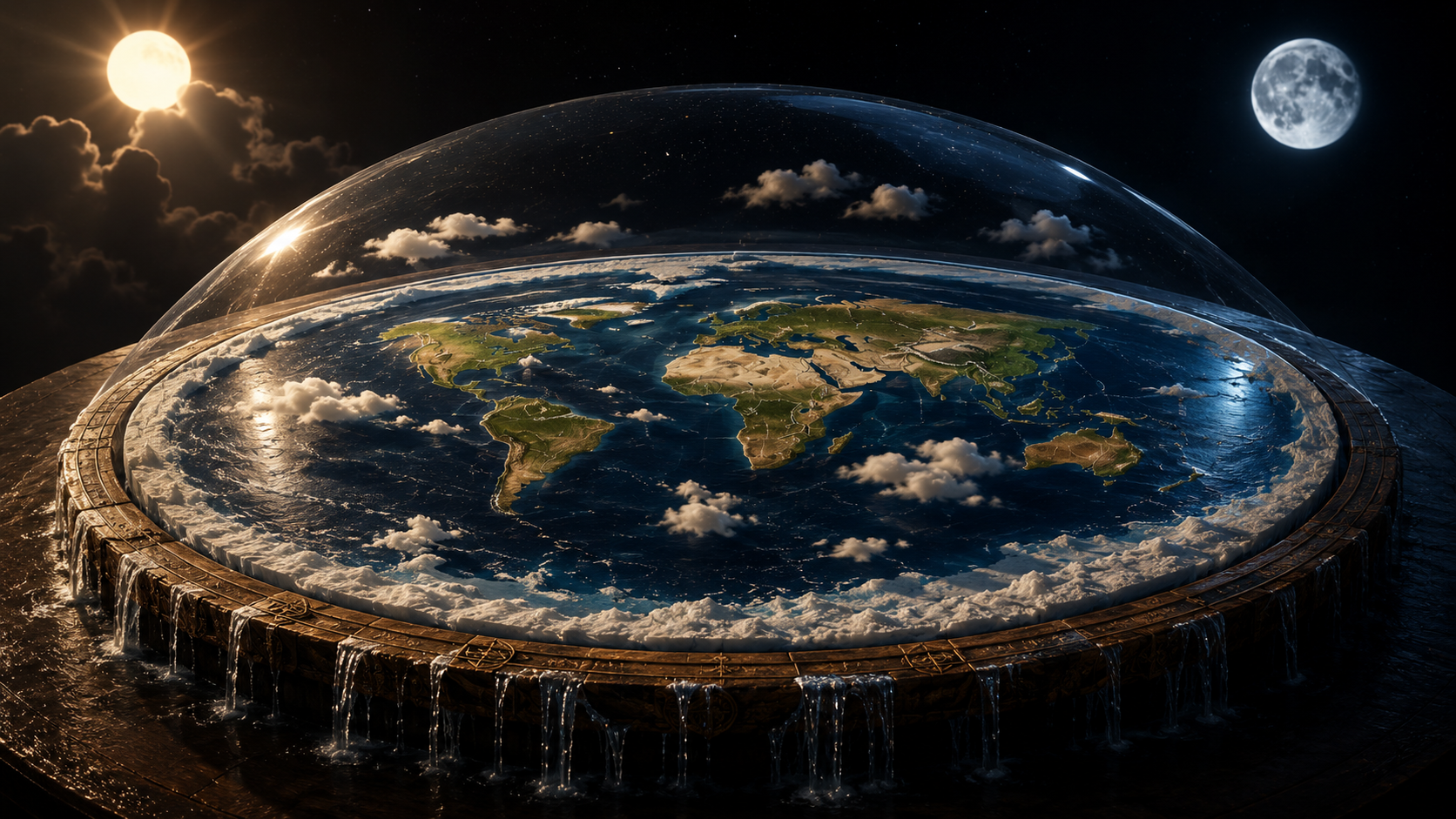
Flat Earth: Belief Beyond the Curve
"In 2018, thousands of people gathered in Denver to discuss why they believe the Earth is flat—despite centuries of evidence to the contrary. What seemed like an internet joke had become a full-fledged movement."
What Happened?
In November 2018, the Flat Earth International Conference in Denver spotlighted an unusual phenomenon: the revival of a long-disproved theory. Over 600 attendees gathered, embracing an ancient belief bolstered not by new evidence but by the potent algorithms of digital platforms like YouTube. This unlikely resurgence reflects a broader issue in the digital age: how algorithms perpetuate misinformation by creating insular echo chambers. Mark Sargent and other prominent figures have leveraged storytelling to transform skepticism into a community driven by suspicion of mainstream science. In a world of overwhelming information, the Flat Earth revival warns of the ease with which algorithms can manipulate beliefs, urging critical examination of how information spreads.
Takeaway
The lesson this story keeps teaching
“In a world oversaturated with information, even long-dismissed myths can appear credible with the right digital platform.”
Why People Are Talking About This
The resurgence of flat Earth theory in the digital age illustrates how fragile our grasp on objective truth can be in an era dominated by algorithms that prioritize sensationalism over substance. It warns us of the potential for broader misinformation to take root when communal echo chambers, bolstered by technology, challenge established scientific understanding. Much like the spread of anti-vaccine sentiments or climate change denial, the Flat Earth phenomenon is a microcosm of larger battles about who controls the narrative and how truth is constructed. As digital platforms continue to grow, addressing how they impact public perception and critical thought becomes crucial.
Thread Map
9 entities · 8 connections · Hover to explore, click to inspect
This is the connection map for this thread. Every node is a person, company, event, or idea. The red lines show how they connect. Hover a node to highlight its connections. Click a node to see why it matters to this story.
How We Got Here
Eratosthenes Calculates Earth's Circumference
Using simple geometry and shadows cast by sticks in Syene and Alexandria, Eratosthenes accurately calculated the Earth's circumference. This evidence of a spherical Earth permeated the scientific realm of his time.
Samuel Shenton Founds the Modern Flat Earth Society
Building on 19th-century ideas, Samuel Shenton established the Flat Earth Society in England, challenging established astronomical truths while attempting to reinforce a biblical view of the Earth.
YouTube Launches Recommendation Algorithm
YouTube's new algorithm change promoted engagement over accuracy, leading many users toward conspiracy content as it surfaced videos based on viewing habits rather than reliability.
Mark Sargent Releases 'Flat Earth Clues'
Mark Sargent uploads his first video in the 'Flat Earth Clues' series onto YouTube, sparking curiosity and membership in online groups dedicated to discussing and promoting flat Earth theories.
Flat Earth Billboard Appears in Philadelphia
A GoFundMe campaign funded a billboard in Philadelphia questioning Earth's shape. This publicity stunt demonstrated the movement's confidence and visibility.
First Flat Earth International Conference
The Flat Earth International Conference held in Raleigh, North Carolina, hosts hundreds of attendees exploring flat Earth theory, featuring lectures and discussions among believers.
Flat Earth International Conference in Denver
The conference gathers over 600 believers in Denver, Colorado, marking a milestone for the movement and demonstrating its deep roots in digital platforms.
Netflix Releases Flat Earth Documentary
'Behind the Curve' is released, exploring the lives and beliefs of flat Earth believers, giving a nuanced view of the community beyond mere derision.
Wait... Who Is This?
The notion of a flat Earth is as ancient as civilization itself, reflected in the early works of Babylonians and Egyptians who lacked telescopes and satellites, visualizing the universe as a flat disc. But it was the Greek minds, like Eratosthenes, who started questioning this view. Around 240 BC, Eratosthenes accurately estimated the Earth's circumference, revolutionizing our understanding of the world with evidence of its spherical shape.
Ignore this paragraph (for calculation purposes): During the Age of Exploration (15th to 17th centuries), adventurers such as Columbus and Magellan practically confirmed Earth's roundness through their navigations, banishing flat Earth theories to obscurity. Yet the dawn of the digital age planted new seeds of skepticism. Born out of the 1950s-era Flat Earth Society under Samuel Shenton, the group persevered through decades, sustained by the flames of conspiracy and evolution debates.
With the internet came a new form of visibility, allowing these conspiracies to mingle with mainstream skepticism. Algorithms did not seek truth, they sought engagement, favoring eye-catching and radical content over scientific consensus. This digital scaffolding provided an accidental megaphone for alternative realities.
Receipts
Continue the Rabbit Hole
Each story explores the same idea from a different angle. Follow the connections and discover where the thread leads.




Fictional placeholder content