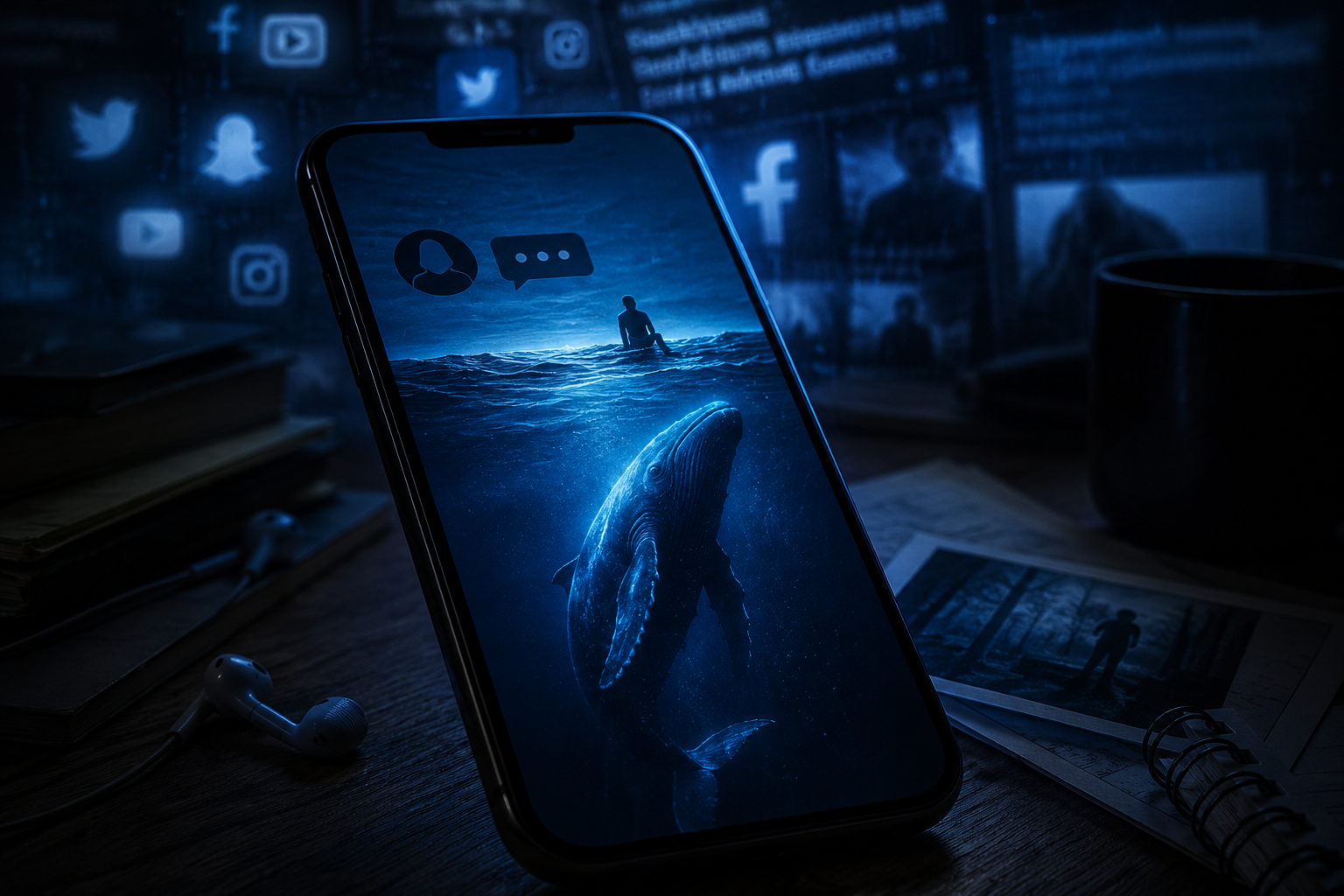
The Deadly Lure of Blue Whale
"A terrifying online challenge allegedly spread from Russia to the rest of the world, prompting police warnings, school alerts, and alarming headlines. But was the Blue Whale Challenge truly a global epidemic—or one of the internet's biggest moral panics?"
What Happened?
In the 2010s, headlines warned of the Blue Whale Challenge, a sinister 'game' allegedly driving teens to complete escalating self-harm tasks leading to suicide. Originating from Russian social media, it quickly ignited global panic, prompting schools to issue warnings and media outlets to amplify fears. Digging deeper, investigators were challenged with disambiguating reality from sensationalism. What they found was a complex tapestry of isolated incidents, digital folklore, and an instance of media fervor where real threats converged with viral exaggeration, sparking significant debates over online safety and information ethics.
Takeaway
The lesson this story keeps teaching
“Fear spreads faster than facts when sensational stories collide with digital platforms.”
Why People Are Talking About This
The Blue Whale Challenge became more than just an urban legend; it turned into a critical point of examination on how we perceive risks in the digital age. While the frenzy fueled moral panic, it also opened dialogue about authenticity in media reporting and clarity in digital interactions.
This case underlines the critical importance of verifying information before it's granted legitimacy across platforms. It wasn't just about protecting the young from possible harm but recognizing that our intensified interconnectedness could also facilitate widespread misconceptions.
Moving forward, vigilance surrounding similar narratives is key in forming responsible media practices. This episode emphasized the need for balanced communication channels to ensure that fact follows fear, not the other way around.
Thread Map
6 entities · 5 connections · Hover to explore, click to inspect
This is the connection map for this thread. Every node is a person, company, event, or idea. The red lines show how they connect. Hover a node to highlight its connections. Click a node to see why it matters to this story.
How We Got Here
Blue Whale Challenge Conception
Philipp Budeikin allegedly created the Blue Whale Challenge, believing it to be a method of societal cleansing. His creation aimed to manipulate teenagers into suicide through a series of 50 tasks.
Philipp Budeikin Arrested
Authorities outside Moscow arrested Philipp Budeikin on suspicion of organizing a Blue Whale death group, revealing the challenge's Russian origins and spurring international concern.
Ilya Sidorov Allegedly Involved
Media reported that Ilya Sidorov, a Russian postman, was an administrator for the Blue Whale Challenge, extending the network of orchestrators behind the game.
Isaiah Gonzalez Dies
Tragedy struck in Texas when 15-year-old Isaiah Gonzalez committed suicide, allegedly while participating in the Blue Whale Challenge, bringing the issue to American public attention.
Global Fear and Media Coverage
The Blue Whale Challenge became a global topic of concern with stories emerging from countries like the U.S., India, and Nigeria, generating widespread parental and educational fear.
White Whale Project Launches
Responding to the Blue Whale Challenge, Gabriel Kenji from Brazil launched the White Whale project to promote positivity and self-worth online, offering a hopeful counter-narrative.
Law Enforcement Engages
Authorities in several countries began efforts to crack down on the Blue Whale Challenge. Campaigns were launched to educate about the risks and signs of involvement in such activities.
Psychiatric and Media Investigations
Psychiatrists and media outlets focused extensively on the mental health and social media contagion effects of the Blue Whale Challenge, driving conversations on online safety.
Wait... Who Is This?
As the internet's integration into daily life deepened over the early 2010s, social media's place in fostering interaction was increasingly central. This new hub for connection offered both opportunities and vulnerabilities. Previously fragmented communities knit together in digital spaces, tasked with establishing new rules of engagement.
However, darker elements emerged as communities formed. These platforms served as hiding spots for those with nefarious intentions, driving some to develop sophisticated means to exploit the digital advantages.
Globally, this period of digital expansion felt experimental, bordered by uncertainties surrounding mental health impacts and the increasing prevalence of online-based deception or coercion.
Navigating these waters involved multi-national stakeholders—from policymakers to educational bodies—all adapting their conventional approaches to suit online contexts more accurately.
The emergence of the Blue Whale Challenge as an alleged threat fits squarely within this timeline of adaptation and reveals societal anxieties bubbling beneath technological advancement.
Receipts
Blue Whale Challenge - Wikipedia
Blue Whale: What is the truth behind an online 'suicide challenge'?
Texas family says teen killed himself in macabre ‘Blue Whale’ online challenge that’s alarming schools - The Washington Post
Blue Whale Challenge: Perceptions of First Responders in Medical Profession
The Blue Whale Challenge, Social Media, Self-Harm, and Suicide Contagion
Same Pattern
Different story. Same lesson.
The Broadcast That Terrified America
On the night of October 30, 1938, chaos reigned as Americans believed Martians were invading. It was all fiction.
Richard Gere's Urban Misfire: The Gerbil Tale
In the glossy world of 1990s Hollywood, the unlikeliest of animals became a haunting presence. A gerbil caught in a story with Richard Gere, proving that fact can be far stranger than fiction.
Continue the Rabbit Hole
Each story explores the same idea from a different angle. Follow the connections and discover where the thread leads.



Fictional placeholder content