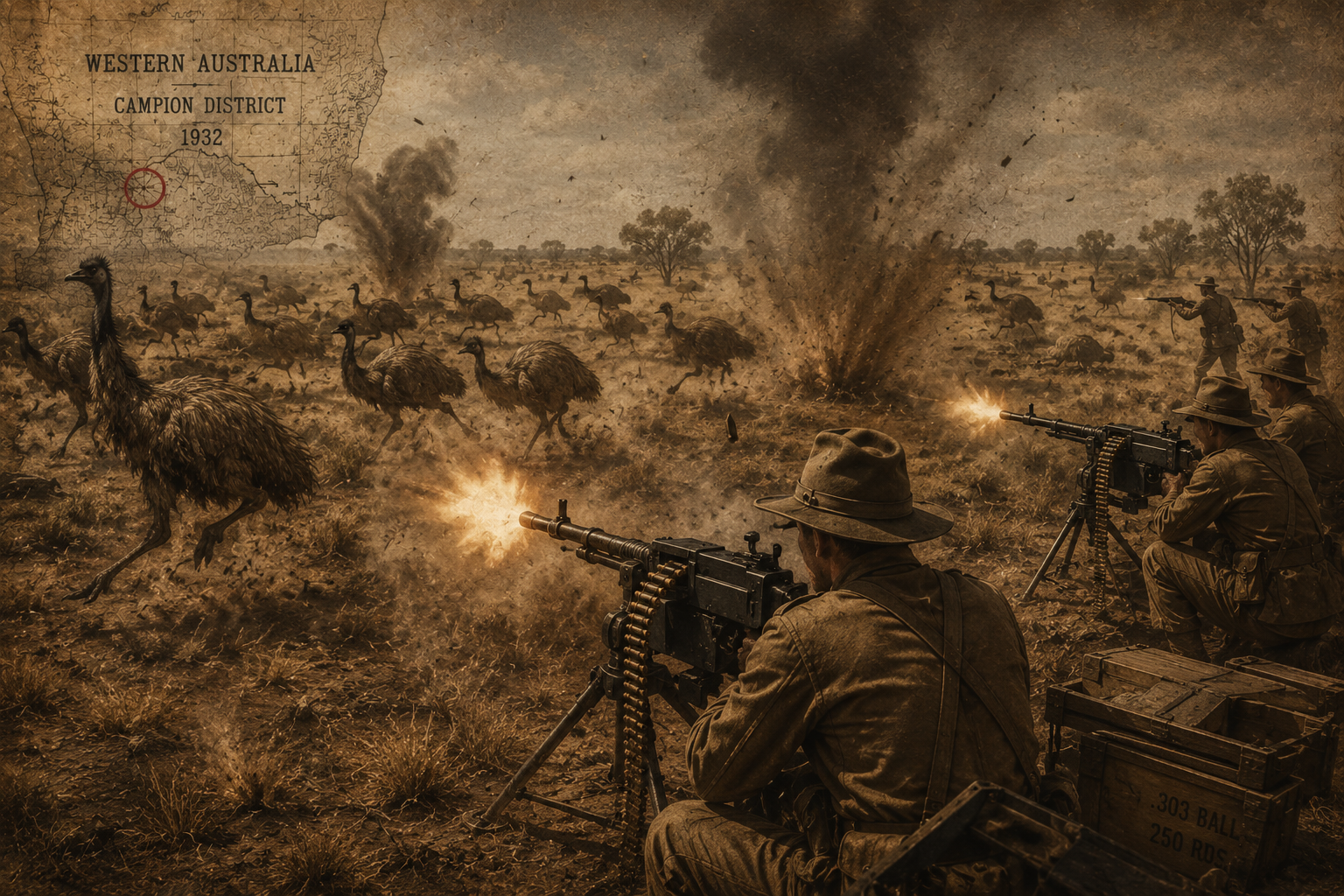
The Great Emu Debacle
"In 1932, Australia's military declared war—on emus. With soldier precision and machine guns drawn, they faced a feathered foe that would not back down."
What Happened?
In 1932, Australia faced an unusual adversary — emus. These birds, relentless in their pursuit of sustenance, began devouring crops in Western Australia's wheat fields. The situation seemed so dire that the government deployed military resources to combat the problem. Soldiers armed with machine guns found themselves in what was dubbed the 'Great Emu War.' Despite their efforts, the operation was ultimately unsuccessful, leading to widespread ridicule and a reevaluation of how nature and human intervention should interact. This bizarre episode highlights the complexity of dealing with nature through sheer force.
Takeaway
The lesson this story keeps teaching
“When conventional military might faced the unpredictability of nature, the result was a surreal defeat that still offers lessons today.”
Why People Are Talking About This
The tale of the Great Emu War is more relevant today than ever. As we face increasingly complex ecological challenges, the event serves as a cautionary reminder of the limits of human control. Our initial instinct might be to quell the rebels with brute force, yet the emus show us another path: understanding the quirks of nature before hubris leads another chapter of regret.
More importantly, it reflects on how reactionary measures often fall short, and lasting solutions lie within informed strategies over knee-jerk actions. Emus may seem an absurd choice for posterity, but their reminder remains pivotal—a storyteller of change.
Thread Map
9 entities · 8 connections · Hover to explore, click to inspect
This is the connection map for this thread. Every node is a person, company, event, or idea. The red lines show how they connect. Hover a node to highlight its connections. Click a node to see why it matters to this story.
How We Got Here
The Emu Problem Emerges
In the Wheatbelt of Western Australia, as many as 20,000 emus began invading, damaging farms already reeling from the Great Depression. Farmers became desperate as the birds consumed crops vital to their survival.
Military Calls to Action
With farmers overwhelmed, Australia's government decided on military action. Sir George Pearce authorized Major G.P.W. Meredith and the Royal Australian Artillery to intervene, armed with machine guns.
The Battle Begins
The first military operation commenced, but the emus, ever elusive, allowed for just 200 out of thousands to be killed. Ammunition was rapidly expended with little to show for the effort.
End of the Great Emu War
The operation was declared a failure and ceased, with emus considered the victors. The military withdrew, and the 'war' ended without meeting its intended objectives.
Bounty System for Emus
In light of military failures, the Australian government introduced a bounty system to encourage farmers to manage the emu population themselves by offering monetary rewards.
Building of Vermin Fences
To further protect crops from wildlife like emus, extensive vermin fences were constructed across agricultural areas.
Protection Under the Law
Emus received legal protection under the Environment Protection and Biodiversity Conservation Act, aiming to prevent any similar conflicts in the future.
Legacy in Wildlife Management
The Emu War is often referenced in current discussions on wildlife management, serving as a case study for understanding human-wildlife conflict and management strategies.
Wait... Who Is This?
Western Australia in the 1930s seemed a place of opportunity for ex-servicemen. Enticed by promises of farmland prosperity and reformulated futures, many found the landscape unforgiving. Soldier settlement schemes emerged post-World War I, designed to stabilize livelihoods and territories. Despite the lofty ideals, the reality faced by many settlers was stark, compounded by erratic weather, economic depression, and the relentless assault of nature itself.
In Campion, a seemingly peaceful district, emus became the herald of struggles those farmers faced. Their sudden entry into the lands was not a random migration but a dire consequence of displacement and survival instincts. As these creatures moved with precision, the farmer's toil became a buffet. It only escalated the farmers’ plight, already beaten by the cruel hand of economic stasis.
Government officials, desperate to quell the unrest, considered every possible angle, each effort ending at an impossible impasse. Yet, out of chaos bore an incentive—a tactical maneuver as delusional as it was absurd. Tensions escalated, the fate of local agriculture did not rest on nurturing or patience but on military might, considered to reign back order with guns in their grip.
Receipts
Emu War - Wikipedia
The Great Emu War: How Flightless Birds Beat the Australian Army
The bizarre story of when Australia went to war with emus—and lost
Did you say Emu Wars!? - Behind Every Day
The Great Emu War of 1932 | Everything You Need to Know!
The Emu War | Australia, Casualties, History, Summary, & Facts | Britannica
Same Pattern
Different story. Same lesson.

When Time Went Awry
On January 10, 1985, Eric Stoltz was fired after filming for six weeks. The frantic yet calculated recasting was as much about salvaging a movie as it was about altering cinematic history.
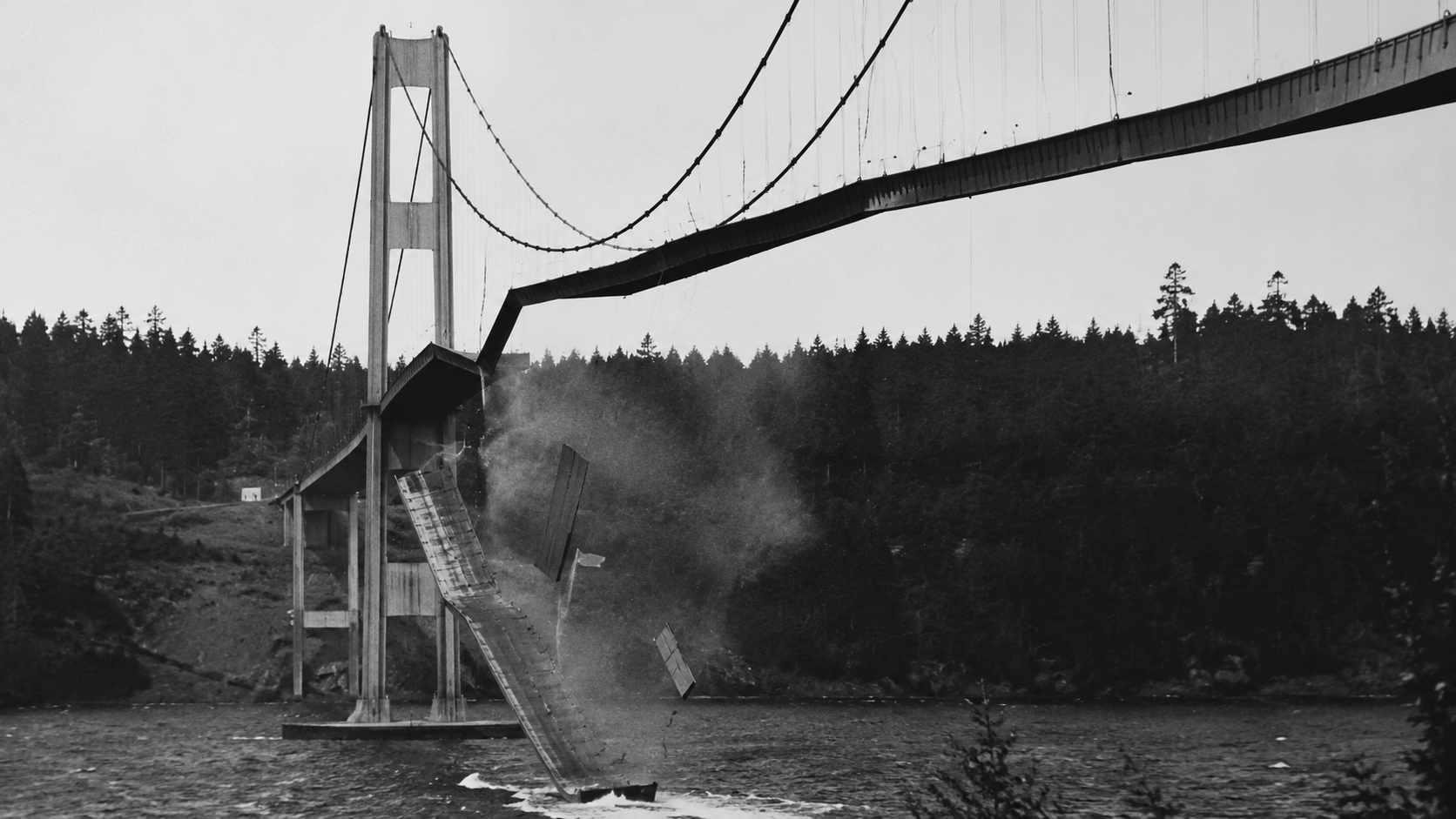
Galloping Gertie's Chaotic Dance
November 7, 1940: The sleek Tacoma Narrows Bridge twisted violently in the wind before collapsing into the Puget Sound. The engineering marvel turned disaster within seconds, leaving questions echoing through the air.

The $5.9 Billion Collapse
On a crisp October morning in 2023, the vibrant digital marketplace for Counter-Strike skins crumbled by $1.7 billion overnight due to an unexpected update. What set the stage for this colossal upheaval?
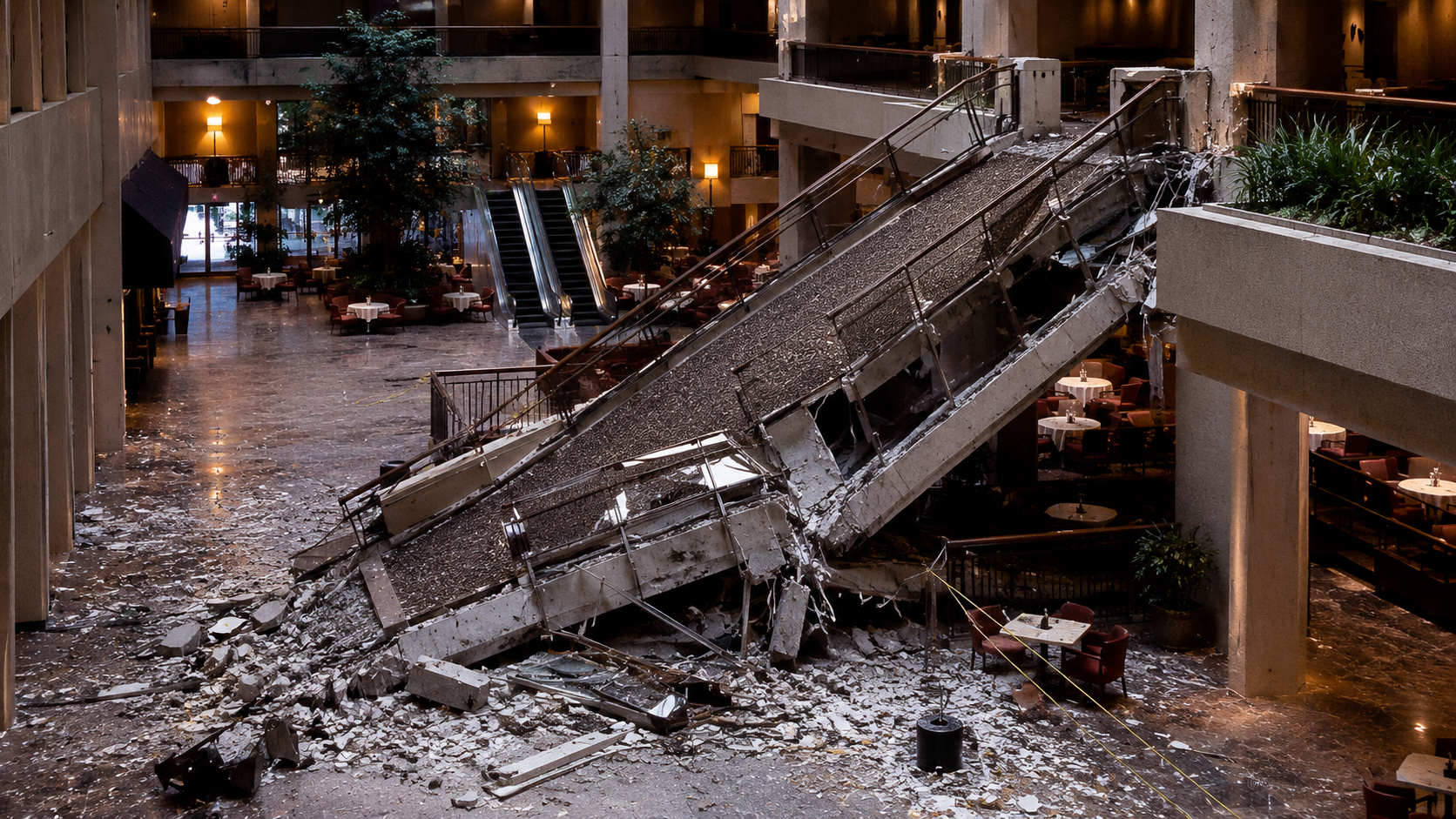
When the Skywalks Fell
On July 17, 1981, two suspended walkways collapsed in the Hyatt Regency Kansas City, killing 114 people. What unseen detail could lead to such catastrophic failure?
Continue the Rabbit Hole
Each story explores the same idea from a different angle. Follow the connections and discover where the thread leads.








Fictional placeholder content