MKUltra: The Mind Control Program Exposed
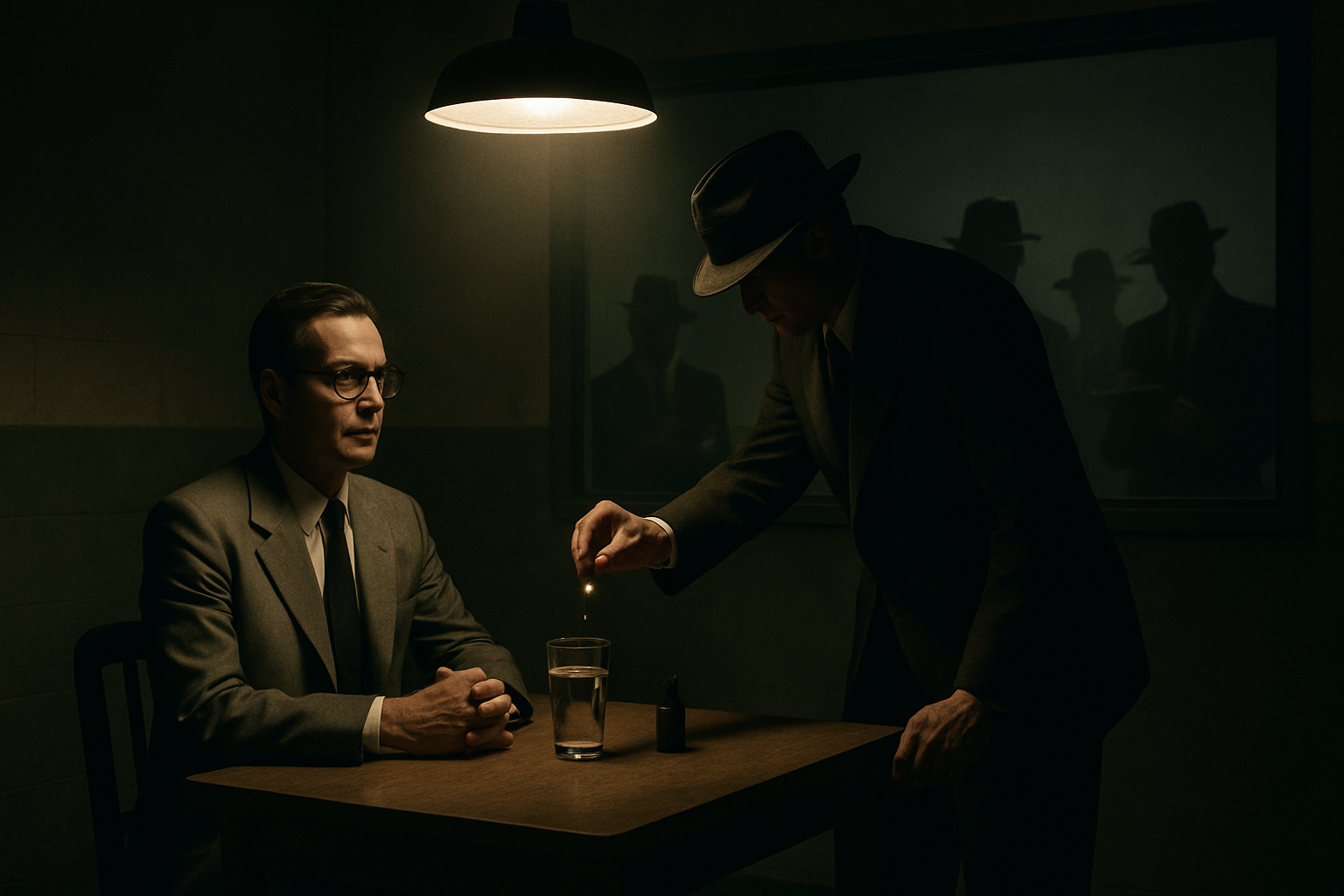
"In a nondescript office, Sidney Gottlieb coldly approved the delivery of LSD to unwitting civilians. But this was only the beginning."
What Happened?
Sidney Gottlieb stood over the incinerator, watching as decades of secrets went up in smoke. It was 1973, and the CIA was erasing the last of Project MKUltra’s tracks. This wasn’t just routine housekeeping; it was a calculated move to bury the evidence of experiments that even verged on the surreal. LSD, hypnosis, electroshock therapy—anything deemed useful for controlling the human mind found its place here. Many participants had no idea they were part of the trials. Others, coerced into compliance, had regrets stitched into the fabric of their lives.
The program had begun in 1953, under a Cold War shroud of paranoia. Intelligence officers like Richard Helms saw potential in mind control as a weapon, and Gottlieb, then head of the CIA's Technical Services Division, was the man tasked with making it real. Yet, what started as a strategic initiative quickly spiraled beyond ethical boundaries. From New York to San Francisco, unsuspecting citizens became unwitting lab rats, living out the CIA’s dystopian fantasies.
When journalist Seymour Hersh blew the lid, the nation was jolted—right into the Church Committee hearings of 1975. Pages of redacted documents revealed more than the agency could control, and the American public discovered the kin behind the curtain. Gottlieb had retired, leaving behind a scorched-earth policy as his legacy. The remaining files, or what was left of them, painted a fragmented picture of a project that felt more like fiction than fact.
Despite the destruction, new documents surfaced in 2024, reigniting public interest and horror at the scope of MKUltra. Once more, the secretive depths of government operations were exposed to daylight, showing us that sometimes the past refuses to stay silent. And what did the CIA learn? Maybe that control is a tricky thing—it tends to backfire when cloaked in secrecy and stitched with lies.
Takeaway
The lesson this story keeps teaching
“The pursuit of control bred chaos, revealing that secrecy can be more dangerous than the threat it aims to contain.”
Why People Are Talking About This
Revelations of MKUltra's horrors mark a turning point in public trust, a breach that continues to inform our understanding of governmental boundaries.
In a world where technology increasingly permeates daily life, the lessons of MKUltra caution against unchecked authority. The surveillance debates echo its themes, a reminder of the thin line between protection and coercion.
Thread Map
9 entities · 8 connections · Hover to explore, click to inspect
This is the connection map for this thread. Every node is a person, company, event, or idea. The red lines show how they connect. Hover a node to highlight its connections. Click a node to see why it matters to this story.
How We Got Here
MKUltra Commences Under CIA's Watch
Sidney Gottlieb takes the helm of MKUltra, initiating experiments that involve LSD and other mind-altering substances to explore the limits of psychological manipulation.
Operation Midnight Climax Begins
Under MKUltra, CIA establishes brothels to administer drugs to unsuspecting patrons while observing their behaviors for mind control applications.
Destruction of MKUltra Records Ordered
Richard Helms orders the dismantling of MKUltra records in an attempt to protect the CIA from fallout, inadvertently igniting suspicion and intrigue around the program's activities.
Seymour Hersh Unveils CIA's Domestic Spying
Investigative journalist Seymour Hersh publishes articles exposing the CIA's domestic spying programs, leading to greater scrutiny of intelligence operations, including MKUltra.
Church Committee Hearings Begin
The U.S. Senate's Church Committee launches a series of hearings revealing the extent of the CIA's illegal activities, shining a light on MKUltra's unethical experiments.
Declassification of MKUltra Documents
Following a Freedom of Information Act request, the CIA declassifies thousands of MKUltra-related documents, providing a clearer picture of its mind control experimentation.
New Revelations from Declassified MKUltra Files
Newly released documents reveal additional details, continuing to surprise and shock the public with the extent of MKUltra's controversial research.
First LSD Tests on Human Subjects Conducted
The CIA uses LSD for the first time on human subjects at universities and hospitals, marking the beginning of dubious experimentation under MKUltra.
Ethics Concerns Emerge
Some within the CIA report concerns over MKUltra’s ethical violations, sensing a recklessness in its pursuit of mind control.
Allan Memorial Institute Involved in Experiments
Dr. Ewen Cameron at Allan Memorial Institute engages in MKUltra-sanctioned experiments involving electroshock therapy, dramatically altering patients' mental states.
Wait... Who Is This?
Project MKUltra was born from Cold War tensions, a time when paranoia drove many secretive American policies. The Soviet Union loomed as the enemy, and in this charged environment, fear often overran morality.
Sidney Gottlieb, the head of the CIA’s Technical Services Division, viewed mind control as the ultimate weapon. Aspiring to unlock the deep recesses of the mind, he spearheaded experiments across a network of universities, research foundations, and hospitals. Unbeknownst to participants, their psychological states and autonomy were manipulated in the name of national security.
These experiments weren’t bound by the usual constraints of ethics or legality. From hallucinogenic drugs like LSD to electroshock therapy, the boundaries of science were pushed to the extremes. Yet, what started as a quest for safeguarding American interests soon revealed the darker instincts governing unchecked state apparatus. By the mid-70s, public exposure of MKUltra’s practices only fueled suspicions: if something this extensive could remain hidden, what else might escape scrutiny?
Receipts
MKUltra
Documents Reveal Just How Crazy The CIA's MKULTRA ...
The CIA's Appalling Human Experiments With Mind Control
MK-Ultra | HISTORY
Mind Control, Drug Experiments, and MKULTRA
The MKULTRA Conspiracy - The History Reader
Brainwashed: The echoes of MK-ULTRA
'Poisoner In Chief' Details The CIA's Secret Quest For Mind ...
Same Pattern
Different story. Same lesson.

The Lab That Invented Tomorrow
In December 1979, Steve Jobs saw echoes of the future inside Xerox PARC's halls. There, in a secluded lab, lay the blueprint for the modern tech landscape.

The Browser War That Built the Internet
In the mid-1990s, a software battle erupted that would shape how billions accessed information. Few could predict that the victor would soon face its own downfall.

Pixar's Radical Feedback Loop
In a stark, unadorned room, some of the most powerful voices in animation face off with ruthless honesty. Their weapons? Brutal feedback that molds raw ideas into cinematic gold.

The Chicken That Changed Retail
Costco's $4.99 rotisserie chicken isn't just a meal — it's a strategic masterpiece. The unexpected ripple effects changed retail forever.

Minority Report's Prescient Touchscreen Reality
In 2002, Hollywood imagined a future of seamless touchscreen interfaces. Today, Steven Spielberg's vision feels eerily prescient as technology catches up.

The Mandela Effect’s Mind-Bending Mystique
Millions remember Nelson Mandela dying in the 1980s, yet he passed in 2013. What caused this shared illusion?
Continue the Rabbit Hole
Each story explores the same idea from a different angle. Follow the connections and discover where the thread leads.





Fictional placeholder content