The Digital Monster Almost Became Real
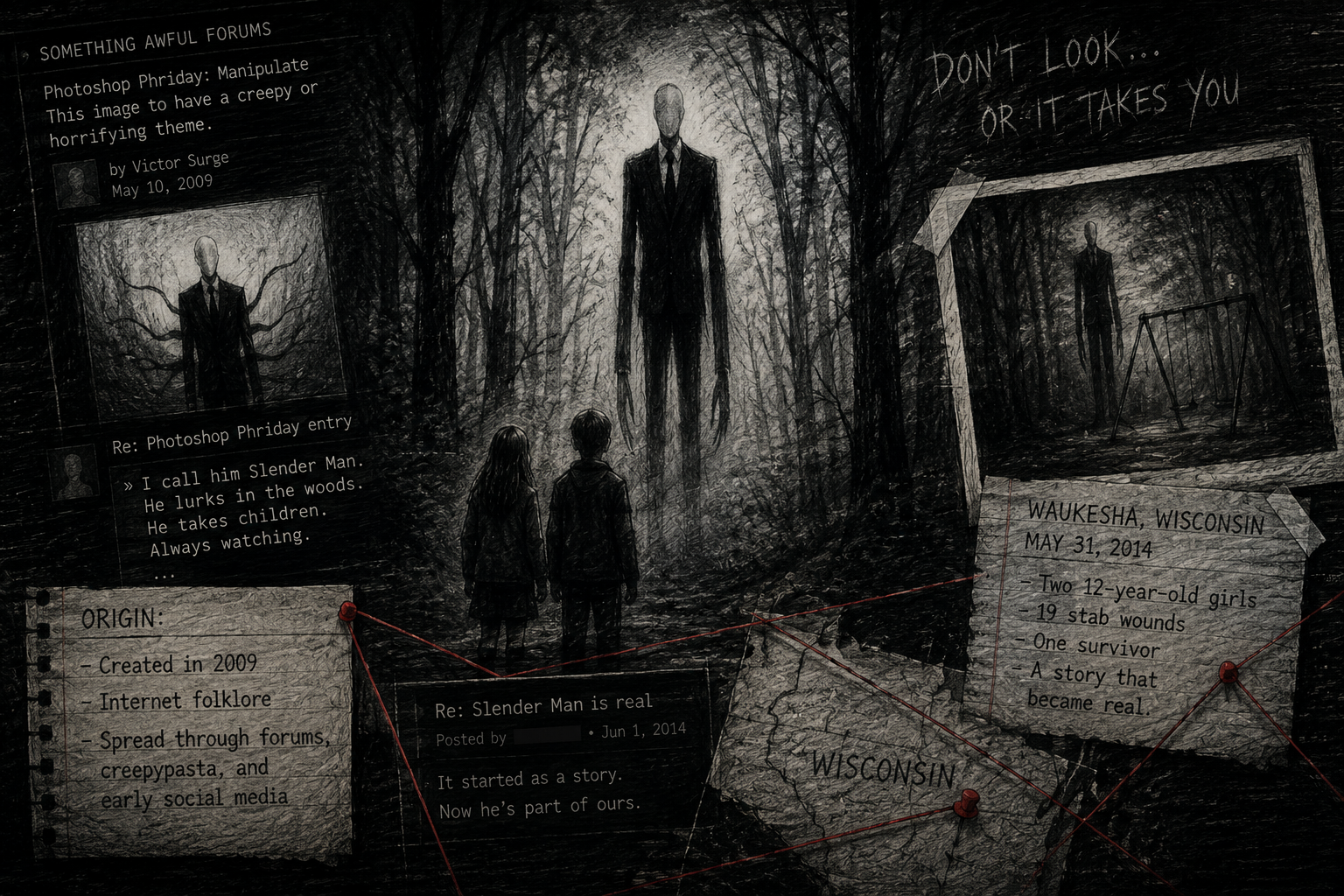
"In 2014, two 12-year-old girls stabbed their friend 19 times, driven by a desire to appease a mythical internet creation. Slender Man, once an online horror, had walked into the real world with devastating consequences."
What Happened?
The woods were a place of whispers and terror that day, secrets exchanged in the shadows cast by tall trees in Waukesha, Wisconsin. On May 31, 2014, Morgan Geyser and Anissa Weier lured their friend, Payton Leutner, into this ominous setting. Driven by a chilling devotion to Slender Man, a fictional entity born from the noxious depths of the internet, they intended to sacrifice her as a tribute. Undeterred by the brutality of their plan, the pair attacked Payton, inflicting 19 stab wounds. Miraculously, Payton survived, crawling through the underbrush to find rescue. "It was her strength that saved her," authorities remarked afterward.
This disturbing incident was not just a tale of violence but a reflection of how a figment of a digital age could warp into a perceived reality. Slender Man, an eerie creature crafted by Eric Knudsen on the Something Awful forums in 2009, appeared in altered photographs as a slender, faceless figure in a suit. Intended as nothing more than a digital hoax, its sinister allure captured imaginations—and fears—across the globe. By the time of the attack, his mythos had twisted into something chillingly real for Geyser and Weier, who believed pleasing Slender Man would protect their families.
Despite originating as harmless digital folklore, Slender Man’s embodiment in popular culture spurred too far beyond its creators' control. The character infected forums, stories, and videos, blurring the line between fiction and fear. In the dark scrawl of internet lore, Slender Man was never meant to leap from screen to reality. But on that day in May, it did, transforming from an ominous tale into a haunting nightmare that could never be recontained.
Takeaway
The lesson this story keeps teaching
“The myth became bigger than the truth, revealing the fragile boundary between fictional stories and real-world actions.”
Why People Are Talking About This
The Slender Man crisis shed light on how vulnerable young minds can misinterpret fictional narratives. This case explores the profound impacts of internet culture on real-life actions, prompting urgent discussions about digital literacy and mental health awareness.
The story serves as a cautionary tale about the unpredictable power of the internet, emphasizing the need for responsible content moderation and the potential dangers lurking in digital storytelling.
Thread Map
6 entities · 5 connections · Hover to explore, click to inspect
This is the connection map for this thread. Every node is a person, company, event, or idea. The red lines show how they connect. Hover a node to highlight its connections. Click a node to see why it matters to this story.
How We Got Here
Slender Man is Born Online
Eric Knudsen creates Slender Man for a contest on Something Awful forums. The character is a tall, faceless figure in a black suit, born from a user's imagination and destined to become an internet icon.
Fantasy Turns to Violence
Morgan Geyser and Anissa Weier lure friend Payton Leutner into the woods, stabbing her 19 times in an attempt to please Slender Man. Despite severe injuries, Leutner survives, setting off a media frenzy.
The Internet Takes Notice
The Slender Man stabbing case becomes a national sensation. Media coverage intensifies, focusing on the influence of internet culture on youth and the dangers of digital folklore.
Legal Proceedings Begin
Morgan Geyser and Anissa Weier are taken into custody. Investigations reveal their deep belief in Slender Man, raising concerns over their mental health and ability to stand trial.
Sentencing and Institutionalization
Geyser and Weier are sentenced. Geyser receives 40 years in a mental health facility, reflecting the severity of her psychological issues. Weier is sentenced to 25 years in a mental institution.
Slender Man Hits the Big Screen
A feature film about Slender Man is released, exploring the character's mythos and the cultural fascination surrounding it. The film further embeds Slender Man into popular culture.
Morgan Geyser Briefly Escapes
Geyser escapes from a supervised group home, stirring memories of the horrifying 2014 attack and prompting a search that quickly recaptures her.
Wait... Who Is This?
In the burgeoning digital landscape of the mid-2000s, internet forums became breeding grounds for new ideas and myths. It was in one such forum that a ghostly figure known as Slender Man emerged, its roots planted deeply within the web's fertile ground. Created in 2009 by Eric Knudsen, Slender Man was part of a challenge to fabricate a modern legend. This tall, faceless entity wearing a black suit soon captured the imagination of the internet, growing beyond its humble origins to become a significant piece of internet folklore.
Over time, stories about Slender Man multiplied, shared through Creepypastas—short, user-driven tales intended to terrify. The figure's malleability allowed it to be reshaped and adapted by countless users, each contributing to its mythos. Blogs, YouTube series, and horror games propagated the character, embedding Slender Man into the popular consciousness. By 2014, what started as an internet meme had metamorphosed into a specter residing in the corners of web culture.
Amid this, the myth took a dark turn. The boundary between hoax and reality blurred for two young girls, culminating in an act of violence that turned Slender Man from eerily fascinating to utterly infamous. The phrase 'digital monster' gained new weight; the internet's capacity to conjure bogeymen proved far more potent than its creators intended.
Receipts
Same Pattern
Different story. Same lesson.

The Chicken That Changed Retail
Costco's $4.99 rotisserie chicken isn't just a meal — it's a strategic masterpiece. The unexpected ripple effects changed retail forever.

The Lab That Invented Tomorrow
In December 1979, Steve Jobs saw echoes of the future inside Xerox PARC's halls. There, in a secluded lab, lay the blueprint for the modern tech landscape.

The Browser War That Built the Internet
In the mid-1990s, a software battle erupted that would shape how billions accessed information. Few could predict that the victor would soon face its own downfall.

The Wii Gamble That Saved Nintendo
In a world obsessed with graphics and power, Nintendo bet on simplicity. The Wii was laughed at — until it wasn't.

Pixar's Radical Feedback Loop
In a stark, unadorned room, some of the most powerful voices in animation face off with ruthless honesty. Their weapons? Brutal feedback that molds raw ideas into cinematic gold.
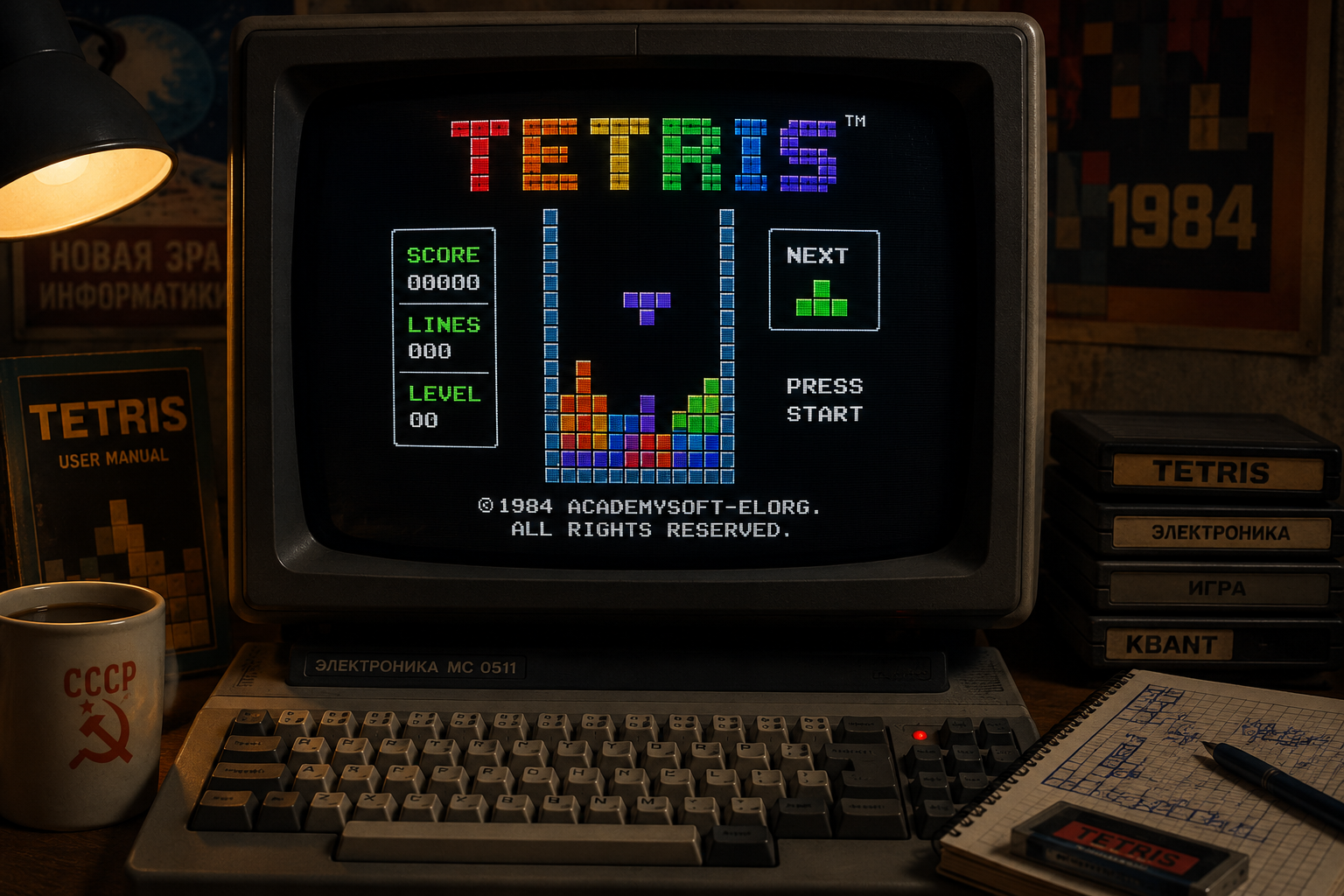
The Puzzle that Conquered the World
A Soviet engineer at his desk, unknowingly poised to create a legend. His creation? Tetris — a game that would break barriers and forever alter the gaming landscape.
Continue the Rabbit Hole
Each story explores the same idea from a different angle. Follow the connections and discover where the thread leads.

Fictional placeholder content