
The Rectangle Riddle
"Imagine a YouTube channel that uploads nearly 80,000 cryptic videos. Each bizarre and unyielding, they captivated a global audience. Why did they exist?"
What Happened?
It was early 2014 when internet users stumbled upon Webdriver Torso, a mysterious YouTube channel. The channel was uploading an avalanche of videos—more than 77,000, each a mere 11 seconds of red and blue rectangles flickering against a white screen accompanied by a beeping tone. Speculation was immediate: Was it a coded message? An alien transmission? Or just some bizarre art project?
The truth, revealed a few months later, was even stranger. The channel was not the work of an individual eccentric or extraterrestrial; it was created by Google. Webdriver Torso was part of a network designed to test YouTube’s video quality across different devices and regions. The idea was simple: analyze how different settings impacted playback. But the execution—uploading thousands of eerily similar clips without explanation—turned a technical procedure into an internet enigma.
As theories spread and the mystery deepened, one Italian blogger, Soggetto Ventuno, took it upon himself to uncover the truth. Through meticulous investigation, he connected Webdriver Torso to Google’s testing network and shared his findings with Engadget, leading to Google’s eventual confirmation of ownership in June 2014. Ventuno’s detective work transformed a curious riddle into a solved mystery, revealing a pattern of intrigue that shows the internet's ability to spin mundane activities into enthralling narratives.
Webdriver Torso’s saga is a testament to the captivating grip of internet mysteries—where a straightforward test can morph into a global sensation. It demonstrates how the absence of context can turn the ordinary into the extraordinary, and reminds us that in the right context, even simple rectangles can captivate the world.
Takeaway
The lesson this story keeps teaching
“The Webdriver Torso saga shows how an ordinary technical test can spiral into a global narrative of intrigue and speculation.”
Why People Are Talking About This
Webdriver Torso, despite its simple origin, became a powerful symbol of our times — one marked by curiosity and the vast expanse of the digital universe. Yet, beneath its esoteric facade, this narrative unveils an essential truth: in the age of misinformation, the human instinct to uncover and decode is both our greatest strength and most intriguing vulnerability.
Such phenomena show how ordinary intentions can spiral into collective enigmas, shaping cultural narratives that reflect and remind us of our intrinsic motivations — the unquenchable thirst for narrative, answers, and meaning in a complex world.
Thread Map
9 entities · 8 connections · Hover to explore, click to inspect
This is the connection map for this thread. Every node is a person, company, event, or idea. The red lines show how they connect. Hover a node to highlight its connections. Click a node to see why it matters to this story.
How We Got Here
The YouTube Channel Launches Quietly
In March 2013, Google quietly created the YouTube channel Webdriver Torso. Without fanfare, uploads began as part of an internal quality testing program.
The First Video Upload
The first video appears on the Webdriver Torso channel, an unremarkable clip showcasing red and blue rectangles. It slips under the radar, yet marks the start of a digital anomaly.
Community Attention Builds
As the number of uploads balloons past thousands, community scrutiny increases. Speculation swirls, drawing attention from amateur sleuths and media alike. The digital narrative begins to take shape.
Google's Reveal To Engadget
Under pressure from persistent coverage and speculation, Google admits to Engadget its connection to Webdriver Torso. The admission confirms the channel's purpose as a video quality test.
A Mystery Saturated in Mundanity
With Google's admission, the compelling narrative dissolves into corporate mundanity. Views and speculation plummet as the channel's original intent surface — mundane tests captured unexpected global fascination.
Story Fades, But Interest Lingers
Despite the anticlimactic end, Webdriver Torso becomes a staple on Reddit and other forums as an amusing reminder of how simple questions can escalate into worldwide puzzles.
The Legacy of Curiosity
Webdriver Torso morphs into an internet lexicon term — referenced more for the enigma it sparked than the answers it provided. It marks a note in the annals of online culture, emblematic of narrative over fact.
A Documented Case Study
Academics and media experts discuss Webdriver Torso in analyses of internet phenomena, observing how technical mundanity can ignite curiosity-driven public frenzy in an algorithmic age.
Renewed Interest and Documentation
Webdriver Torso reemerges in online discussions during the pandemic, a subject studied as an example of the Internet’s ability to transform and intrigue. Its legacy as a mysterious icon persists.
Wait... Who Is This?
Back in 2013, the world was a different digital landscape. YouTube was no longer an upstart; it was a dominant platform where global trends were just beginning to form. Users from every corner of the globe uploaded content ranging from the ordinary to the outright bizarre, carving out niches across every conceivable interest.
Amidst this context, Webdriver Torso was born in silence. No grand announcement, just a quiet presence on the platform. Its story began with a playlist of videos — 11-second clips dominated by two rectangles, red and blue, juxtaposed against a plain white sound. Each clip was mysteriously devoid of title touches explaining its purpose or origin.
This was all it took. In an age of overabundant content and hidden gems going unnoticed, Webdriver Torso silently became chaos incarnate. It captivated an audience hungry for meaning, transforming nothing into palpable substance by giving purveyors of mystery the facades of conspiracy.
By sheer numbers alone, the channel demanded attention. Thousands of cryptically simple videos stood out in a realm normally powered by personality, narration, and dynamic storytelling. It was there, however, that Webdriver Torso found its power — mystery within mundanity. What began as technical routine quickly morphed into internet lore, emblematic of our incessant search to qualify the unknown.
Receipts
Same Pattern
Different story. Same lesson.
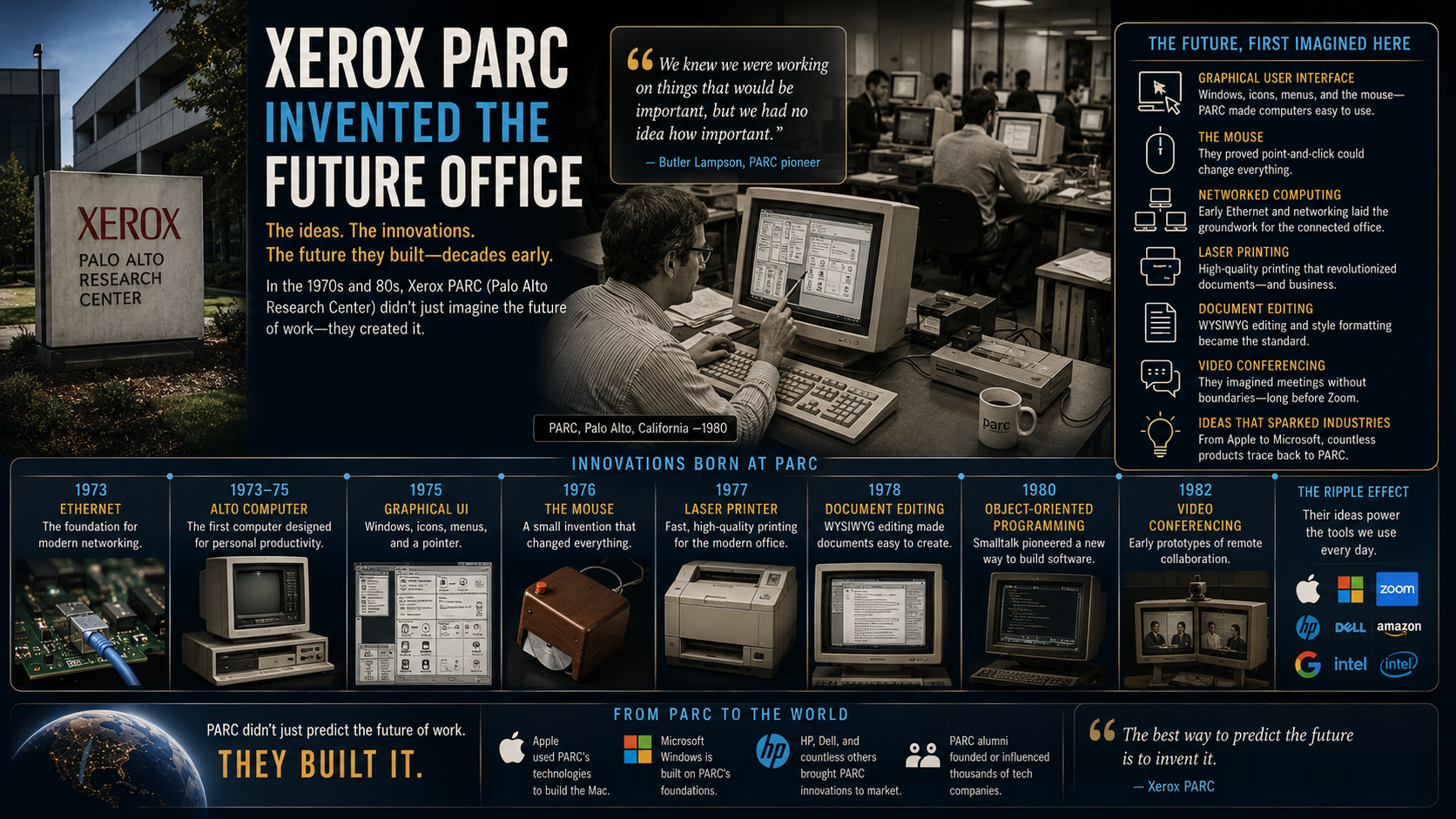
The Lab That Invented Tomorrow
In December 1979, Steve Jobs saw echoes of the future inside Xerox PARC's halls. There, in a secluded lab, lay the blueprint for the modern tech landscape.
The Browser War That Built the Internet
In the mid-1990s, a software battle erupted that would shape how billions accessed information. Few could predict that the victor would soon face its own downfall.
The Wii Gamble That Saved Nintendo
In a world obsessed with graphics and power, Nintendo bet on simplicity. The Wii was laughed at — until it wasn't.

Pixar's Radical Feedback Loop
In a stark, unadorned room, some of the most powerful voices in animation face off with ruthless honesty. Their weapons? Brutal feedback that molds raw ideas into cinematic gold.

The Chicken That Changed Retail
Costco's $4.99 rotisserie chicken isn't just a meal — it's a strategic masterpiece. The unexpected ripple effects changed retail forever.
Minority Report's Prescient Touchscreen Reality
In 2002, Hollywood imagined a future of seamless touchscreen interfaces. Today, Steven Spielberg's vision feels eerily prescient as technology catches up.
Continue the Rabbit Hole
Each story explores the same idea from a different angle. Follow the connections and discover where the thread leads.





Fictional placeholder content