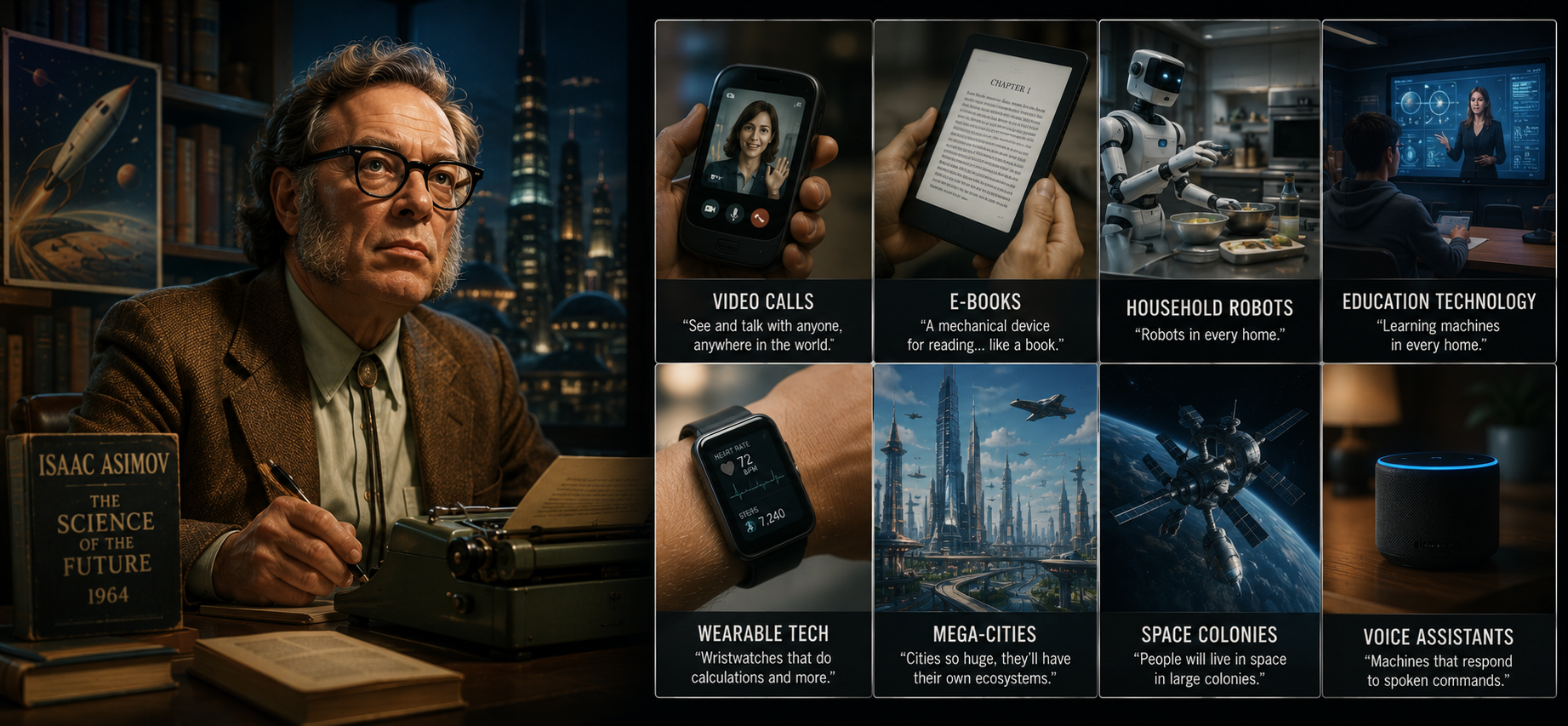
Asimov's 1964 Vision: Eerily Accurate Predictions
"In 1964, Isaac Asimov peered 50 years into the future, stating technology would reshape daily life in unimaginable ways. His predictions were startlingly prescient — and some, unsettlingly off."
What Happened?
In the bustling chaos of the 1964 New York World's Fair, a man known for weaving futures out of present threads stood among the emerging wonders. Isaac Asimov, whose mind crafted worlds beyond the veil of science fiction, dared to sketch the contours of 2014 with startling precision and surprising restraint. Science fiction fans devoured his work in 'The New York Times,' keen to glimpse a world fifty years hence.
He imagined an era where gadgets liberated humanity from drudgery, foreseeing kitchen units conjuring 'automeals' with the push of a button. Asimov's kitchen of the future wasn't just science fiction; it prefigured our present reality, where Keurig machines and microwaves replaced the stove. And yet, he cautioned, robots would be real but neither common nor particularly good by 2014—a prediction that remains prescient.
Perhaps most haunting was his speculation that humanity would fall into the malaise of boredom, a 'disease' he believed would spread and deepen with increased leisure—a prophecy resonating unnervingly in today's world of digital distraction and unending content streams. As Asimov peered through the fair's technological marvels, he saw not just progress, but the shadows it cast: technology's relentless march forward outpacing our ability to savor it.
Reflecting on Asimov's visions, the irony emerges: these weren't flights of fancy but calculated deductions from someone deeply rooted in the science and society of his time. His 1964 forecast reads less like fantasy and more like a meticulous construction of the possible, where the miracle lies not just in what he saw, but in what he chose not to predict.
Takeaway
The lesson this story keeps teaching
“Asimov's predictions from 1964 teach us that our understanding of what the future holds is deeply influenced by the era we live in.”
Why People Are Talking About This
Asimov's predictions document our aspirations and hesitations about the future, offering a benchmark against which today's reality stands. They reveal fears about technology and its potential to transcend control, showcasing how stories shape vision. While technology transforms life, human concerns remain constant — and this narrative fuels the perpetual dialogue surrounding innovation. It challenges us to reflect not only on the benefits realized over half a century but also implications unforeseen, yet just as potent.
Thread Map
9 entities · 8 connections · Hover to explore, click to inspect
This is the connection map for this thread. Every node is a person, company, event, or idea. The red lines show how they connect. Hover a node to highlight its connections. Click a node to see why it matters to this story.
How We Got Here
Asimov's Vision Sends Ripples
Isaac Asimov publishes his predictions for 2014 in The New York Times during the World's Fair. These insights include visions of robotics, telecommunications, and even lunar colonies, sparking curiosity and debate.
World's Fair Inspires Future Visions
The New York World's Fair convenes, emblazoned with a theme celebrating 'Peace Through Understanding.' Concepts like space exploration and emerging technologies inspire thinkers like Asimov, who aligned his futuristic predictions with the current scientific zeitgeist.
Predictions Stun the Public
The public receives Asimov's startling predictions. While some dismiss them as fantasy, others see reflections of the future. These divisive opinions plant Asimov's vision in the collective imagination.
Robotics Draw Speculative Blueprint
Asimov's foresight on robotics echoes as scientists begin exploring prototypes of automated systems. His ideas spurred enthusiasm in robotics circles who began considering the logistical aspects of domestic automation.
Tech Landscape Evolves Rapidly
The rapid advance from mainframe computers to early personal computing validates Asimov's predictions of a domesticated electronic world.
Birth of the Modern Personal Computer
The release of the Apple Macintosh confirms the increasing appeal and integration of computers predicted in Asimov's writings, granting public access to digital exploration.
The iPhone Heralds Communication Evolution
Apple introduces the iPhone, revolutionizing communication with handheld devices. This aligns closely with Asimov's prediction of advanced personal communication tools redefining human connectivity.
Asimov's Timeless Vision is Re-evaluated
A renewed interest in Asimov's predictions occurs as the spotlight returns to the 1964 predictions. The accuracy of his vision spurs discussions on the nature of foresight within technology.
Asimov's Work Sparks Ongoing Conversations
Isaac Asimov's predictions continue to hold a place in dialogues around technology's role in shaping society's future. His legacy endures as a reminder of visionary potential.
Wait... Who Is This?
Isaac Asimov, a visionary in every right, stood hand-in-hand with giants of 20th-century science fiction. His books, lauded by scholars and laypeople alike, harbored ideas as fanciful as they were foreboding. 'I, Robot' molded generations' perceptions of artificial intelligence, embedding the narrative deep into cultural consciousness. 1964 brought Asimov to the New York World's Fair, an event bursting with wonder, showcasing humanity's soaring aspirations. It was against this backdrop that he penned his essay forecasting life 50 years forward. The 1960s clutched in the throes of a technological renaissance thanks to the Space Race and computing innovations. The era brimming with scientific zeal gave Asimov a lens through which he glimpsed the future. His tone, distinctly hopeful, nonetheless carried caution about what lay claims to be at the mercy of machines. Asimov captured the embrace of advancement while tiptoeing the uncertainties inherent in its uncharted paths.
Receipts
Isaac Asimov Predicts in 1964 What the World Will Look Like in 2014
Isaac Asimov's 2014 Predictions Were Shockingly Conservative For 1964 — Paleofuture
World's Fair: Isaac Asimov's predictions 50 years on - BBC News
12 Predictions Isaac Asimov Made About 2014 in 1964
Visit to the World's Fair of 2014
Asimov's 1964 predictions-better than Nostradamus. - Knight Science Journalism @MIT
Same Pattern
Different story. Same lesson.
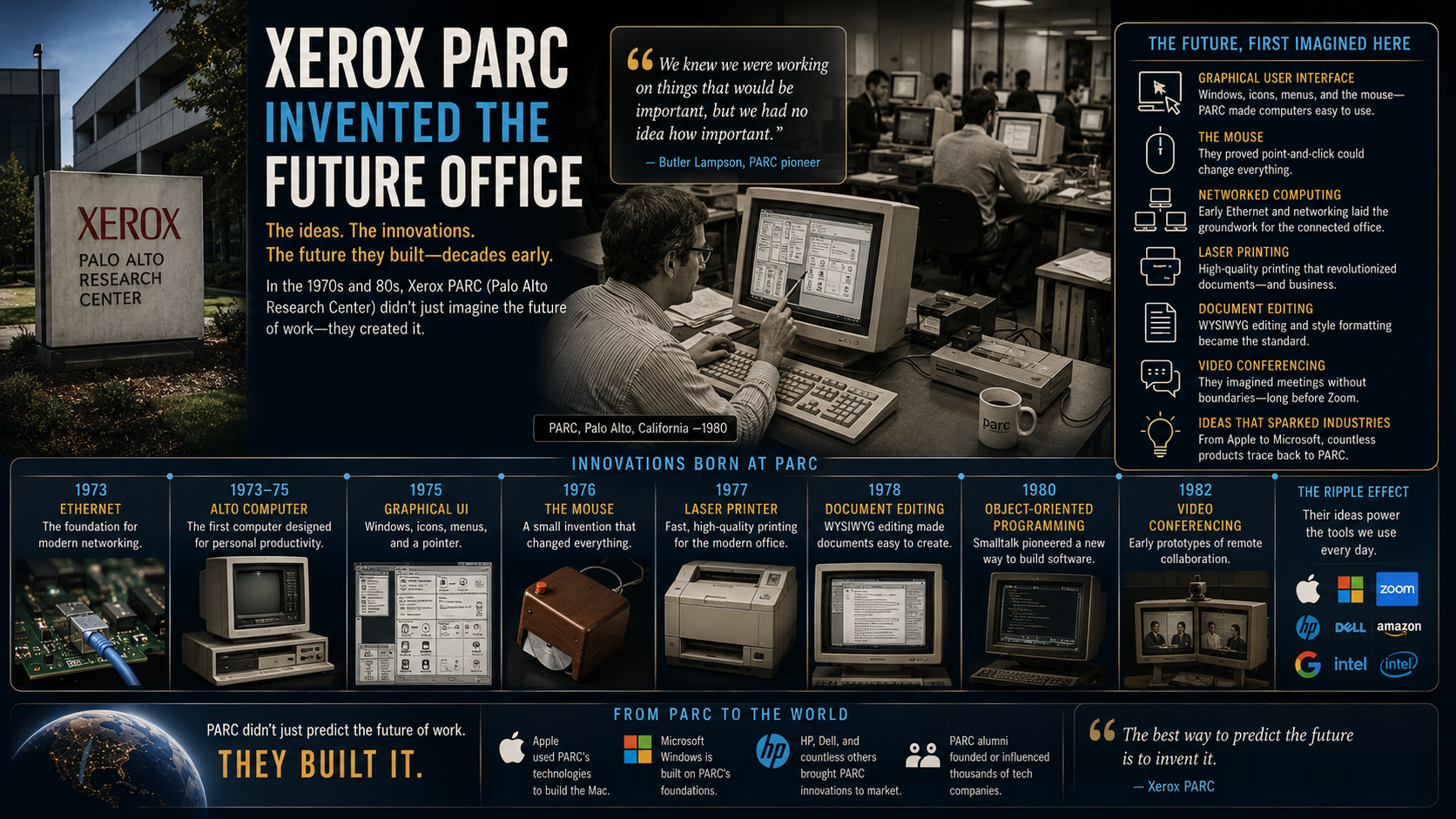
The Lab That Invented Tomorrow
In December 1979, Steve Jobs saw echoes of the future inside Xerox PARC's halls. There, in a secluded lab, lay the blueprint for the modern tech landscape.
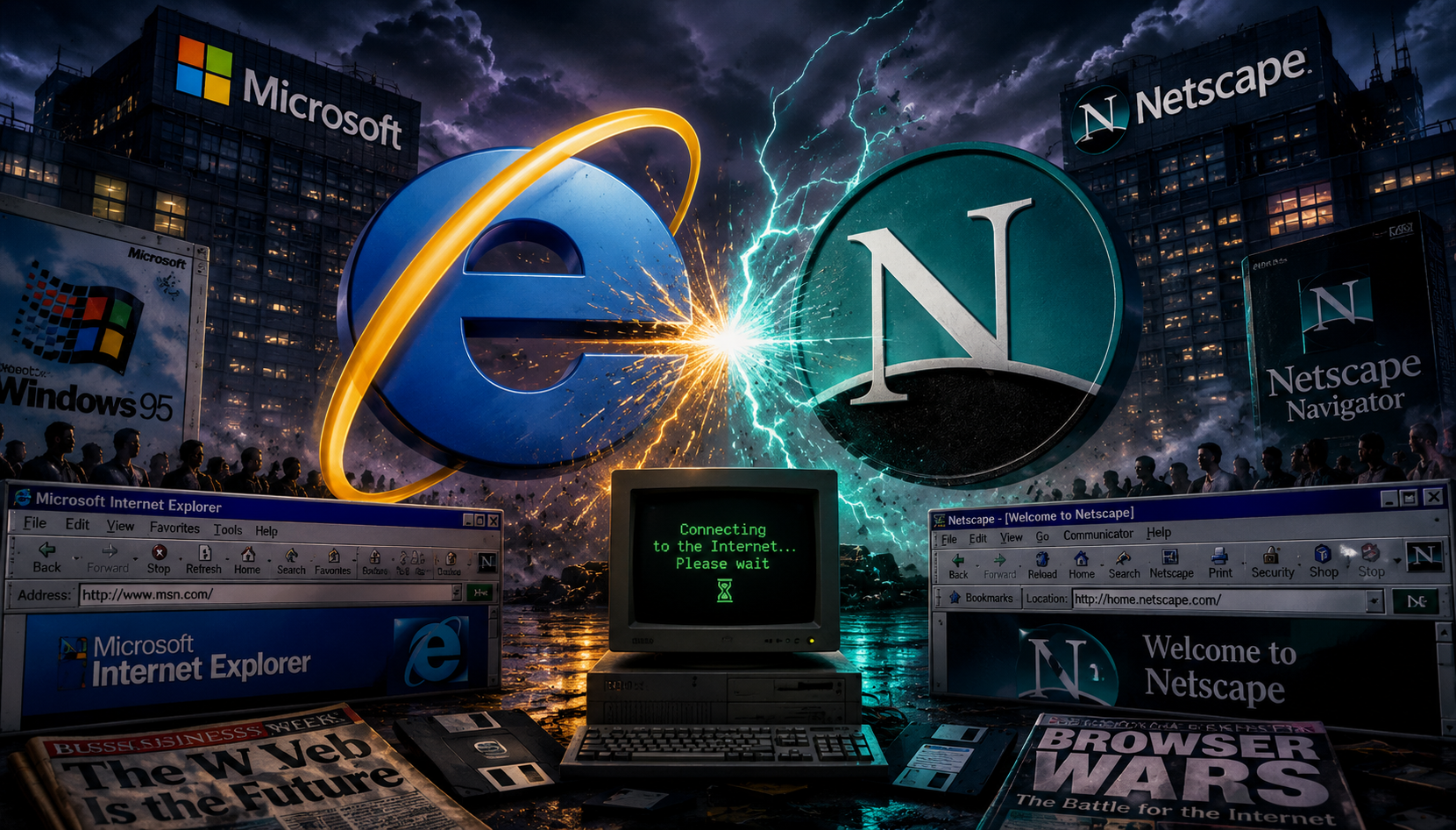
The Browser War That Built the Internet
In the mid-1990s, a software battle erupted that would shape how billions accessed information. Few could predict that the victor would soon face its own downfall.
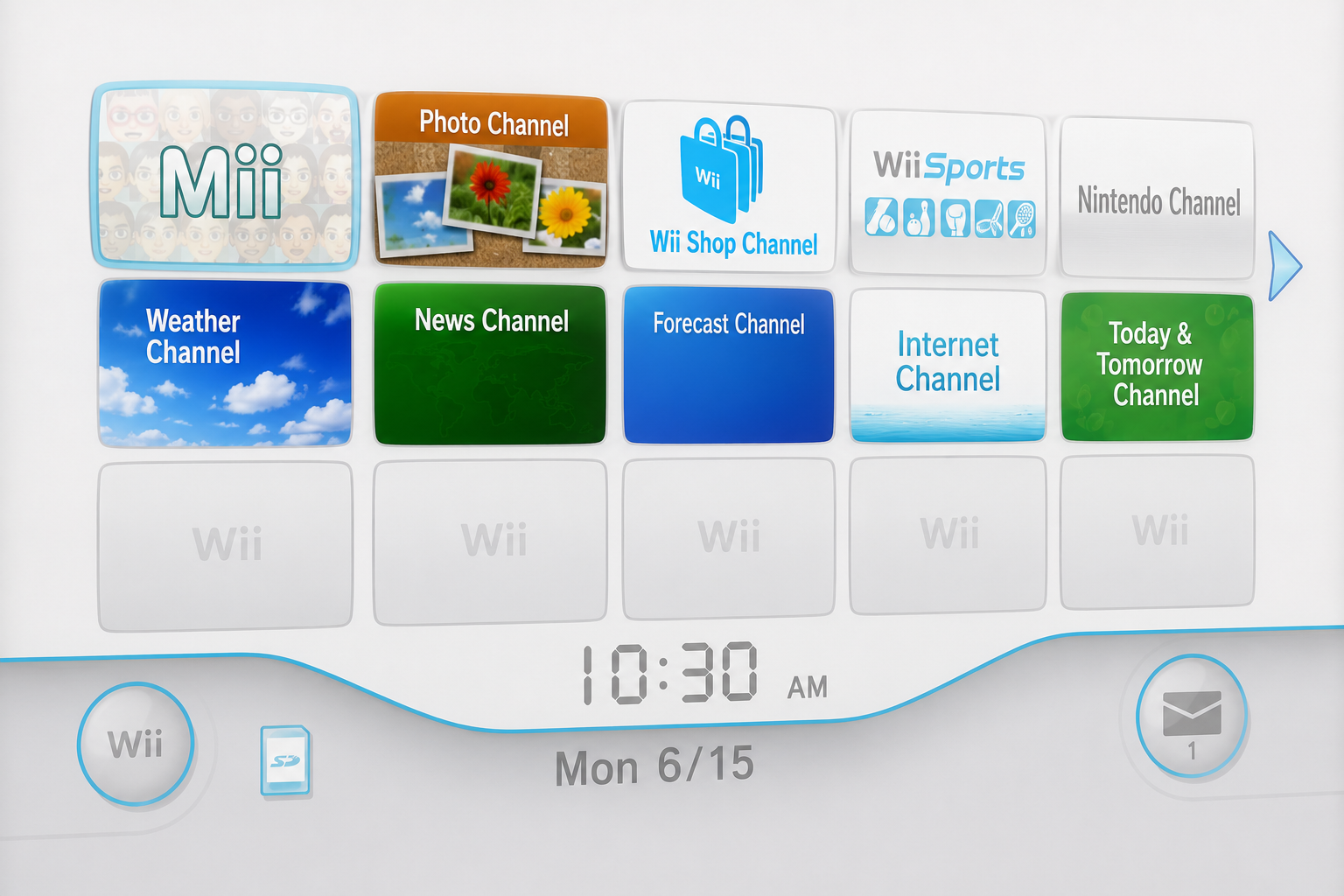
The Wii Gamble That Saved Nintendo
In a world obsessed with graphics and power, Nintendo bet on simplicity. The Wii was laughed at — until it wasn't.
Pixar's Radical Feedback Loop
In a stark, unadorned room, some of the most powerful voices in animation face off with ruthless honesty. Their weapons? Brutal feedback that molds raw ideas into cinematic gold.

The Chicken That Changed Retail
Costco's $4.99 rotisserie chicken isn't just a meal — it's a strategic masterpiece. The unexpected ripple effects changed retail forever.
Minority Report's Prescient Touchscreen Reality
In 2002, Hollywood imagined a future of seamless touchscreen interfaces. Today, Steven Spielberg's vision feels eerily prescient as technology catches up.
Continue the Rabbit Hole
Each story explores the same idea from a different angle. Follow the connections and discover where the thread leads.
Fictional placeholder content