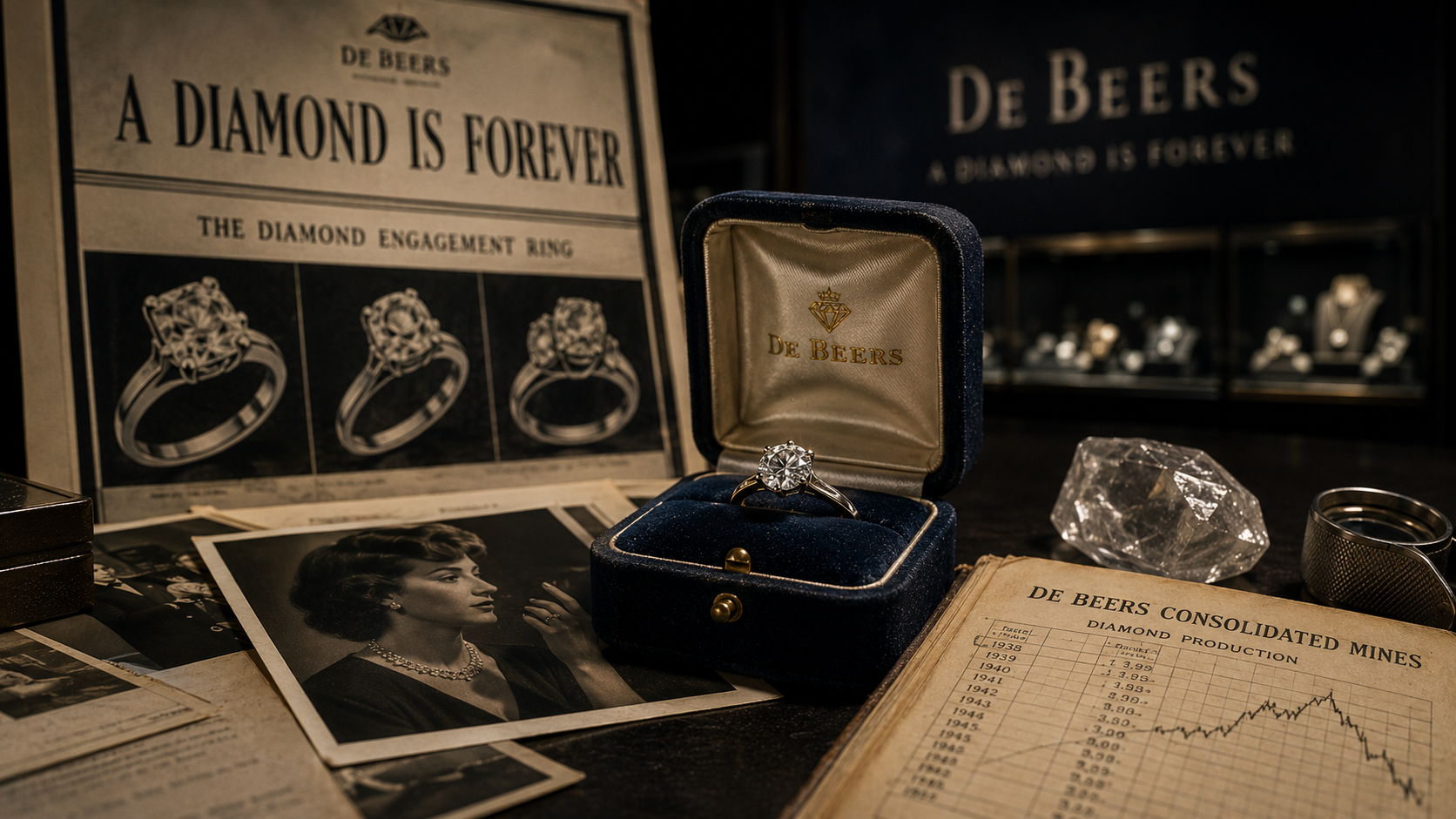
How De Beers Made Diamonds Forever
"Frances Gerety crafted a sentence so compelling that it reshaped an industry — without ever seeing her creation become the cultural touchstone it is today."
What Happened?
The summer sun cast long shadows as a man stood on the shore, diamond ring clutched in one hand, proposal rehearsed and ready. Decades earlier, this scene would have been ordinary. But in 1947, De Beers flipped tradition on its head with just four words: "A Diamond Is Forever." It was Frances Gerety's brainchild at the advertising agency N.W. Ayer & Son. The slogan wrapped diamonds in layers of sentiment and symbolism, turning what was once just another gem into the universal token of love.
Before this campaign, only 10% of American engagement rings even featured diamonds [14]. Marriage proposals were varied and diverse—something you might capture with anything from family heirlooms to simple bands. But by the time De Beers was done, not only had diamonds become standard, but so had an elaborate script. One knee. A sparkling stone. And a promise of eternity enclosed within the cut of the diamond.
At its core, De Beers' strategy hinged on control. It wasn't enough to market a product; they needed to transform the way people thought about love itself. By the 1980s, this approach had extended far beyond simple ownership. "A Diamond Is Forever" became a cultural staple, with 90% of brides in the United States receiving diamond engagement rings [11]. The campaign had infiltrated Hollywood, graced family stories across generations, and left a legacy that blurred the line between sentiment and strategy.
Yet, behind the glamour, De Beers was engineering a different kind of operation. They controlled nearly 90% of the diamond supply worldwide [2], dictating availability and setting prices almost at will. The company tactically stored diamonds, manipulating scarcity and crafting an illusion of rarity. That tight grip on the market made their iconic gems seem not only invaluable but irreplaceable.
Today, reminders of this enduring campaign loom large as ever. Couples continue to fork out an equivalent of two months' salary for a stone that symbolizes far more than material wealth. De Beers created a narrative that intertwined with the fabric of human emotion, proving not only the power of a great story but how a single idea can reshape global conventions.
Takeaway
The lesson this story keeps teaching
“When the narrative becomes more valuable than the truth, perception dictates reality. De Beers taught the world that desire can be created as surely as diamonds can be mined.”
Why People Are Talking About This
Today, nearly eighty years since its creation, 'A Diamond is Forever' remains a cornerstone of wedding culture, influencing societal perceptions about love and commitment. It highlights the power of well-crafted marketing to shape human beliefs and behaviors, extending beyond commodities into personal values. While new generations increasingly question traditional norms and investigate ethical sourcing, the legacy of De Beers continues to challenge our understanding of manufactured desires in a reality where perception is often deemed more significant than truth.
Thread Map
4 entities · 3 connections · Hover to explore, click to inspect
This is the connection map for this thread. Every node is a person, company, event, or idea. The red lines show how they connect. Hover a node to highlight its connections. Click a node to see why it matters to this story.
How We Got Here
A Slogan is Born
Frances Gerety of N.W. Ayer coined 'A Diamond is Forever' for De Beers, setting in motion a campaign that would forever change the diamond market.
Diamonds Become Synonymous with Marriage
De Beers' marketing efforts embed diamonds into Western marriage proposals, effectively intertwining the concept of diamonds and romance.
The Glamorization of Wealth
De Beers features affluent East Coast locations in ads, framing diamonds with settings of opulence and substantial luxury to tighten their association with wealth.
De Beers Adapts Strategy Amid Changes
Faced with structural shifts in diamond distribution, De Beers liquidates its strategic diamond stockpile, marking a new phase for the historic company.
Launch of Forevermark
To adapt to changing times, De Beers launches the Forevermark, emphasizing ethical sourcing and the unique beauty of diamonds certified by this hallmark.
De Beers' Market Share Declines
Despite decades of market supremacy, by 2018 De Beers holds a market share by value of approximately 35%, a significant decrease from their previous dominance.
Synthetic Diamonds Enter the Market
Increasing accessibility to synthetic diamonds challenges the enduring De Beers narrative, questioning the boundaries of authenticity and value.
Waning Impact on Younger Generations
Millennials and Gen Z embrace alternatives as ethical concerns highlight the lack of necessity for traditional diamonds, sparking shifts in the gemstone market.
Wait... Who Is This?
In 1930s and 1940s, De Beers controlled the supply and distribution of diamonds, yet faced a crucial psychological barrier: convincing people diamonds were indispensable in expressions of love. At the time, diamonds were largely industrial — useful but not culturally burned into personal narratives about romance. The backdrop of post-World War America offered fertile ground. Economic growth fueled by new technologies provided affluence and a yearning for emblems of personal and familial stability. The slogan 'A Diamond is Forever,' crafted in 1947, seamlessly capitalized on these conditions. It spoke not to substance but to symbolism, an eternal fixture implying that love was unyielding, as enduring as the diamond itself. This brilliant psychological stroke led to the modern belief in the necessity of diamonds. De Beers didn't just sell stones; they sold the timeless desire to embody permanence in a transient world.
Receipts
A Diamond Is Forever | Diamond Source of Virginia
De Beers - Wikipedia
A Brief History of De Beers
How De Beers Changed the Diamond Market with One Simple Tagline | Jewelry | Sotheby’s
A Diamond Is Forever: The History of the Famous Slogan | Beverly's Jewelry
Same Pattern
Different story. Same lesson.
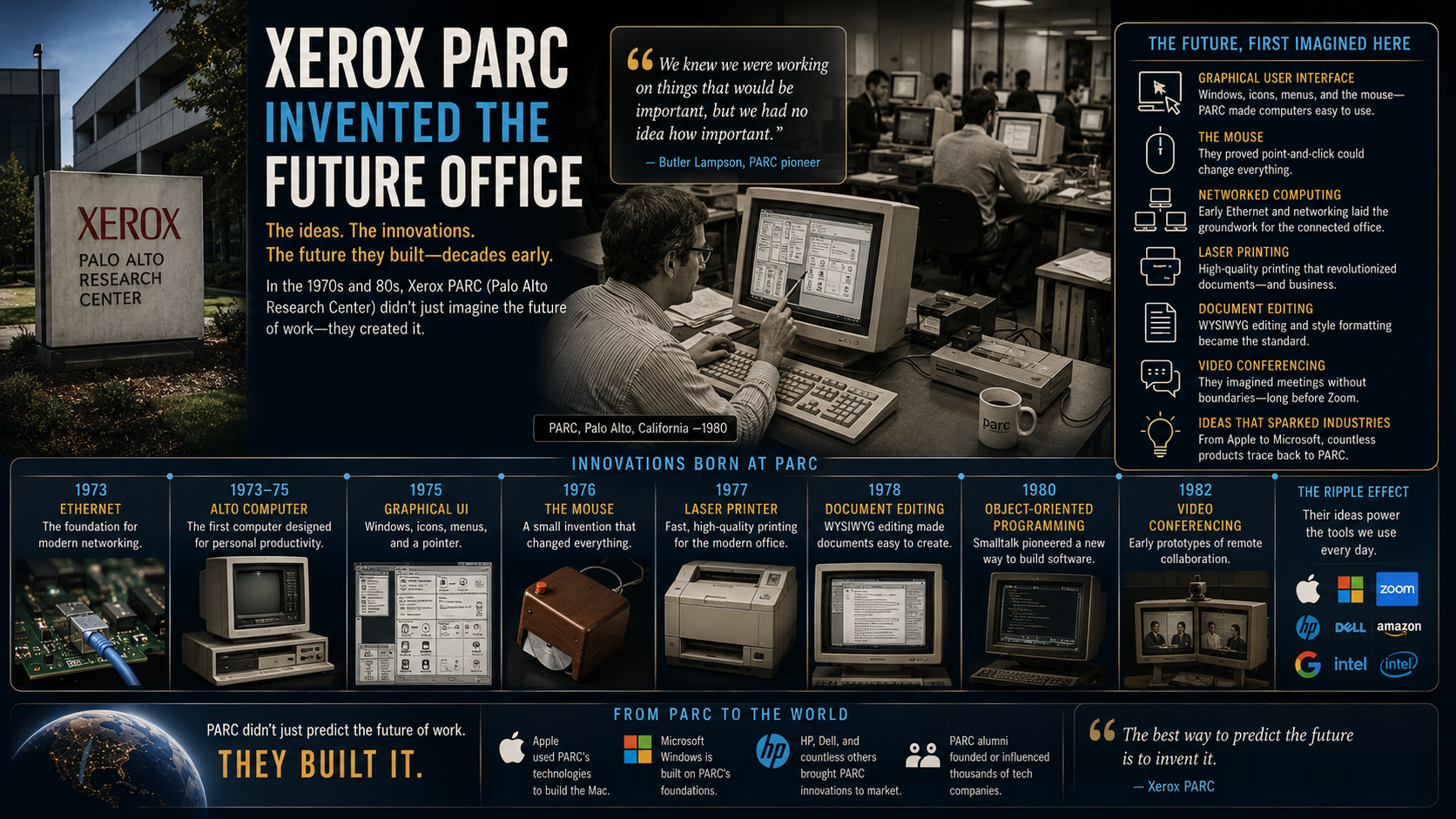
The Lab That Invented Tomorrow
In December 1979, Steve Jobs saw echoes of the future inside Xerox PARC's halls. There, in a secluded lab, lay the blueprint for the modern tech landscape.

The Browser War That Built the Internet
In the mid-1990s, a software battle erupted that would shape how billions accessed information. Few could predict that the victor would soon face its own downfall.
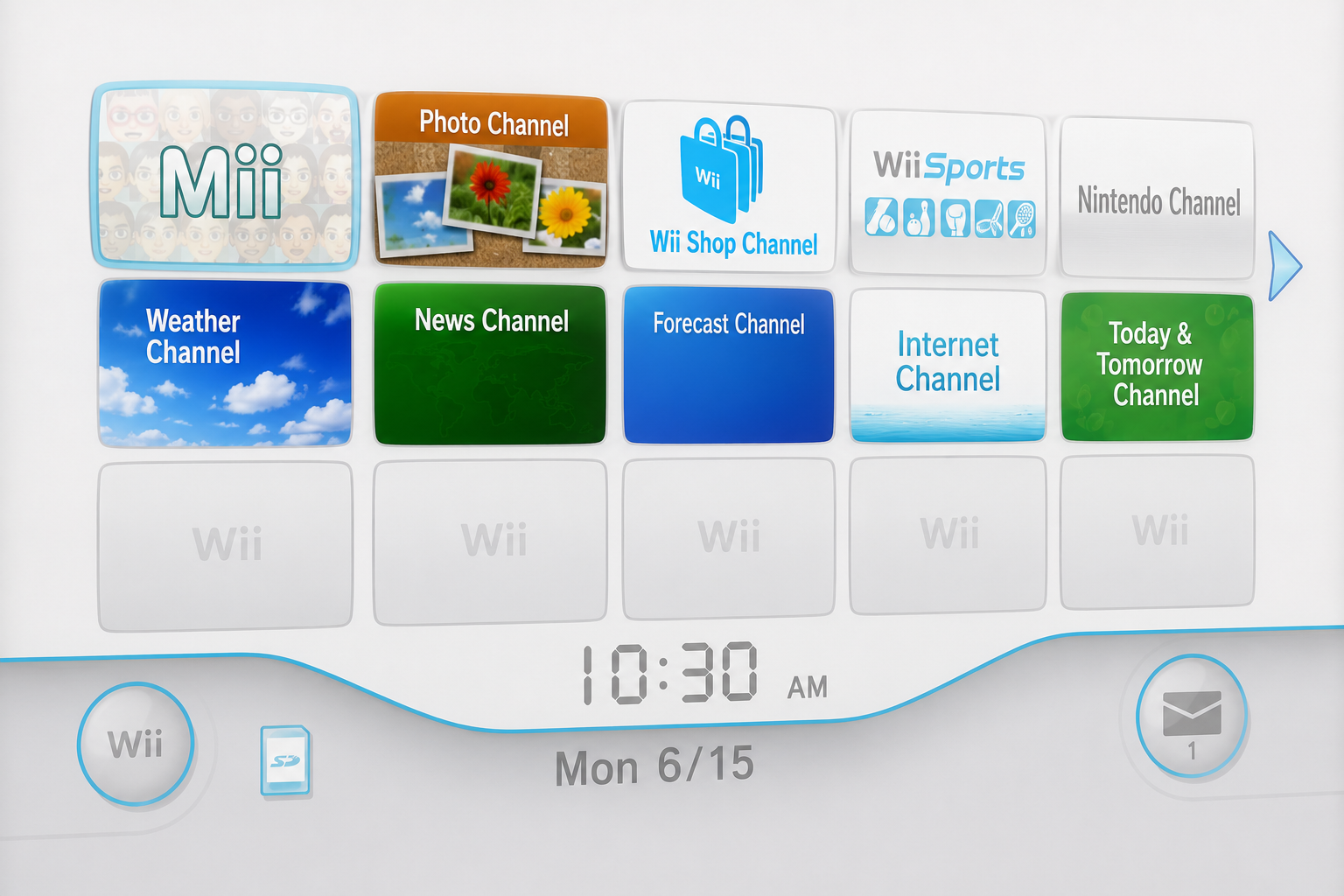
The Wii Gamble That Saved Nintendo
In a world obsessed with graphics and power, Nintendo bet on simplicity. The Wii was laughed at — until it wasn't.
Pixar's Radical Feedback Loop
In a stark, unadorned room, some of the most powerful voices in animation face off with ruthless honesty. Their weapons? Brutal feedback that molds raw ideas into cinematic gold.

The Chicken That Changed Retail
Costco's $4.99 rotisserie chicken isn't just a meal — it's a strategic masterpiece. The unexpected ripple effects changed retail forever.

Minority Report's Prescient Touchscreen Reality
In 2002, Hollywood imagined a future of seamless touchscreen interfaces. Today, Steven Spielberg's vision feels eerily prescient as technology catches up.
Continue the Rabbit Hole
Each story explores the same idea from a different angle. Follow the connections and discover where the thread leads.
Fictional placeholder content