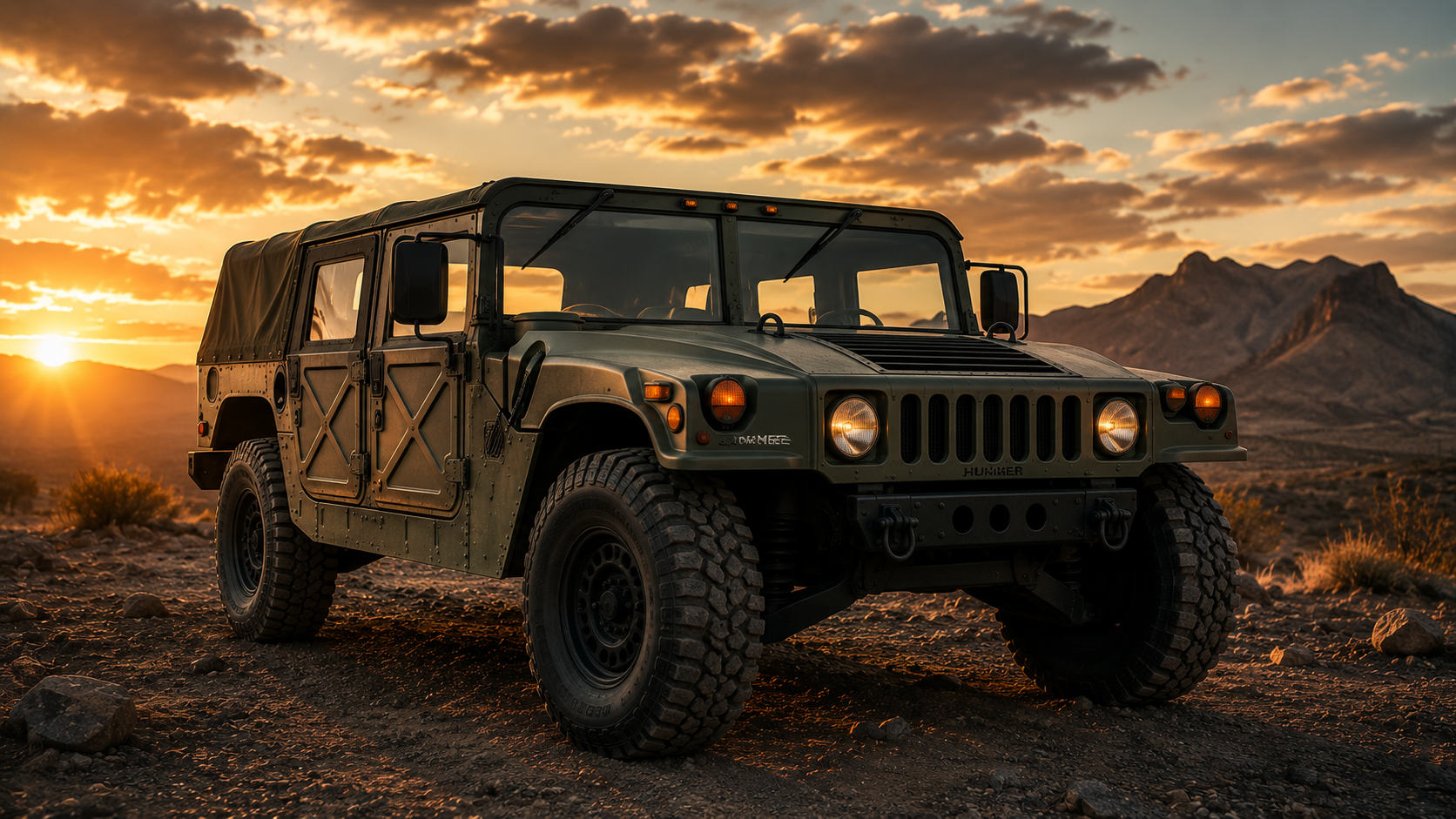
The Hummer's Unlikely Journey
"In the midst of war, one vehicle caught America's imagination. The Humvee, a military juggernaut, was about to become a symbol of civilian excess."
What Happened?
It was the kind of indulgence that made heads turn—a civilian vehicle weighing in at 8,000 pounds, with a fuel economy that barely nudged into double digits. The Hummer H1 bulldozed into the public eye in 1992, a civilian echo of the military Humvee, which had roared across battlefields in the Gulf War just years before. But this wasn't about mere off-road prowess. The Hummer was Arnold Schwarzenegger, the former action star turned driving force behind bringing the vehicle out of combat zones and into driveways. He didn't just own a Hummer; he became its most vocal advocate, helping to transform a military workhorse into an icon for American excess.
Not everyone was thrilled. As the Hummer's massive frames rolled off production lines, environmentalists raised alarms over its gas-guzzling nature. This was a vehicle that seemed almost oblivious to its surroundings—the same could be said for the people who clamored to own them in Hollywood. But for a time, it seemed unstoppable.
Then came 2008. The economic downturn hit America hard, and suddenly a truck that guzzled gas like a thirsty camel in the Sahara didn't seem like something most people could justify. General Motors felt the squeeze. By 2010, the Hummer was unwound, a behemoth put to rest—but not gone. It lingered in the cultural landscape, a reminder of ambition and extravagance.
Fast forward to 2020, when GMC rebooted the Hummer as an electric vehicle, aligning with a world increasingly conscious of sustainability. Could this new electric iteration shake off its gas-hungry past? The pattern here is one of transformation—from military might to suburban symbol, then into an eco-friendly embodiment of the same American ambition. In the end, even the Hummer could not escape the gravitational pull of reinvention.
Takeaway
The lesson this story keeps teaching
“Larger-than-life ambitions create iconic legacies but often overlook the practical sustainability needed to maintain them.”
Why People Are Talking About This
In the chronicles of consumer history, the Hummer stands out as an emblem of excess, ambition, and eventual humbling. Beyond its metal and motors, it narrates the conflicts between indulgence and sustainability. The irony of a military stalwart morphing into a civilian indulgence before crumbling validates the chaotic interplay between dreams and reality, intent and environment. It shows how cultural symbols start as icons and often end up echoing cautionary tales.
Thread Map
9 entities · 8 connections · Hover to explore, click to inspect
This is the connection map for this thread. Every node is a person, company, event, or idea. The red lines show how they connect. Hover a node to highlight its connections. Click a node to see why it matters to this story.
How We Got Here
AM General Secures Military Contract
AM General was awarded a groundbreaking contract to produce 55,000 Humvees for the U.S. military, setting the stage for what would become a civilian sensation.
The Hummer H1 Hits Civilian Streets
After Arnold Schwarzenegger advocated for civilian use, AM General introduced the Hummer H1, transforming military might into a luxury status.
General Motors Buys Hummer
General Motors acquired the Hummer brand from AM General, signaling a new era of mass-market ambitions for the previously niche vehicle.
Launch of the Hummer H2
GM launched the Hummer H2, a smaller, more consumer-friendly version, trying to ride the wave of into pop-culture dominance.
Fuel Prices Begin to Bite
The onset of recession led to decreased demand for heavy, fuel-inefficient vehicles such as the Hummer, as economic realities clashed with the brand's excess.
The Great Recession Impacts Hummer
The global economic downturn exacerbated declining sales, taking a toll on the popularity and viability of Hummer's gas-guzzling vehicles.
Hummer's Production Ends
As financial turbulence continued, GM ceased production of the Hummer, marking the end of an era for the flamboyant SUV line.
Hummer Returns as EV Symbol
In a surprising pivot, GMC reintroduced the Hummer as an electric vehicle, aligning with shifting trends and environmental mindfulness.
Wait... Who Is This?
The aura surrounding the Hummer was never that of an ordinary vehicle; it boasted the soul of a battlefield juggernaut and the physique of a gargantuan luxury accessory. Its origin lay in the pursuit of military excellence. In 1983, AM General unveiled what would become the Humvee—a rugged utility vehicle purpose-built for the U.S. military. When the Gulf War rolled around, Humvees were indispensable on the frontlines, earning respect and reverence. Their on-screen presence cemented them as symbols of might and endurance. Still, the military focus was never meant to marry with civilian applications—that is, until Hollywood collided with the military through Arnold Schwarzenegger's fascination with the vehicle. This unlikely crossover birthed the larger-than-life civilian Hummer models, which glamorized power and prestige in what seemed a perfectly American complex of bigger and better.
Receipts
Timeline: The Rise, Fall, and Return of the Hummer
The origins of the Hummer | March 22, 1983 | HISTORY
A Brief History of the Hummer
The Entire History of the Hummer | Hummer Facts
Hummer H1 - Wikipedia
The History of the Hummer: From Military Might to Electric Power - Alpine Buick GMC Blog
Same Pattern
Different story. Same lesson.
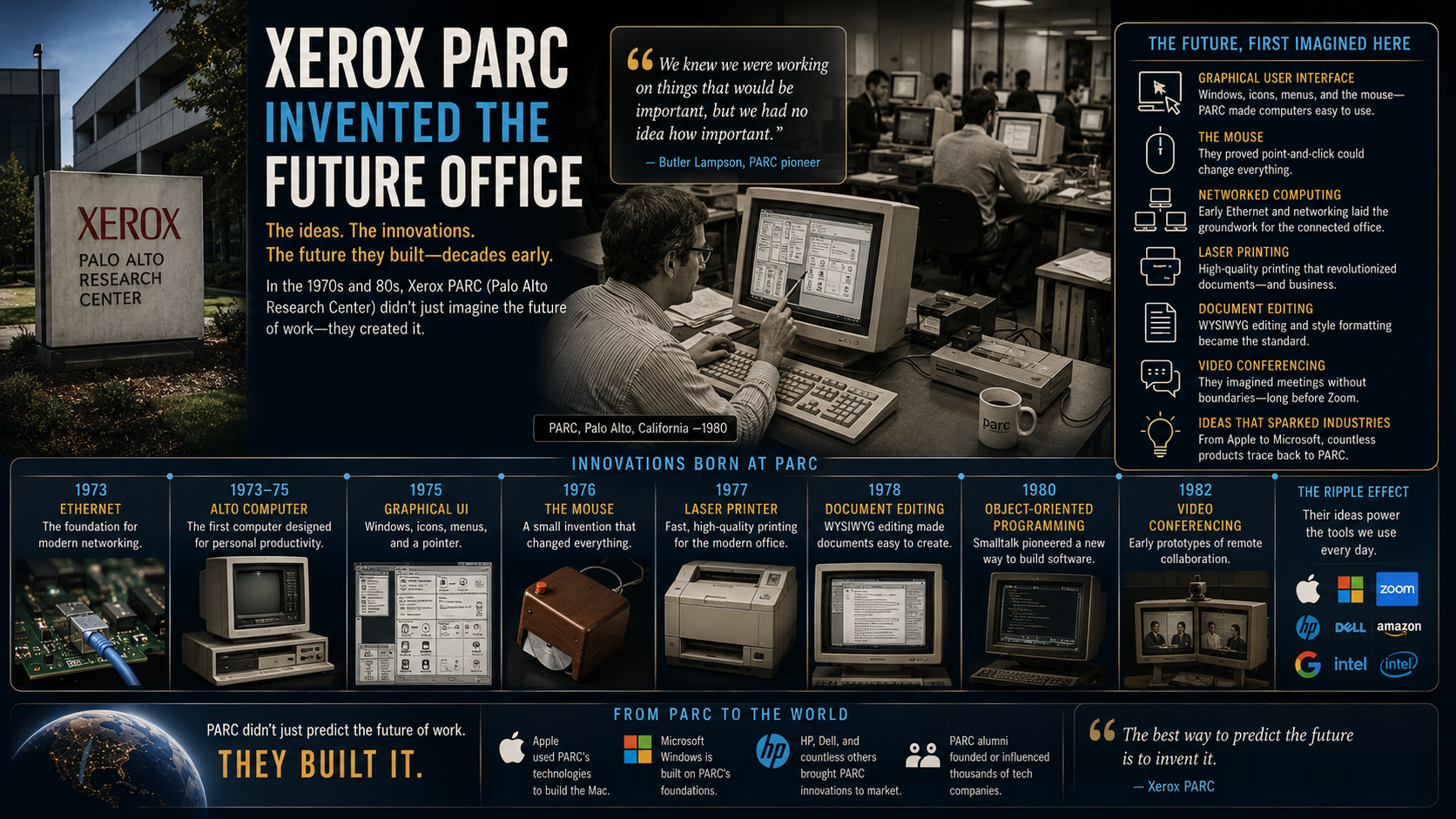
The Lab That Invented Tomorrow
In December 1979, Steve Jobs saw echoes of the future inside Xerox PARC's halls. There, in a secluded lab, lay the blueprint for the modern tech landscape.

The Browser War That Built the Internet
In the mid-1990s, a software battle erupted that would shape how billions accessed information. Few could predict that the victor would soon face its own downfall.

The Wii Gamble That Saved Nintendo
In a world obsessed with graphics and power, Nintendo bet on simplicity. The Wii was laughed at — until it wasn't.

Pixar's Radical Feedback Loop
In a stark, unadorned room, some of the most powerful voices in animation face off with ruthless honesty. Their weapons? Brutal feedback that molds raw ideas into cinematic gold.
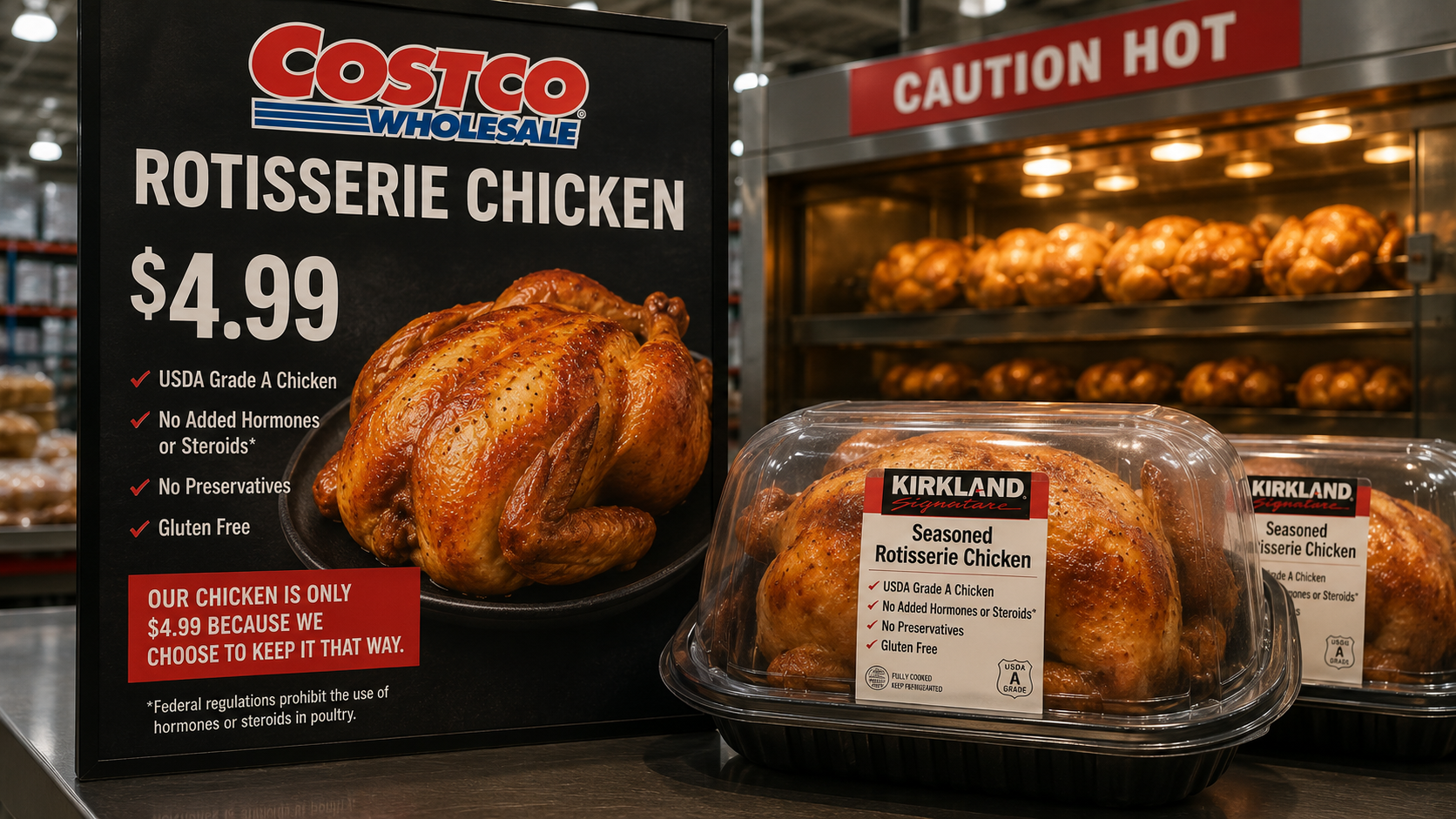
The Chicken That Changed Retail
Costco's $4.99 rotisserie chicken isn't just a meal — it's a strategic masterpiece. The unexpected ripple effects changed retail forever.

Minority Report's Prescient Touchscreen Reality
In 2002, Hollywood imagined a future of seamless touchscreen interfaces. Today, Steven Spielberg's vision feels eerily prescient as technology catches up.
Continue the Rabbit Hole
Each story explores the same idea from a different angle. Follow the connections and discover where the thread leads.


Fictional placeholder content