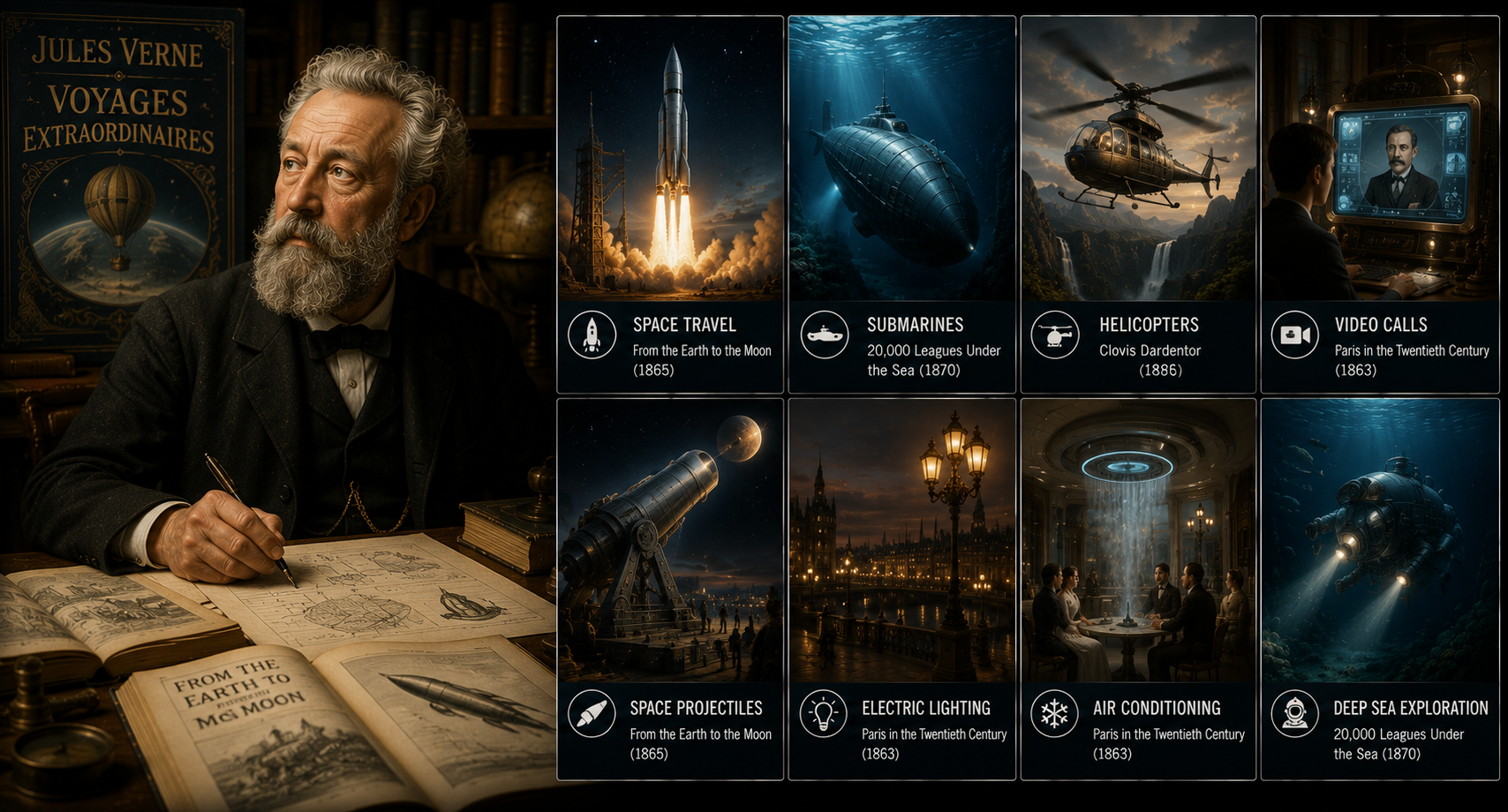
Jules Verne Sees Tomorrow
"Jules Verne predicted the advent of submarines, moon missions, and even the internet — all from his 19th-century desk. Yet some of his uncannily accurate predictions remained hidden until the 20th century."
What Happened?
The streets of 1960s Paris were unusually crowded. Gasoline-powered cars honked their way through traffic, skyscrapers cast their shadows over pedestrians, and what seemed like electronic dance music drifted out from busy cafes. These futuristic elements weren’t just pulled from a dream — Jules Verne had written about them almost a hundred years earlier in his novel, "Paris in the Twentieth Century." But it wasn’t until long after his death, in 1863, that scholars would fully grasp how eerily prescient his visions were.
Jules Verne, the man often called the "Father of Science Fiction," had an uncanny ability to foresee the technologies that would shape the world. His era was one of steam and telegraphs, yet his imagination soared into realms beyond, landing on realities like the Moon missions and submarines. In "Twenty Thousand Leagues Under the Sea" (1870), he described the Nautilus, a submarine remarkably close to what the military would craft decades later.
Verne's bold predictions were not unfounded guesses. Instead, they stemmed from his astute observations of scientific progress and collaboration with the scientific minds of his time. He believed that the continuous streams of technological advancement would inevitably lead to the marvels he depicted in his novels.
But the future wasn’t always kind to his foresight. For every moon mission accurately sketched, there were odd wrinkles — like his belief in cannon-fired space travel — that history kindly overlooked. Yet, even these missteps were part of Verne’s larger vision, questioning what the future holds if progress continues unchecked.
Jules Verne didn’t just write stories; he posed questions. What might be if science outpaces our understanding? How will modernity shape identities? His questions remain relevant, tapping into the ever-pressing curiosity that continues to drive both scientific and literary worlds today.
Takeaway
The lesson this story keeps teaching
“Imagination can sometimes blur into reality, reshaping it in ways even its creators may not have anticipated.”
Why People Are Talking About This
Jules Verne's storytelling served as a harbinger for society's potential. He aligned speculative narratives with scientific curiosity in ways that ultimately pushed the boundaries of technological and cultural latitude. His writings predicted transformations that would ripple through time, underlying today's technological landscapes.
His fiction lingered beyond his era, embedding itself into the blueprint of modern innovation. By bridging the chasm between dreams and reality, Verne reminds us that today's imagination may very well be tomorrow's truth.
Thread Map
9 entities · 8 connections · Hover to explore, click to inspect
This is the connection map for this thread. Every node is a person, company, event, or idea. The red lines show how they connect. Hover a node to highlight its connections. Click a node to see why it matters to this story.
How We Got Here
Paris in the Twentieth Century Written
Jules Verne penned 'Paris in the Twentieth Century', filled with fascinating predictions about future society. However, his publisher deemed it too dismal, and it wasn't published during his lifetime.
Twenty Thousand Leagues Under the Sea Released
Jules Verne's seminal novel, 'Twenty Thousand Leagues Under the Sea' introduced readers to the fictional submarine Nautilus, setting the stage for future technological advancements in naval craft.
Mysterious Island Explores New Frontiers
Jules Verne published 'Mysterious Island', showcasing his ability to blend romance with practical science, enthralling readers with tales of survival and ingenuity.
Personal Struggles Threaten Verne
Amidst personal challenges, including being shot by his nephew and managing his family affairs, Verne continued producing works that deepened his foray into imaginative storytelling.
Master of the World Clarifies Ambitions
In 'Master of the World', Jules Verne created a tale of daring conquest and scientific autonomy, exploring themes of power and domination.
Verne's Legacy Spreads Globally
By the late 19th century, Verne's reputation as a pioneer in speculative fiction was well established, with his novels translating into various languages and influencing a global readership.
'Paris in the Twentieth Century' Resurfaces
The manuscript 'Paris in the Twentieth Century' was discovered and published posthumously, astonishing modern readers with its prescient visions of technology and urban life.
Verne's Works Inspire Modern Technology
Enthusiasts explored parallels between Verne's speculative fiction and contemporary technologies, positioning him as a cultural touchstone for innovation.
Wait... Who Is This?
Jules Verne, a name synonymous with visionary sci-fi, grew up immersed in an era teeming with technological birth pains. The Victorian backdrop was vibrant with steam engines and early electric experiments framing a colorful canvas for Verne's prodigious imagination. Raised in a Paris cloaked in art and invention, Verne absorbed the scientific and cultural dynamism surrounding him. His insatiable curiosity led him to a delicate weave of science and narrative, producing works far beyond the adventure tales they initially appeared to be.
Verne's storytelling was fueled by the cultural cascades of the nineteenth century, driven by the rapid pulse of industrial innovation. His works seemed outrageous at first — a prophecy disguised as fiction. Unbeknownst to his contemporaries, Verne watched as reality began catching up with his imagination, demonstrating that future's fabric was interlaced with fiction.
Receipts
Jules Verne: The Sci-Fi Author Who Predicted the Future
Jules Verne's Use of Victorian Scientific Models
Jules Verne Accurately Predicts What the 20th Century Will Look Like in His Lost Novel, Paris in the Twentieth Century (1863)
On the 1863 novel that predicted the Internet, cars, skyscrapers, and electronic dance music.
Jules Verne, Captivating Storyteller and Harbinger of the Future
JULES VERNE: The Man Who Invented the Future – My French Quest
Same Pattern
Different story. Same lesson.

Minority Report's Prescient Touchscreen Reality
In 2002, Hollywood imagined a future of seamless touchscreen interfaces. Today, Steven Spielberg's vision feels eerily prescient as technology catches up.
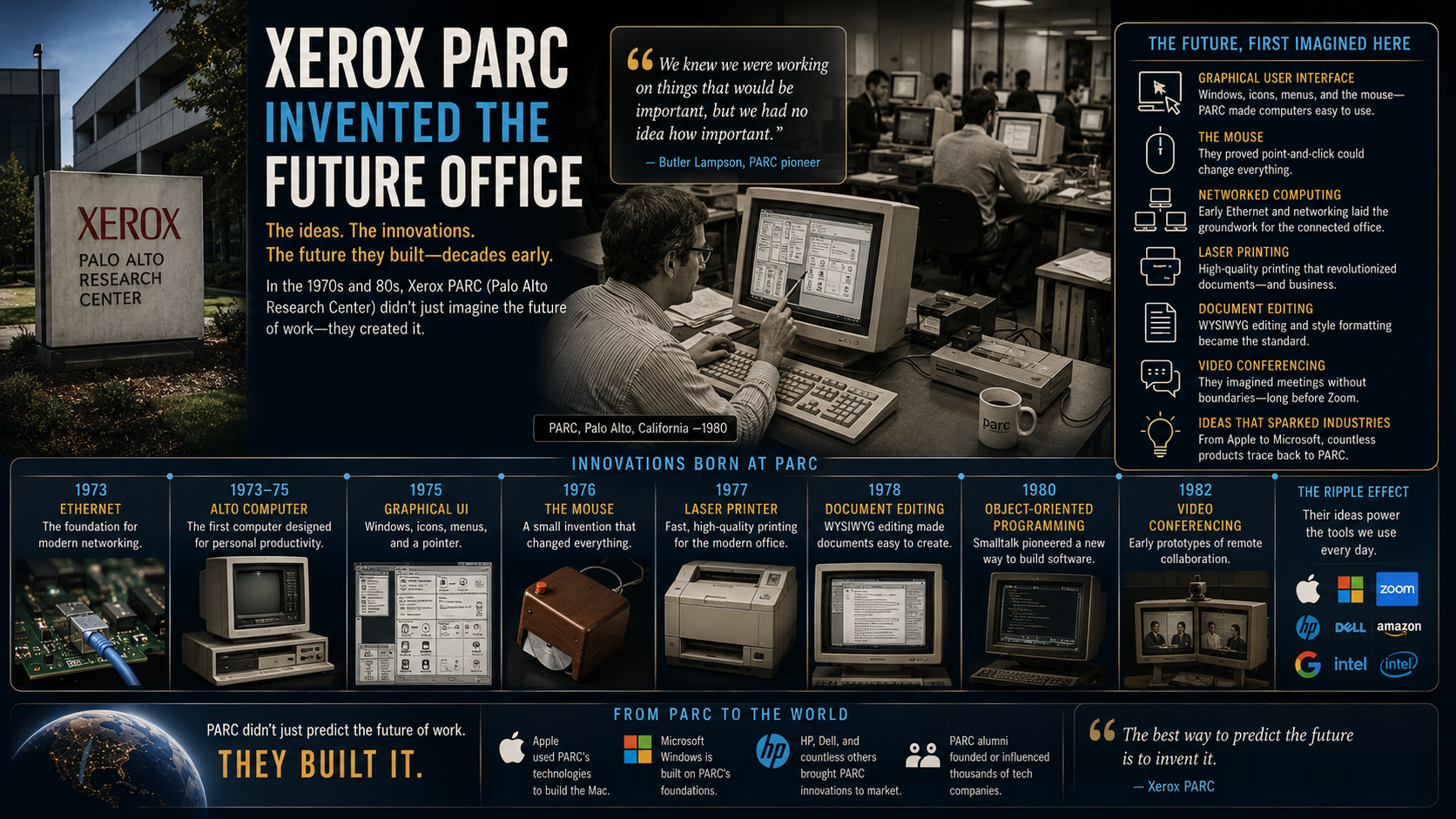
The Lab That Invented Tomorrow
In December 1979, Steve Jobs saw echoes of the future inside Xerox PARC's halls. There, in a secluded lab, lay the blueprint for the modern tech landscape.
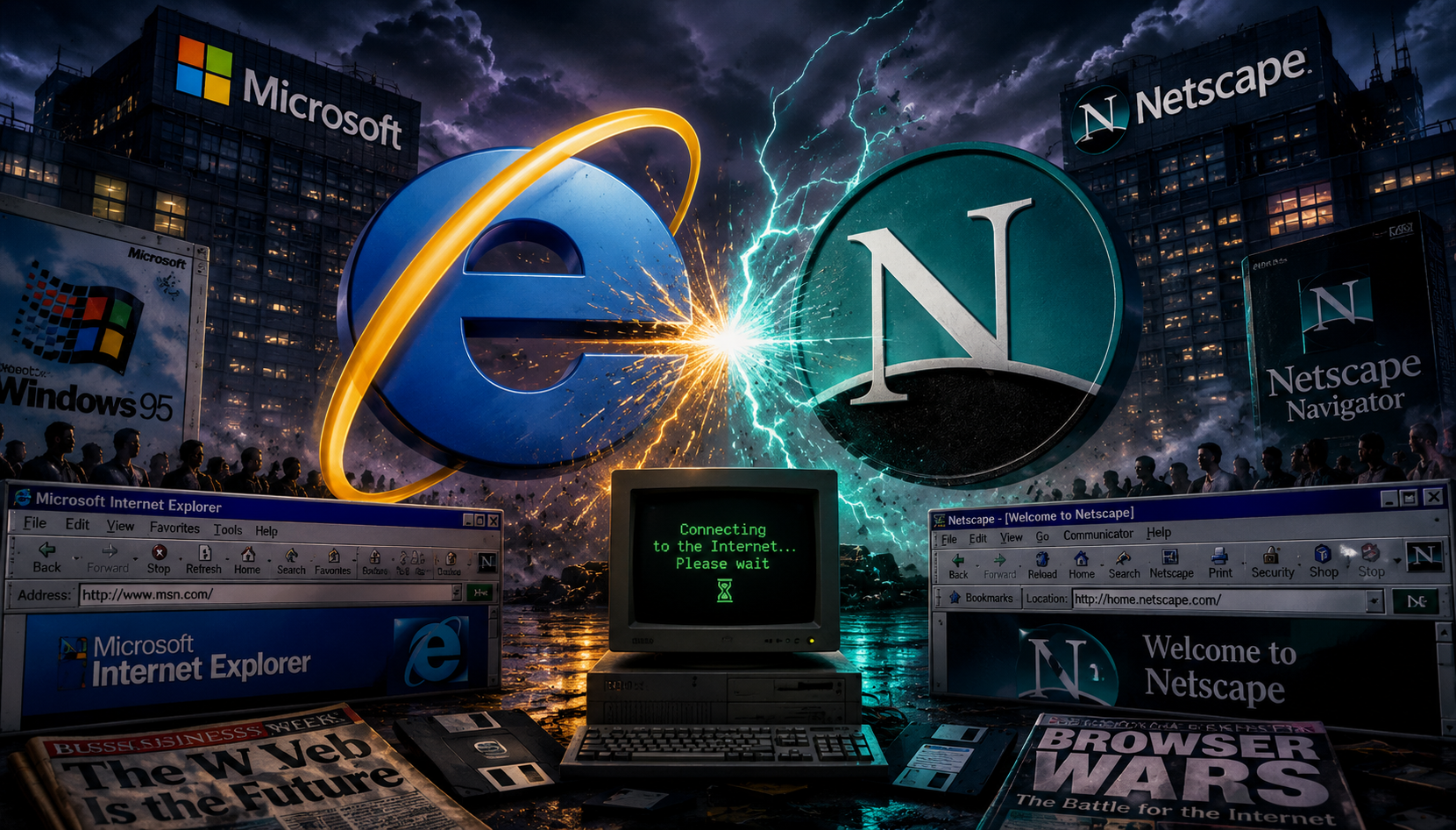
The Browser War That Built the Internet
In the mid-1990s, a software battle erupted that would shape how billions accessed information. Few could predict that the victor would soon face its own downfall.

The Wii Gamble That Saved Nintendo
In a world obsessed with graphics and power, Nintendo bet on simplicity. The Wii was laughed at — until it wasn't.

Pixar's Radical Feedback Loop
In a stark, unadorned room, some of the most powerful voices in animation face off with ruthless honesty. Their weapons? Brutal feedback that molds raw ideas into cinematic gold.

The Chicken That Changed Retail
Costco's $4.99 rotisserie chicken isn't just a meal — it's a strategic masterpiece. The unexpected ripple effects changed retail forever.
Continue the Rabbit Hole
Each story explores the same idea from a different angle. Follow the connections and discover where the thread leads.

Fictional placeholder content