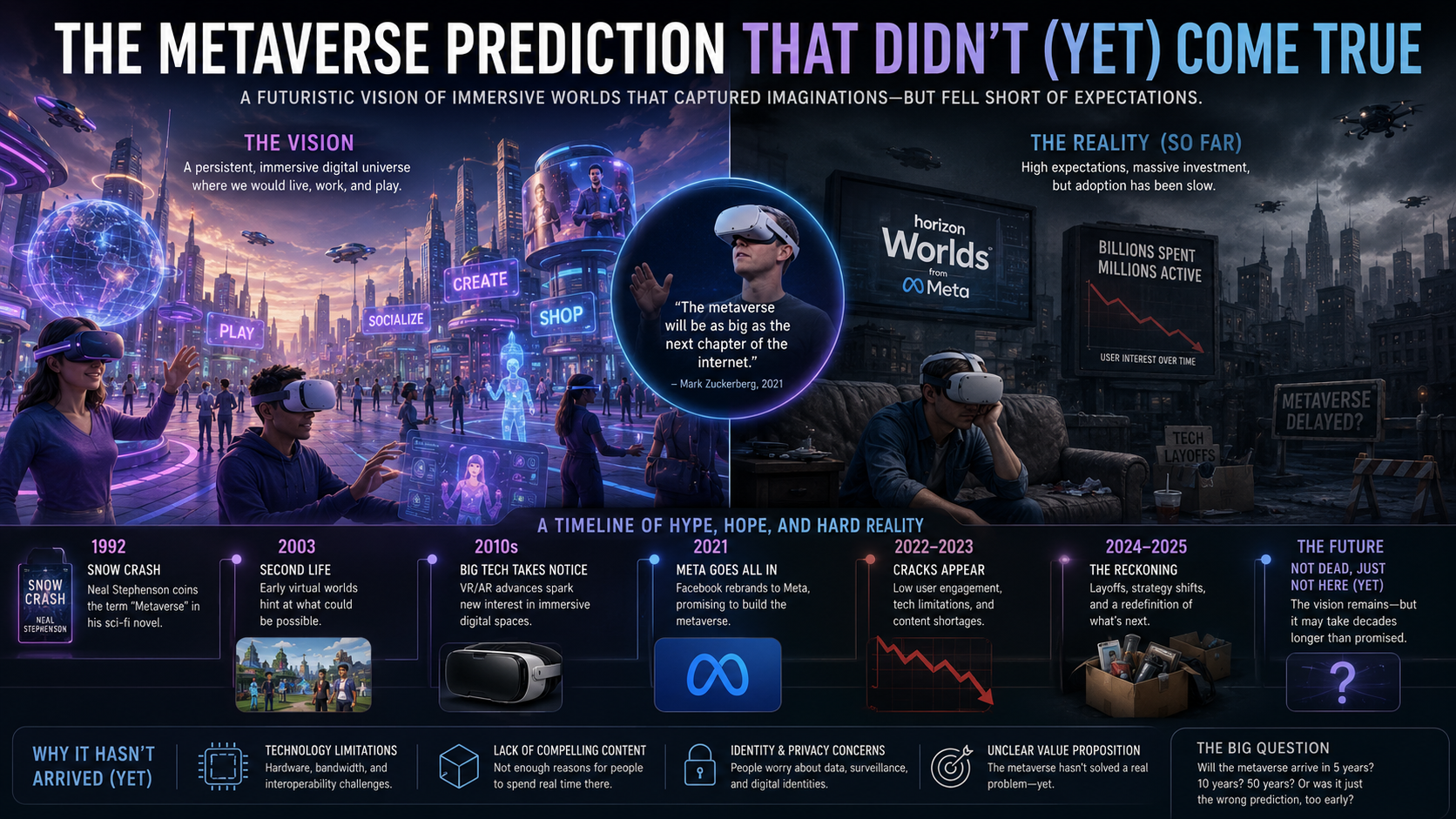
The Metaverse Mirage
"In 2021, Facebook gambled its future on the metaverse with a bold rebranding to 'Meta.' Fast forward, and the digital realm promised by Mark Zuckerberg remains more hype than reality."
What Happened?
The gamble was audacious. In 2021, Facebook bet its entire identity on a vision that seemed both revolutionary and yet hauntingly familiar. It rebranded to Meta, fueled by a belief in a digital future so immersive it would reshape human interaction. Mark Zuckerberg, the face of this audacious pivot, assured the world that by 2030, the metaverse would be as ubiquitous as social media.
Yet, as the dust of excitement settled, the landscape looked eerily static. By early 2024, Meta had funneled $36 billion into its metaverse ambitions, but the grandeur did not translate into reality [16]. The technology, still in its infancy, struggled under the weight of promises too big for its current capabilities. Consumer adoption, expected to explode, remained tepid as the public found the vision too far removed from their online realities.
The comparisons to sci-fi landscapes, like those imagined by Neal Stephenson in 'Snow Crash', now seemed overly optimistic, if not prophetic missteps [6]. Fundamental issues such as data privacy and digital security stymied widespread user trust, as highlighted by industry analysts who noted that managing biometric and performance data was an unexplored frontier fraught with concerns [2].
As the metaverse flounders in its infancy, giant leaps are being made elsewhere. Generative AI is heralded as the new frontier, captivating the same imaginations that once saw so much potential in the metaverse [3]. Where one vision stalls, another sprints ahead. But as bold predictions shift, the question lingers: did we misunderstand what the future should look like, or did it merely call us in a different direction?
The story of the metaverse is not yet one of failure, but of delayed expectations. Interactions imagined on a grand, virtual scale must wait until technology, regulation, and perhaps human preference align. In this waiting game, the metaverse remains a potential, not a place.
Takeaway
The lesson this story keeps teaching
“The metaverse highlights the gap between visionary predictions and technological actualities.”
Why People Are Talking About This
The narrative of the metaverse is an insightful case study on tech ambition. Facebook, now Meta, exemplified a willingness to gamble its future on an unprecedented virtual vision. This story highlights how enthusiasm and momentum can create a powerful narrative that masks underlying practical challenges. Beyond technology, it serves as a business lesson about the risks of overextending on abstract promises. Meta's stumbles reflect a broader truth about the volatile intersection of expectation, financing, and tech capabilities.
Thread Map
9 entities · 8 connections · Hover to explore, click to inspect
This is the connection map for this thread. Every node is a person, company, event, or idea. The red lines show how they connect. Hover a node to highlight its connections. Click a node to see why it matters to this story.
How We Got Here
Facebook Becomes Meta in Bold Rebrand
Mark Zuckerberg announced that Facebook would be rebranding to Meta, setting its sights on the metaverse. This was seen as a radical shift, aiming to position Meta as the harbinger of a new digital world.
Reality Sets in for the Metaverse
By early 2022, the excitement had waned as technical and user engagement issues emerged. Developers faced significant challenges, and early adopters struggled with user experience. The visionary image started cracking.
Generative AI Steals the Limelight
As interest in the metaverse stumbled, generative AI technologies began gaining traction, threatening to overshadow Meta's vision with new possibilities in content generation and digital interaction.
Investors Grow Impatient
Despite hefty investments, tangible progress remains elusive for Meta. The company's reiterated confidence didn't align with the visible struggles, raising questions about deliverables and timelines.
Meta Tries New Initiatives
In a bid to rekindle interest, Meta launched new initiatives hoping to re-engage users and developers. While new features spurred momentary curiosity, they couldn't maintain sustained growth.
Reorientation Toward AI and AR
As challenges with the metaverse persisted, Meta started shifting focus towards more immediately feasible technologies like augmented reality (AR) and generative AI, suggesting a pivot in strategy.
The 'Super-Metaverse' Predicted
Rahul Saxena predicts a 'Super-Metaverse' by 2040 that promises the integration of all digital realms and functionalities designed to vastly improve human capacities.
The Metaverse Vision Re-Emerges
With the 'Super-Metaverse' deadline looming, expectations are high once more. Companies are increasingly exploring cross-reality experiences to make integrated virtual platforms feasible.
Wait... Who Is This?
In the mid-2020s, the concept of the metaverse wasn't new, but Facebook's dramatic rebranding to Meta took the tech world by storm. It's a classic tale of ambition meeting reality. Most believed the metaverse would transform digital interactions radically equating it with technological utopias written about in science fiction novels like Neal Stephenson's 'Snow Crash.' Tech visionaries were captivated. Advocates promised a boundless virtual landscape where societies would socialize, work, and play seamlessly. The pandemic had pushed people online, seeming to open the floodgate for such innovations. However, recreating real-world experiences in a digital world posed numerous hurdles of creativity, engagement, and integration. As Meta sought to push boundaries, it found itself constrained by the same limits that have tested tech endeavors throughout history. This backstory sets the stage for Mark Zuckerberg's bid to redefine reality and the lessons learned as visions outpaced capabilities.
Receipts
The Metaverse in 2040 | Pew Research Center
The metaverse as we knew it failed, but it's resurrecting in new ways
The Future of the Metaverse | Imagining the Internet | Elon University
Is the metaverse dead? Here's what happened and what's next | TechTarget
'Snow Crash' predictions
The Predictions That Won't Come True
Same Pattern
Different story. Same lesson.
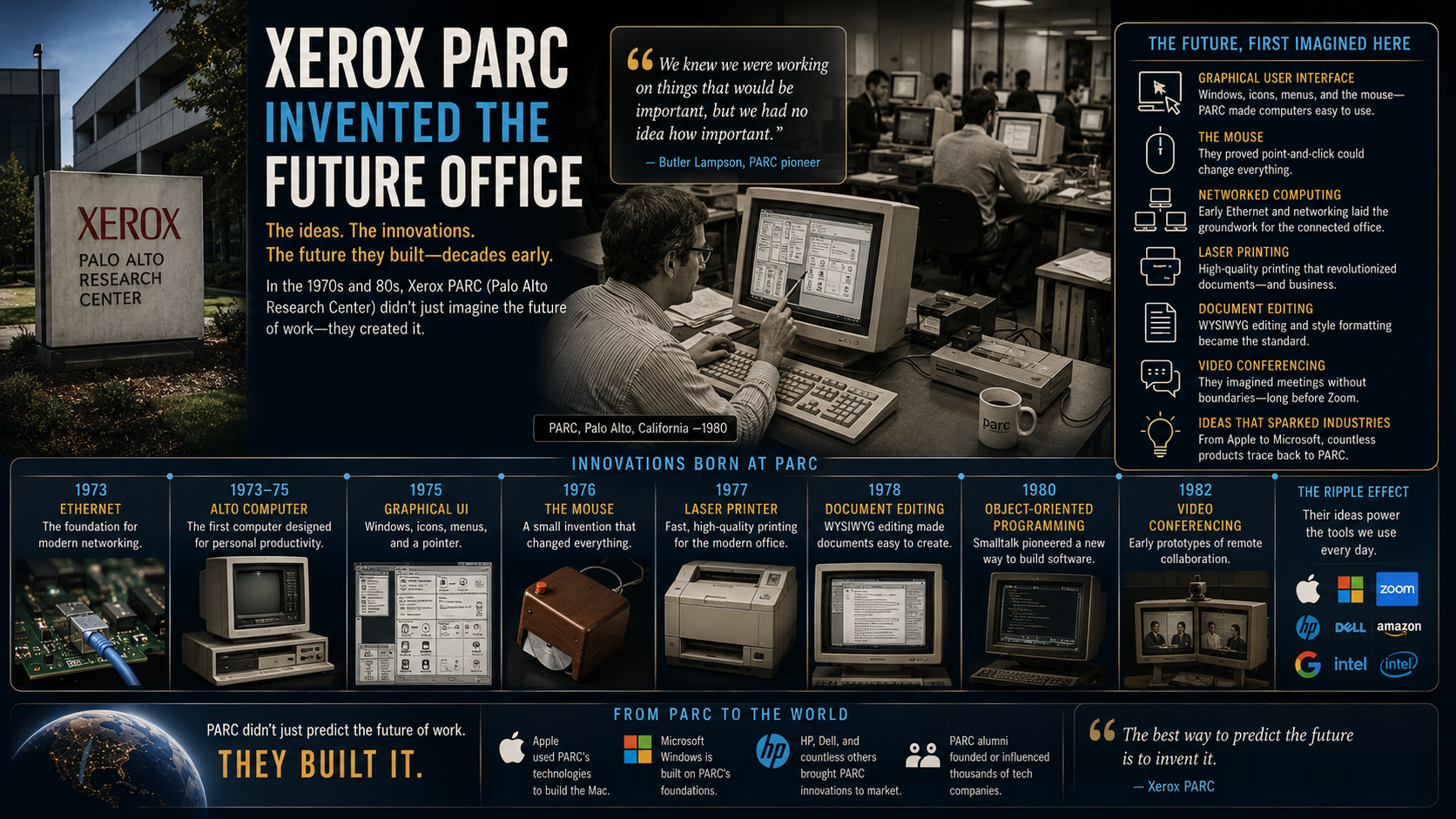
The Lab That Invented Tomorrow
In December 1979, Steve Jobs saw echoes of the future inside Xerox PARC's halls. There, in a secluded lab, lay the blueprint for the modern tech landscape.

Pixar's Radical Feedback Loop
In a stark, unadorned room, some of the most powerful voices in animation face off with ruthless honesty. Their weapons? Brutal feedback that molds raw ideas into cinematic gold.

The Browser War That Built the Internet
In the mid-1990s, a software battle erupted that would shape how billions accessed information. Few could predict that the victor would soon face its own downfall.
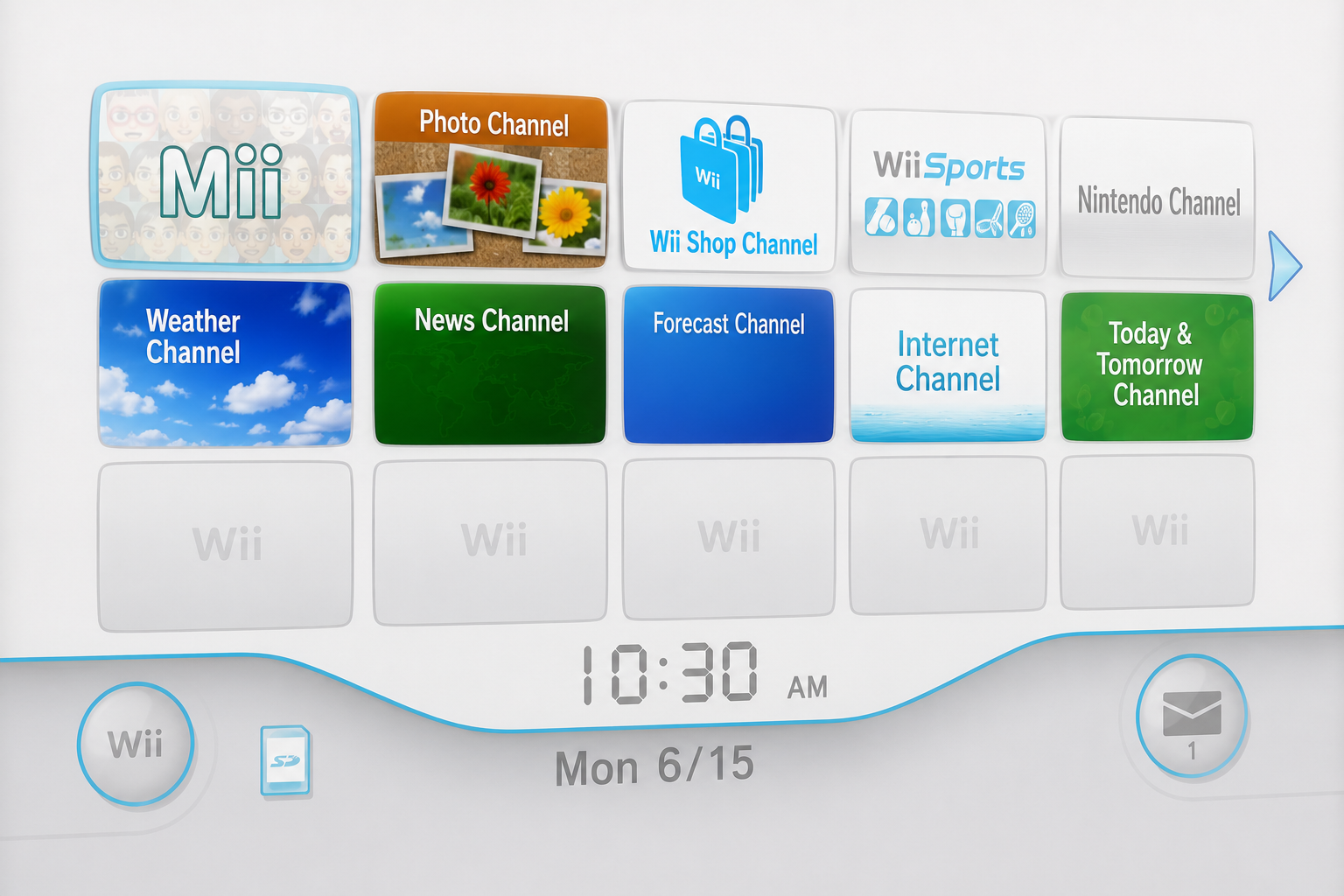
The Wii Gamble That Saved Nintendo
In a world obsessed with graphics and power, Nintendo bet on simplicity. The Wii was laughed at — until it wasn't.

The Chicken That Changed Retail
Costco's $4.99 rotisserie chicken isn't just a meal — it's a strategic masterpiece. The unexpected ripple effects changed retail forever.

Minority Report's Prescient Touchscreen Reality
In 2002, Hollywood imagined a future of seamless touchscreen interfaces. Today, Steven Spielberg's vision feels eerily prescient as technology catches up.
Continue the Rabbit Hole
Each story explores the same idea from a different angle. Follow the connections and discover where the thread leads.

Fictional placeholder content