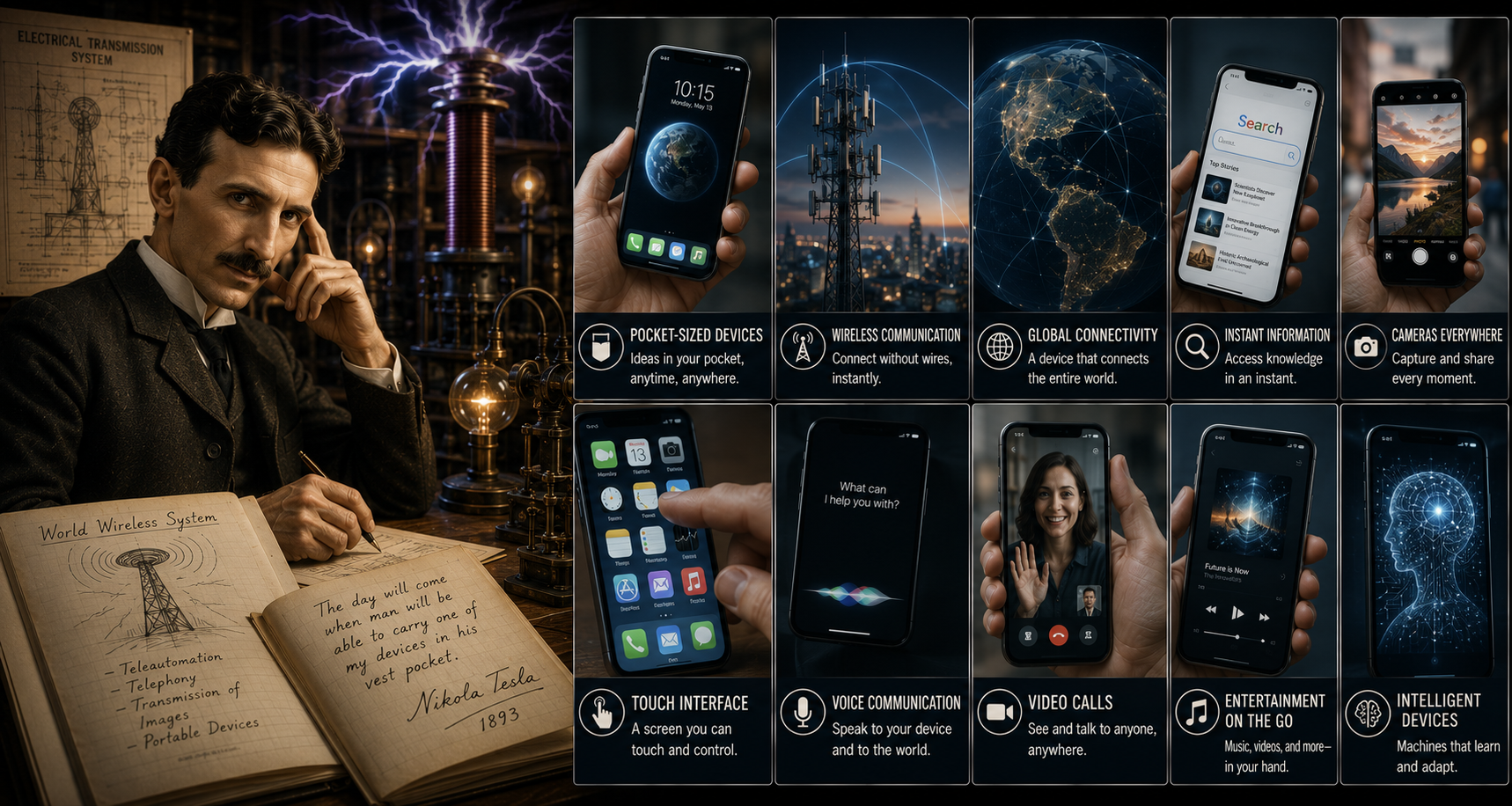
Tesla's Prophetic Vision
"In 1926, Nikola Tesla foresaw a world where people carried communication devices in their pockets. This wasn't science fiction. It was a vision of the smartphone, decades before its invention."
What Happened?
On a brisk day in 1926, Nikola Tesla peered into the fabric of the future and described a reality few could imagine. In the pages of Collier’s Magazine, he painted a portrait of a world where communication devices would fit in a man's vest pocket. It was a staggering prediction, more than sixty years before the smartphone as it exists today came into being. Tesla’s vision wasn’t just about miniaturization; it was about a change in how humanity would connect, transcending distance with instantaneous communication.
Imagine a time when the telephone was a cumbersome apparatus, tethered to the wall, its reach limited, its abilities singular. Yet here was Tesla, envisioning pocket-sized technology we now casually call smartphones. “When wireless is perfectly applied,” he mused, “the whole earth will be converted into a huge brain.” His vision included not just voice, but also images and video in their embryonic forms, though he did not live to see it realized.
Tesla’s prediction wasn’t isolated. He theorized the global transmission of images and sounds, foresaw the rise of wireless communication networks, and described a future of interconnected devices speaking to one another. Though he was no stranger to remarkable insights — known for pioneering the AC electricity system and holding over 300 patents — this prediction about personal communication devices stands out for its prescient nature.
Today, Tesla's foresight echoes in our pocket-sized companions, each one a testament to a moment in time when vision met reality. His words carry a legacy of innovation that inspired figures like Elon Musk and Larry Page, who built companies on the foundations of restless curiosity, and perhaps a piece of Tesla's bold imagination lives within every ping and swipe.
Takeaway
The lesson this story keeps teaching
“Tesla's vision reminds us that imagination often paves the path for technological breakthroughs long before technology catches up.”
Why People Are Talking About This
Nikola Tesla’s predictions were not mere fantasies; they laid foundational visions that shaped modern technology. Looking past his era’s limitations, he prophesied a future of wireless communication that would become ubiquitous in global society.
His ability to envision devices like smartphones shows how far ahead he was, inspiring generations of inventors. Beyond technology, Tesla’s foresight continues to stand as a beacon for creative thinking and imagination in scientific innovation, challenging the boundaries of what's deemed possible.
Thread Map
9 entities · 8 connections · Hover to explore, click to inspect
This is the connection map for this thread. Every node is a person, company, event, or idea. The red lines show how they connect. Hover a node to highlight its connections. Click a node to see why it matters to this story.
How We Got Here
Tesla Predicts Smartphones
In an interview with Collier’s Magazine, Nikola Tesla envisions a future with portable devices allowing global communication. This idea was remarkably ahead of its time, decades before such technology was feasible.
Early Wireless Predictions
Tesla begins conceptualizing wireless communication technologies that resemble modern cell phones, demonstrating his foresight into the future of communication.
Tesla Patents the Tesla Coil
Nikola Tesla patents the Tesla coil, his first significant step in harnessing wireless energy, laying groundwork for future wireless innovations.
Boston Globe Interviews Tesla
Tesla discusses wireless communication possibilities in a Boston Globe interview, foreshadowing the concepts of global telecommunication networks.
Tributes to Tesla on His 75th Birthday
Tesla receives widespread recognition for his innovative contributions to the field of electricity and his visionary ideas that continue to influence modern technology.
Tesla Passes Away
Tesla dies at 86, leaving a legacy of visionary ideas and technological concepts that would spur future innovations.
First Personal Handheld Device Conceptualized
Ralph Benjamin conceptualizes the Stylator, one of the earliest ideas of a personal handheld device, gradually leading to technology that aligns with Tesla’s vision.
Smartphones Become Part of Daily Life
The iPhone is released, leading to the transformation of communication and information access, closely resembling what Tesla predicted.
The Legacy of Tesla's Predictions
Tesla’s predictions continue to inspire innovation, as the idea of portable communication devices influences technological advancement and design philosophies.
Wait... Who Is This?
Nikola Tesla was no ordinary innovator; he was a pioneer whose audacious visions often felt more like science fiction set in the heart of early 20th-century scientific exploration. Known primarily for his work with alternating current, Tesla consistently demonstrated a knack for letting his imagination drift far beyond the constraints of existing technology.
In the years leading up to his famed 1926 prediction, the world wrestled with technological infancy — the radio was still considered cutting-edge, and telephones were tethered to walls. Amidst this, Tesla, ever the visionary, spoke frequently of wireless communications and compact devices reminiscent of gadgets we now consider ordinary.
His beliefs were rooted in the idea that information and communication could one day transcend distance, unhindered by physical limitations. What seemed far-fetched then is not just our present reality, but also a testament to what boundless imagination can yield. Almost a century later, we grasp more of Tesla’s foresight every time we reach for our smartphones — a reality he envisioned long before it materialized.
Receipts
Tesla Predicted Smartphones in 1926 - Business Insider
Nikola Tesla predicted smartphones in 1926 like a boss – GeekWire
Nikola Tesla Accurately Predicted the Rise of Wireless Technology & the Smartphone in 1926 | Open Culture
BBC Radio 4 - Radio 4 in Four - Five Nikola Tesla predictions that came true
Nikola Tesla's Hundred Year Old Prediction About Smartphones ...
TIL that in 1926, Nikola Tesla predicted modern cell ...
Same Pattern
Different story. Same lesson.
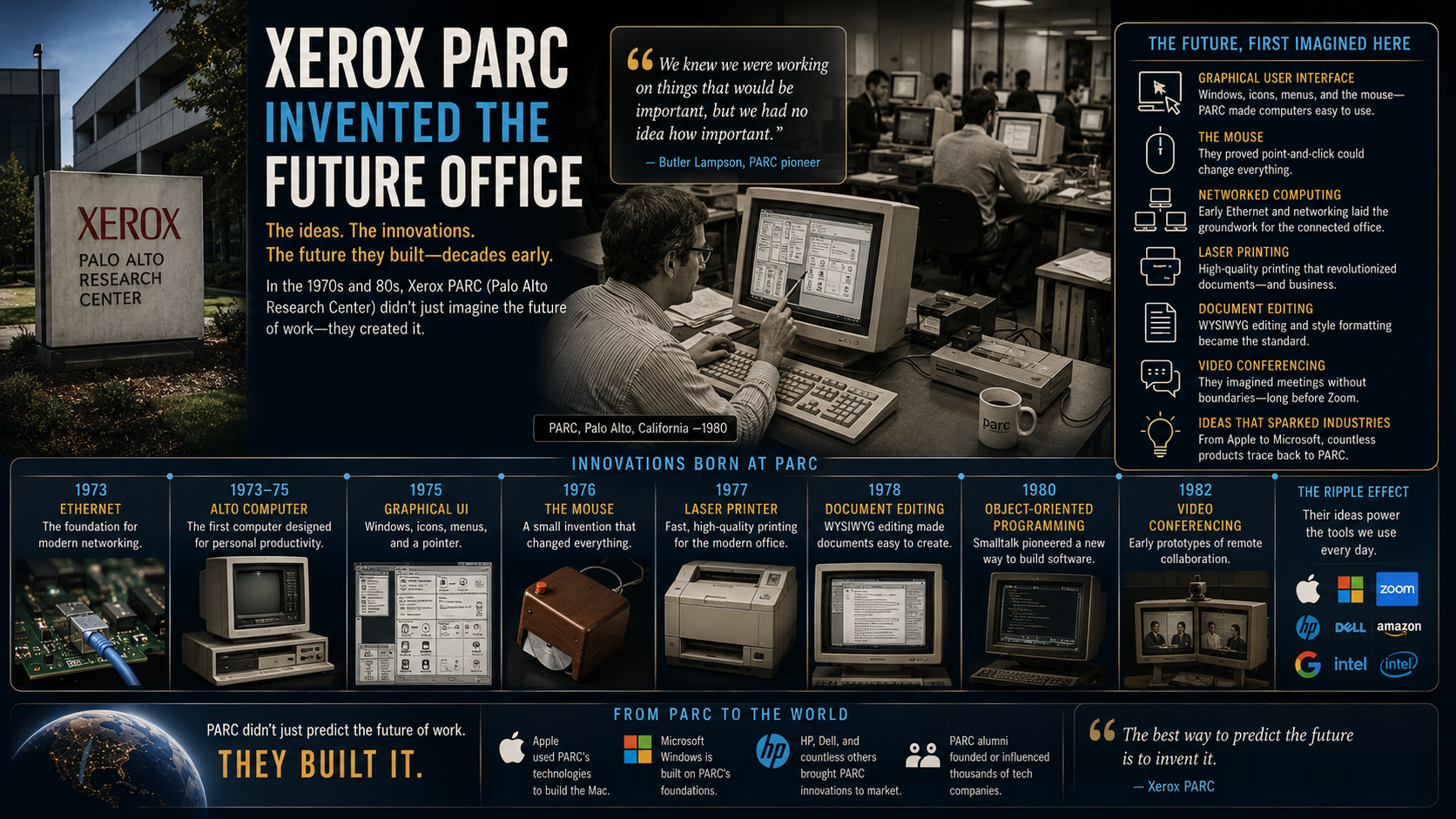
The Lab That Invented Tomorrow
In December 1979, Steve Jobs saw echoes of the future inside Xerox PARC's halls. There, in a secluded lab, lay the blueprint for the modern tech landscape.
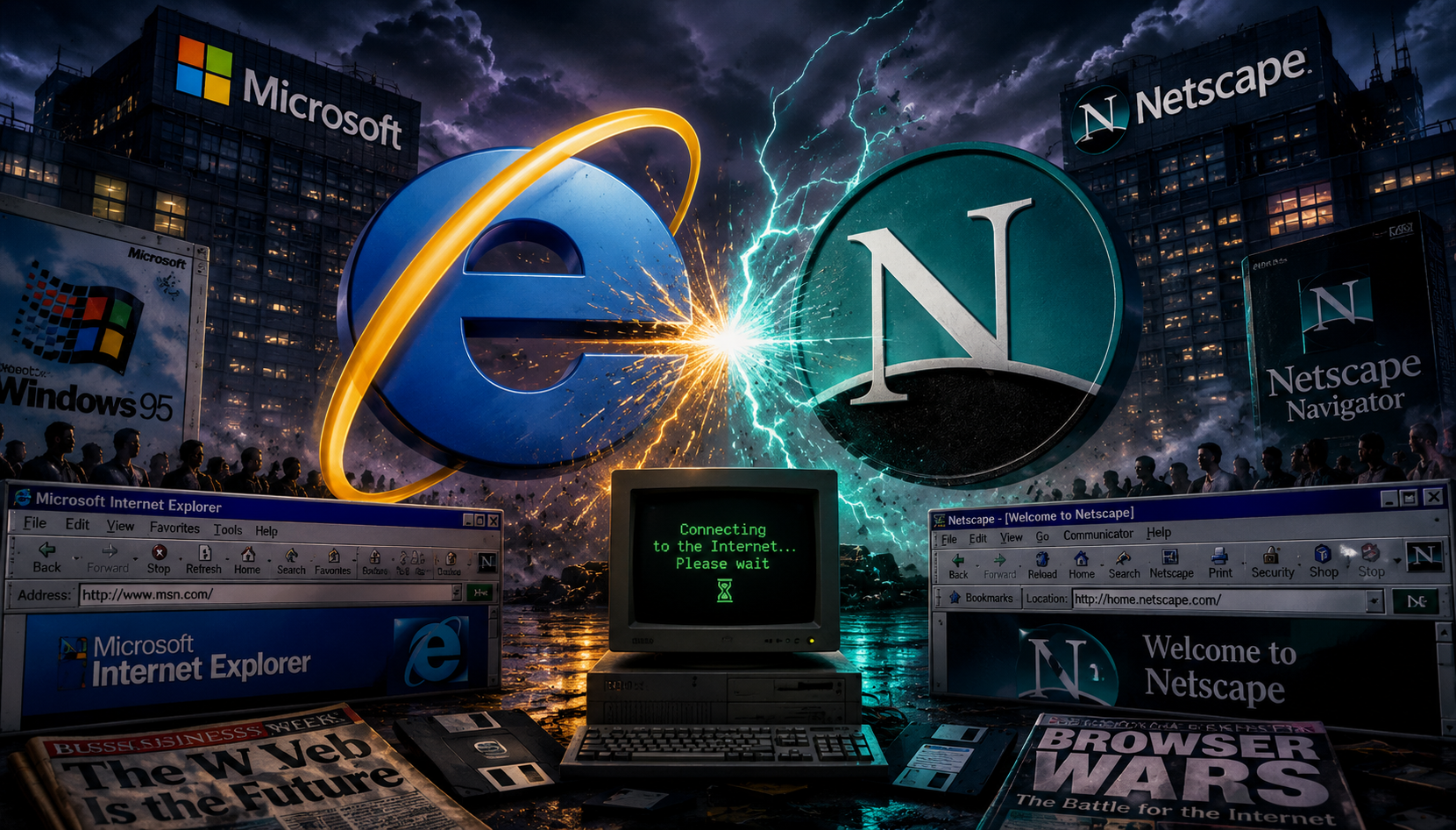
The Browser War That Built the Internet
In the mid-1990s, a software battle erupted that would shape how billions accessed information. Few could predict that the victor would soon face its own downfall.
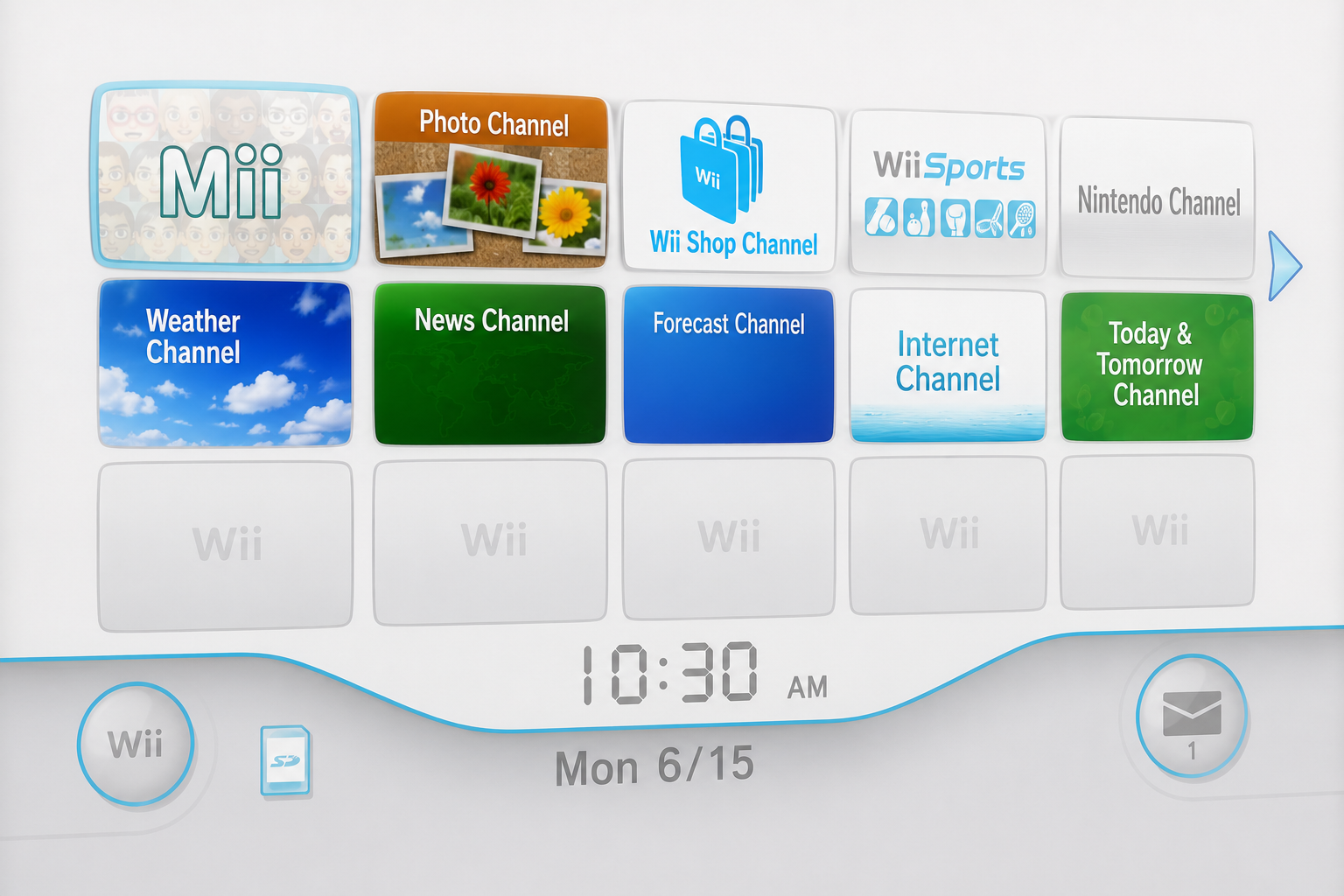
The Wii Gamble That Saved Nintendo
In a world obsessed with graphics and power, Nintendo bet on simplicity. The Wii was laughed at — until it wasn't.
Pixar's Radical Feedback Loop
In a stark, unadorned room, some of the most powerful voices in animation face off with ruthless honesty. Their weapons? Brutal feedback that molds raw ideas into cinematic gold.

The Chicken That Changed Retail
Costco's $4.99 rotisserie chicken isn't just a meal — it's a strategic masterpiece. The unexpected ripple effects changed retail forever.
Minority Report's Prescient Touchscreen Reality
In 2002, Hollywood imagined a future of seamless touchscreen interfaces. Today, Steven Spielberg's vision feels eerily prescient as technology catches up.
Continue the Rabbit Hole
Each story explores the same idea from a different angle. Follow the connections and discover where the thread leads.

Fictional placeholder content