Signal Shocking the Skies
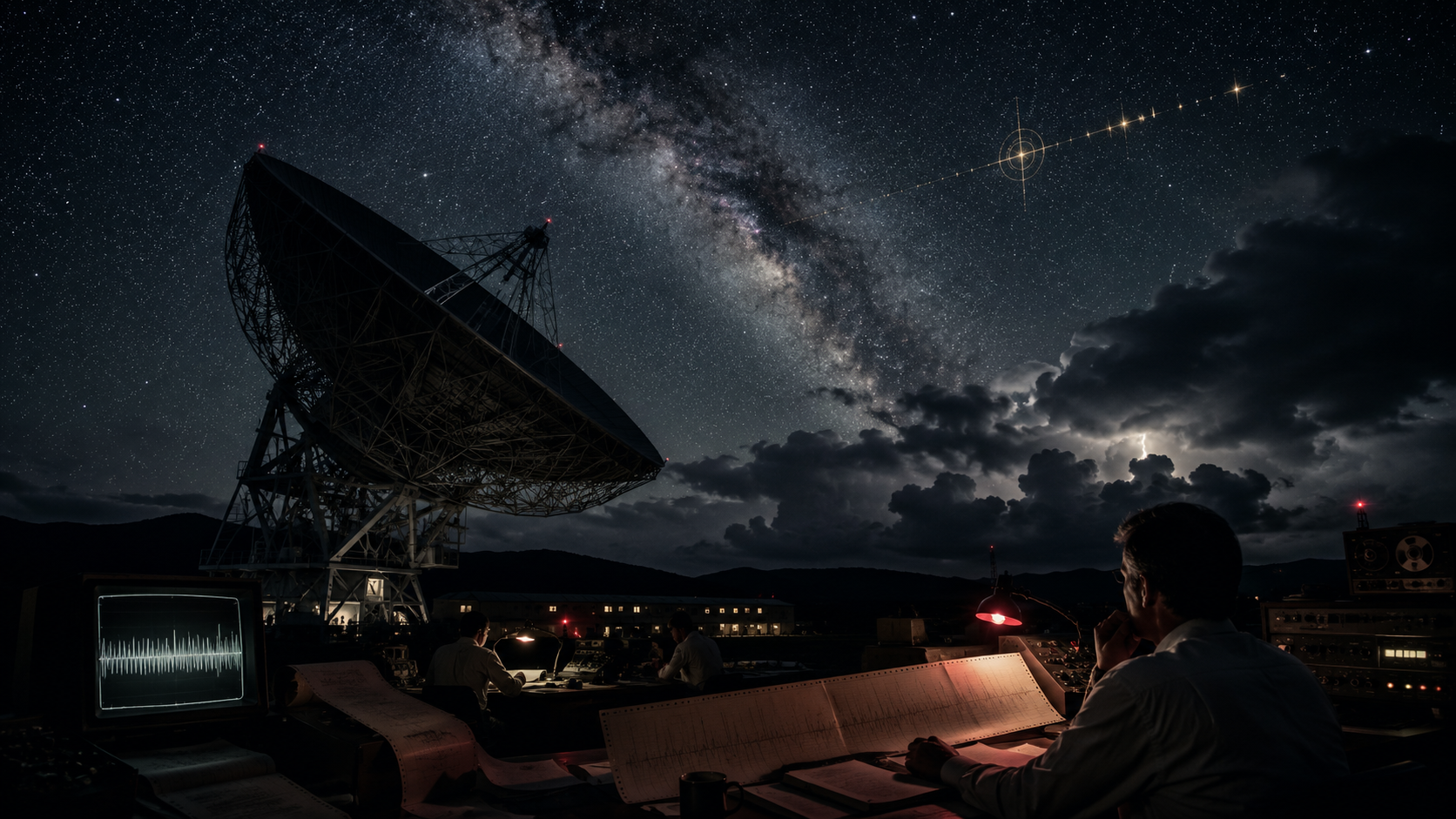
"On August 15, 1977, something astonishing happened: a radio signal from deep space, a narrowband transmission, broke through the mundane chatter of the cosmos. Dubbed the "Wow! Signal" after the exclamation scrawled next to the data, its mystery has haunted and intrigued generations."
What Happened?
On a muggy night in August 1977, a faint yet compelling signal was detected by the Big Ear telescope in Ohio. This mysterious signal, pinpointed by astronomer Jerry R. Ehman, was so unexpected and unique that he just scribbled 'Wow!' beside it. Though originating from the Sagittarius constellation, its source remains unknown. It spurred a persistent debate about whether it was a sign of extraterrestrial intelligence or a cosmic anomaly, encapsulating the everlasting allure of the unknown. The 'Wow! Signal' reminds us of the tantalizing mysteries the universe holds and how one anomaly can ignite years of exploration and speculation.
Takeaway
The lesson this story keeps teaching
“A fleeting cosmic signal can ignite curiosity and redefine our place in the universe.”
Why People Are Talking About This
The 'Wow! Signal' continues to captivate minds not just for its mystery but for what it symbolizes—an emblem of hope in the dialogue between humanity and the cosmos. In our quest to understand the universe and our place within it, moments like these persist as reminders of both how much we've uncovered and how much remains incomprehensible. It challenges the limits of both our technological prowess and our philosophical reflections, signaling that the universe may indeed have messages waiting for those willing to listen.
Thread Map
3 entities · 2 connections · Hover to explore, click to inspect
This is the connection map for this thread. Every node is a person, company, event, or idea. The red lines show how they connect. Hover a node to highlight its connections. Click a node to see why it matters to this story.
How We Got Here
Radio Signal Stuns Scientist
The Big Ear radio telescope, while scanning the skies, recorded a narrowband radio signal of unusual strength from the direction of the Sagittarius constellation. This led astronomers to speculate possible extraterrestrial origins.
Discovery Gets a Name
Jerry R. Ehman, while analyzing data from Big Ear, stumbled upon an extraordinary signal. He scrawled 'Wow!' next to the printout, inadvertently naming a mystery.
First Explorations into the Mystery
A detailed study by Kraus et al. linked the Wow! Signal to the hydrogen line, proposing it could be a deliberate attempt at contact from an intelligent extraterrestrial source.
Breakthrough Listen Joins the Hunt
The Breakthrough Listen project aimed to scan for more signals like the Wow! Signal, adding to the scientific resources devoted to unraveling this cosmic mystery.
Potential Star Source Identified
Astronomer Alberto Caballero pinpointed the star 2MASS 19281982-2640123 as a possible origin of the Wow! Signal, located about 1,788 light-years away, offering a new potential solution.
Arecibo Project Revisits the Signal
The Arecibo Wow! project announced the unveiling of a study reanalyzing the Wow! Signal, offering new insights and stirring fresh interest in the decades-old cosmic event.
Wait... Who Is This?
In the shadow of the Cold War and emboldened by the space race, 1960s America dared to dream beyond Earth's boundaries. SETI was an aspiration—a scientific foray into the unknown. This era found the United States grappling with its own earthbound boundaries, confronted by conflicts like Vietnam and civil rights struggles, even as it aimed for the moon.
Ohio State University, with its lightly funded but heartily ambitious vision, launched the Big Ear radio telescope project in preparation for a galactic eavesdrop—curious whispers amid the clamor of terrestrial conflict. John D. Kraus pioneered Big Ear as part of an amalgamated search for intelligent cosmic interlocutors, setting its sights upon the infinite.
Construction of Big Ear began in earnest in 1963, a gradual assemblage that mirrored both scientific advancement and practical improvisation. Researchers pieced together salvaged components and harnessed local ingenuity, building not just a device but an idea; it was a touchstone for inspiration, weaving technical precision with philosophical wonder.
During its heyday, Big Ear scanned the heavens, chronicling a silent cosmological conversation with stars. Astronomers, some driven by cosmic curiosity while others by professional intrigue, joined this ambitious league. As the engagement with cosmic canvases grew, so did the collective anticipation—a persistent hope that perhaps among the galactic static, a friendly voice might greet their diligent pursuit.
Receipts
Same Pattern
Different story. Same lesson.

Petra: Rise, Fall, and Rediscovery
In 1812, Johann Ludwig Burckhardt found his way through a concealed entrance into a city no Western eyes had seen for centuries. This was Petra—an ancient masterpiece sculpted from stone, hidden by nature and time.

The QR Code Revolution
In 1994, a Japanese engineer devised a simple square that would silently revolutionize communication. Today, that simple QR code is as essential as email.

The Viral Audio that Divided the Internet
In May 2018, an audio clip shattered the internet's collective consciousness by dividing listeners into two camps: 'Laurel' or 'Yanny'. The divide went deeper than just sound—it exposed the auditory biases lurking in all of us.

The Day You Missed the Gorilla
In a famous 1999 experiment, half of the subjects failed to notice a man in a gorilla suit walk through a basketball game. Our attention can betray us.

The Birth of Bitcoin
In January 2009, a mysterious figure mined the Genesis Block of Bitcoin, marking the inception of a financial revolution led by an anonymous creator.
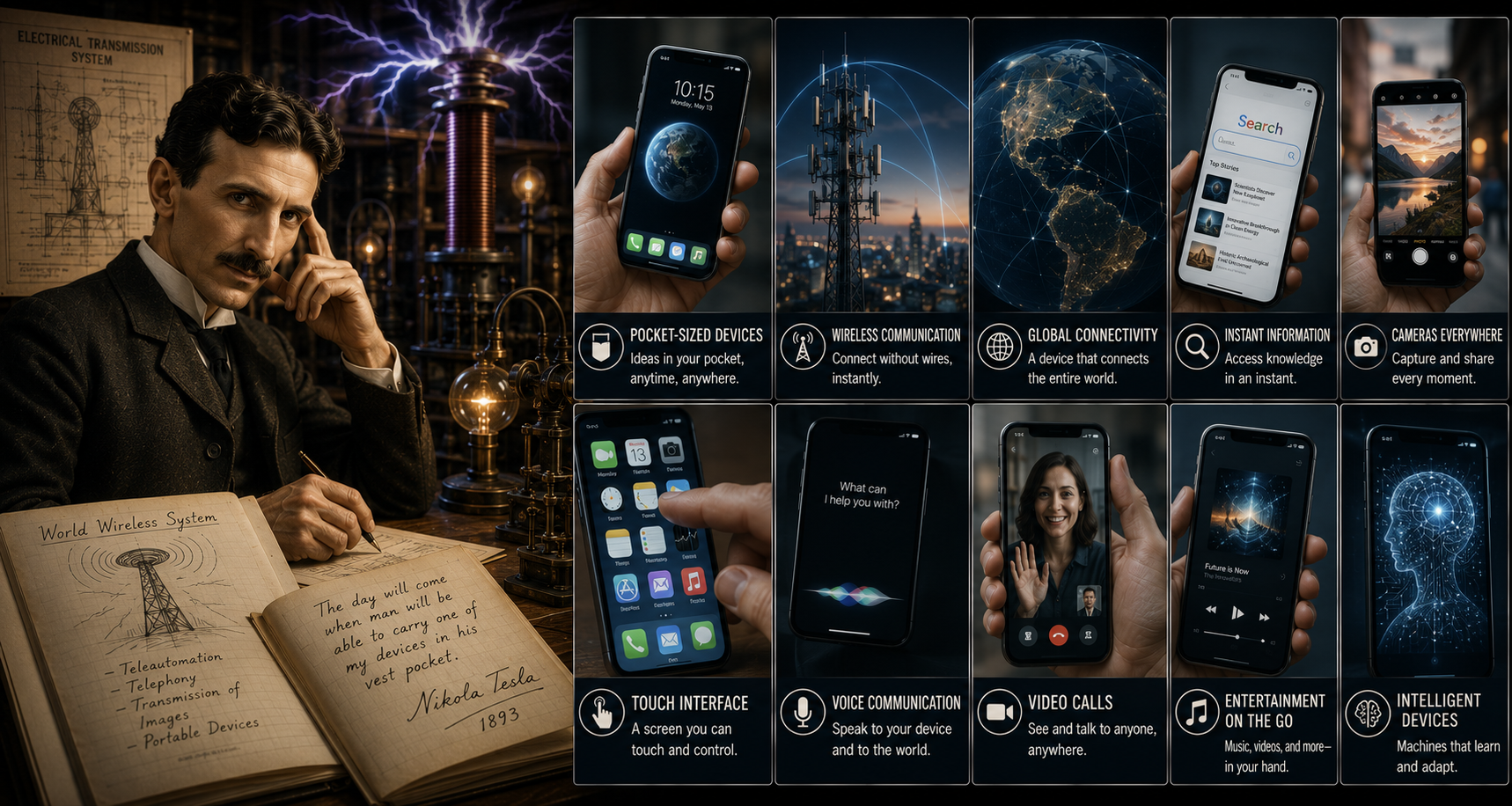
Tesla's Prophetic Vision
In 1926, Nikola Tesla foresaw a world where people carried communication devices in their pockets. This wasn't science fiction. It was a vision of the smartphone, decades before its invention.
Continue the Rabbit Hole
Each story explores the same idea from a different angle. Follow the connections and discover where the thread leads.





Fictional placeholder content