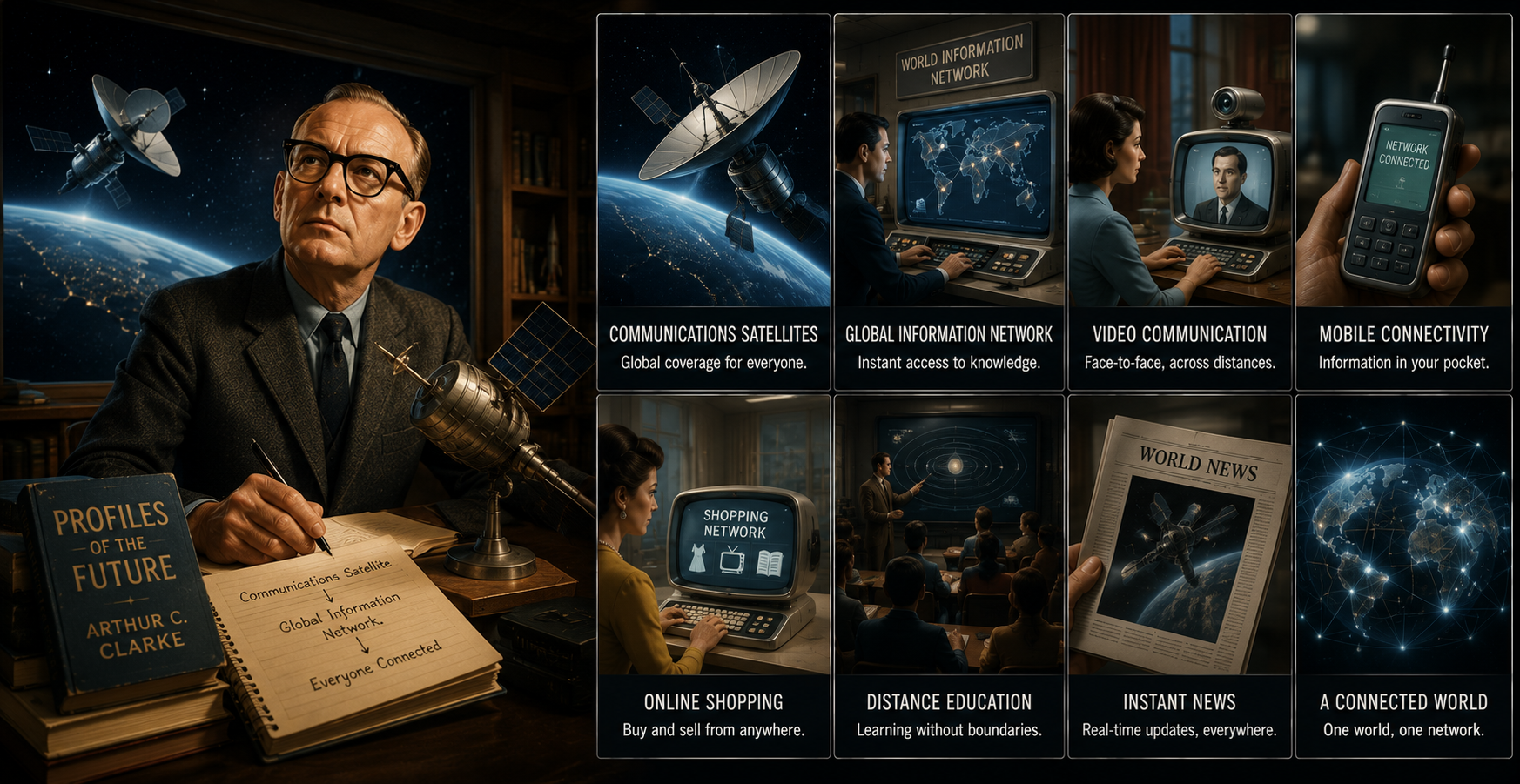
Arthur C. Clarke's Futuristic Vision in 1964
"In 1964, Arthur C. Clarke told a BBC audience something audacious: the future would see a world connected by an unseen network. A bold claim when computers still filled entire floors."
What Happened?
Arthur C. Clarke sat before a BBC camera in 1964, his vision clear and unsettlingly precise. "One day," he said, "we will be able to contact our friends even if we don’t know their physical location." In a world where computers occupied entire buildings and communication was constrained by rotary phones, Clarke described a future where knowledge and connection were boundless, where the limits of distance and time were dissolved by technology.
In Clarke's future, anyone could tap into this vast network and access limitless information. It was a spectacle at odds with the tangible world around him—televisions with static images and telephones that demanded patience. Yet Clarke's audacious prediction foretold a transformation: the birth of what we now know as the internet. His words painted a picture of remote work and instantaneous communication—a bold vision that technology wouldn't catch up with for decades.
By 1974, Clarke's predictions didn’t just stop at global networks; he envisioned computers shrinking to fit on desks and even connecting remotely. These once-sci-fi concepts began translating into reality, redefining how information was shared and consumed. The world he predicted is now our reality. Every click, each search, all echo the foresight of a man who saw the invisible threads of connectivity that would one day bind us all.
As we navigate this digital era, Clarke's prophetic voice reminds us how far we've come—and how much one man's vision can alter the trajectory of human communication. It’s not just about technology; it's about imagination meeting possibility.
Takeaway
The lesson this story keeps teaching
“Visionaries see what others can't, transforming what seems impossible into inevitable reality.”
Why People Are Talking About This
Arthur C. Clarke's predictions in 1964 serve as a testament to human ingenuity's potential to transcend present limitations. His vision did not merely suggest advancements in technology but rather compelled us to consider the possibilities withheld in today's imagination. These insights reflect broader themes in innovation and challenge us to retread our understanding of progress, daring us to ask whether the boundaries of today are merely the possibilities of tomorrow.
Thread Map
9 entities · 8 connections · Hover to explore, click to inspect
This is the connection map for this thread. Every node is a person, company, event, or idea. The red lines show how they connect. Hover a node to highlight its connections. Click a node to see why it matters to this story.
How We Got Here
Clarke Imagines Satellite Network
Arthur C. Clarke wrote to Wireless World, envisioning satellites that would span the globe, laying a foundation for future communications.
Publicly Discusses Future Tech
Clarke makes incredible future predictions during public appearances, foreshadowing his later, more detailed predictions for communication technology.
BBC Interview Changes Minds
Clarke delivers a BBC interview describing a future interwoven with a global communications network and desktop computers, challenging contemporary ideas.
Predicts Rise of Desk Computers
In a follow-up, Clarke foresees a future where computers are a staple in every home, shifting how technology is perceived and integrated.
World Wide Web Conceived
Tim Berners-Lee creates the World Wide Web, realizing Clarke’s vision of an interconnected digital landscape accessible in homes worldwide.
Public Internet Launches
The internet becomes accessible to the public, fulfilling many of Clarke's predictions and redrawing the possibilities for global communication.
3D Printing Technology Emerges
3D printers begin to infiltrate public knowledge, echoing Clarke's predictions of a world capable of producing objects from concept to reality effortlessly.
Remote Work Gains Traction
As the COVID-19 pandemic reshapes work, Clarke's vision of a world relying on digital communication and remote capabilities becomes clearer and more vital.
Wait... Who Is This?
During a time when the world was still grappling with the rudiments of modern technology, a figure emerged to reshape expectations: Arthur C. Clarke. Known as more than just a science fiction writer, Clarke occupied a unique place in the cultural lexicon as an oracle of future possibilities. His prescience was uncanny. In a 1964 BBC broadcast that stirred imaginations and roused skeptics, Clarke presented a vision of future communication technology that defied contemporary limitations. It was a world of interconnected computers, an era of digital communication that went well beyond the horizon of public consciousness. While the era was defined by large, monolithic computing systems and tedious rotary phones, Clarke imagined a planet connected by invisible and instantaneous digital networks. His words would ripple through time, touching a generation that would come to know these ideas not as speculative fiction but as the very fabric of reality.
Receipts
Arthur C. Clarke predicted the internet and desktop computers. | Pascal BORNET posted on the topic | LinkedIn
Arthur C. Clarke predicted the internet in 1964. Not 1984. Not 1974. 1964. This was when: Computers filled entire buildings. Rotary phones hung on kitchen walls. TV had three channels. And they all… | Rujuta Singh | 107 comments
In 1964, Arthur C. Clarke Predicts the Internet, 3D Printers and Trained Monkey Servants | Open Culture
Arthur C. Clarke
Sci-Fi Writer Arthur C. Clarke Predicts the Future in 1964: Artificial Intelligence, Instantaneous Global Communication, Remote Work, Singularity & More | Open Culture
Same Pattern
Different story. Same lesson.
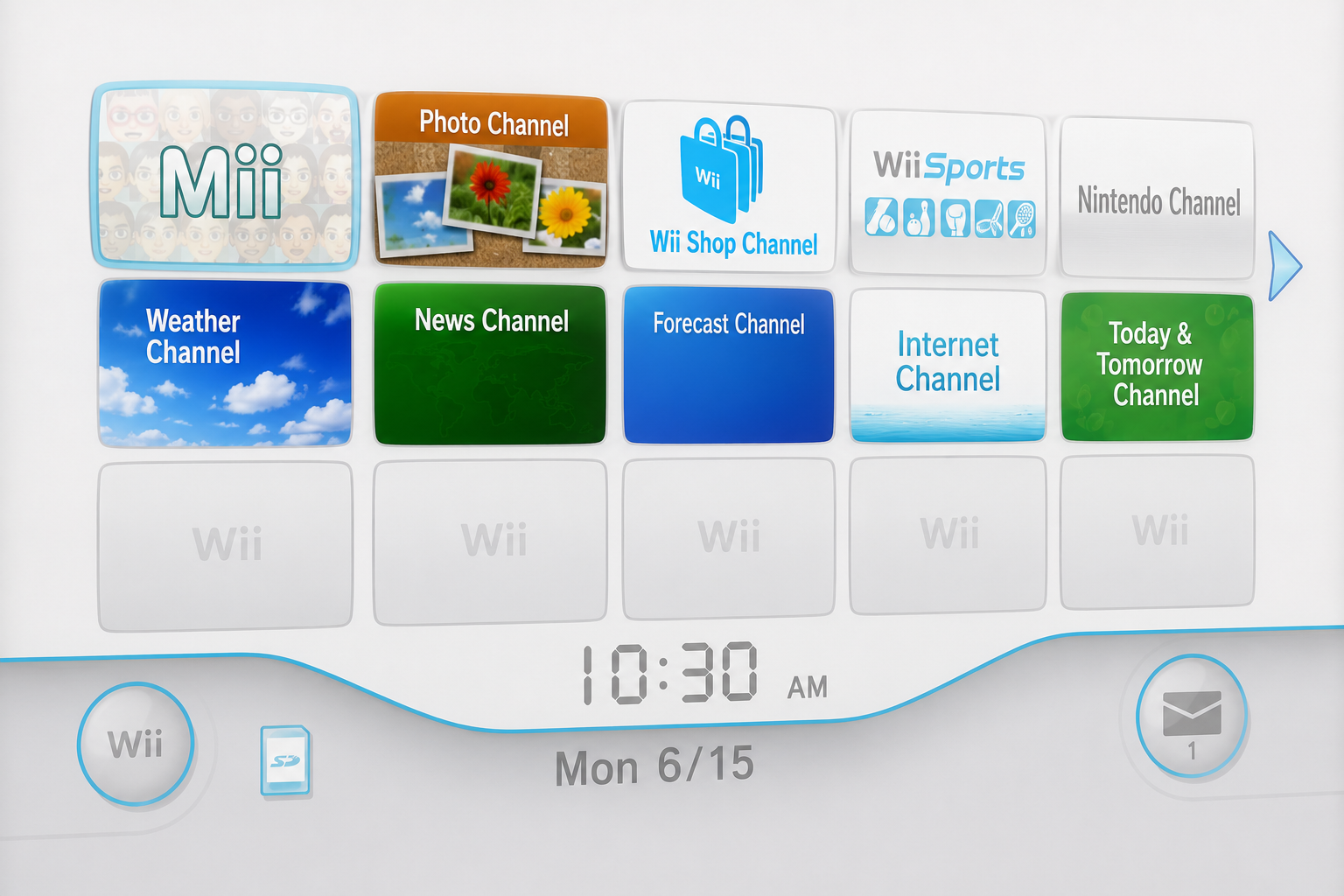
The Wii Gamble That Saved Nintendo
In a world obsessed with graphics and power, Nintendo bet on simplicity. The Wii was laughed at — until it wasn't.
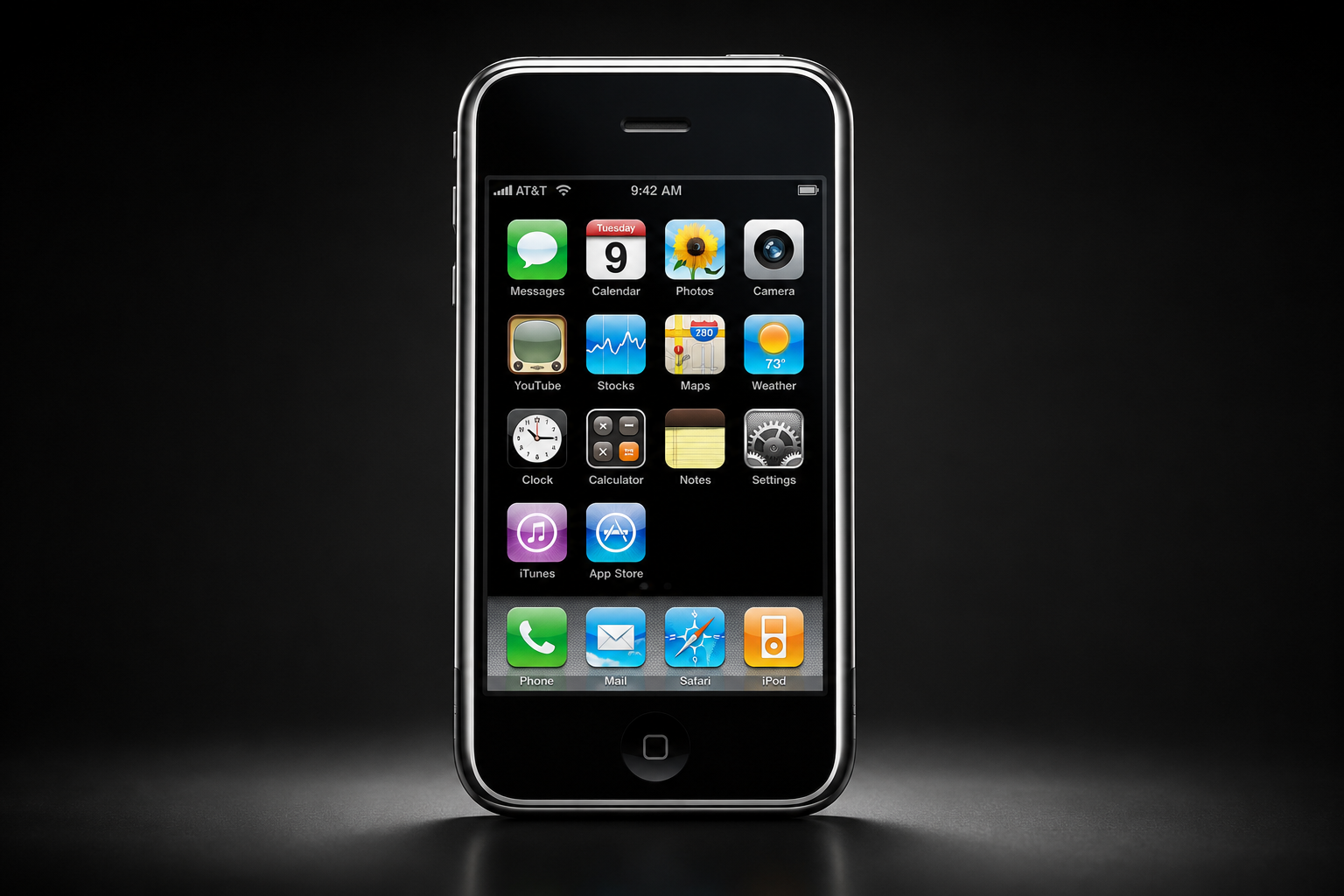
The iPhone That Disrupted the World
In January 2007, Steve Jobs stepped onto the stage and introduced a device that would redefine the entire world: the iPhone. What seemed like just another gadget launch was, in fact, the dawn of a new era.
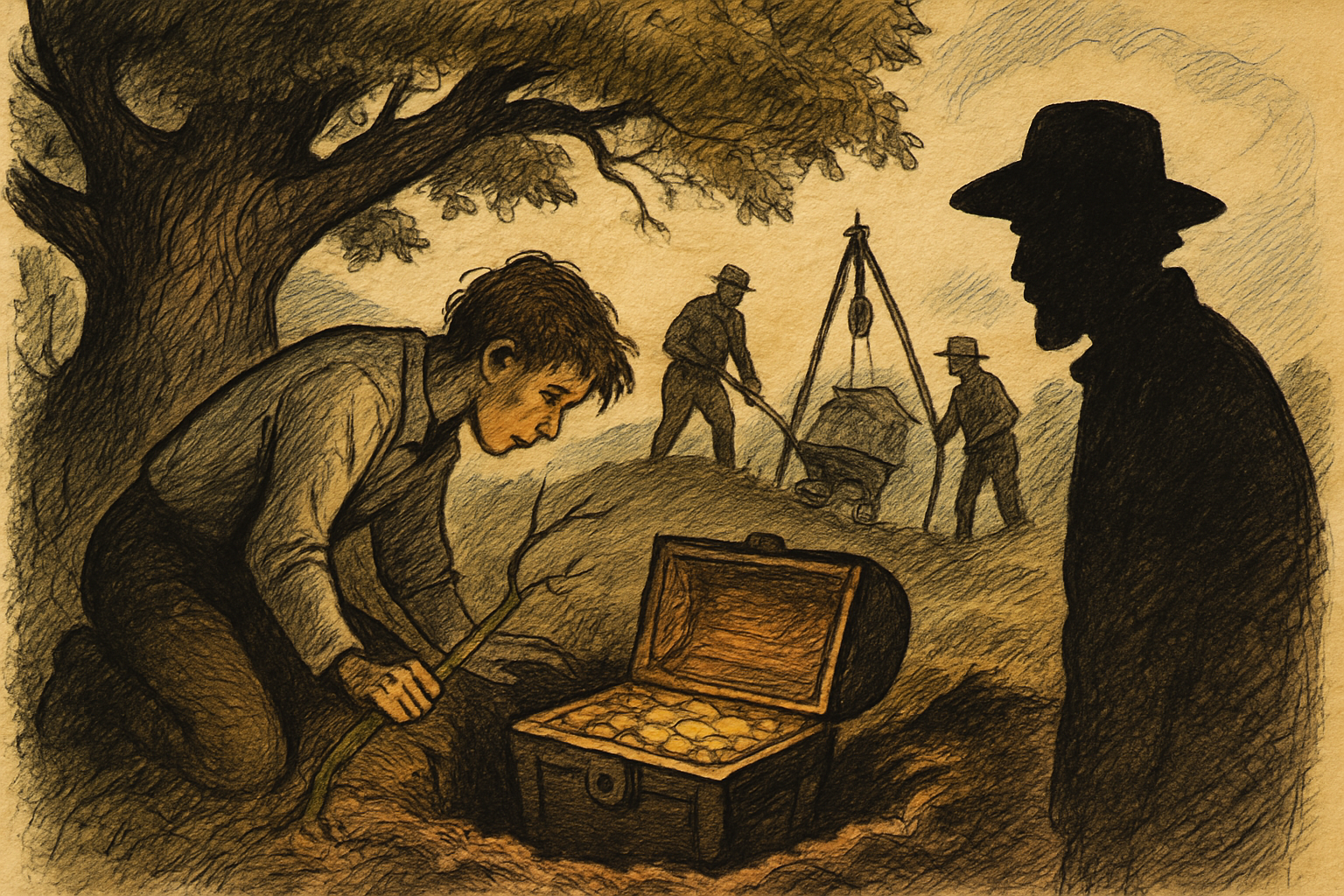
The Enigma of Oak Island
Beneath Oak Island lies a pit of promises, holding legends of buried treasure yet never yielding its secrets.
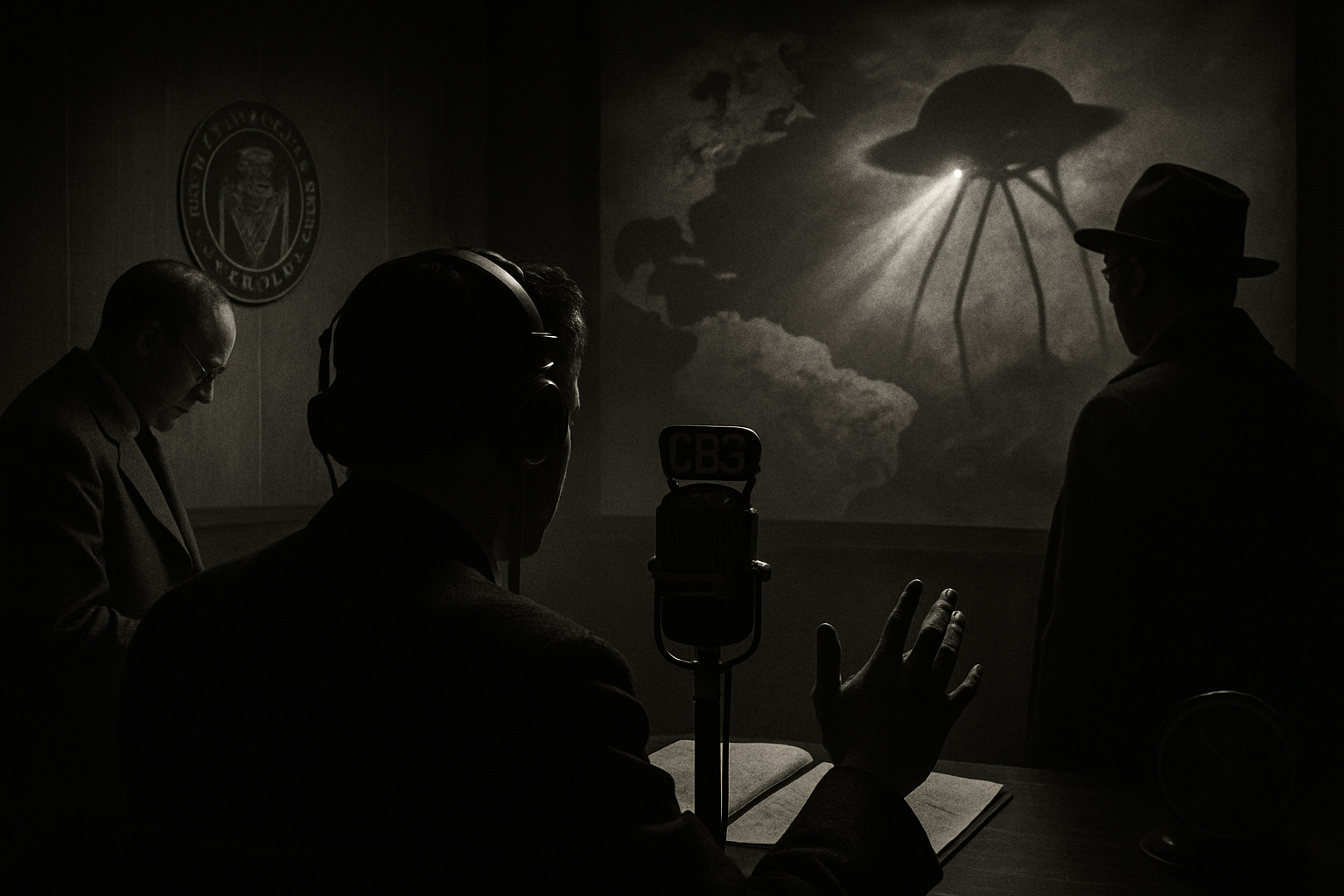
The Broadcast That Terrified America
On the night of October 30, 1938, chaos reigned as Americans believed Martians were invading. It was all fiction.
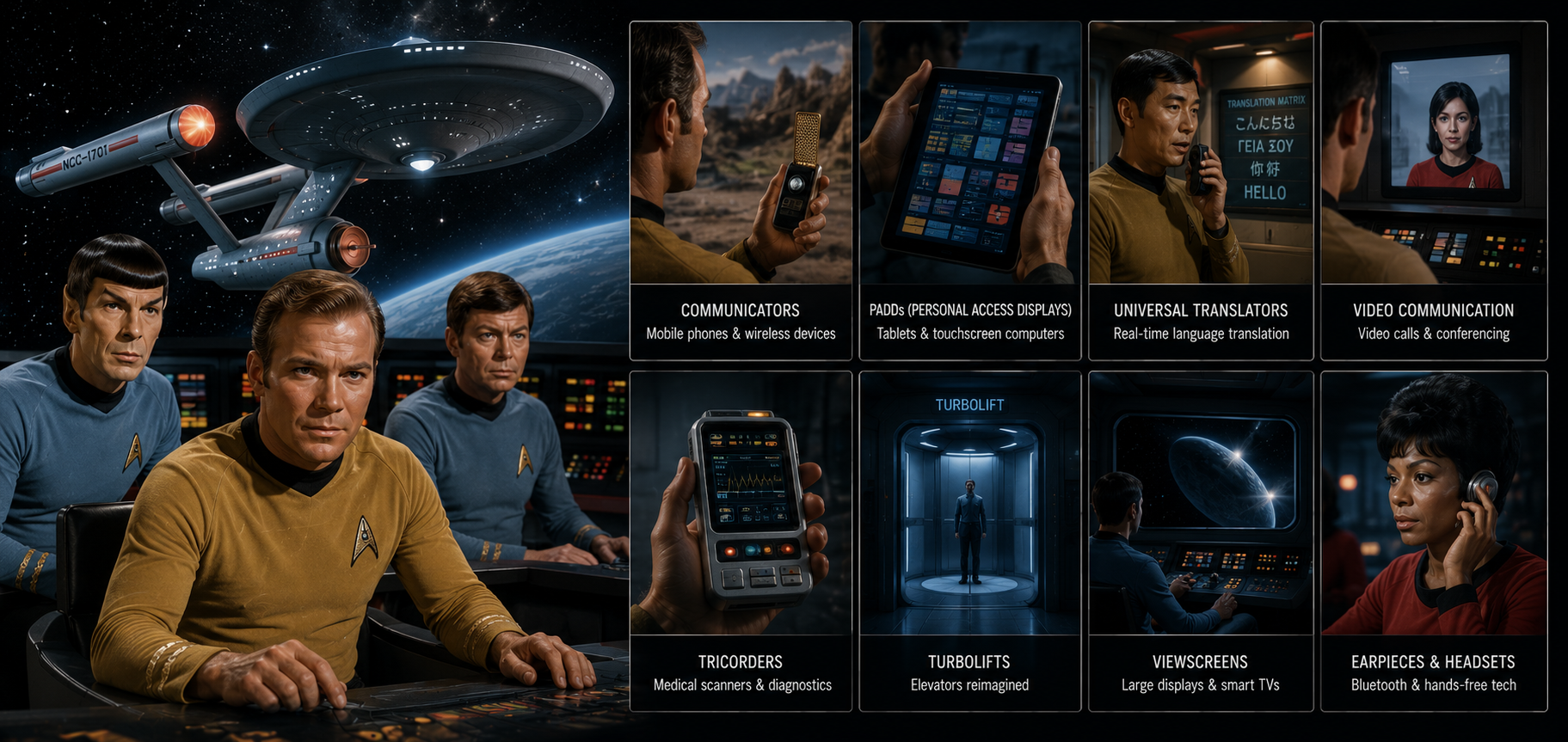
Star Trek's Blueprint for the Future
One TV series changed how we envision the future. But the even stranger twist? Its fictional tech became real.
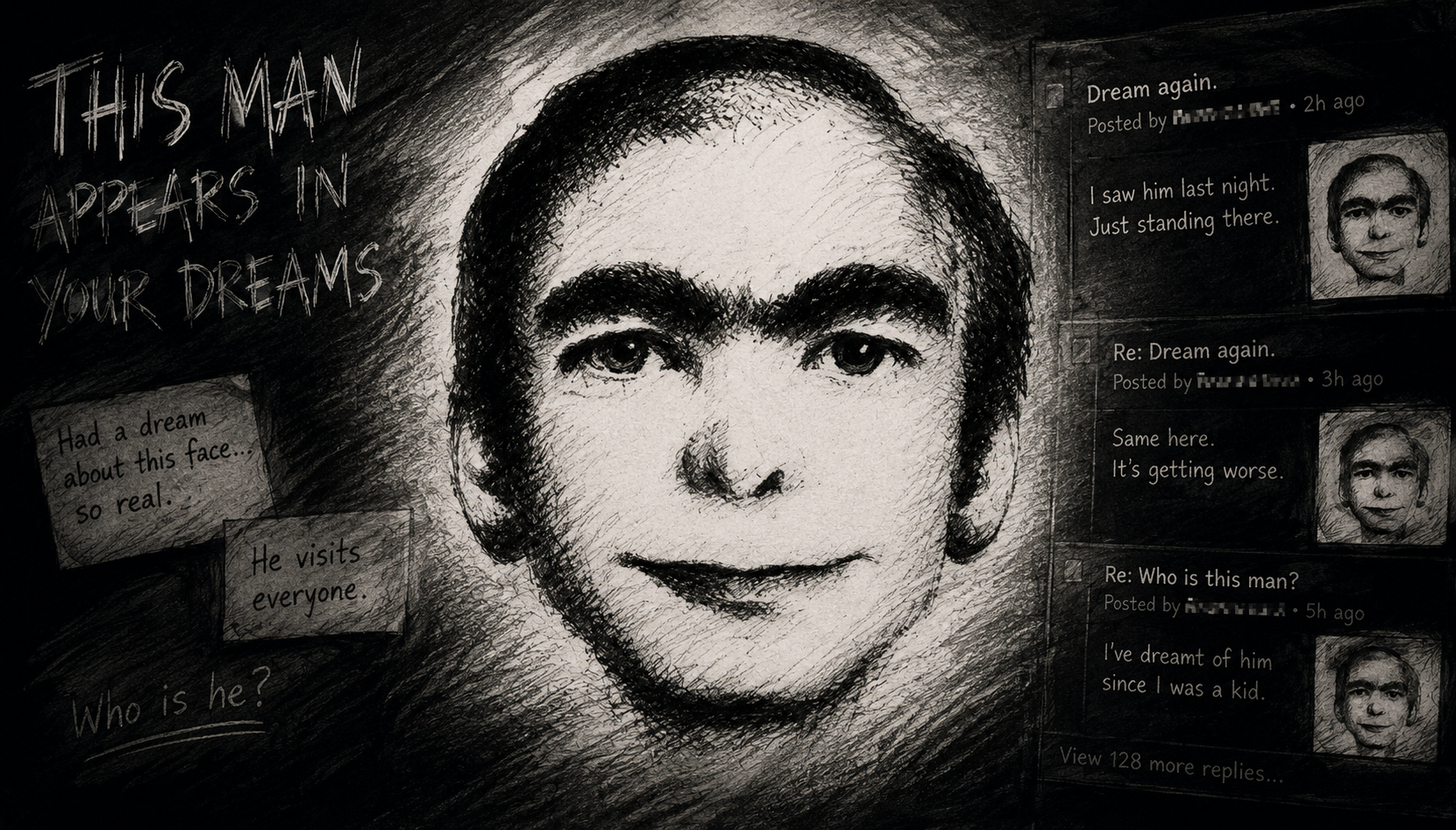
The Man in Everyone's Dreams
In the murky digital realm, a man nobody knew became the face everyone dreamed of. And the reality was even stranger.
Continue the Rabbit Hole
Each story explores the same idea from a different angle. Follow the connections and discover where the thread leads.



Fictional placeholder content