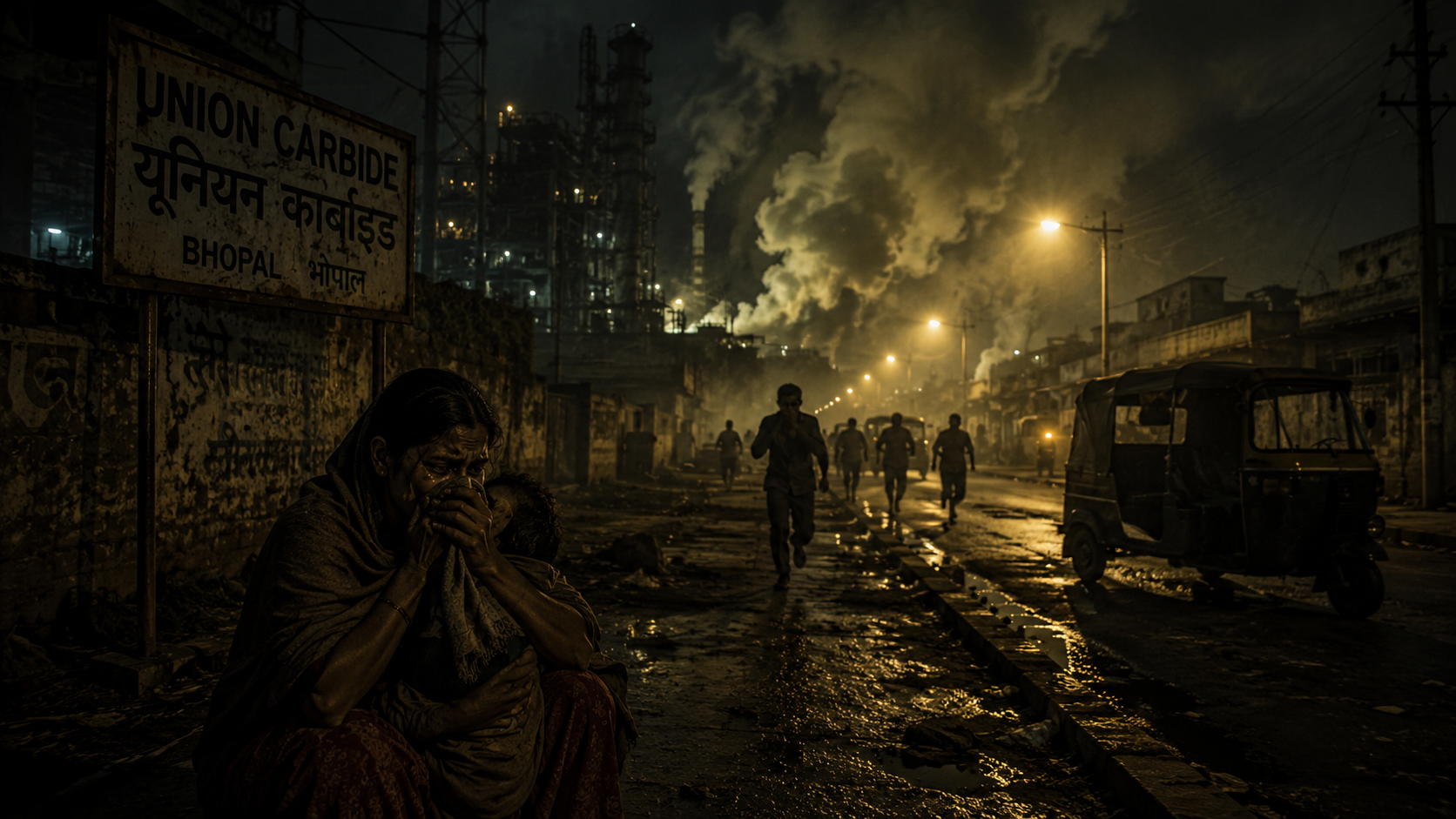
The Night Bhopal Became a Ghost Town
"On a cold night in December, a toxic cloud seeped into the sleeping city of Bhopal, transforming dreams into nightmares within minutes. The death toll rapidly climbed, revealing a catastrophe in the making."
What Happened?
The night air in Bhopal was heavy with an unease that no one could quite pinpoint until it was too late. A loud hiss and an acrid smell signaled a disaster in the making when 27 tons of methyl isocyanate gas burst into the atmosphere from a storage tank at the Union Carbide India Limited plant. Thousands awoke in terror, eyes stinging, lungs burning, as the toxic cloud enveloped the city.
By dawn on December 3, 1984, chaos reigned. Streets clogged with panicked residents fleeing in every direction, searching for clean air and loved ones left behind. The immediate death toll was staggering—over 3,000 lives lost that night. In the weeks and months that followed, tens of thousands more succumbed to the deadly effects of the gas, while half a million others would carry the scars of that night in their bodies.
Union Carbide, a subsidiary of the American multinational Union Carbide Corporation, found itself at the center of one of the worst industrial disasters in history. The boardroom decisions and safety compromises that had set the stage for this catastrophe were now exposed, embroiling the company in decades of litigation and public outrage.
And yet, the shadow of the tragedy extends far beyond the numbers. Generations bore its imprint, as children grew up in environments stained by lingering toxins, with disabilities that echoed the disaster’s terrible legacy. The Chingari Children’s Centre continues to serve as a refuge for these innocents, a testament to enduring resilience amid injustice.
Forty years later, legal battles still haunt the victims, who strive against the continuing backdrop of environmental degradation and corporate impunity. As the world looks at Bhopal, the unshakable question is whether justice will ever catch up with those whose actions—or lack thereof—unleashed the disaster that never truly ended.
Takeaway
The lesson this story keeps teaching
“The race for cheaper production often plants the seeds for inevitable disaster.”
Why People Are Talking About This
The Bhopal Gas Tragedy reveals the grim cost of corporate negligence intertwined with under-regulation. It holds a mirror to modern industries, urging a rethink on industrial safety protocols worldwide. This catastrophic event serves as a critical reminder of the price communities pay when profitability outweighs humanity.
Furthermore, the saga engendered a shift towards stronger environmental justice legislation, exposing the realities of inequality in industrial oversight. Bhopal stands testament to the idea that urgent systemic reform is imperative to prevent history from repeating itself.
Thread Map
9 entities · 8 connections · Hover to explore, click to inspect
This is the connection map for this thread. Every node is a person, company, event, or idea. The red lines show how they connect. Hover a node to highlight its connections. Click a node to see why it matters to this story.
How We Got Here
Chemical Reaction Breaches Control
A dangerous chemical reaction begins after safety protocols fail at the Union Carbide plant. The gas leak starts, setting off a chain reaction of events leading to a catastrophic gas release over Bhopal.
Toxic Cloud Engulfs Bhopal
As the leaking gas spreads, thousands succumb in their sleep. Survival becomes a race against an invisible killer as panic spreads throughout the city. Hospitals are overwhelmed as they try to treat those affected.
Investigations Lay Bare the Systemic Failures
A series of investigations unveil the cost-cutting measures and ignored safety warnings that led up to the disaster. Union Carbide faces global outrage for negligence.
Settlement with Union Carbide Announced
After prolonged negotiations, Union Carbide reaches a $470 million settlement with the Indian government for victims, a figure criticized as being grossly inadequate.
Six Officials Convicted
A local court convicts seven Indian former employees, sentencing them to two years in prison, widely seen as symbolic gestures rather than substantive justice.
Ongoing Health and Environment Struggles
Reports confirm continued suffering in Bhopal due to untreated sites and unremedied health impacts, highlighting the enduring legacy of the disaster.
Forty Years On: Reflecting on Injustice
Amnesty International publishes a poignant reflection on the forty years of injustice still faced by the victims and the ongoing fight for accountability.
Wait... Who Is This?
In the 1970s, Union Carbide sought fertile ground for expansion. The soaring demand for agricultural chemicals in a developing India seemed promising. Bhopal, a burgeoning city with a hungry worker population, housed the giant’s pesticide facility. The plant came with risks—methyl isocyanate (MIC), a lethal ingredient crucial for Carbide's production, required rigorous handling and deeper safety protocols.
Yet, by 1984, years of negligence had unraveled the plant’s integrity. Cost-cutting measures denied necessary safety features. Trained personnel diminished, maintenance was ignored, and equipment deteriorated under the strain of negligence and disinvestment. Protocols meant to protect lay decimated for profit’s sake. Bhopal sat precariously on a bed of toxic potential.
Warnings had been echoed ahead of the fateful night. Union leaders and local press sounded alarms about the technological weaknesses and the persistent chemical odors. But risk management was sporadic at best, buried under fiscal drive. Amidst the rapid development, nobody foresaw how fragile progress could cascade into devastation overnight.
Receipts
Bhopal Gas Tragedy | Union Carbide Corporation
Bhopal Gas Tragedy: 40 years of Injustice
Bhopal disaster
A Bhopal Timeline · University of Wisconsin Law School Digital Repository · University of Wisconsin Law School Digital Repository
Bhopal Disaster | Science | Research Starters | EBSCO Research
Bhopal Plant Disaster Appendix A: Chronology
Lessons learnt from Bhopal Disaster 1984
Bhopal’s tragedy has not stopped': the urban disaster still claiming lives 35 years on | Cities | The Guardian
Same Pattern
Different story. Same lesson.
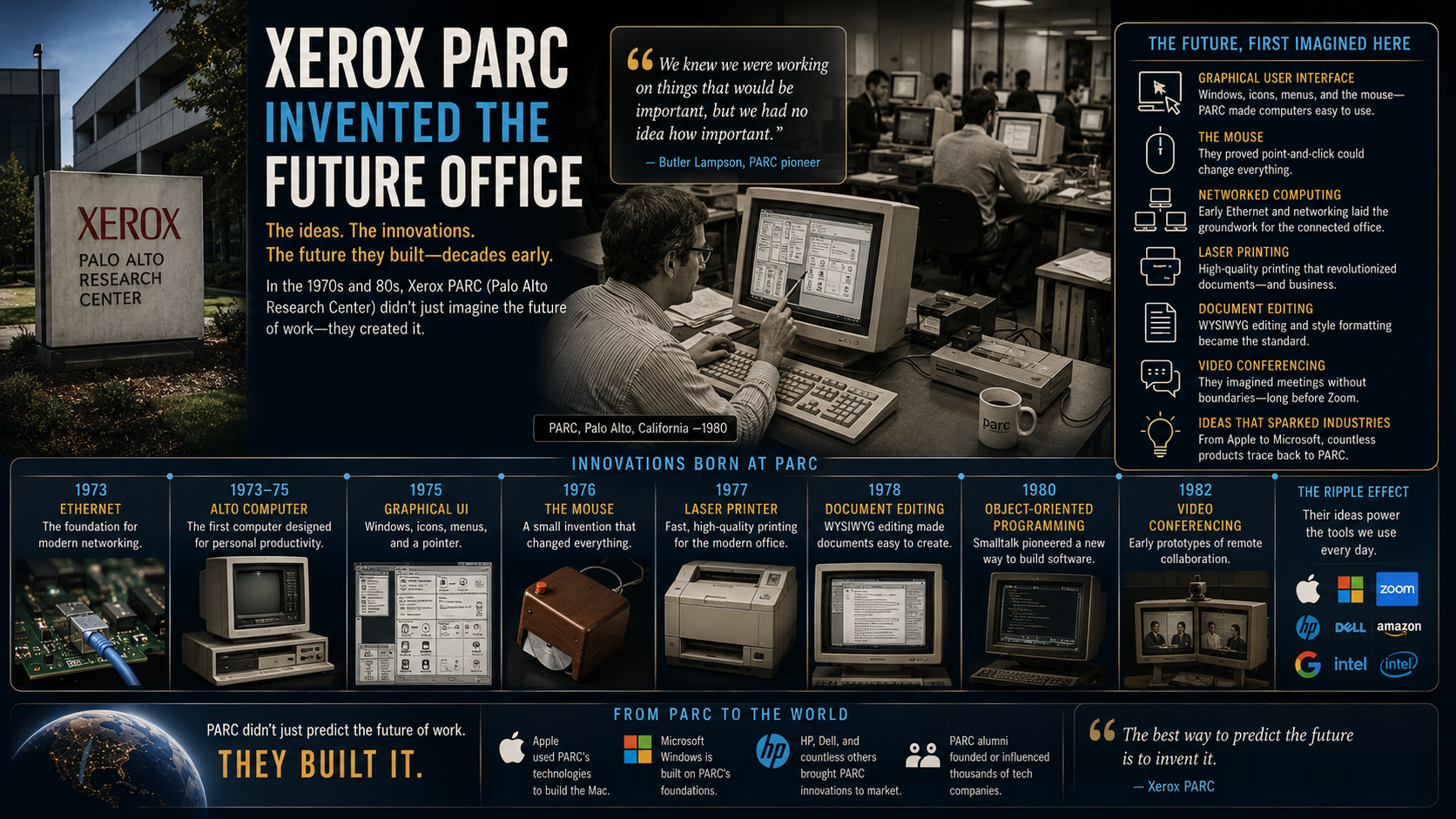
The Lab That Invented Tomorrow
In December 1979, Steve Jobs saw echoes of the future inside Xerox PARC's halls. There, in a secluded lab, lay the blueprint for the modern tech landscape.

The Browser War That Built the Internet
In the mid-1990s, a software battle erupted that would shape how billions accessed information. Few could predict that the victor would soon face its own downfall.

Pixar's Radical Feedback Loop
In a stark, unadorned room, some of the most powerful voices in animation face off with ruthless honesty. Their weapons? Brutal feedback that molds raw ideas into cinematic gold.

The Chicken That Changed Retail
Costco's $4.99 rotisserie chicken isn't just a meal — it's a strategic masterpiece. The unexpected ripple effects changed retail forever.

Minority Report's Prescient Touchscreen Reality
In 2002, Hollywood imagined a future of seamless touchscreen interfaces. Today, Steven Spielberg's vision feels eerily prescient as technology catches up.

The Mandela Effect’s Mind-Bending Mystique
Millions remember Nelson Mandela dying in the 1980s, yet he passed in 2013. What caused this shared illusion?
Continue the Rabbit Hole
Each story explores the same idea from a different angle. Follow the connections and discover where the thread leads.





Fictional placeholder content