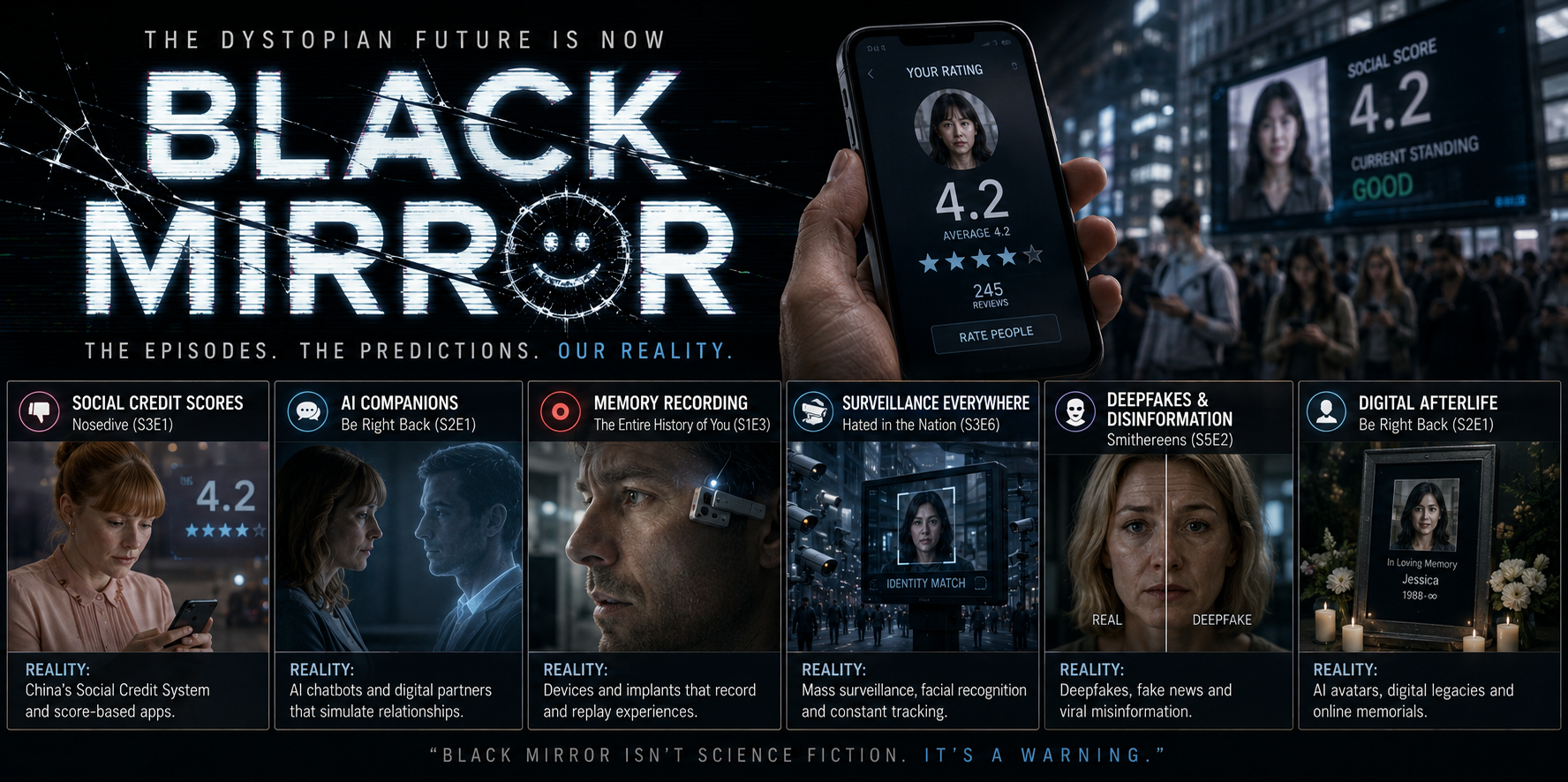
When Black Mirror Became Reality
"Black Mirror was meant to be a dystopian warning, not a manual for the future. Yet, today, life seems to imitate its plots."
What Happened?
Picture this: a loved one's voice echoing through the room, not in memory, but from an Amazon Alexa device. In 2022, a quiet update made it possible—your dead relative returned, their voice now a digital phantom guiding you through your daily routine. This unsettling reality echoes the Black Mirror episode “Be Right Back,” where grief-stricken Martha speaks with an AI replica of her deceased partner, Ash. The thin veil between fiction and reality just became even more transparent.
Charlie Brooker, the mind behind Black Mirror, imagined a dystopian future shaped by technological innovation and its darker implications. When the series first aired, it was a grim mirror reflecting our societal fears. By the time it moved to Netflix in 2015, its disturbing prophecies were creeping into our world. Entrepreneurs like those behind HereAfter AI and Project December took cues directly from Brooker's scripts, building AI chatbots capable of replicating deceased loved ones. The premise of a 2013 episode had transformed from speculative fiction into a harrowing product.
Meanwhile, Neuralink, a company headed by Elon Musk, is developing brain implants destined to blur the lines further, promising realities where digital consciousness might reside in implanted devices. What was once a cautionary tale is now a blueprint for innovators to follow.
Black Mirror’s eerie foresight continues to unravel in real time. We live in the shadow of Brooker's imagination, navigating a maze of ethical quandaries that were once entertainment. One must wonder: is this mere coincidence or a roadmap laid out by storytellers who saw the potential in our devices to become companions, comrades, and even ghosts? The worry is no longer dystopian fiction but rather a prediction slowly, inexorably becoming our present.
Takeaway
The lesson this story keeps teaching
“When dystopian fiction becomes a blueprint for reality, it challenges our perception of progress, forcing us to confront technology's ethical implications.”
Why People Are Talking About This
Black Mirror has increasingly blurred the lines between fictional narratives and reality, revealing a sobering truth about technological aspiration's unchecked advances. The fact that technologies envisaged as cautionary tales are now part of daily life serves as a stark reminder of the ethical considerations society faces.
These episodes are no longer just speculative fiction but are becoming blueprints for real technological practices. As they leap from screens into reality, they challenge us to question the impact of digital life integration. With rapid advancements outpacing discussions on ethics, Black Mirror’s eerie accuracy holds crucial lessons on which society needs to reflect.
Thread Map
6 entities · 5 connections · Hover to explore, click to inspect
This is the connection map for this thread. Every node is a person, company, event, or idea. The red lines show how they connect. Hover a node to highlight its connections. Click a node to see why it matters to this story.
How We Got Here
'Be Right Back' Premiers: Echoes of AI Beyond the Screen
Black Mirror's chilling episode 'Be Right Back' depicted a widow using AI to interact with her deceased partner, foreshadowing tools like HereAfter AI.
Black Mirror Migrates to Netflix
Charlie Brooker and Annabelle Jones took their show to Netflix, broadening its reach and amplifying its already expansive dystopian commentary.
Pizza Hut Adapts Autonomous Tech
Pizza Hut announced its development of self-driving pizza delivery vans, drawing uncanny parallels to Black Mirror's 'Crocodile' episode.
Amazon’s Alexa Breaks Vocal Barriers
Amazon introduced a haunting update: Alexa replicating voices of users' deceased loved ones, a chilling nod to Black Mirror scenarios becoming reality.
Neuralink’s Breakthrough Brain Implant
Neuralink's third successful brain implant resonated with themes explored in Black Mirror's 'The Entire History of You,' bridging sci-fi to reality.
Wait... Who Is This?
Before Black Mirror entwined itself with reality’s narrative, it thrived as an anthology series that highlighted the absurdities and dangers of modern technological dependencies. Charlie Brooker’s brainchild first aired in 2011, providing audiences with speculative yet unsettling stories that felt eerily plausible. Initially broadcast on Channel 4, it captured the essence of a complex digital age, bridging the gap between science fiction and grim reality.
Charlie Brooker had long envisioned placing a cracked mirror before society, reflecting the distorted potential futures if humanity remained heedless of digital advancements. The show’s shift to Netflix in 2015 widened its scope and viewership, tapping into global consciousness about technology's role.
Black Mirror's stories hit at the core anxieties and thrilling possibilities of tech interwoven into our daily lives. These episodes spun tales of dystopian possibilities highlighted by strained ethics and revealed the invisible yet looming threats of unchecked innovation. Over time, these uncanny narratives began mirroring the headlines, leading audiences to question where fiction ended and reality began.
In a stunning turn, this fictional TV show has not just replicated real-life events, but is now seen as a predictor of them. Brooker's vision foresaw the unsettling ways in which technology could shape human behavior, and as reality caught up with fiction, it became more than just a series, evolving into a touchstone for understanding modern society’s slippery slope.
Receipts
Same Pattern
Different story. Same lesson.
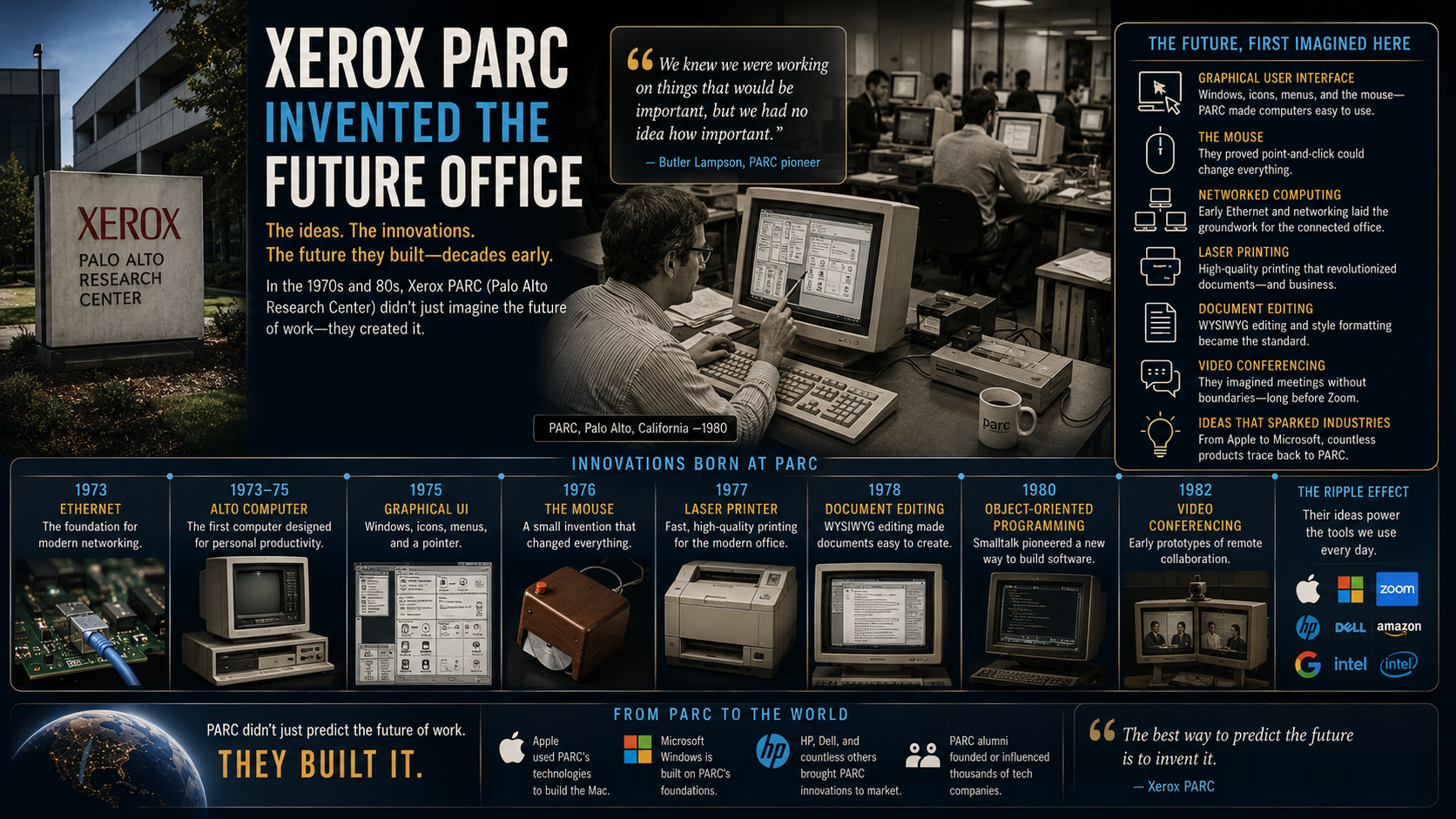
The Lab That Invented Tomorrow
In December 1979, Steve Jobs saw echoes of the future inside Xerox PARC's halls. There, in a secluded lab, lay the blueprint for the modern tech landscape.
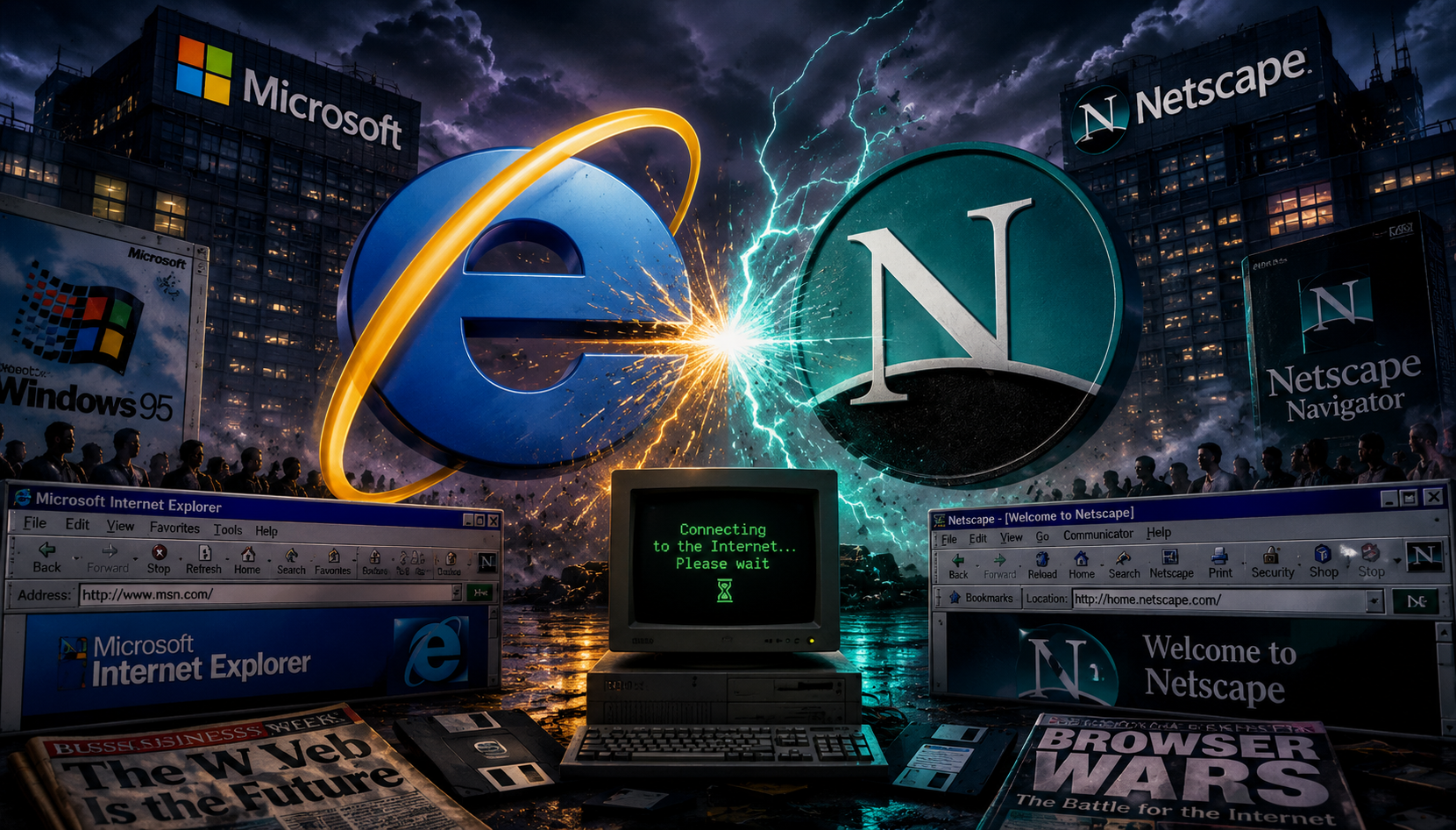
The Browser War That Built the Internet
In the mid-1990s, a software battle erupted that would shape how billions accessed information. Few could predict that the victor would soon face its own downfall.
Pixar's Radical Feedback Loop
In a stark, unadorned room, some of the most powerful voices in animation face off with ruthless honesty. Their weapons? Brutal feedback that molds raw ideas into cinematic gold.

The Chicken That Changed Retail
Costco's $4.99 rotisserie chicken isn't just a meal — it's a strategic masterpiece. The unexpected ripple effects changed retail forever.
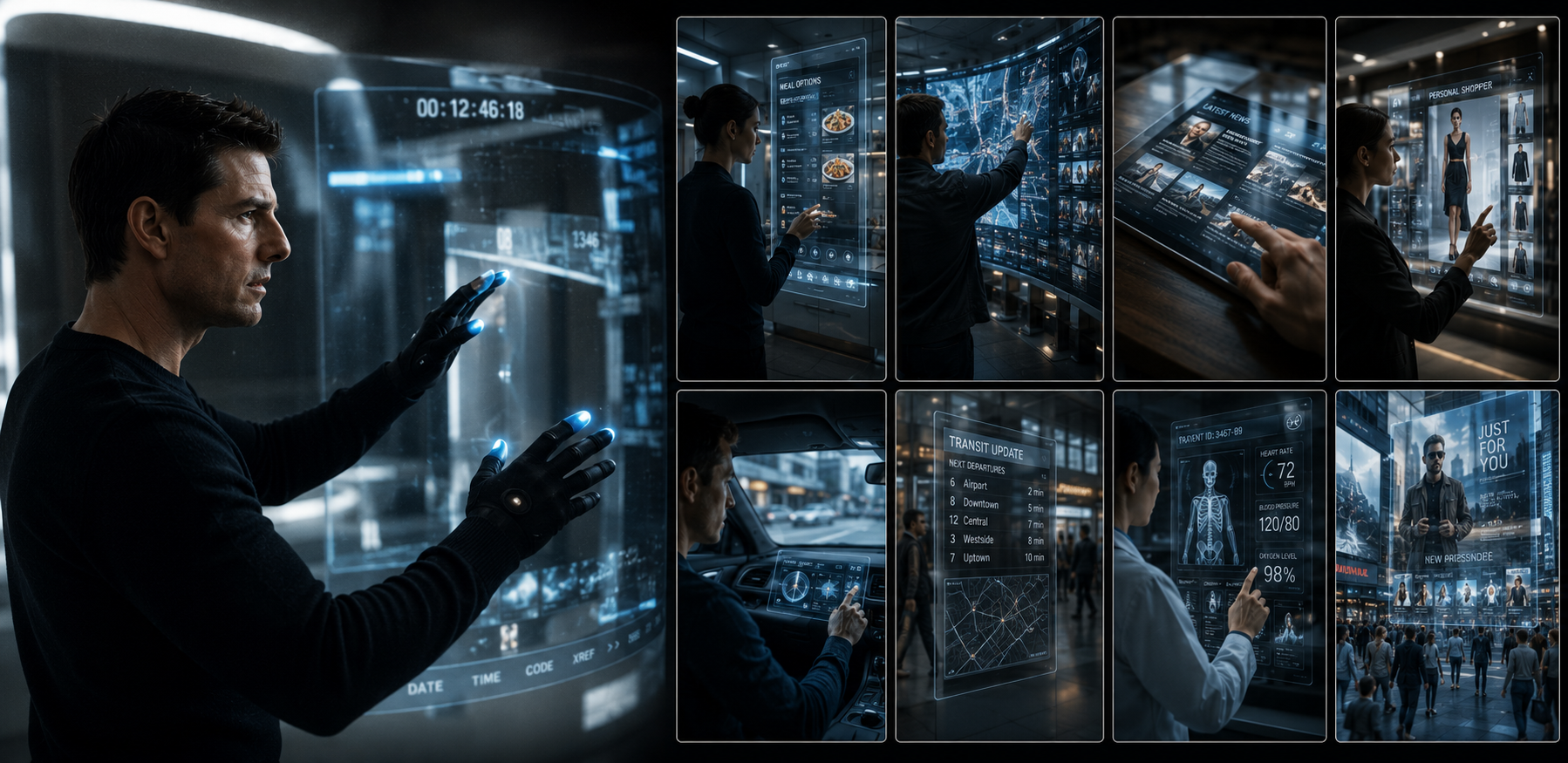
Minority Report's Prescient Touchscreen Reality
In 2002, Hollywood imagined a future of seamless touchscreen interfaces. Today, Steven Spielberg's vision feels eerily prescient as technology catches up.
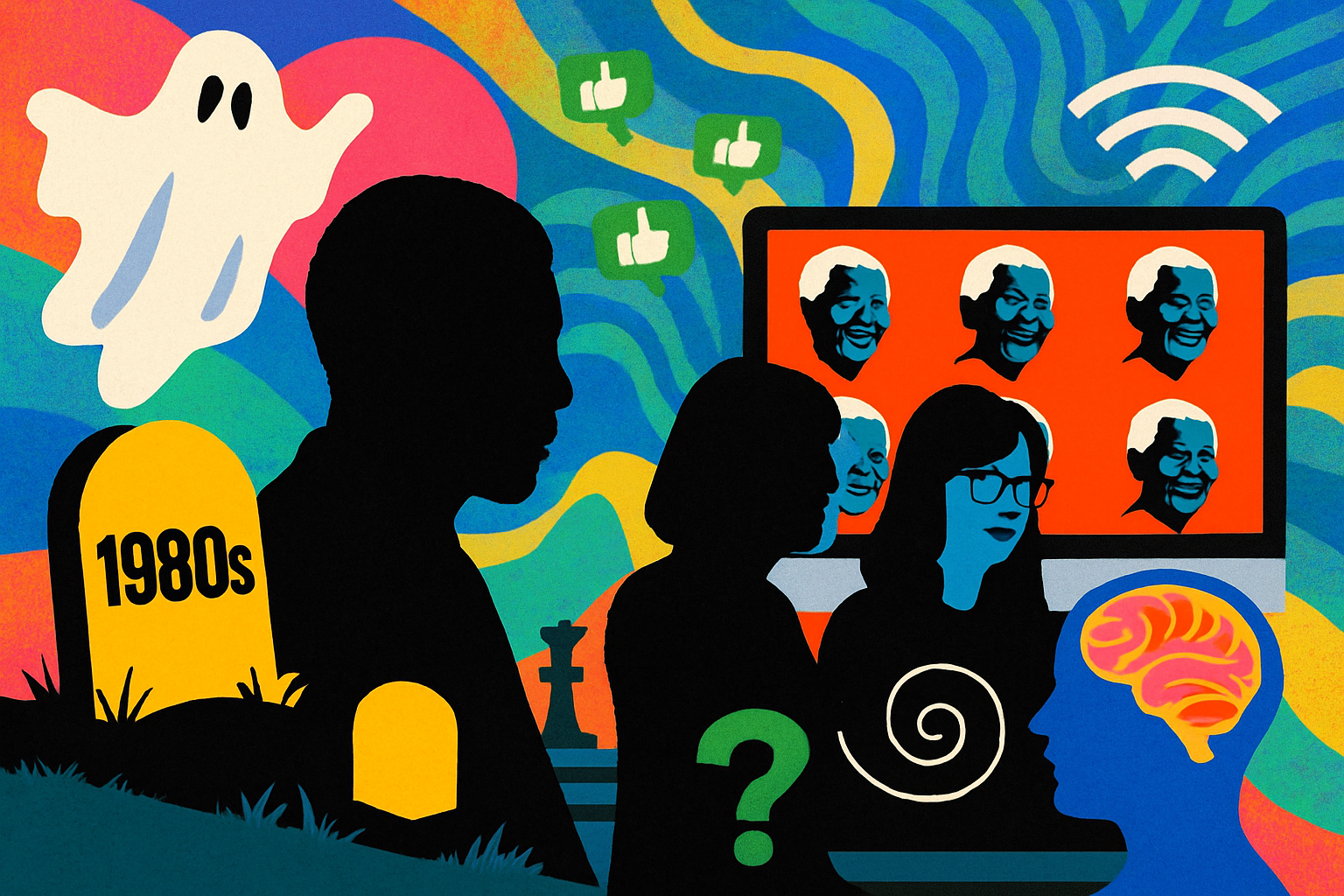
The Mandela Effect’s Mind-Bending Mystique
Millions remember Nelson Mandela dying in the 1980s, yet he passed in 2013. What caused this shared illusion?
Continue the Rabbit Hole
Each story explores the same idea from a different angle. Follow the connections and discover where the thread leads.
Fictional placeholder content