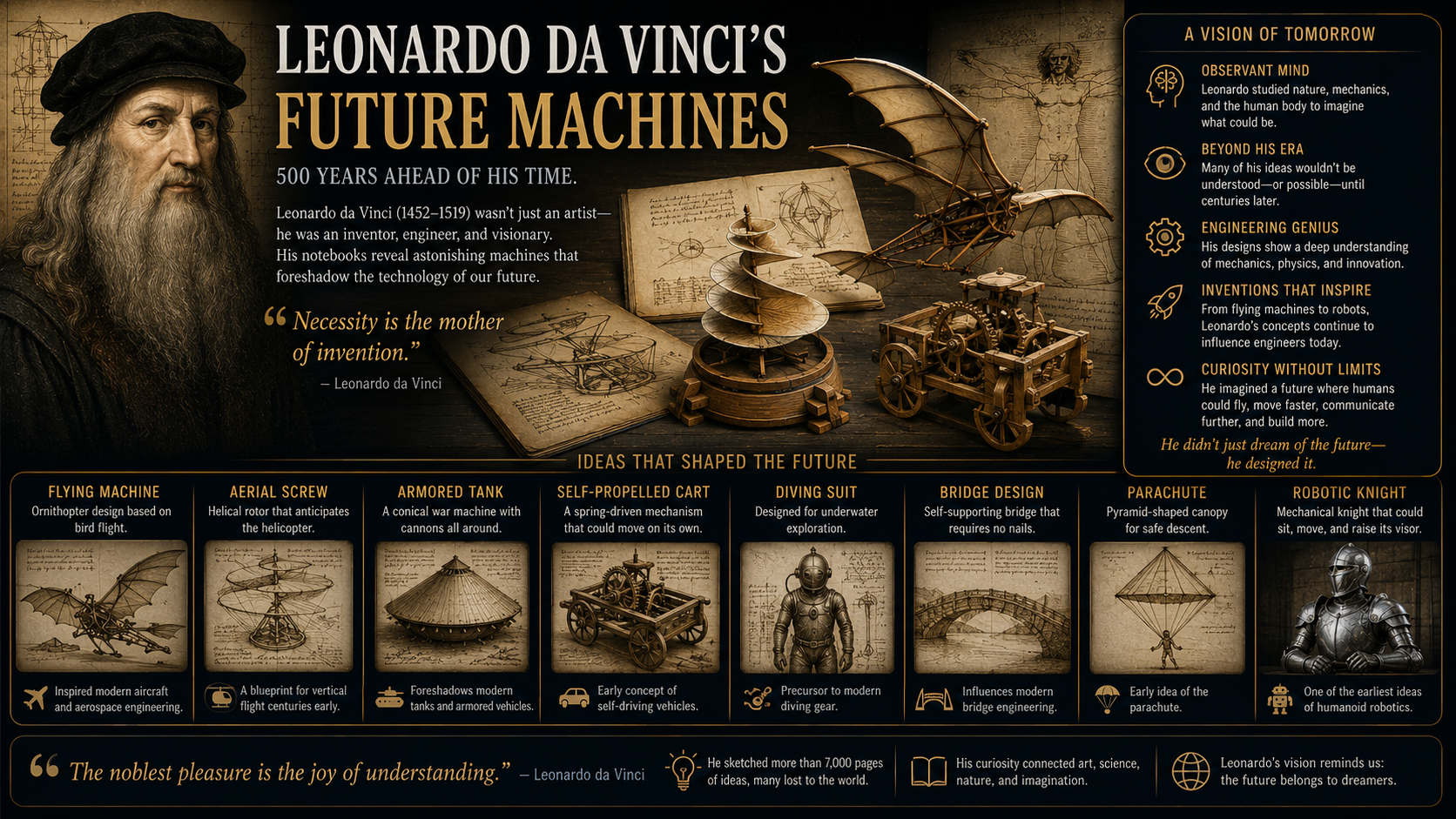
Leonardo's War Machines: The Imagined Arsenal
"In a dusty workshop in 1502, Leonardo da Vinci sketched machines of flying and war that seemed like dreams more than reality. Centuries later, we find those dreams more familiar than alien."
What Happened?
The wooden gears failed to align, rattling ominously in the quiet workshop. It was a scene Leonardo da Vinci might have imagined himself, as his centuries-old sketches were brought to life. In the 21st century, a mechanical knight raised its arm in Berlin, echoing a vision first drawn on parchment more than 500 years ago.
Leonardo dreamed of machines before there was industry to build them, drawing concepts that were dismissed as fanciful at the time. He sketched armored vehicles bristling with weaponry, aerial screws spiraling toward imagined heights, and mighty catapults with intimidating potential. His ‘ideal city’ was a marvel of engineering theory: multi-level streets, hydraulic systems, and underground passages created a vision of sanitized urban living that would not see materialization for nearly five centuries.
April 1519 marked the end of Leonardo’s earthly life but the beginning of a legacy that would continue to evolve long after his death. His manuscripts, many hidden in dusty trunks, told of an intellect that bridged art and mechanical invention. Among these documents was an aerial screw requiring human propulsion—a precursor to the modern helicopter. Though never realized in his time, scholars and engineers at the University of Maryland tested its feasibility in 2019, marveling at the insights of a man unwed to modern physics.
Surprisingly, it was not until an Italian nationalistic wave under Mussolini that many of Leonardo's machines were reconstructed. Models were crafted to reignite national pride in 1939, showcasing the breadth and often eerie foresight of his mechanical sketches. Each construction reignited questions: How could a mind span centuries? Why did these notions lay dormant for so long?
Da Vinci’s designs were not just prescient during his lifetime; they have inspired transport, warfare, and urban planning as far as his notes have been rediscovered. Today, Leonardo's vision collides with reality, his sketches guiding the blueprints for innovations centuries later. Beneath the wheels of his conceptual tank and the fluttering wing of his ornithopter, we find a man whose thoughts raced ahead of his time—challenging modern-day inventors to dream just as boldly.
Takeaway
The lesson this story keeps teaching
“Leonardo's imaginative designs reveal how seeing beyond the possible can, over time, bring the future into the present.”
Why People Are Talking About This
Leonardo da Vinci's futuristic designs forecasted possibilities before they could be realized, influencing centuries of technological advancements. His creations demonstrate how far-reaching imagination can reshape our world.
This story is a reminder of the value of dreaming beyond current constraints, challenging us to ask what else might lie beyond our immediate understanding and readiness.
Thread Map
8 entities · 7 connections · Hover to explore, click to inspect
This is the connection map for this thread. Every node is a person, company, event, or idea. The red lines show how they connect. Hover a node to highlight its connections. Click a node to see why it matters to this story.
How We Got Here
Leonardo Sketches the Aerial Screw
Leonardo da Vinci draws his interpretation of a flying machine, inspired by a helicoidal screw, symbolizing his early idea of flight.
Studies Bird Flight
Leonardo conducts detailed studies and records observations about bird flight, intending to construct a human flying machine.
Codex on the Flight of Birds
Leonardo's compilation of studies on birds and flight mechanics is completed, offering insights into aerodynamic principles.
Designs War Machines
Sketches include mechanized devices, ranging from early tanks to giant crossbows, intended for defense and warfare.
Moves to Rome Under Pope Leo X
Leonardo accepts an invitation to work in Rome where he begins crafting designs at the Vatican.
Gift to Francis I of France
Leonardo enters the service of Francis I and gifts him a mechanical lion, symbolizing his ingenuity.
Leonardo Da Vinci Dies
Leonardo passes away at Cloux, France, leaving thousands of sketches and designs behind.
University of Maryland Tests Aerial Screw
Researchers attempt to build and test Leonardo's aerial screw design, exploring its viability under modern engineering.
Wait... Who Is This?
The Renaissance was a dazzling era teetering between past tradition and future innovation. It was an age where new ideas sparked from the crucibles of art, science, and philosophy. Leonardo da Vinci embodied this confluence, crafting works that tangentially touched each domain. His mind harbored ideas that were ahead of their time, yet he existed in a Europe that could never quite catch up. Against commissions of divine and war-torn art, Leonardo sketched machines that seemed ridiculous — aerial screws, armored tanks, massive crossbows, designs that were outlandish yet fascinating.
In those years, war was fought face-to-face, and the sky was a place for birds, not machines. But Leonardo saw further. He filled his pages with anatomical studies and mechanical designs, not only illustrating beauty but unraveling the mechanics behind it. His quest led him from city to city as patrons invested in his mind's apparent magic. Leonardo was an artist who saw beyond, leaving behind not only masterpieces of art but a pathway to what might yet be possible.
Receipts
Leonardo da Vinci Draws Designs of Future War Machines: Tanks, Machine Guns & More | Open Culture
Machines In Motion - Evergreen Exhibitions
THE MACHINES OF LEONARDO DA VINCI - ARANEUS
Leonardo da Vinci’s GENIUS Inventions
The Inventions of Leonardo Da Vinci
Leonardo Da Vinci: His Life, Inventions & Visions For The Future | HistoryExtra
Leonardo da Vinci’s “Machines & Robotics Exhibition” Part 2
Same Pattern
Different story. Same lesson.

The Wii Gamble That Saved Nintendo
In a world obsessed with graphics and power, Nintendo bet on simplicity. The Wii was laughed at — until it wasn't.

The Chicken That Changed Retail
Costco's $4.99 rotisserie chicken isn't just a meal — it's a strategic masterpiece. The unexpected ripple effects changed retail forever.
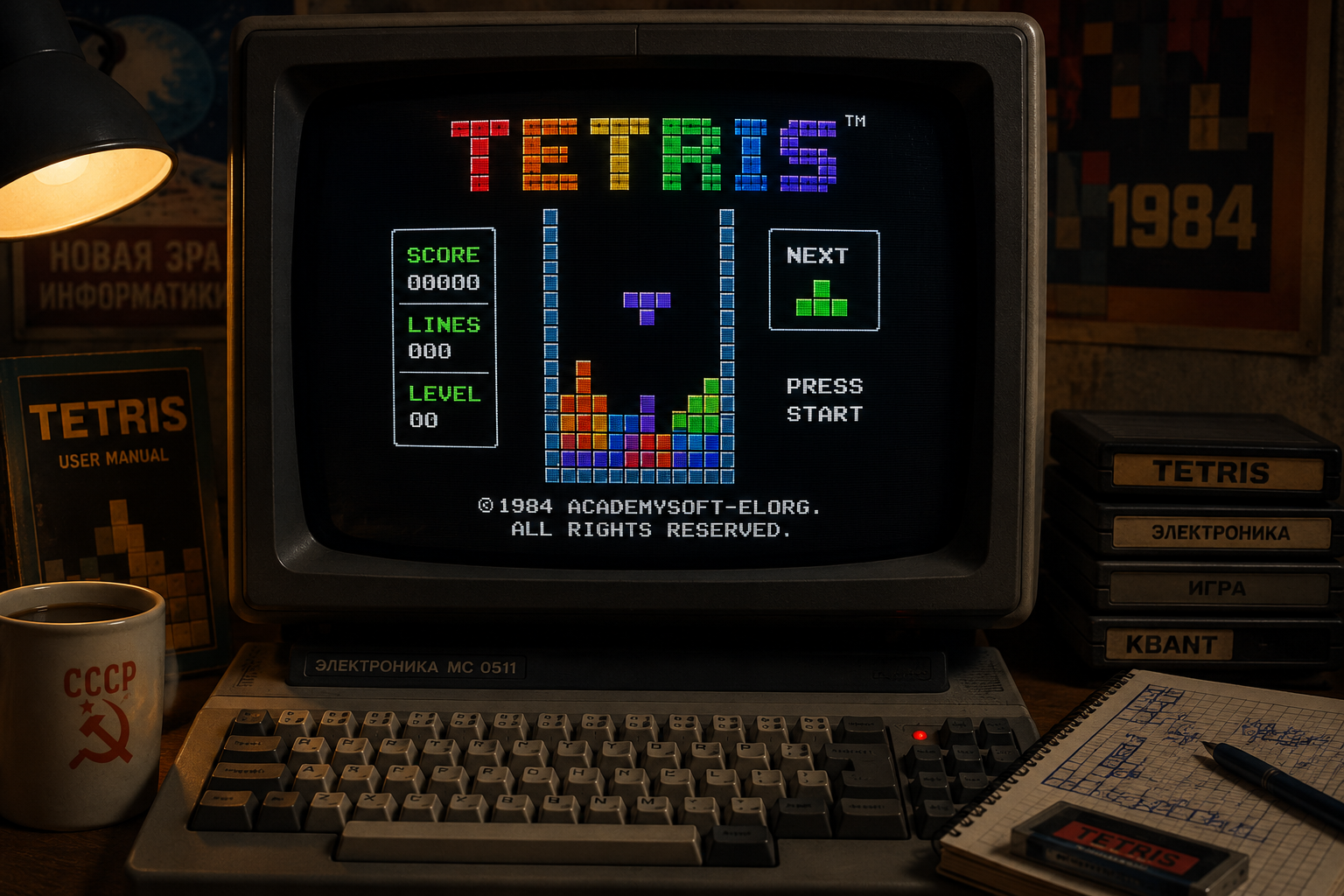
The Puzzle that Conquered the World
A Soviet engineer at his desk, unknowingly poised to create a legend. His creation? Tetris — a game that would break barriers and forever alter the gaming landscape.
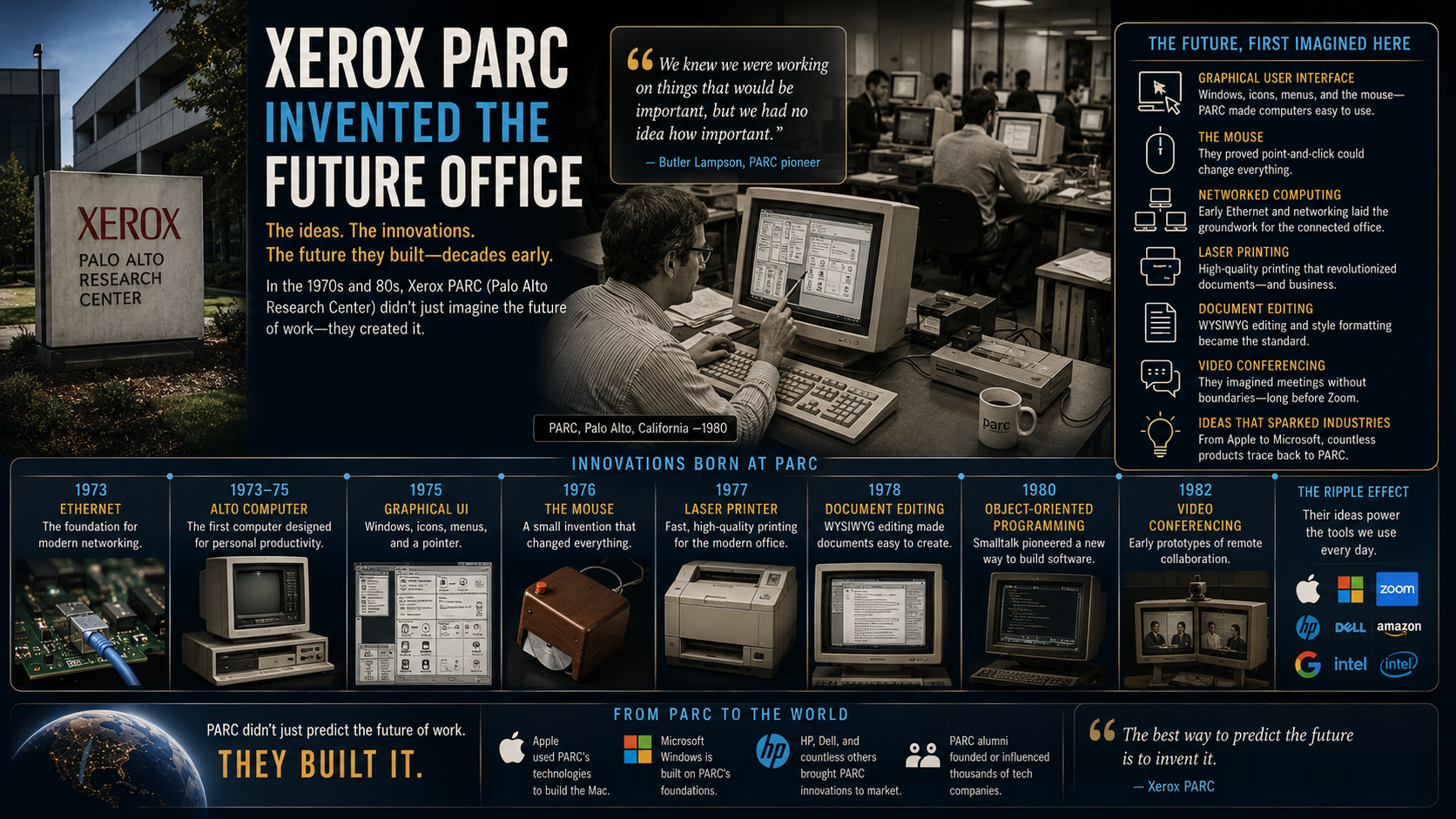
The Lab That Invented Tomorrow
In December 1979, Steve Jobs saw echoes of the future inside Xerox PARC's halls. There, in a secluded lab, lay the blueprint for the modern tech landscape.

The Browser War That Built the Internet
In the mid-1990s, a software battle erupted that would shape how billions accessed information. Few could predict that the victor would soon face its own downfall.

Cracking the Cicada Code
In 2012, an enigmatic online puzzle appeared that promised enlightenment. But who was behind Cicada 3301?
Continue the Rabbit Hole
Each story explores the same idea from a different angle. Follow the connections and discover where the thread leads.




Fictional placeholder content