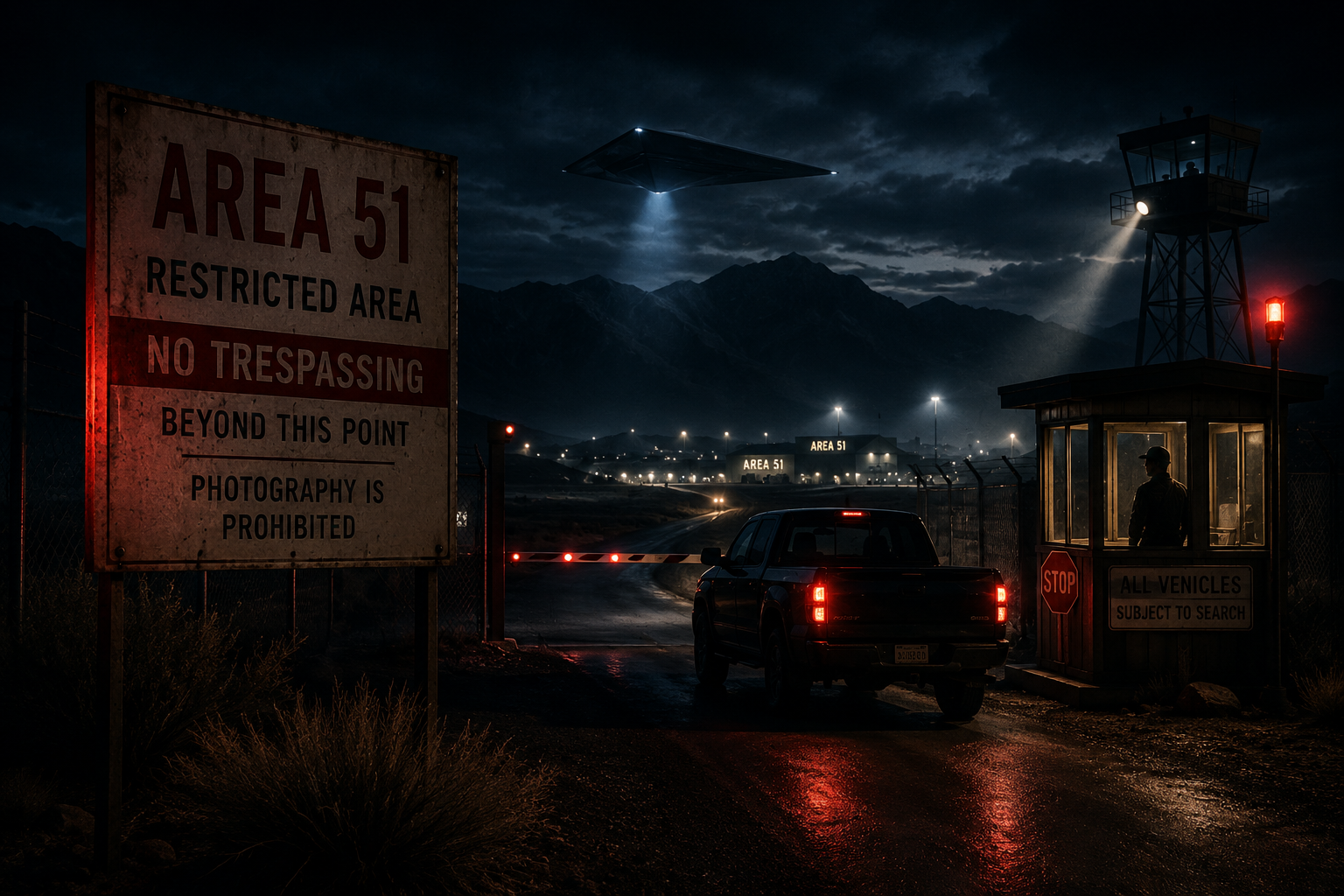
Secretive Shadows of Area 51
"In 1989, Bob Lazar claimed he'd seen alien spacecraft at Area 51. What he didn't predict was sparking a global intrigue that turned a military base into the epicenter of conspiracy."
What Happened?
They weren't supposed to see it. Yet, on an otherwise routine mission in July 1974, Skylab astronauts unwittingly photographed a stretch of parched Nevada desert few believed still existed: Area 51. The image, against all odds, brought America's most secretive military base out of the shadows — or at least tried. For decades, the US government persistently denied its existence, insulating its activities behind a wall of classified projects and restricted airspace. But the veil finally lifted in 2013 when the CIA declassified documents confirming what conspiracy theorists had long suspected.
At the heart of Area 51's mystery lies a paradox. It's a secretive site shrouded in intrigue, yet the sheer volume of speculation has turned it into a cultural landmark. Originating in 1955, Area 51 was initially a pristine testing ground for Lockheed's U-2 Spy Plane, nestled within the vast Nevada Test and Training Range. It was a time when Cold War jitters mandated cutting-edge surveillance technology, and this seemingly barren landscape provided the perfect cover.
In the late 1980s, Bob Lazar's wild claims that he had worked on reverse-engineered alien technology at the base only deepened the legend. Details of his account aligned eerily with newly surfaced, unidentified aerial phenomena, immortalizing the site in UFO folklore. By 2019, a viral event known as "Storm Area 51" drew thousands to the base's perimeter, where their dreams of discovering extraterrestrial secrets met stern warnings and armed guards.
The layers of mystery cloaking Area 51 continue to fascinate, making it an irresistible rabbit hole of conspiracy theories and espionage lore. Each revelation, each photograph, further entwines reality with myth, ensuring that curiosity about what truly transpires behind those barbed fences will never fully fade away.
Takeaway
The lesson this story keeps teaching
“Secrecy often breeds myths larger than the truths they're meant to protect.”
Why People Are Talking About This
Area 51 serves as a vital reminder of the impact of secrecy on public perception. When knowledge is locked away, suspicion reigns. Myths like those surrounding Area 51 highlight the interplay between power and information, where gaps lead to narratives filled with extraterrestrial fantasies.
This story reveals the human penchant for intrigue and distrust of hidden facts, emphasizing the potential consequences when secrecy and transparency collide. When the public seeks truths, sometimes the narrative, once started, can't be reined in — the myth becomes more real than reality.
Thread Map
7 entities · 6 connections · Hover to explore, click to inspect
This is the connection map for this thread. Every node is a person, company, event, or idea. The red lines show how they connect. Hover a node to highlight its connections. Click a node to see why it matters to this story.
How We Got Here
Area 51 Designated as Testing Ground
Under the guidance of CIA officer Richard Bissell, a remote Nevada location was chosen for testing the U-2 reconnaissance aircraft. Its remote nature made it ideal for secrecy.
U-2 Program Begins at Area 51
The U-2 aircraft program officially commenced at Area 51. The program propelled U.S. reconnaissance to new heights, extending above enemy radars.
Bob Lazar’s Bold Claims
Bob Lazar claimed to have witnessed alien technology at Area 51, sparking widespread belief in UFO-related conspiracy theories about the base.
CIA's Acknowledgment of Area 51
The CIA formally acknowledged the existence of Area 51 through declassified documents, prompting public fascination with this once-mysterious military site.
Storm Area 51 Event Goes Viral
A Facebook event jokingly encouraged people to raid Area 51. The joke spiraled into a potential reality, drawing media attention and public spectacle.
Wait... Who Is This?
In 1955, when the CIA selected a barren swath of Nevada as a testing ground, few anticipated that the site would later become infamous for shrouded mysteries and alien lore. Initially conceived as a testing ground for the Lockheed U-2 reconnaissance aircraft, Area 51 was heralded for its isolation, perfect for secrecy. The Cold War had ignited an era of espionage and the need for advanced surveillance technology. The Skunk Works team at Lockheed, led by Kelly Johnson, found its barren expanse ideal for testing new aircraft that would roam the highest skies.
Yet, with secrecy came budding intrigue. Despite being officially non-existent, rumors persisted. Voices whispered of alien crafts and celestial happenings, laying a foundation for speculative storytelling. When the CIA finally acknowledged Area 51’s existence in 2013, it mattered little to those who saw its scant acknowledgment as confirmation of wilder truths.
The site's elaborate cover allowed imaginations to fester unbridled, ensuring that when Bob Lazar spoke of UFOs, ears everywhere were primed to listen, ready to believe. It's a tale set against Cold War paranoia, enriched by the void of information.
Receipts
Same Pattern
Different story. Same lesson.
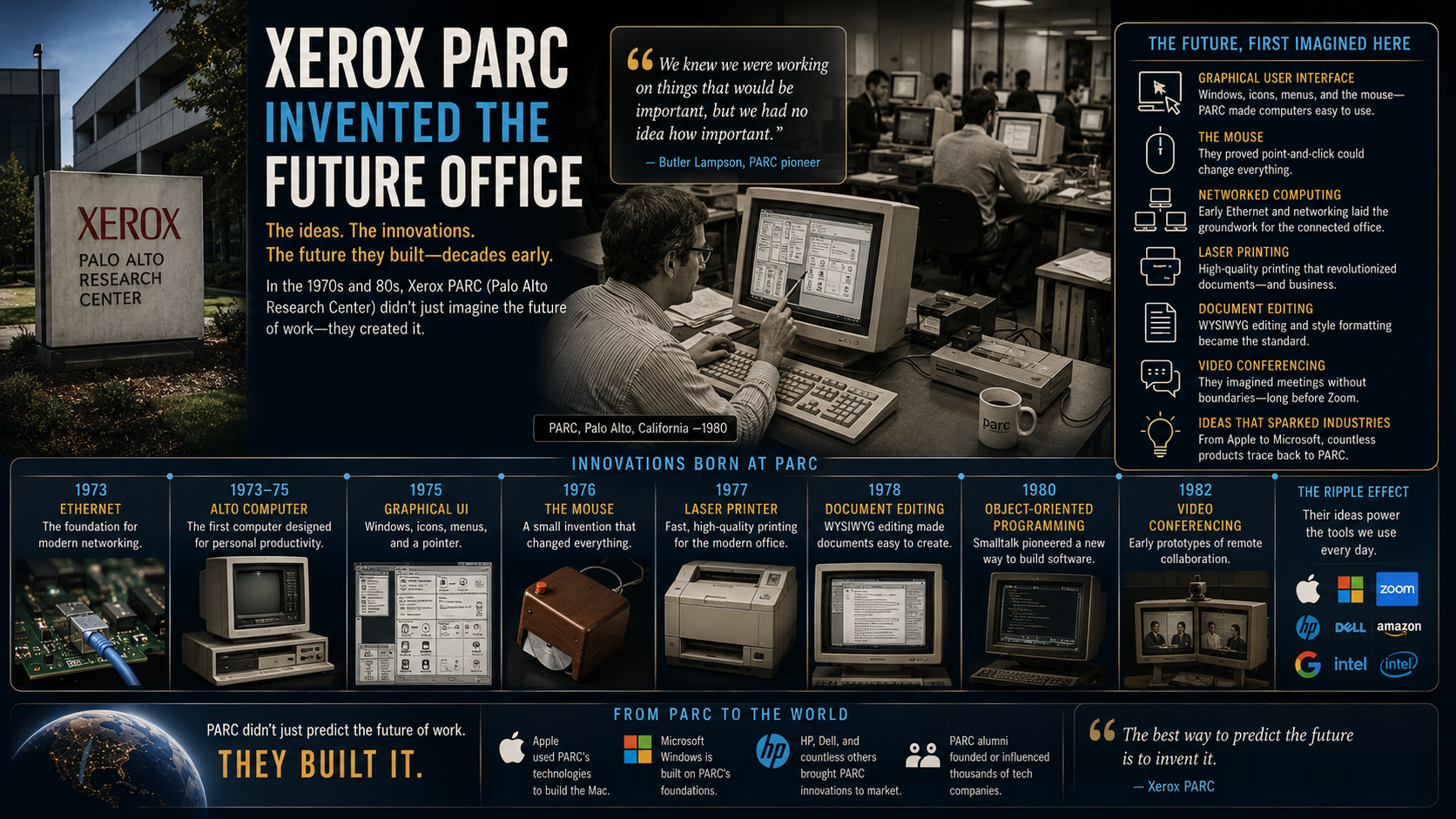
The Lab That Invented Tomorrow
In December 1979, Steve Jobs saw echoes of the future inside Xerox PARC's halls. There, in a secluded lab, lay the blueprint for the modern tech landscape.
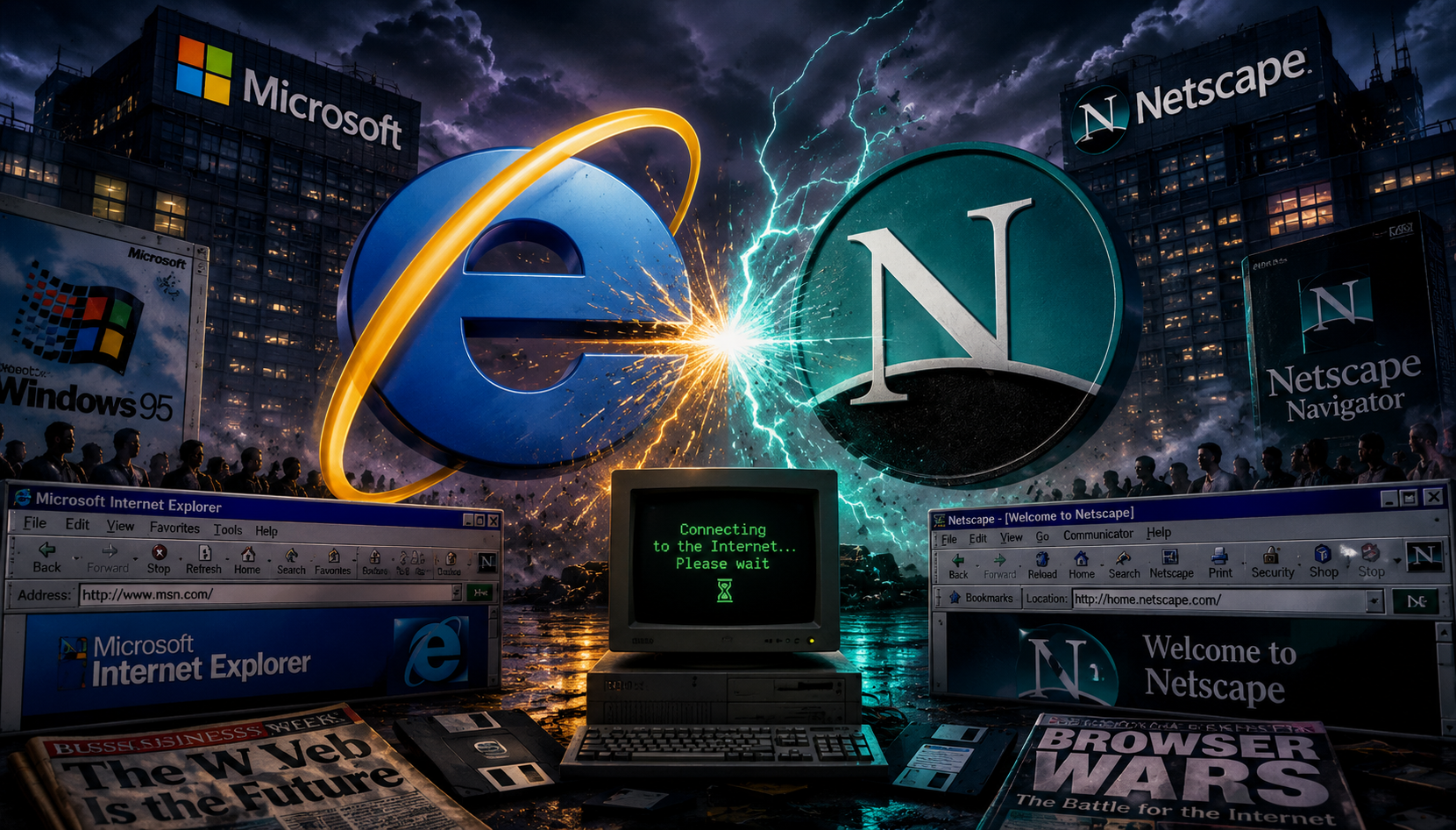
The Browser War That Built the Internet
In the mid-1990s, a software battle erupted that would shape how billions accessed information. Few could predict that the victor would soon face its own downfall.

The Wii Gamble That Saved Nintendo
In a world obsessed with graphics and power, Nintendo bet on simplicity. The Wii was laughed at — until it wasn't.
Pixar's Radical Feedback Loop
In a stark, unadorned room, some of the most powerful voices in animation face off with ruthless honesty. Their weapons? Brutal feedback that molds raw ideas into cinematic gold.

The Chicken That Changed Retail
Costco's $4.99 rotisserie chicken isn't just a meal — it's a strategic masterpiece. The unexpected ripple effects changed retail forever.
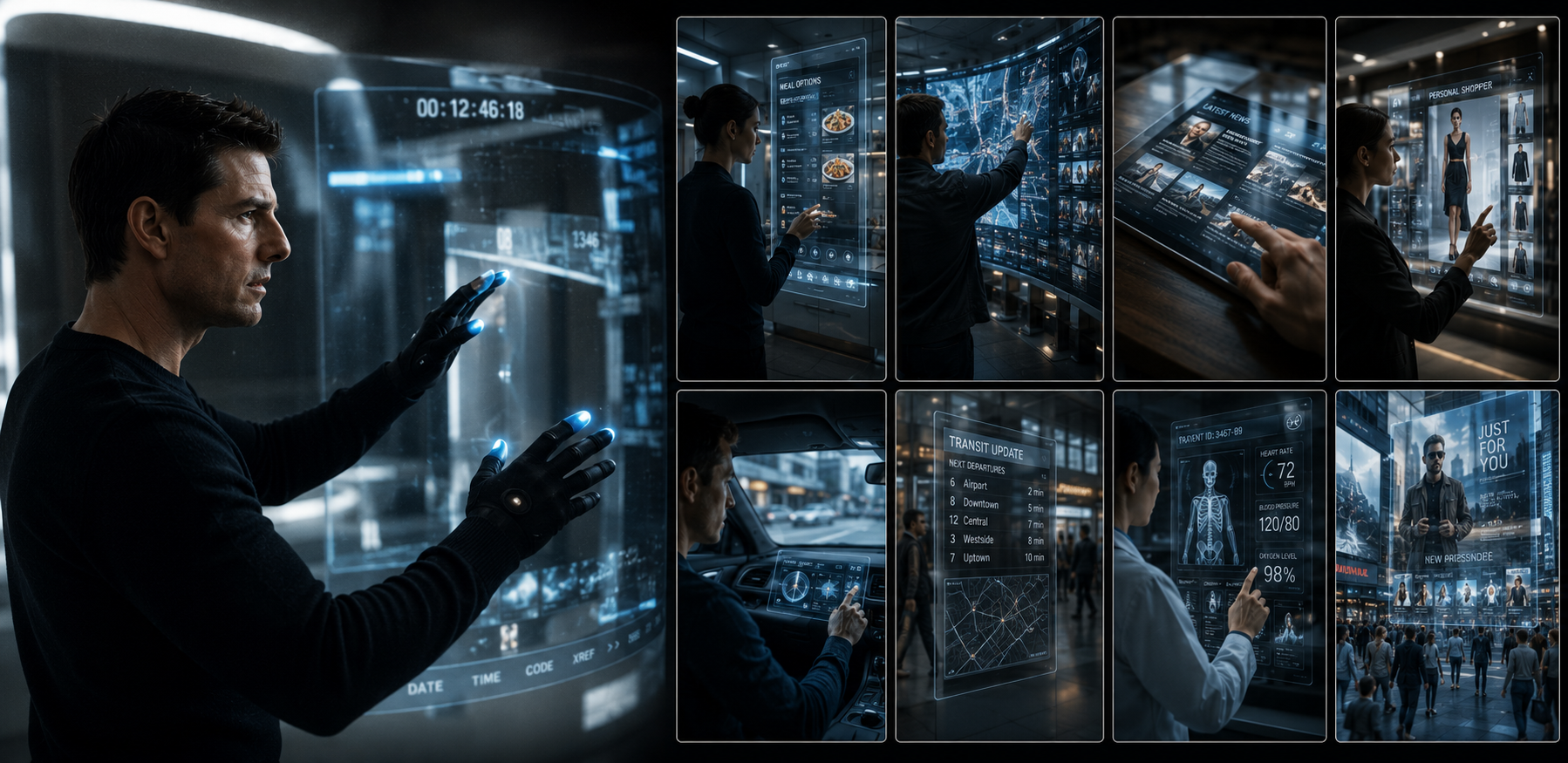
Minority Report's Prescient Touchscreen Reality
In 2002, Hollywood imagined a future of seamless touchscreen interfaces. Today, Steven Spielberg's vision feels eerily prescient as technology catches up.
Continue the Rabbit Hole
Each story explores the same idea from a different angle. Follow the connections and discover where the thread leads.

Fictional placeholder content