The Visionary Who Predicted Wikipedia
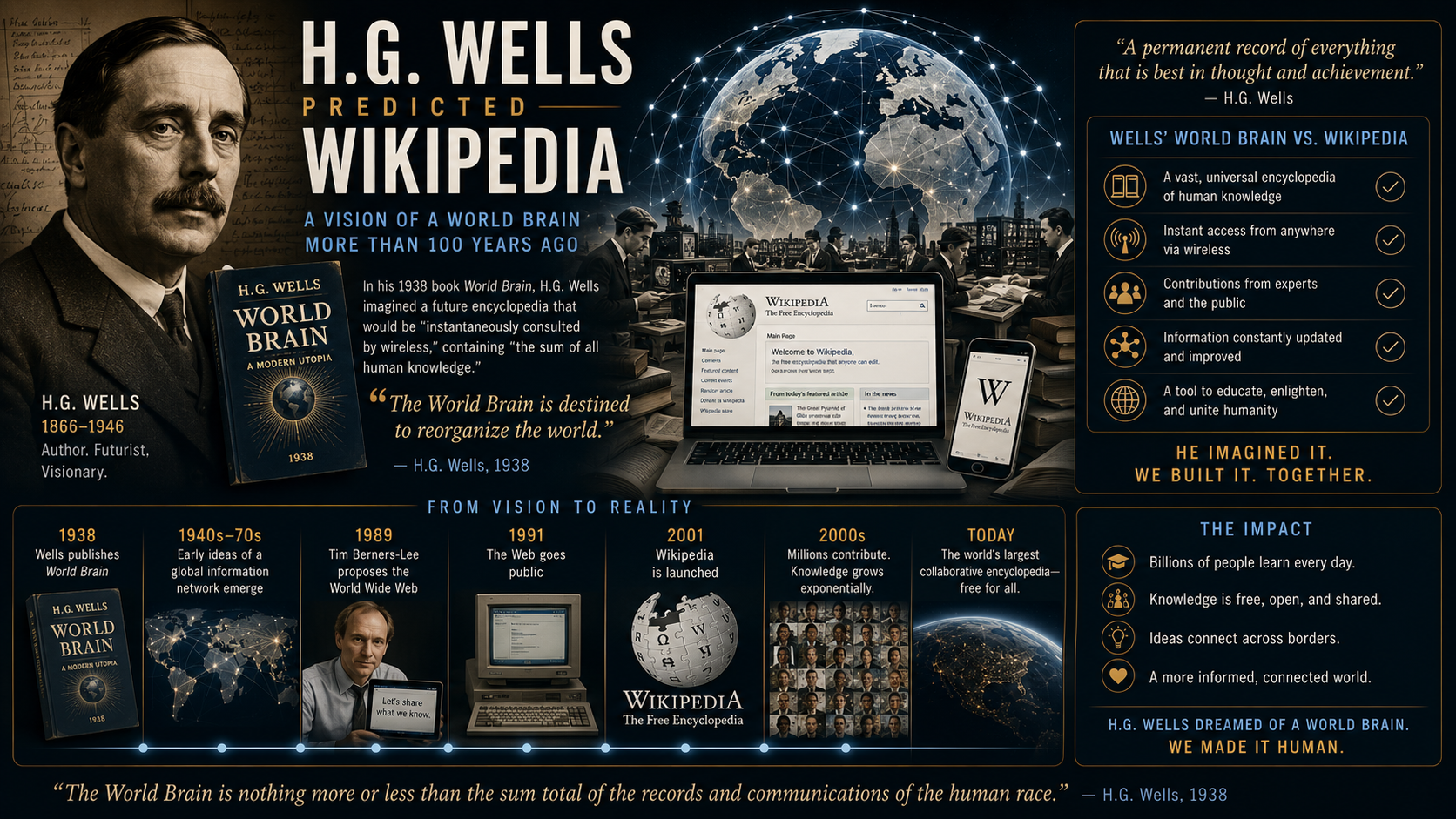
"In 1937, H.G. Wells described a global knowledge network eerily similar to Wikipedia. And he believed it would lead to world peace."
What Happened?
In the dim light of London's Royal Institution, H.G. Wells unveiled a vision so ambitious it bordered on fiction: a Permanent World Encyclopaedia. This was 1936, long before the Internet, yet Wells described a repository of human knowledge accessible to everyone, everywhere. A feat of imagination that paralleled visions of spaceships and nuclear bombs, his encyclopaedia seemed impossible. But with surprising accuracy, it foreshadowed the very essence of Wikipedia.
When Wells presented his idea at the World Congress of Universal Documentation in 1937, it was met with skepticism. The world had yet to witness the digital revolution or the collaborative potential of a global network. Yet, Wells persisted. He imagined a world where information was not anchored in one place but replicated across the globe—in Peru, China, Iceland. His essay, later published in 'World Brain,' articulated this vision, predicting a society shaped by shared, immediate access to knowledge.
Fast forward to 2001. The digital age was in full swing, and Jimmy Wales and Larry Sanger launched Wikipedia. A free encyclopedia edited by volunteers, accessible worldwide, it was the manifestation of Wells's dream. Though imperfect, with biases and variable accuracy, the site became a cornerstone of daily knowledge, reshaping how information is exchanged and consumed.
Wells's vision went beyond mere documentation. He dreamt of an intellectual unity that could foster global peace. Whether Wikipedia achieves that remains another prediction unfulfilled. However, as we navigate the complexities of information overload and digital ethics, Wells’s foresight about the power of shared knowledge is undeniable. A writer's imagination in the twilight of one era gave rise to the dawn of a new, interconnected world.
Takeaway
The lesson this story keeps teaching
“Visionary thinking often anticipates future technological and social landscapes, even when immediate realization seems impossible.”
Why People Are Talking About This
H.G. Wells’ vision remains relevant, illustrating the profound impact of foresight on society. His concept didn’t just imagine shared knowledge; it dared to challenge boundaries, bridging divides decades ahead. However, this foresight also reveals humanity's stumbling blocks—technology brought limitless data, but peace and understanding remain aspirational. This pattern exposes the persistent friction between idealism and reality, begging reflection on how current advances might reshape our own unpredictable tomorrow.
Thread Map
9 entities · 8 connections · Hover to explore, click to inspect
This is the connection map for this thread. Every node is a person, company, event, or idea. The red lines show how they connect. Hover a node to highlight its connections. Click a node to see why it matters to this story.
How We Got Here
H.G. Wells Envisions the 'World Brain'
At the World Congress of Universal Documentation, H.G. Wells presented his 'World Brain' concept, envisioning a global knowledge network similar to Wikipedia.
Presentation at the Royal Institution
Wells set forth his ideas for a constantly updated encyclopedia that would serve as a global repository of knowledge, aiming for cultural unity.
Essay on Permanent World Encyclopaedia
Wells published an essay that expounded on his vision for a global repository of knowledge, highlighting its potential for unifying humanity.
Publication of 'World Brain'
Wells released 'World Brain,' detailing his ideas for a global encyclopedia, which aligned closely to modern online knowledge-sharing platforms.
Launch of Wikipedia
Wikipedia was launched, realizing Wells’ vision of a universally accessible digital platform for knowledge sharing.
Outbreak of World War II
As World War II began, Wells' foresight into global conflicts highlighted the pressing need for collaborative understanding.
Discussion on Wells’ Predictions
Publications revisit Wells' predictions to note how his vision remarkably paralleled today’s digital knowledge initiatives.
Prediction of World War II
In 'The Shape of Things to Come,' Wells foresaw a world war starting in January 1940, demonstrating his ability to anticipate global trends.
Wait... Who Is This?
H.G. Wells wasn't just the man behind science fiction classics like 'The War of the Worlds' and 'The Time Machine.' His eyes were keenly fixed on both the stars and the ground beneath his feet. As Europe trembled at the brink of another world war, Wells quietly presented a radical notion—an all-encompassing 'World Brain' that could unite fragmented nations under a shared roof of knowledge. It was an idea tender in its boldness. This was more than just a proposal for a global encyclopedia; it was a vision of peace powered by insight. The 1930s laid fertile ground for this ambition; radio waves dissolved borders, and print reached its zenith, setting the stage for Wells' brainchild that asked if collected wisdom could be the answer to humanity’s gravest challenges. As tensions brewed, his idea became a whisper of hope amid the roar of impending devastation.
Receipts
In 1937, H.G. Wells predicted Wikipedia. But he thought it’d lead to world peace. | Vox
The Futuristic Predictions of H. G. Wells (#155) | Let’s Learn About...
The life and work of H.G. Wells: a timeline | OUPblog
The Many Futuristic Predictions of H.G. Wells That Came True
H. G. Wells - Wikipedia
The Star (Wells short story) - Wikipedia
Same Pattern
Different story. Same lesson.
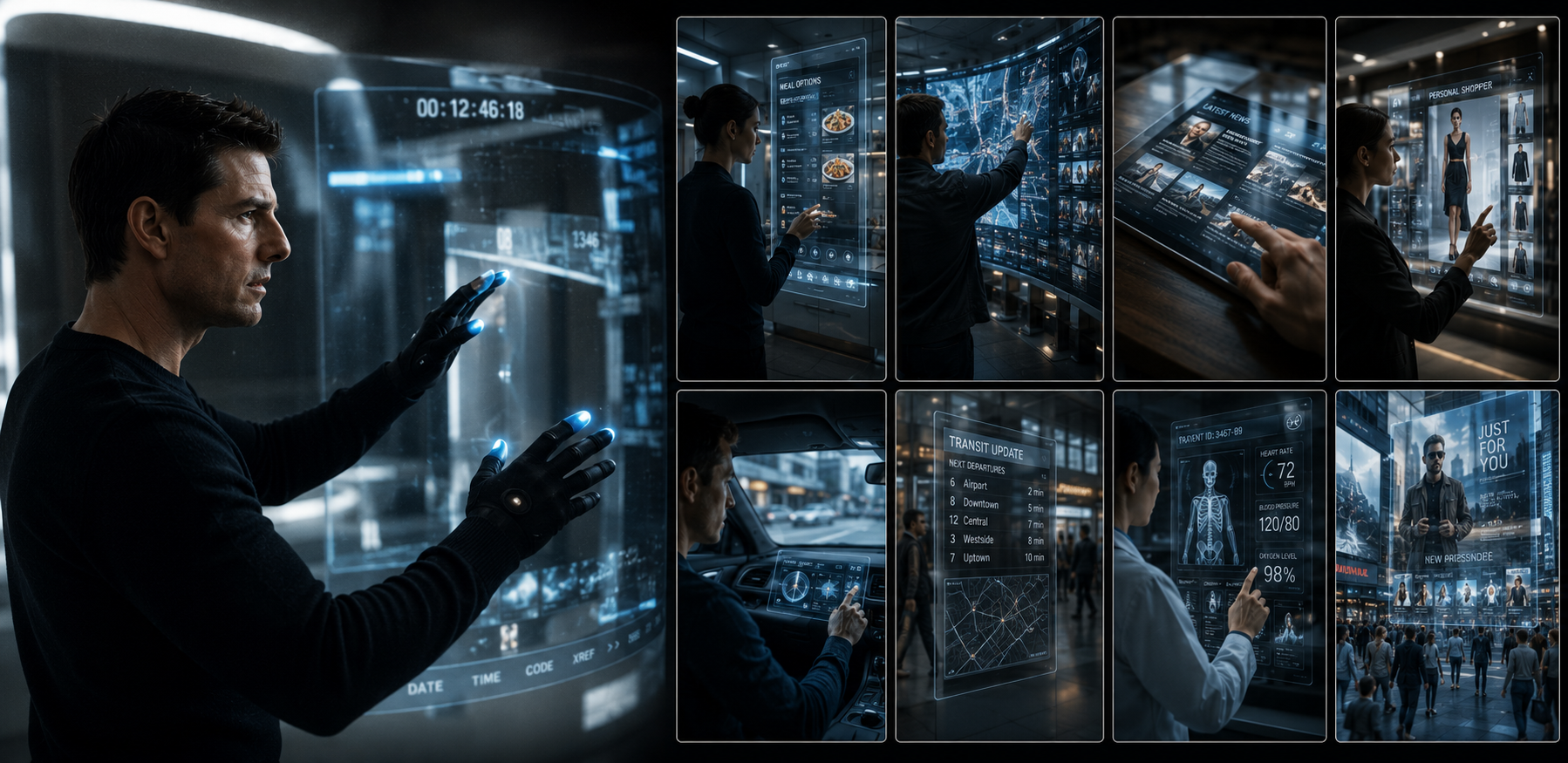
Minority Report's Prescient Touchscreen Reality
In 2002, Hollywood imagined a future of seamless touchscreen interfaces. Today, Steven Spielberg's vision feels eerily prescient as technology catches up.
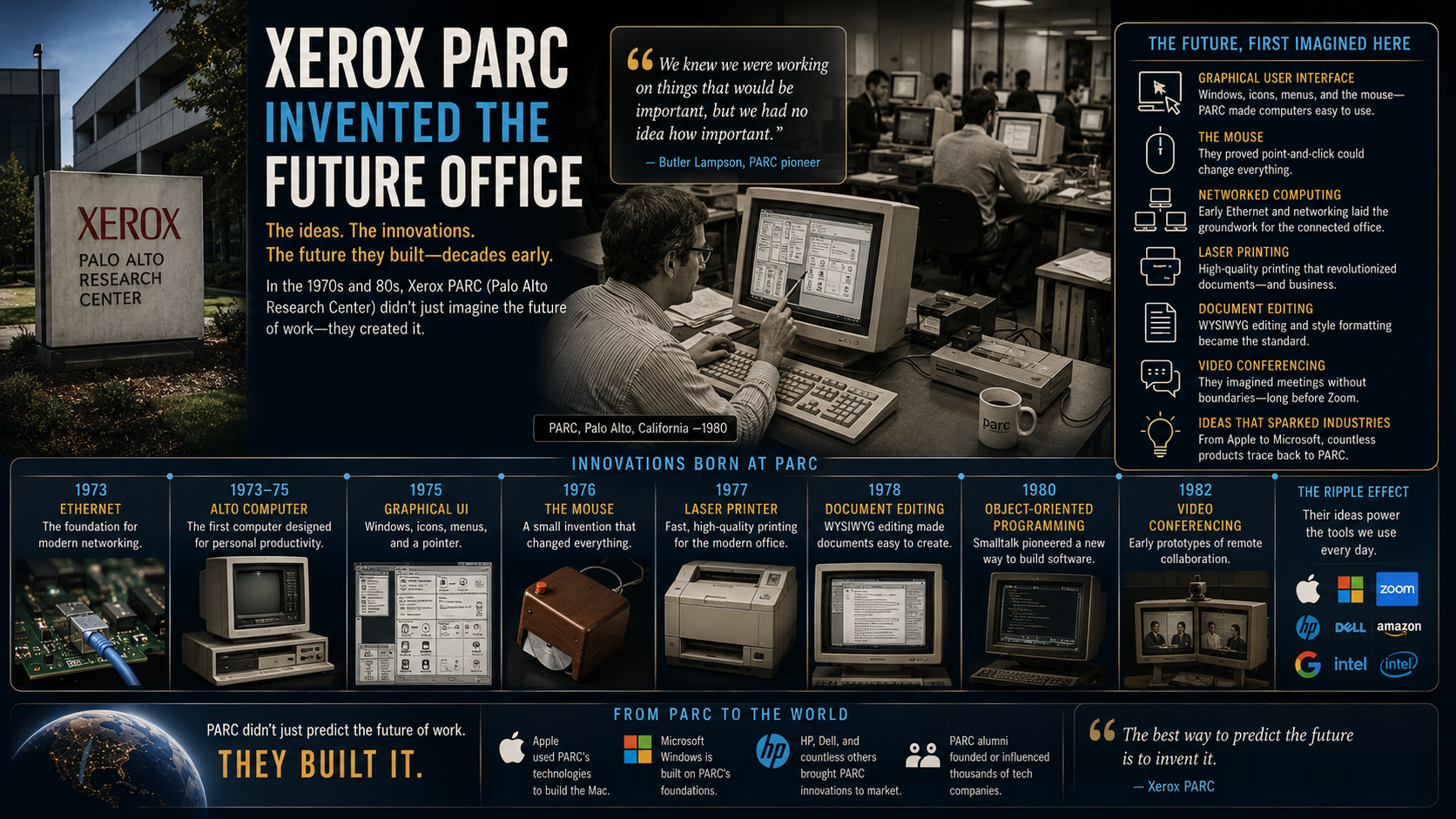
The Lab That Invented Tomorrow
In December 1979, Steve Jobs saw echoes of the future inside Xerox PARC's halls. There, in a secluded lab, lay the blueprint for the modern tech landscape.
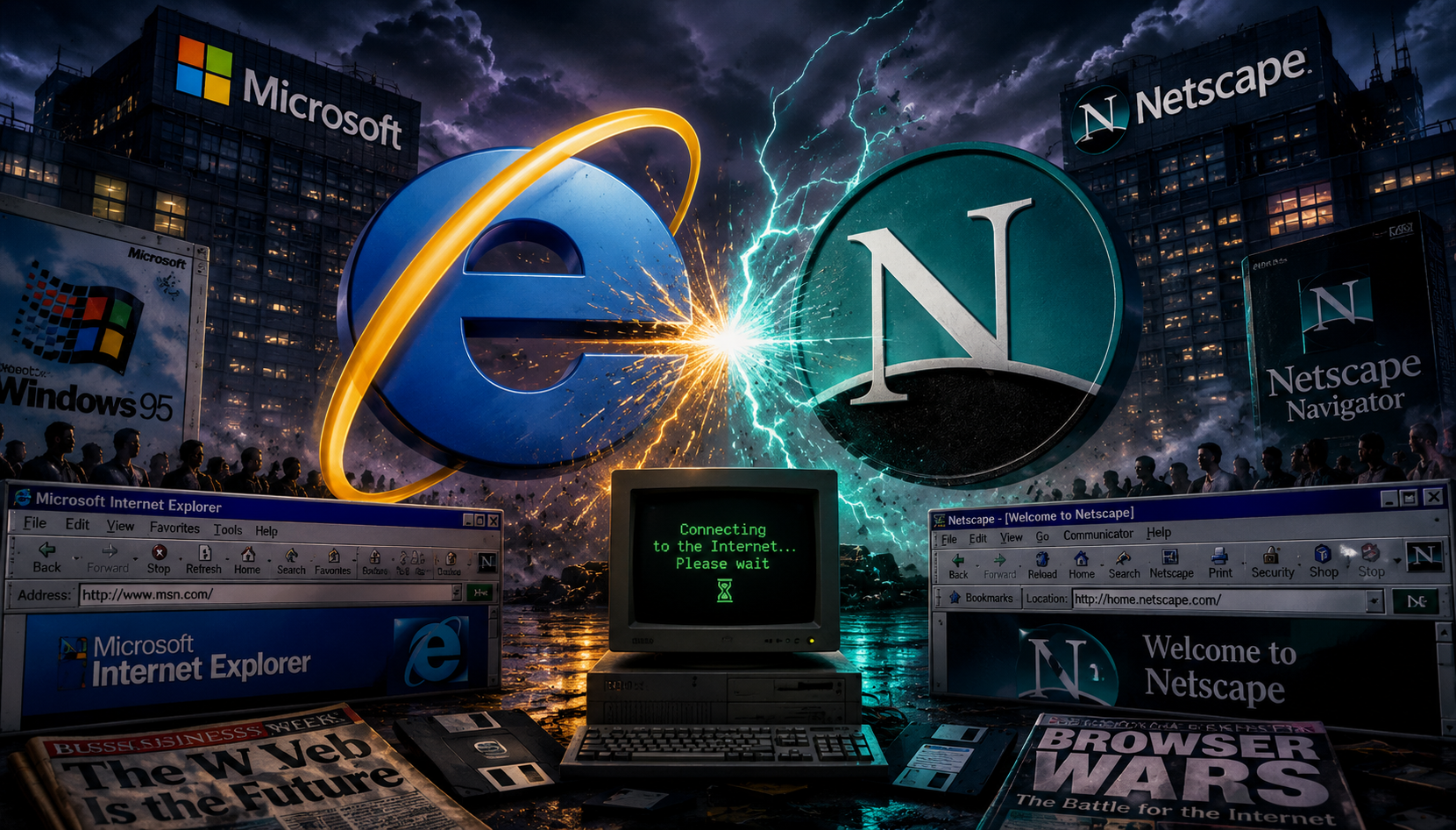
The Browser War That Built the Internet
In the mid-1990s, a software battle erupted that would shape how billions accessed information. Few could predict that the victor would soon face its own downfall.
Pixar's Radical Feedback Loop
In a stark, unadorned room, some of the most powerful voices in animation face off with ruthless honesty. Their weapons? Brutal feedback that molds raw ideas into cinematic gold.

The Chicken That Changed Retail
Costco's $4.99 rotisserie chicken isn't just a meal — it's a strategic masterpiece. The unexpected ripple effects changed retail forever.
The Mandela Effect’s Mind-Bending Mystique
Millions remember Nelson Mandela dying in the 1980s, yet he passed in 2013. What caused this shared illusion?
Continue the Rabbit Hole
Each story explores the same idea from a different angle. Follow the connections and discover where the thread leads.
Fictional placeholder content