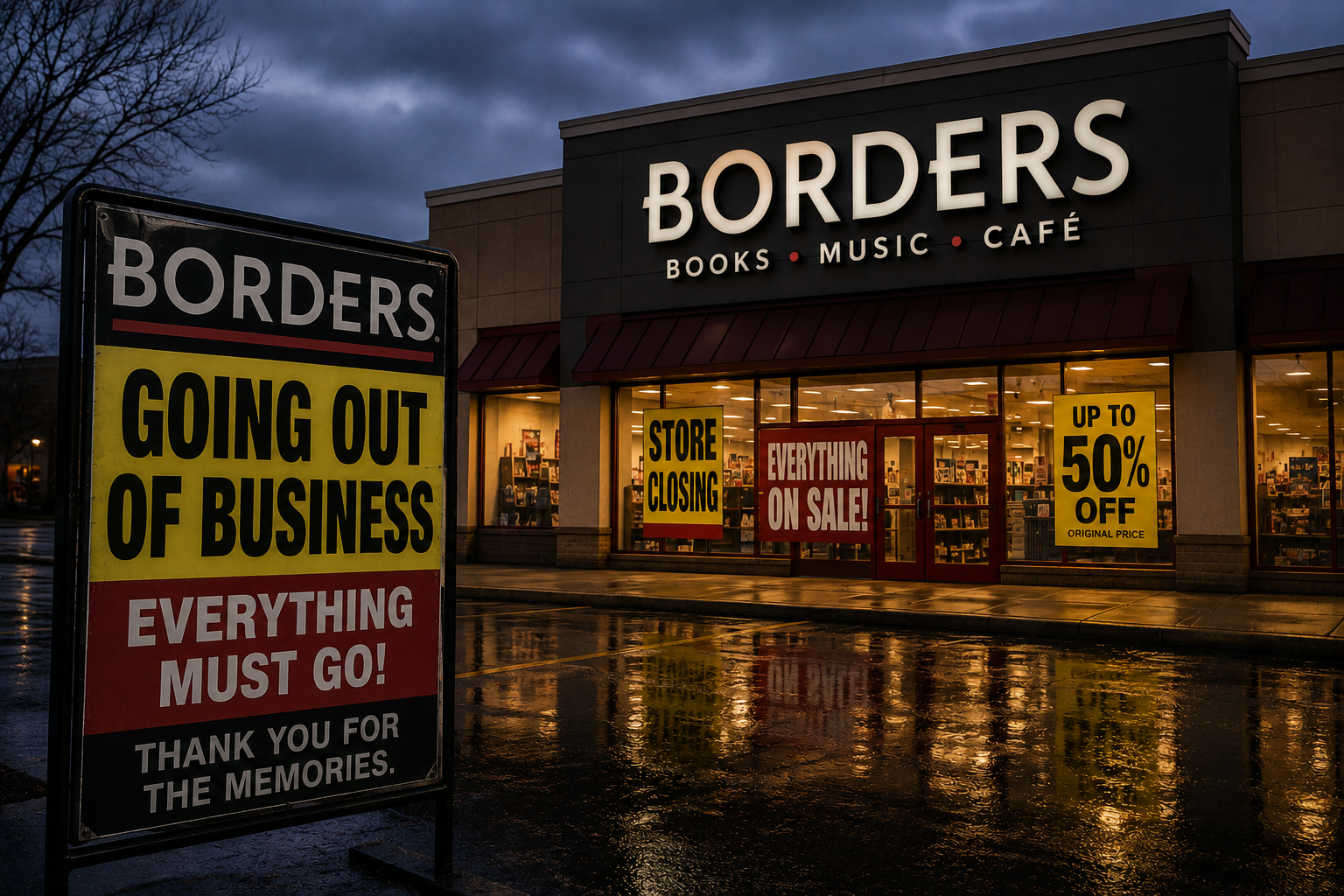
Borders' Last Chapter
"To hear the final chapter of Borders, step into February 16, 2011, where a bookstore giant finally filed for Chapter 11. Was it the digital age that sealed its fate or decisions made across boardroom tables unaware?"
What Happened?
In the echo of the final cash register closing, Borders Bookstore vanished—a titan felled not by a single blow, but by a cascade of missed chances and strategic missteps. At its height in 1995, Borders generated $1.6 billion in annual revenue, a fortress of literature and media sprawling across America. Yet, beneath its grandeur, cracks were widening. Decisions made in the boardroom rippled into the marketplace, slowly unraveling the empire.
One of the most perplexing choices was handing over its online bookselling to Amazon, a competitor that would soon redefine the retail landscape. From 2001 to 2008, instead of building its digital backbone, Borders watched as digital commerce slipped further from its grasp. By the time Borders launched its own e-book store in 2010, Barnes & Noble had beaten them to the punch by eight months, fortifying its position in the digital arena while Borders floundered.
Ironically, Borders’ insistence on expansive physical stores—a strategy that had been its strength—became its undoing. The very superstores once celebrated as cultural bastions became financial liabilities. Each location was an unsustainable monument to a bygone era of retail, burdened by lease costs and dwindling foot traffic.
As digital waves crashed against the brick-and-mortar stronghold, Borders’ leadership shuffled like a deck of cards. Mike Edwards became the chain’s final CEO in 2010, navigating a company spiraling toward bankruptcy. With a Chapter 11 filing in February 2011, Borders' fate was sealed, closing the chapter on a narrative that transitioned from market dominance to cautionary tale. By September, the last Borders bookstores closed their doors, leaving a haunting reminder: in the rapidly changing world of retail, agility and foresight are paramount.
Takeaway
The lesson this story keeps teaching
“Adapting to technological change is not just advantageous but essential for survival — even industry giants aren't immune.”
Why People Are Talking About This
Borders' collapse was more than just the closure of a bookstore chain. It underscored the importance of embracing technological advances and adapting promptly to consumer behavior shifts. Failing to recognize the digital wave turned its brick-and-mortar strength into a weakness.
This story shines a light on how nostalgia can blindside even the most successful businesses, illustrating that innovation isn't just an option but a necessity for sustainability in the fast-changing market landscape.
Thread Map
10 entities · 9 connections · Hover to explore, click to inspect
This is the connection map for this thread. Every node is a person, company, event, or idea. The red lines show how they connect. Hover a node to highlight its connections. Click a node to see why it matters to this story.
How We Got Here
Borders Hits Its Peak
Borders was the second largest bookstore chain in the United States, with superstores that housed extensive collections and annual revenue soaring to $1.6 billion.
Borders Outsources to Amazon
In a fateful strategic move, Borders outsourced its online sales operations to Amazon, a decision that ceded its digital future to a competitor.
Borders Repays Pershing Square
Borders repaid a $42.5 million loan to Pershing Square, accessing crucial credit in a bid for financial stability but only achieving temporary relief.
Borders Launches E-book Store
Borders belatedly launched its e-book store, trailing behind competitors in the digital space and barely making a dent against existing frontrunners.
Ackman Offers Merger Financing
Investor Bill Ackman proposed financing a merger between Borders and Barnes & Noble, revealing the desperate search for viable rescue options.
GE Capital's Conditional Refinancing
Borders announced a conditional refinancing offer from GE Capital, indicative of its slim lifeline before filing for Chapter 11 bankruptcy.
Borders Files for Bankruptcy
Borders filed for Chapter 11 bankruptcy, resulting in an immediate restructuring effort. It became a final attempt at salvage amid unsustainable financial conditions.
Final Closure of Borders Stores
All remaining Borders stores were closed, marking the end of an era for the once-powerful bookseller chain.
Wait... Who Is This?
Before the digital age changed the game, Borders was thriving. Born in Ann Arbor as a small bookstore but expanding aggressively under the helm of Robert DiRomualdo, it quickly became a cornerstone of American retail. Borders' stores became synonymous with wide-ranging selections and an immersive experience—a retail haven for book lovers across the nation. The retail landscape was changing fast, though, as online giants like Amazon emerged, signaling a digital awakening that would transform consumer habits forever.
During its zenith in the 1990s, Borders expanded considerably—its physical retail expansion in full swing. Yet, the ground beneath the bookshelves was shifting. As consumers pivoted towards the convenience of online shopping, Borders clung to its brick-and-mortar dreams. Its crucial misstep came when it handed over its online operations to Amazon—sacrificing its digital future to the very competitor that would eventually contribute to its downfall.
The tale of Borders teems with lessons—about technological evolution and the blindness that past successes can often induce.
Receipts
Borders Collapse: How a Bookstore Giant Missed the Digital Shift – Headcount Coffee
Timeline: A short history of Borders Group bookstores
Borders (retailer) - Wikipedia
The Rise and Fall of Borders Bookstore - by Lauren Erickson
Why Borders Bookstore Closed: A Tale of Changing Times - Resist Booksellers
Why Borders Failed While Barnes & Noble Survived : NPR
and what Mike Edwards learned as its last CEO
5 Reasons Why Borders went out of business - InspireIP
Same Pattern
Different story. Same lesson.

The Fall of BlackBerry
In a boardroom once buzzing with innovation, silence filled the air as BlackBerry executives watched Apple's iPhone dismantle their empire one launch at a time.
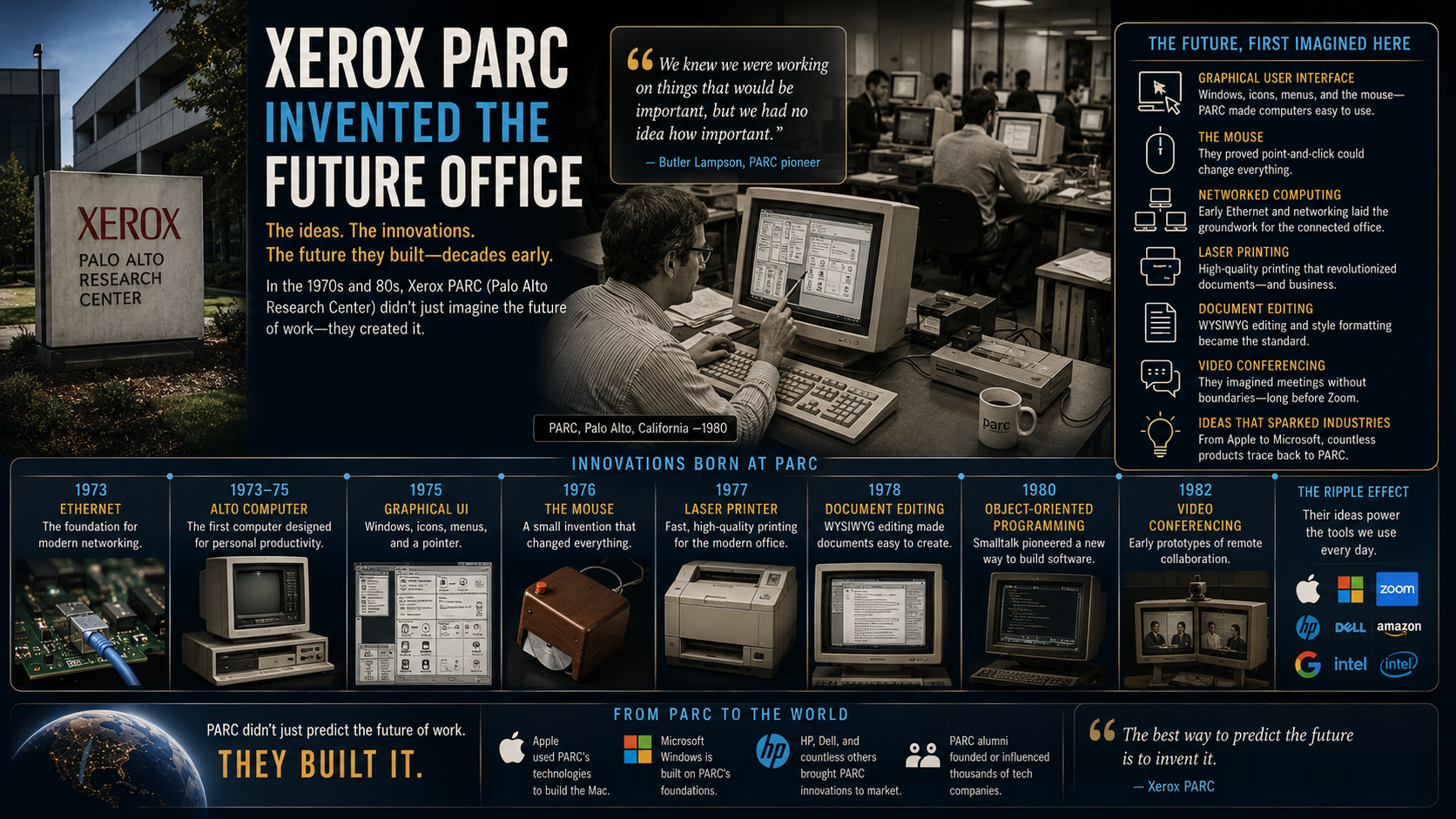
The Lab That Invented Tomorrow
In December 1979, Steve Jobs saw echoes of the future inside Xerox PARC's halls. There, in a secluded lab, lay the blueprint for the modern tech landscape.

The Wii Gamble That Saved Nintendo
In a world obsessed with graphics and power, Nintendo bet on simplicity. The Wii was laughed at — until it wasn't.

Pixar's Radical Feedback Loop
In a stark, unadorned room, some of the most powerful voices in animation face off with ruthless honesty. Their weapons? Brutal feedback that molds raw ideas into cinematic gold.

How Google's 20% Time Shaped Innovation
Gmail, the widely-used email service, was born from Google's infamous 20% Time. What else did this unconventional policy unleash?

The iPhone That Disrupted the World
In January 2007, Steve Jobs stepped onto the stage and introduced a device that would redefine the entire world: the iPhone. What seemed like just another gadget launch was, in fact, the dawn of a new era.
Continue the Rabbit Hole
Each story explores the same idea from a different angle. Follow the connections and discover where the thread leads.






Fictional placeholder content