
Kodak's Moment of Innovation and Blindness
"Kodak crafted the world's first digital camera only to tuck it away like an unwanted secret. Years later, that secrecy became their downfall."
What Happened?
In 1975, deep within the Kodak labs, engineer Steve Sasson crafted a device that flickered with the promise of a digital revolution—a prototype digital camera. Weighing eight pounds and cobbled together with leftover parts, its grainy images whispered of a future almost unimaginable then. Yet, when Sasson presented his creation to Kodak executives, it wasn't met with the fanfare you'd expect. Curiosity lingered, but skepticism loomed larger. Realizing the threat his invention posed to the company's lucrative film business, Kodak decided to protect its legacy rather than upend it.
For decades, Kodak had been the king of film. George Eastman's early bet on color film had revolutionized the way we captured memories, cementing Kodak's dominance. But as Sasson's digital vision gathered dust, rivals quietly took note. By the 1980s, firms like Fujifilm were encroaching on Kodak's empire with cheaper film options and by becoming the official film of events like the 1984 Los Angeles Olympics. The digital tide was rising, yet Kodak remained anchored to its waning star.
By the time Kodak warmed up to the inevitable digital wave, the market had morphed beyond recognition. While Kodak tinkered with digital offerings in the 1990s, their half-hearted efforts were too little, too late. Companies like Sony and Canon were already stepping into the digital arena, leaving Kodak scrambling in the wake of its own unseized innovation.
In January 2012, Kodak filed for bankruptcy, a somber punctuation to a story that might have been different. Kodak's cautionary tale isn't merely about a missed technological boat; it's a stark reminder of the perils of resting on past laurels while the horizon shifts, a narrative echoed in boardrooms and industries wrestling with disruption today. The device that sparked no immediate joy in 1975 ultimately foretold the digital age—just not for Kodak.
Takeaway
The lesson this story keeps teaching
“Success created the conditions for Kodak's own downfall — their past achievements blinded them to future opportunities.”
Why People Are Talking About This
Kodak's tale is a stark reminder of the importance of adaptation in the face of inevitable change. Their failure to capitalize on digital innovation led to their downfall, providing a cautionary tale for any business resting on past laurels.
This story emphasizes that success does not guarantee future relevance. It illustrates a universal lesson: innovation waits for no one, and clinging to former glory can lead to obsolescence.
Thread Map
9 entities · 8 connections · Hover to explore, click to inspect
This is the connection map for this thread. Every node is a person, company, event, or idea. The red lines show how they connect. Hover a node to highlight its connections. Click a node to see why it matters to this story.
How We Got Here
Kodak Conceals the Digital Camera
Steve Sasson invents the digital camera at Kodak, capturing images digitally on a cassette tape. However, Kodak's leadership does not see its potential and chooses not to promote or develop it further, fearing its impact on film sales.
Fujifilm Steals the Limelight
Fujifilm secures a prominent role at the Summer Olympics in Los Angeles, solidifying its presence in the US market. The move highlights Fujifilm's strategic pivot towards diversification and its aggressiveness in gaining market shares against Kodak.
Digital Photography Gains Ground
Digital cameras become widely available, capturing the public's imagination. Competitors like Fujifilm embrace the change, while Kodak remains hesitant to fully commit to the digital world.
Kodak Tries to Catch Up
Kodak begins investing significantly in digital photography to compensate for lost ground. Despite spending billions, its delayed entry leaves it struggling to regain market leadership.
Kodak Plans Massive Layoffs
As part of its restructuring effort, Kodak announces a plan to cut up to 15,000 jobs. This drastic measure highlights the dire situation at Kodak as it tries to adapt to the digital era.
Kodak Declares End of Days for Film Cameras
Kodak stops building traditional film cameras for the US and European markets, acknowledging the complete shift to digital. The decision marks a significant turnaround but also underscores how late the change comes.
Kodak Declares Bankruptcy
Faced with declining sales and depleted resources, Kodak files for Chapter 11 bankruptcy. The move symbolizes the end of an era for a company that once dominated the photography world.
Kodak Returns with a Focus on Printing
After emerging from bankruptcy, Kodak repositions itself as a company focused on commercial printing solutions. This shift reflects its attempt to carve out a new identity in a world where its legacy has diminished.
Wait... Who Is This?
Photography was once a complex art reserved for those who could master its bulky equipment. In the late 19th century, George Eastman wanted to change that, leading to the foundation of Kodak. His motto, "You press the button, we do the rest," transformed Kodak into an household name, making photography accessible to the masses. By mid-20th century, Kodak was a giant, dominating the photography landscape with its film products and cameras.
Yet, by the 1970s, even as the industry flourished, a monumental shift was underway. Steve Sasson, armed with curiosity and ingenuity, pieced together the first digital camera in a Kodak lab. His innovation hinted at a digital future, a future Kodak would eventually ignore. Despite its legacy of embracing new technology, the lure of enduring profit from film led Kodak to dismiss digital photography. This conservative mindset ultimately created cracks in the Kodak empire, setting the stage for a significant fall.
With Fujifilm capturing market attention due to its innovative strategies and the arrival of digital advancements, Kodak, once a leader, soon found itself struggling to catch up. The company's decisions—or lack thereof—during this pivotal time period remain a testament to the perils of not adapting to time’s swift march.
Receipts
How Kodak Failed - Forbes
Kodak invented the digital camera - then killed it. Why innovation often fails | World Economic Forum
Kodak's Rise and Fall: A Timeline | PDF | Camera
Kodak's Multiple Takes at Strategic Renewal that ...
Disruptive technology: How Kodak missed the digital photography revolution
Same Pattern
Different story. Same lesson.
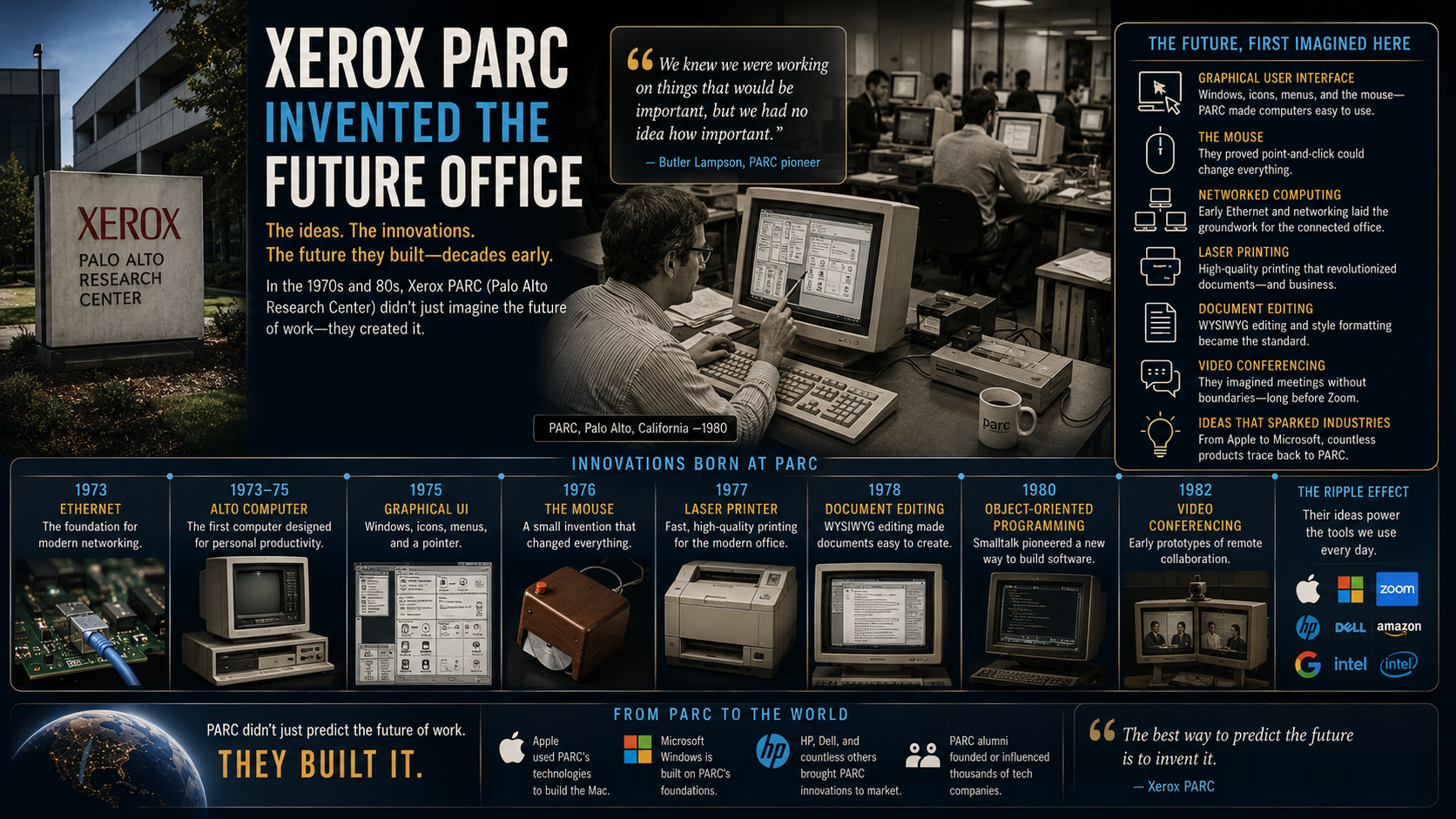
The Lab That Invented Tomorrow
In December 1979, Steve Jobs saw echoes of the future inside Xerox PARC's halls. There, in a secluded lab, lay the blueprint for the modern tech landscape.

The Browser War That Built the Internet
In the mid-1990s, a software battle erupted that would shape how billions accessed information. Few could predict that the victor would soon face its own downfall.

The Wii Gamble That Saved Nintendo
In a world obsessed with graphics and power, Nintendo bet on simplicity. The Wii was laughed at — until it wasn't.

Pixar's Radical Feedback Loop
In a stark, unadorned room, some of the most powerful voices in animation face off with ruthless honesty. Their weapons? Brutal feedback that molds raw ideas into cinematic gold.

The Chicken That Changed Retail
Costco's $4.99 rotisserie chicken isn't just a meal — it's a strategic masterpiece. The unexpected ripple effects changed retail forever.

Minority Report's Prescient Touchscreen Reality
In 2002, Hollywood imagined a future of seamless touchscreen interfaces. Today, Steven Spielberg's vision feels eerily prescient as technology catches up.
Continue the Rabbit Hole
Each story explores the same idea from a different angle. Follow the connections and discover where the thread leads.








Fictional placeholder content